


How to Explore the Ancient Silk Road: From Xi'an to Kashgar
Here at jusha.travel, we love sharing tips to make your China journey unforgettable!
The ancient Silk Road evokes images of bustling caravans and cultural pioneers trading not just goods, but ideas across vast deserts and mountains. Stretching over 4,000 miles, this network of historical trade routes served as a vital bridge between East and West from around 130 BCE to the 15th century. Exploring it allows modern travelers to experience a foundational chapter in globalization through cultural exchange that shaped world history. Today, following the route from Xi’an to Kashgar offers a perfect blend of history, adventure, and contemporary Chinese innovation. This guide dives into how to plan your journey, incorporating elements of Xi’an travel and adventure travel to ensure an enriching experience.
Understanding the Silk Road's Legacy and Modern Appeal
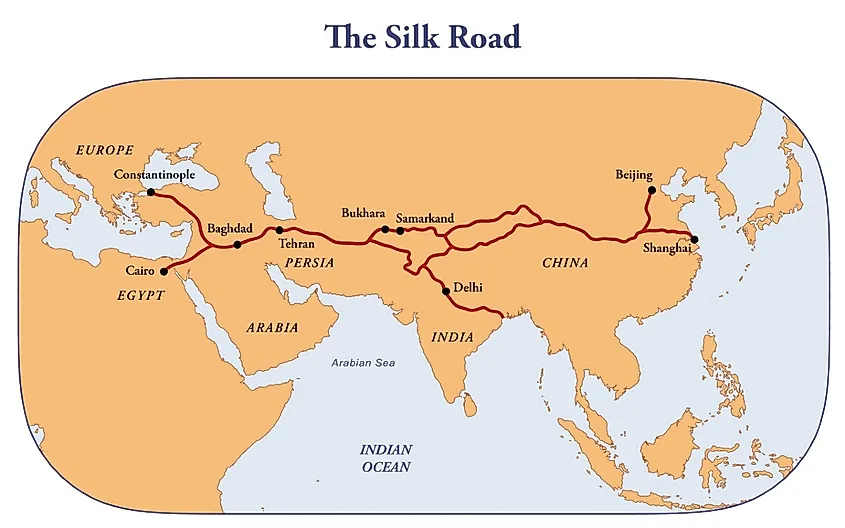
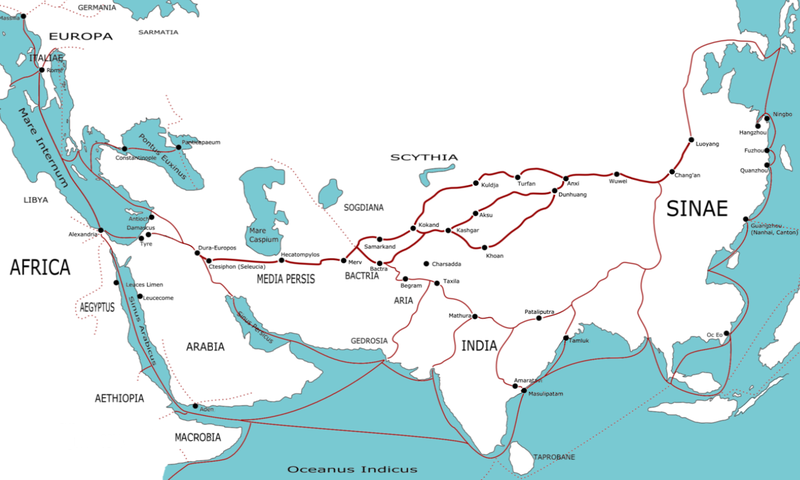
The Silk Road wasn’t just one road but a complex web of paths facilitating trade in silk, spices, precious metals, and more. It became a conduit for profound cultural exchange, spreading Buddhism from India to China, gunpowder westward, and Islamic scholarship eastward. Initiating in ancient Chang’an (modern Xi’an), the route traversed challenging terrains, fostering resilience and adaptation among merchants. In today’s China, this legacy lives on through preserved oases and tech-enhanced sites.
For adventure travel enthusiasts, the journey promises diverse landscapes—from Xi’an’s fertile plains to Kashgar’s frontier vibes. It’s about more than history; it’s a chance to interact with China’s rich tapestry. As UNESCO recognizes parts of the Silk Road, it underscores sustainable tourism’s importance. Travelers can witness how ancient historical trade routes now intersect with China’s high-speed rail network, making exploration accessible yet authentic.
Curious about broader Chinese history? Check out our in-depth look at China’s history, culture, and modernity for context that enhances your understanding.
Kicking Off: Xi'an as the Gateway
Xi’an, a UNESCO World Heritage site, marks the epicenter of the Silk Road’s Eastern branch. Once the imperial capital Chang’an, it buzzed with traders and scholars. A must-visit is the famed Terracotta Army, a 2,200-year-old burial complex symbolizing military prowess. After exploring the 8,000+ warriors, unwind in the atmospheric Muslim Quarter, where street food reflects Silk Road influences—from cumin-spiced lamb to fresh bread paralleling ancient nomadic diets.
Don’t miss the Ancient City Wall for scenic bike rides or the Bell Tower for panoramic views. For Xi’an travel, time your visit in spring (March-May) to avoid summer heat or winter chill. Budget 2-3 days here to immerse in cultural exchange legacies at local museums showcasing artifacts from the Tang Dynasty.
When planning your trip, remember practical preparations. Our guide on essential China travel tips offers insider advice on visas, packing, and cultural navigation to complement your Silk Road adventure.
Venturing West: Key Stops and Desert Challenges

Leaving Xi’an, the route heads through the Hexi Corridor via high-speed train or bus, a strategic ancient passage now flanked by modern infrastructure. Stop in Lanzhou for its bustling Yellow River views, then advance to Jiayuguan, where the Great Wall ends dramatically against the desert. This fortress, poetically the “First Pass Under Heaven,” once controlled Silk Road access.
Beyond lies Dunhuang, an oasis town renowned for the Mogao Caves—492 grottoes adorned with ancient Buddhist frescoes illustrating cultural exchange. Stroll the sand dunes of Singing Sands Mountain, a nod to the caravan trails. Continuing, enter Xinjiang’s arid Taklamakan Desert, with Turpan’s grape valleys and underground karez irrigation systems defying the heat—a testament to human ingenuity on historical trade routes.
For seamless travel logistics, explore our comprehensive transportation in China guide, which details high-speed trains and regional connections vital for this itinerary.
Reaching the End: Kashgar's Crossroads Culture
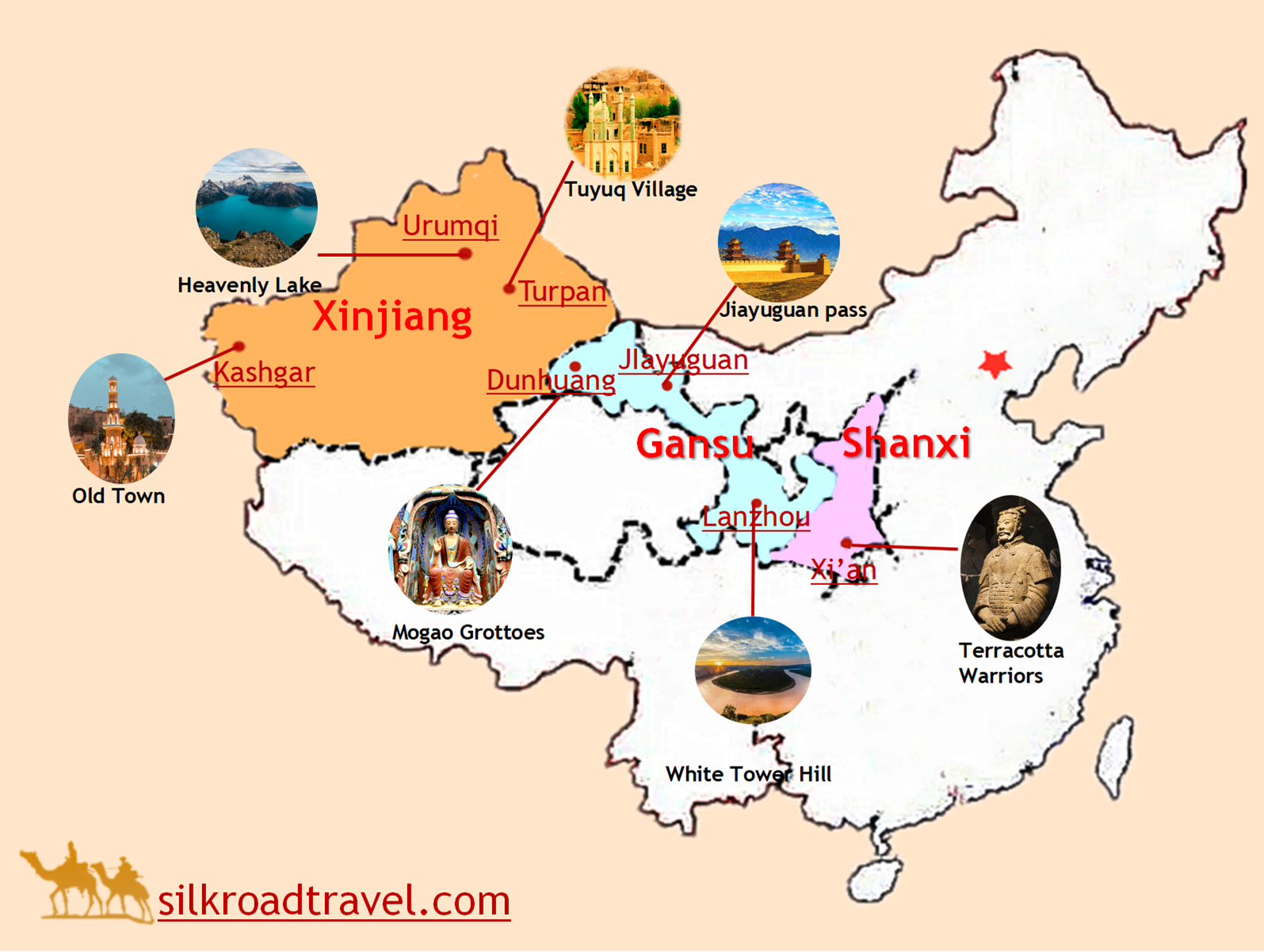
Kashgar, the western terminus, epitomizes Silk Road diversity at the meeting point of empires. Wander the Old Town, a maze of Uyghur architecture blending Han, Persian, and Turkic styles. The Sunday Bazaar lives on as a marketplace echoing camel caravans, selling spices and crafts.
The Id Kah Mosque and Abakh Khoja Tomb highlight Kashgar’s Islamic heritage, while Karakul Lake offers stunning alpine contrast. This city celebrates cultural exchange through foods like laghman noodles and polo rice. For adventure travel, day trips to the Pamir Mountains provide hiking opportunities blending nature with history.
Accommodation options here range from guesthouses to luxury inns. Discover top choices in our article on luxury hotels in China to make your oasis stay special.
Planning Your Silk Road Expedition

A full Xi’an to Kashgar journey spans 10-18 days, covering about 3,700 km. Opt for a guided tour for local insights or DIY with China Railway’s app for trains. Adventure travel highlights include camel treks in Dunhuang and cultural homestays.
Visas, especially for Xinjiang, require advance planning; WeiXin scan at hotels is mandatory. Pack layers for temperature swings, use apps like Pleco for translations, and consider travel insurance. Budget $2,000-4,000 per person for flights, transport, and accomodations—modest compared to the historical value.
Best times? Spring (April-June) and autumn (September-October) for gentle weather. Integrate rest days for cultural reflection.
For more tailored itineraries, read our detailed piece on exploring China’s Silk Road.
Conclusion: Embrace the Silk Road Spirit

Journeying the Silk Road from Xi’an to Kashgar isn’t merely sightseeing—it’s embracing mankind’s spirit of connection. These historical trade routes remind us how exploration fostered innovation and unity. In modern China, the route symbolizes resilience amid technological advances. Whether you’re a history buff, adventurer, or culture seeker, this path offers transformative experiences.
As you plan, jusha.travel is your go-to for China inspiration. Share your thoughts in the comments or dive into our related posts for more vibes. Safe travels!
Frequently asked questions
How long does it take to travel the Silk Road from Xi'an to Kashgar?
A full Xi'an to Kashgar journey spans 10-18 days, covering about 3,700 km. Opt for a guided tour for local insights or DIY with China Railway's app for trains, and budget $2,000-4,000 per person for flights, transport, and accomodations.
Why is Xi'an the gateway to the Silk Road?
Xi'an, a UNESCO World Heritage site, marks the epicenter of the Silk Road's Eastern branch. Once the imperial capital Chang'an, it buzzed with traders and scholars, and must-visits include the famed Terracotta Army, a 2,200-year-old burial complex symbolizing military prowess.
What are the key stops between Xi'an and Kashgar?
Leaving Xi'an, the route heads through the Hexi Corridor. Stop in Lanzhou for its Yellow River views, then Jiayuguan where the Great Wall ends dramatically, then Dunhuang for the Mogao Caves and Singing Sands Mountain, and Turpan with its grape valleys and underground karez irrigation systems.
When is the best time to travel the Silk Road?
The best times are spring (April-June) and autumn (September-October) for gentle weather. Pack layers for temperature swings, use apps like Pleco for translations, and consider travel insurance, since visas especially for Xinjiang require advance planning.
What is Kashgar known for?
Kashgar, the western terminus, epitomizes Silk Road diversity at the meeting point of empires. Wander the Old Town, a maze of Uyghur architecture blending Han, Persian, and Turkic styles, where the Sunday Bazaar sells spices and crafts. The Id Kah Mosque and Abakh Khoja Tomb highlight its Islamic heritage.