
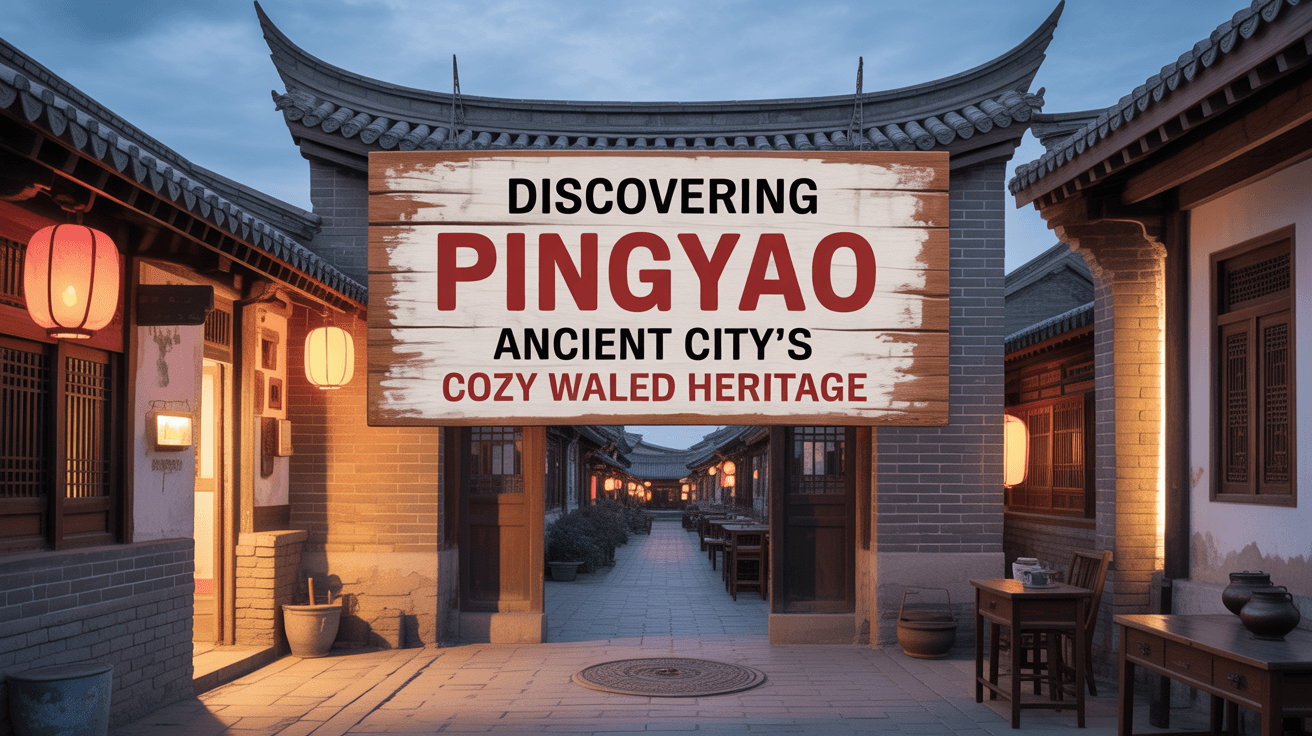
# Discovering Pingyao Ancient City’s Cozy Walled Heritage
Nestled in the heart of Shanxi Province, Pingyao Ancient City is a timeless treasure that beckons travelers with its well-preserved charm and intimate atmosphere. As one of China’s most enchanting China cozy attractions, this UNESCO World Heritage Site since 1997 offers a serene escape into a world of ancient streets, towering walls, and storied courtyards. Founded over 2,700 years ago during the Western Zhou Dynasty, Pingyao flourished as a key trading hub on the ancient Silk Road, becoming a center for prosperous merchant families in the Ming and Qing eras. Today, it stands as a living museum, where the cozy embrace of its historic architecture invites visitors to step back in time while enjoying the simple pleasures of local life. If you’re crafting your China travel guide, Pingyao’s walled heritage is a must-see, blending cultural depth with a relaxed, welcoming vibe that feels like a warm hug from history itself. Here at jusha.travel, we love sharing tips to make your China journey unforgettable—let’s explore this hidden gem together.

## A Glimpse into History: The Walled Legacy of Pingyao
Pingyao’s story is one of resilience and ingenuity, rooted in its strategic location along ancient trade routes. The city’s defenses were first constructed during the early 14th century under the Ming Dynasty, transforming it into a fortress that protected merchants dealing in everything from salt and iron to rare herbs. By the Qing Dynasty, Pingyao had become a financial powerhouse, home to the famous Rishengchang bank—the world’s first paper money exchange—which funded much of its grand architecture. This economic boom led to the construction of over 3,000 courtyards, many still standing today, showcasing the refined lifestyle of wealthy families like the Shen clan, who rose from humble beginnings to amass fortunes through prudent banking.
As a UNESCO site, Pingyao’s walled heritage reflects China’s architectural prowess and cultural evolution. The city’s layout, with its grid of narrow lanes and imposing ramparts, was designed for both defense and daily commerce, creating a self-contained world that feels intimately connected to the past. Walking these streets, you’ll sense the echoes of horse-drawn caravans and bustling markets, a reminder of how Pingyao bridged the Silk Road’s eastern and western worlds. For travelers passionate about history, this Pingyao walled city isn’t just a destination—it’s a portal to understanding China’s mercantile heart. Fun fact: The city’s banking legacy inspired the development of the world’s first draft system, a precursor to modern checks.
## The Majestic City Walls: Guardians of Time
No visit to Pingyao Ancient City is complete without marveling at its iconic city walls, a marvel of Ming Dynasty engineering that encircles the old town in a formidable 12-kilometer loop. Built between 1370 and 1390, these earthen ramparts rise up to 12 meters high and are pierced by six gates, each with its own watchtower and defensive features. From the South Gate, where you can climb for panoramic views of the surrounding plains, to the North Gate overlooking the ancient moat, the walls stand as silent sentinels of the city’s past.
Strolling along the top of the walls offers a unique perspective on Pingyao’s cozy layout below—courtyards nestled like puzzle pieces, narrow alleys winding like veins through the town. These fortifications not only protected against invaders but also symbolized the community’s unity and determination. As you trace the battlements, dotted with 72 watchtowers, you’ll appreciate the intricate brickwork and arrow slits that speak to a bygone era. For those seeking a gentle adventure, the walls are perfect for a leisurely walk or bike ride, especially at sunrise when the golden light bathes the stone in warm hues.
If you’re planning your itinerary, consider renting bikes from a local shop near the South Gate—it’s an eco-friendly way to circle the walls in about an hour. For more on exploring fortified sites, check out our related post on [cycling through China’s best routes](https://jusha.travel/cycling-through-china-best-routes-for-two-wheeled-adventures/), which includes tips for venturing beyond the walls into the countryside.

## Wandering the Narrow Streets: A Tapestry of Courtyards and Culture
Venturing inside the walls, Pingyao reveals a labyrinth of narrow streets lined with traditional courtyards, or *siheyuan*, that form the backbone of its cozy charm. These compounds, often housing multiple generations, feature intricate wooden carvings, latticed windows, and tiled roofs that shield residents from the elements while fostering a sense of community. As you meander through the bustling yet serene lanes, you’ll encounter shopfronts selling local specialties like beef noodles and vinegar-soaked vegetables, evoking the daily life of merchants from centuries ago.
One of the highlights is the Zhengjia Ancestral Hall, a stunning example of Qing Dynasty architecture with its soaring drum tower and ornate halls dedicated to ancestor worship. Nearby, the County Government Office offers a glimpse into imperial administration, with well-preserved buildings that once served as the city’s administrative center. These sites not only showcase Pingyao’s architectural heritage but also its role as a cultural crossroads, where Confucian values of family and harmony are still evident in the layout of the courtyards.
For a deeper cultural immersion, visit during the autumn months when the air is crisp, and the streets come alive with the sounds of traditional shadow puppet performances or local folk music. It’s in these moments that Pingyao feels truly alive, a cozy walled city where history and humanity intertwide.

## Immersing in Local Life: Markets, Temples, and Festivals
Pingyao’s charm extends beyond its walls into the vibrant pulse of its markets and temples, where local life unfolds in colorful detail. The central market square buzzes with vendors hawking handmade crafts, from intricate lacquerware to embroidered shoes, reflecting the city’s artisanal traditions. Stroll through the Mingqing Street area, where ancient shops now house teahouses serving fragrant oolong tea, offering a perfect spot to relax and people-watch.
Temples like the City God Temple provide a spiritual counterpoint, with incense-filled halls and courtyard gardens that invite quiet reflection. These sacred spaces, adorned with colorful murals depicting local legends, highlight Pingyao’s blend of Confucianism, Buddhism, and Taoism. During festivals such as the Pingyao International Photography Festival in September, the streets transform with exhibitions, music, and lantern-lit parades, drawing artists and photographers from around the world.
Local life is unhurried here—residents chat on stoops, children play in courtyards, and elders share tales of the city’s banking heyday. Engaging with the community adds depth to your visit; try joining a cooking class to learn how to make Pingyao’s famous beef jerky or vinegar dishes. For those exploring China’s diverse heritage, this immersion in Pingyao Ancient City feels like discovering a living tapestry of tradition.

## Where to Stay and Savor: Comfort and Cuisine in Pingyao
To fully embrace the cozy atmosphere of the Pingyao walled city, opt for accommodations within restored courtyards, many of which were once merchant homes. Places like the Yunjincheng Hotel offer rooms with antique furnishings, private courtyards, and views of the walls, starting at around 500-800 RMB per night. For a budget-friendly stay, homestays in the old town provide an authentic experience, often including home-cooked meals featuring local specialties like hand-pulled noodles with beef or sweet hawthorn cakes.
Dining in Pingyao is a delight for the senses. Head to family-run eateries near the South Gate for hearty bowls of mutton soup or pingyao beef, simmered slowly with spices for tender perfection. Vegetarian options abound, with vegetable-stuffed dumplings and sesame flatbread adding variety. Don’t miss the night markets, where street vendors grill skewers and serve cooling yogurt drinks under the stars. For a cultural twist, join a tea tasting at a traditional teahouse, where locals share stories over jasmine-infused brews.
These experiences highlight why Pingyao remains a beloved China cozy attraction. To plan your meals wisely, consult our guide on [the cost of traveling to China: a family budget guide](https://jusha.travel/cost-of-traveling-to-china-a-family-budget-guide/), which includes tips for savoring local flavors without overspending.

## Practical Pingyao Travel Tips for a Seamless Visit
Timing your visit is crucial for the best experience in Pingyao Ancient City. Spring (April-May) brings blooming peonies and mild weather, while autumn (September-October) offers golden foliage and fewer crowds. Avoid summer for its intense heat and winter for biting cold. Entry to the walled city costs around 125 RMB, including access to key sites like the City Tower and Zhengjia Ancestral Hall—valid for two days, so plan accordingly.
Getting there is straightforward: High-speed trains from Taiyuan (about 1.5 hours) or Beijing (4 hours) arrive at Pingyao Station, followed by a 15-minute shuttle bus to the South Gate. For a scenic approach, take a taxi from Jiexiu City. Once inside, the town is pedestrian-friendly, with electric carts available for those preferring not to walk the expansive walls.
Pack comfortable shoes for cobblestone lanes and layers for temperature shifts. Download a translation app like Pleco for navigating menus and signs, as English is limited outside tourist areas. Respect local customs: Dress modestly in temples and avoid loud behavior in courtyards. For souvenirs, browse the markets for lacquerware or shadow puppets—perfect mementos of your time here. Our post on [top 5 souvenirs to buy in China for unique memories](https://jusha.travel/top-5-souvenirs-to-buy-in-china-for-unique-memories/) has more ideas.

## Conclusion: Why Pingyao’s Walled Heritage Beckons
In the quiet embrace of Pingyao Ancient City, where ancient walls guard a world of courtyards and whispers from the past, travelers find a perfect blend of history and heart. This Pingyao walled city isn’t just a site—it’s a cozy haven that invites you to slow down, wander its lanes, and connect with China’s storied past. From the imposing ramparts to the intimate markets and temples, every corner reveals layers of a vibrant heritage that continues to inspire.
Here at jusha.travel, we’re passionate about guiding you through such treasures to create lasting memories. Ready to plan your visit to Pingyao? Share your thoughts or favorite cozy spots in China in the comments below—we’d love to hear! For more inspiration, explore our [China travel guide](https://jusha.travel/china-travel-guide/) or check out related articles like [the cost of traveling to China: a family budget guide](https://jusha.travel/cost-of-traveling-to-china-a-family-budget-guide/). Visit jusha.travel today for tailored tips and stories to fuel your next adventure. Your journey to this walled wonder awaits!
