


Victoria Harbour: The Complete Guide to Hong Kong’s Iconic Waterfront
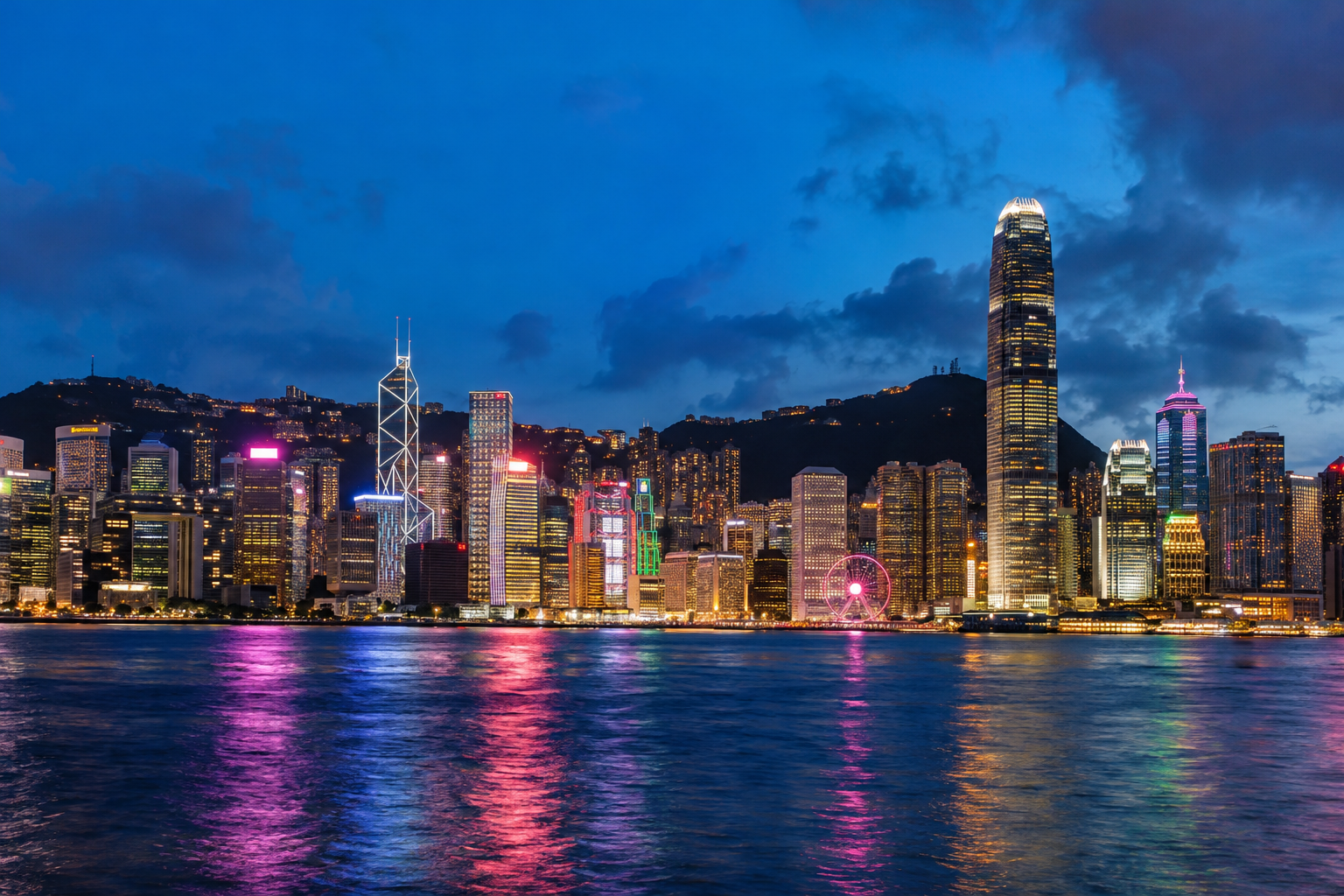
Welcome to Victoria Harbour, the glittering ribbon of water that has defined Hong Kong for more than a century. Separating the dense towers of Hong Kong Island from the neon streets of Kowloon, the harbour is at once a working port, a commuter highway, and — after sunset — one of the most photographed skylines on the planet. If you only have a few days in the city, this is where you should spend at least one full evening.
Whether you are chasing the perfect Hong Kong skyline photo or simply want to understand why this city feels so alive, the harbour delivers. In this post, we will dive into its history, the best vantage points on both shores, the famous Star Ferry, the nightly Symphony of Lights, and the practical details that make a visit effortless. As your go-to Hong Kong travel guide, here at jusha.travel we love sharing tips that turn a good trip into an unforgettable one.
Why Victoria Harbour Is the Heart of Hong Kong
Victoria Harbour is a natural deep-water port, and that single geographical accident is the reason Hong Kong exists as a global city. When British traders arrived in the 1840s, they found a sheltered channel deep enough for the largest ocean-going ships — and everything that followed, from the banking towers of Central to the container terminals of Kwai Chung, grew from that advantage. The harbour was formally named after Queen Victoria, and its Chinese name, 維多利亞港, is still used on every map and ferry sign.
Today the water carries more than 200,000 vessels a year, from the humble Star Ferry to cargo ships bound for the South China Sea. Yet for visitors, the harbour is something simpler: a stage. The buildings on both shores compete to outshine one another, and the result is a skyline that changes character every fifteen minutes as the light shifts from afternoon glare to golden hour to full neon night.
If you want the full story of the city’s most famous sights, our comprehensive guide to Hong Kong’s top attractions ties the harbour into a wider itinerary, and our dedicated piece on Victoria Harbour’s iconic waterfront views goes deeper into the photography side.
Getting There: The Best Vantage Points on Both Sides
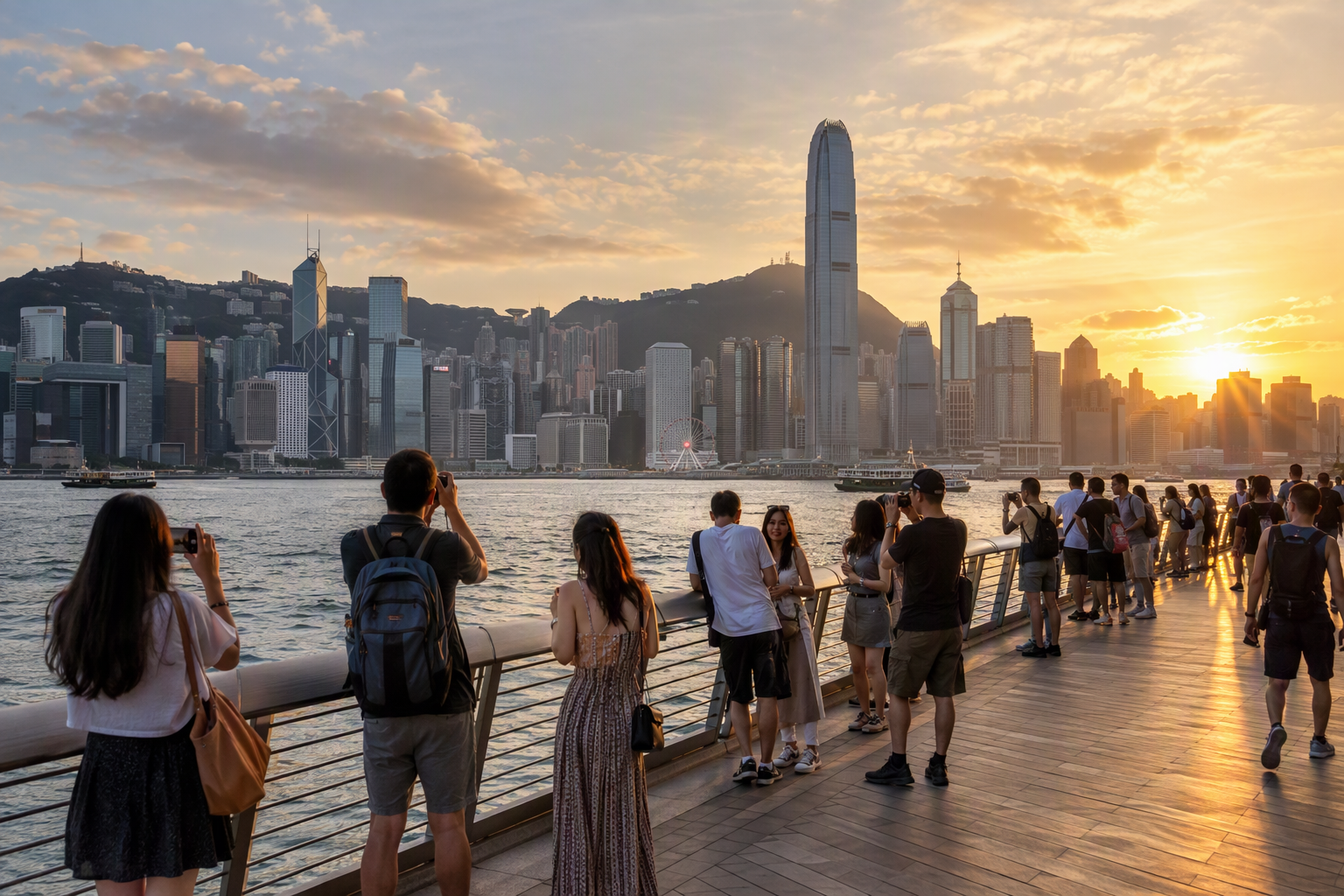
There are two classic ways to see the harbour, one from each shore, and both are free. The Kowloon side gives you the postcard panorama; the island side puts you closer to the water and under the towers themselves. Arrive 30 to 45 minutes before sunset and you will catch the harbour in its most flattering light.
From Kowloon: the Tsim Sha Tsui Promenade
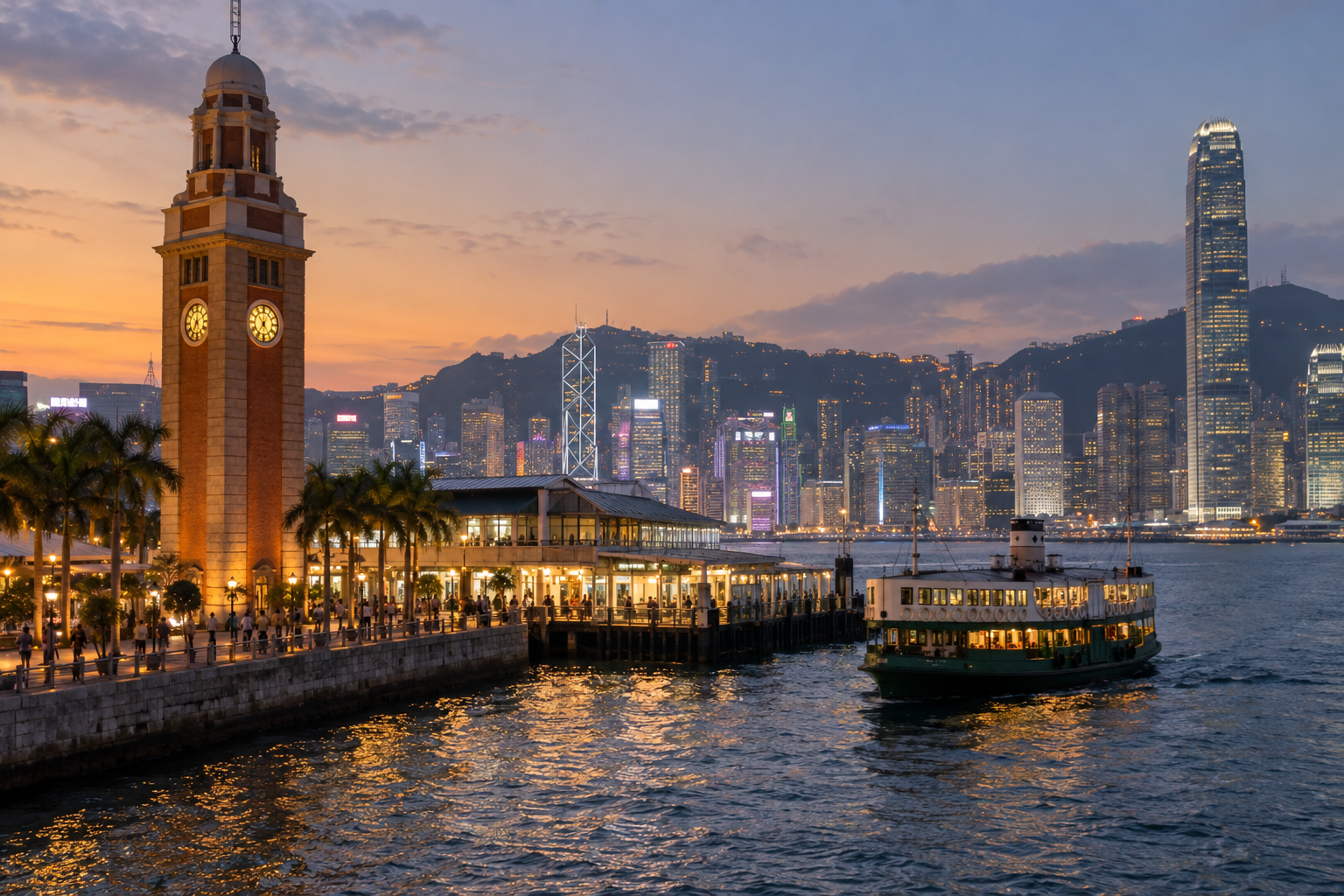
The Tsim Sha Tsui Promenade and the Avenue of Stars form the single best viewpoint in Hong Kong. Take the MTR to Tsim Sha Tsui Station (Exit E) and walk toward the water; the promenade is a 5-minute stroll from the exit. Look for the historic Clock Tower, a red-brick relic from 1915 that once belonged to the old Kowloon railway terminus.
From Hong Kong Island: Central and Admiralty
On the island side, the Central Piers and the elevated walkways around Two IFC put you almost directly beneath the skyscrapers, with the Kowloon shoreline filling the opposite bank. This is also where you catch the Star Ferry, so it makes an ideal finishing point for the evening.
- Best free viewpoints: Tsim Sha Tsui Promenade, Avenue of Stars, Central Piers, Tamar Park
- Getting around: an Octopus card works on the MTR and the ferry — see our guide to navigating the Hong Kong MTR
- Timing: arrive before sunset, stay for the 8 PM light show
Ride the Star Ferry for the Cheapest Sightseeing in Hong Kong
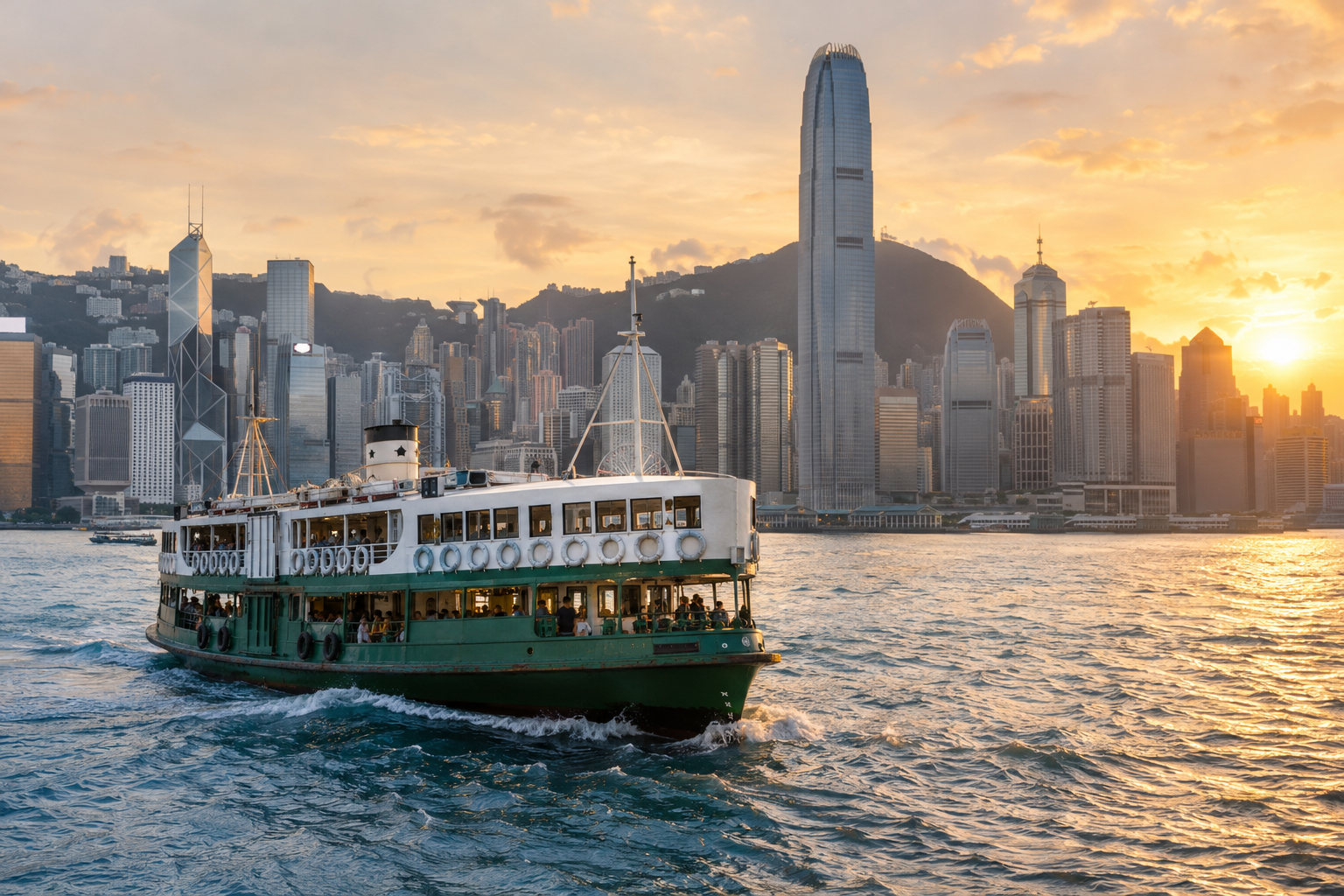
If you do one thing in Hong Kong, make it the Star Ferry. The green-and-white boats have been crossing the harbour since 1888, and a one-way ticket still costs only a few Hong Kong dollars — making it the best-value sightseeing in the city by a wide margin.
The crossing between Tsim Sha Tsui and Central takes about 8 minutes. Resist the air-conditioned cabin and head for the open deck: the breeze, the engine hum, and the slow reveal of the skyline are the whole point. In the evening the same trip becomes a moving front-row seat for the light show.
There are two routes worth knowing. Tsim Sha Tsui to Central is the classic and puts you right beside Two IFC; Tsim Sha Tsui to Wan Chai is slightly longer and quieter. Both run roughly every 6 to 12 minutes from early morning until around 11 PM.
The Symphony of Lights: A Free Nightly Spectacle
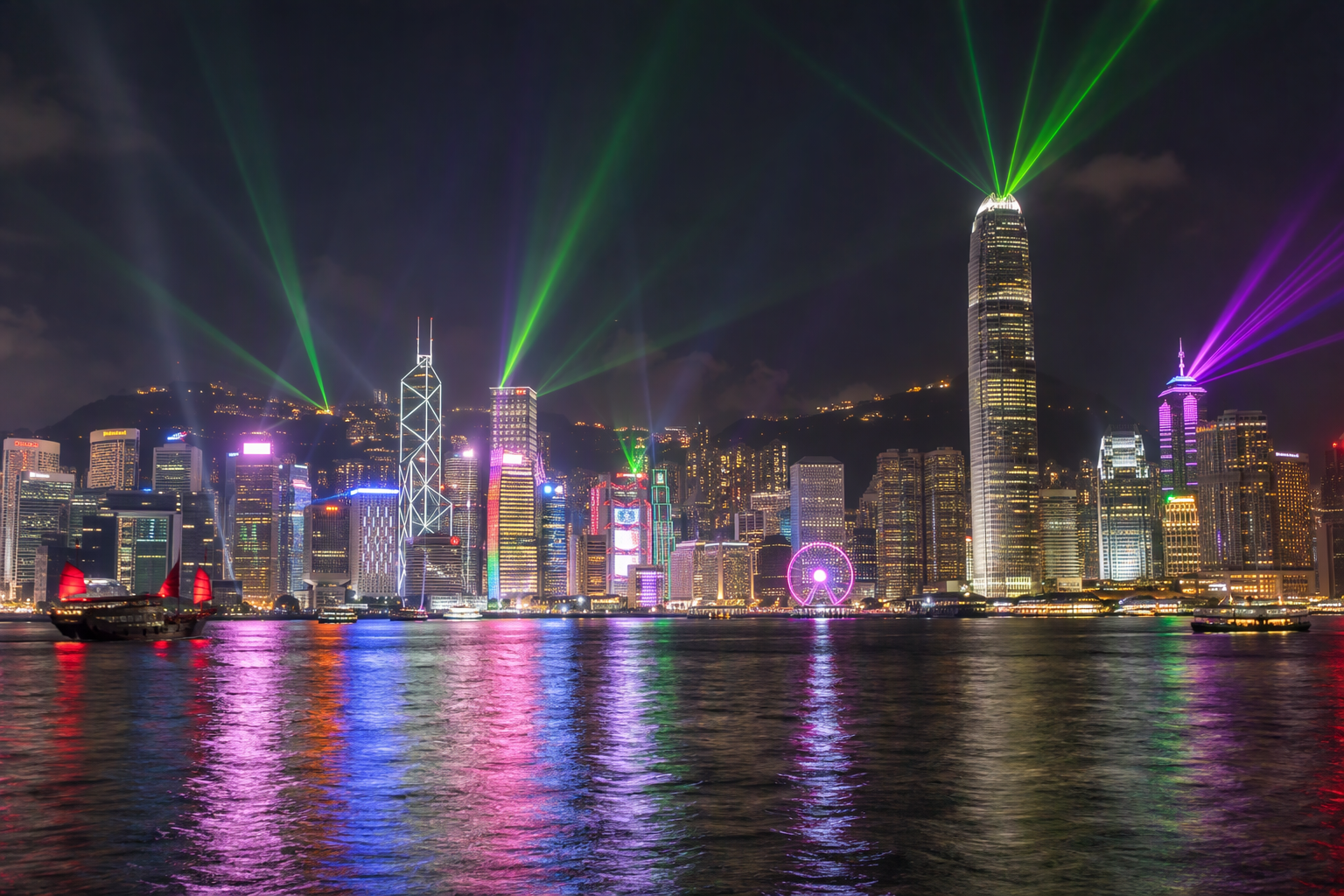
Every evening at 8:00 PM, more than 40 buildings on both sides of the harbour take part in the Symphony of Lights — a coordinated ten-minute show of lasers, LED facades, and searchlights set to music. It has been running since 2004, and it costs nothing to watch. Simply find a spot on the waterfront and look across the water.
The Tsim Sha Tsui Promenade and the Avenue of Stars give the best view, because they face the densest cluster of participating towers on Hong Kong Island. Arrive 15 minutes early on weekends to claim a place at the railing, and check the weather — a hazy or rainy evening noticeably dulls the effect.
What to See Along the Waterfront
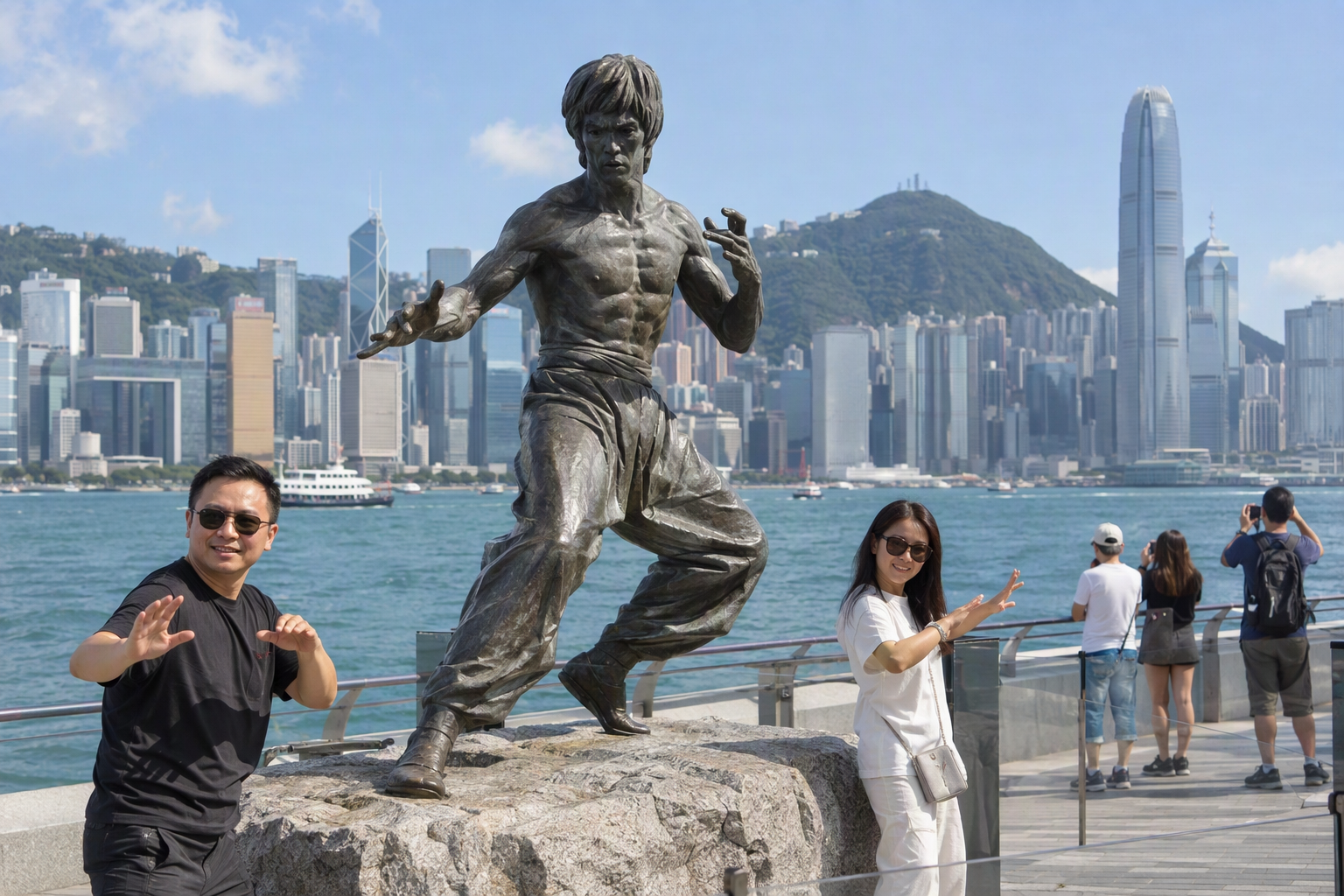
The harbour is not only water and views — the promenades themselves are worth an hour of wandering. The Avenue of Stars honours Hong Kong’s film industry with handprint plaques and statues, including the much-photographed bronze of Bruce Lee. Our piece on experiencing the Avenue of Stars for celebrity tributes covers the full list of names to look for.
Elsewhere along the shore you will find the Hong Kong Cultural Centre, the Museum of Art, and the Star Ferry Pier itself, all within a short walk of one another. It is an easy, flat, and largely shaded stretch — ideal for a slow afternoon before the evening show.
Seeing the Skyline from Victoria Peak
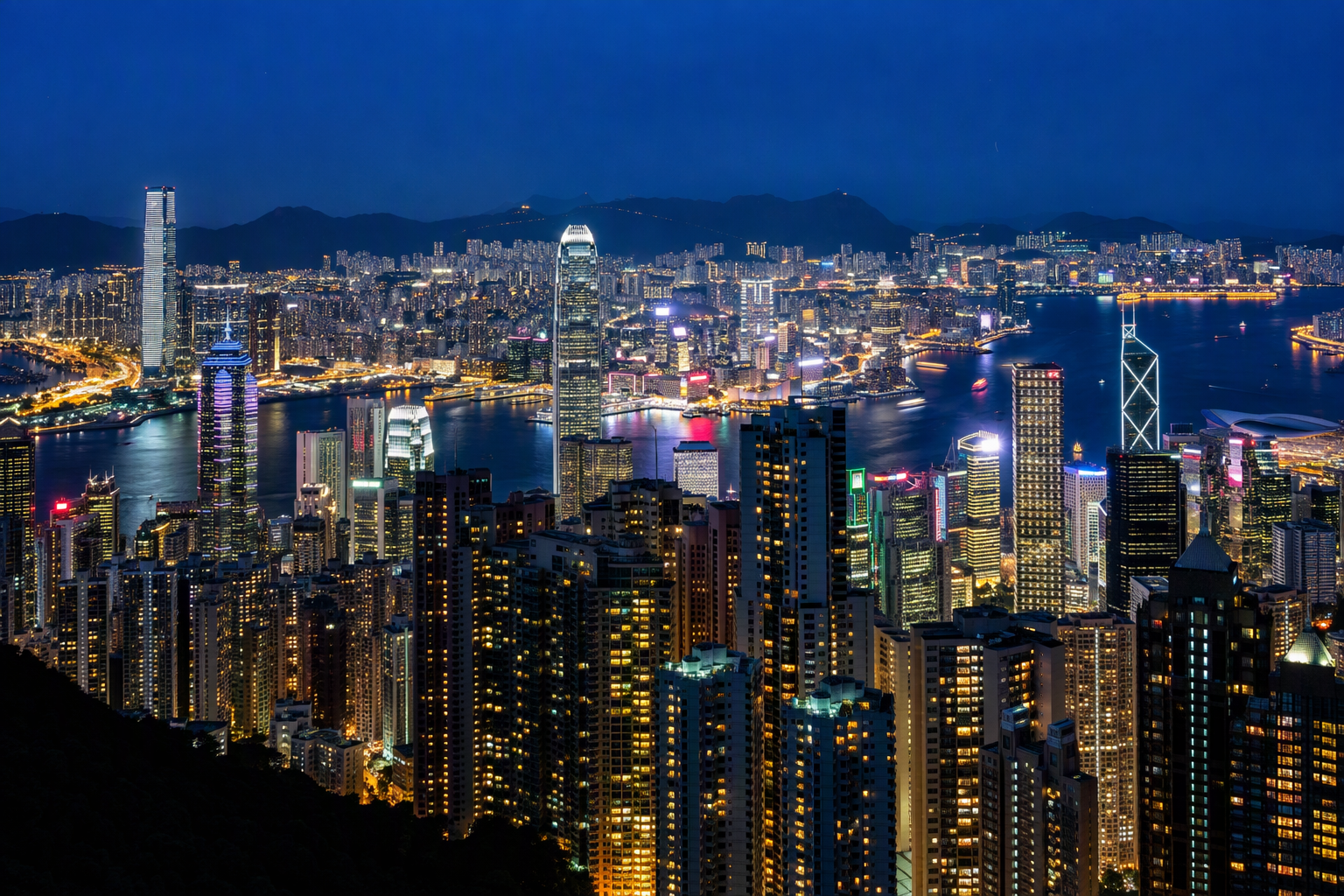
For a completely different angle, ride the Peak Tram up to Victoria Peak and look down on the harbour instead of across it. From 552 metres the whole geography snaps into focus: the harbour, the density, the mountains behind Kowloon. Go after dark and the city reads as a field of light.
The tram runs from Central and takes about 8 minutes. Expect queues at sunset, when everyone has the same idea — our guide to uncovering the Peak Tower for panoramic city vistas explains how to beat the crowds.
Practical Tips for Your Victoria Harbour Visit
The harbour rewards a little planning, but nothing here is complicated. The essentials are timing, cash, and a willingness to walk.
- Best season: October to March. Clear, dry evenings give the sharpest skyline; summer humidity softens everything into haze.
- Money: keep small notes for the ferry and street snacks. Most stalls are cash-only.
- What to bring: a light jacket for the harbour breeze and a small tripod if you want clean night shots.
- Where to stay: hotels on the Kowloon waterfront put you steps from the promenade — see our review of Hong Kong’s top luxury hotels for harbour-view rooms.
- What to eat: pair your evening with Cantonese food. Our Hong Kong food guide and our list of the best dim sum spots will point you in the right direction.
Victoria Harbour pairs naturally with a day of Kowloon sightseeing: browse the markets of Mong Kok in the afternoon, walk down to the waterfront for sunset, ride the Star Ferry across, and finish with dinner on Hong Kong Island. If you have a spare morning, the beaches of the south side make a relaxed contrast — our guide to Stanley Beach for coastal relaxation shows you how to get there.
Here at jusha.travel, we are passionate about helping travellers see the side of China and Hong Kong that guidebooks miss. Plan your evening on the water, and let the skyline do the rest.