


Poyang Lake in November: China’s Winter Bird Airport
On the first cold morning of November, Poyang Lake stops behaving like a lake. The water slides back off the flats, the mud dries into pale roads, and a line of white cranes comes down out of the fog.
Poyang Lake birdwatching works because of that retreat. China’s largest freshwater lake empties and refills by up to 16 m a year, exposing a shallow, fish-rich floodplain that more than 700,000 waterbirds use as a winter airport — including roughly 95% of the world’s Siberian cranes.
At jusha.travel, we love sharing tips that turn a good trip into a memorable one, so this guide sticks to the practical: where to stand at Wucheng, what the hides cost as of October 2026, how to reach the lake from Nanchang, and how to watch without ruining the morning.
What is Poyang Lake, and why do 700,000 birds choose it?
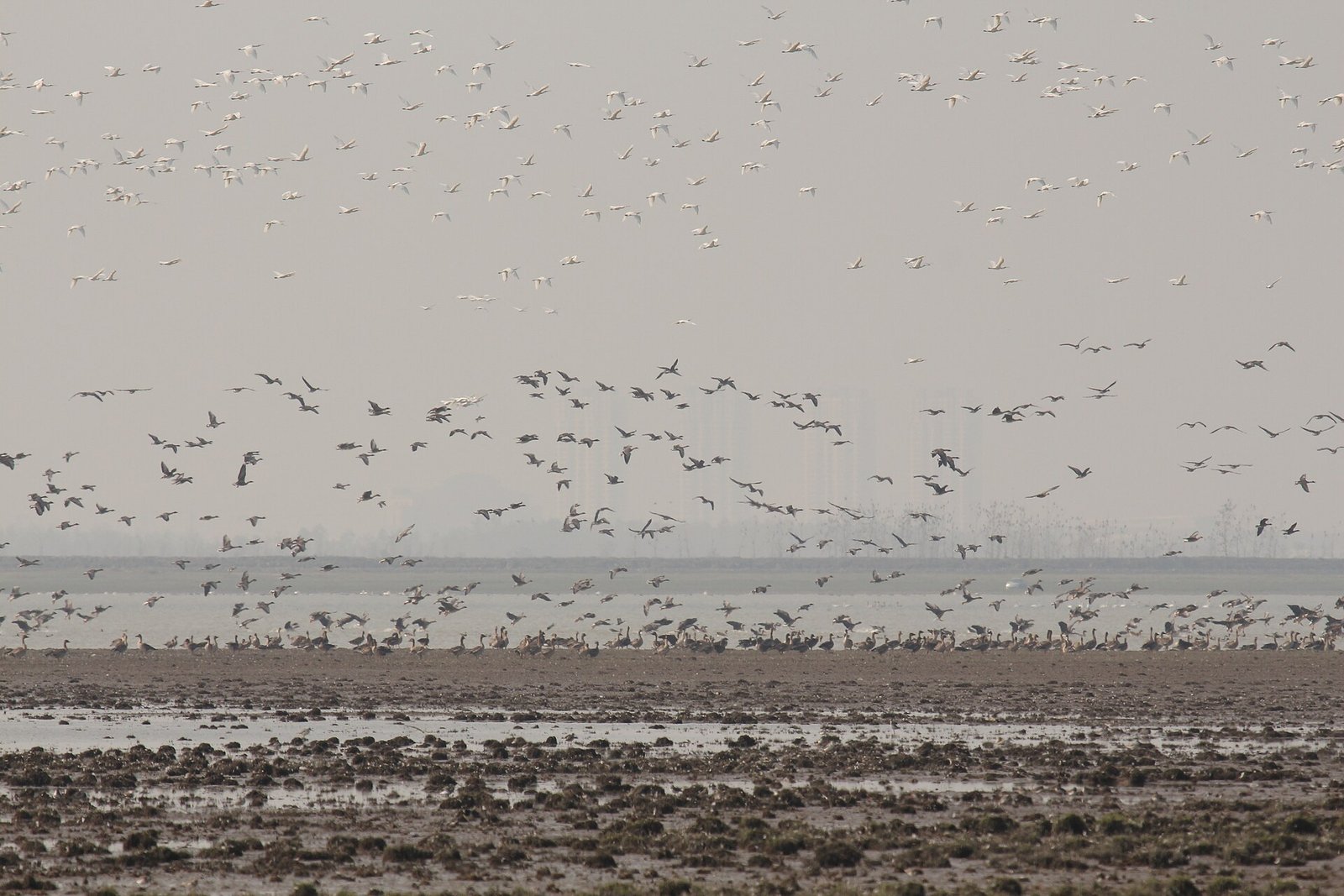
Poyang Lake is China’s largest freshwater lake, a shallow seasonal basin in northern Jiangxi that drains into the Yangtze and, each winter, hosts more than 700,000 migratory waterbirds. Its area swings from about 3,150 km² at a normal 14–15 m level to over 4,000 km² in flood and as little as 500 km² at 12 m, according to the Jiangxi Provincial People’s Congress.
That swing is the mechanism. As the lake retreats it leaves mudflats, shallow pools and sedge roots that wading birds cannot reach in summer. The 22,400-hectare Jiangxi Poyang Lake National Nature Reserve — created in 1983, upgraded to national status in 1988 and listed under Ramsar in 1992 — guards the north-western corner and nine sub-lakes, including Dahuachi, where surveyors counted barely 100 Siberian cranes in the early 1980s.
The reserve bird list has since passed 380 species, 20 of them under class-one protection.
Why November beats January for a first visit
November gives you the best ratio of birds to people for Poyang Lake birdwatching, because the cranes arrive weeks before the domestic holiday traffic does. First flocks show from late October, numbers build through December and peak in January — but November has the light, the space and the quiet.
| Month | The lake | Birds | Crowds |
|---|---|---|---|
| October | Still high | Scouts only | Heavy |
| November | Flats exposed | Building daily | Quiet midweek |
| December | Dry, clear | High | Light |
| January | Driest | Peak | Heavy weekends |
| February | Refilling | Still high | Festival crush |
Bring layers. Mornings sit near 5–10°C with wind off the water, and you stand still in shade at the east-facing hides for the first hour.
Where should you actually go: Wucheng, Nanji or Duchang?
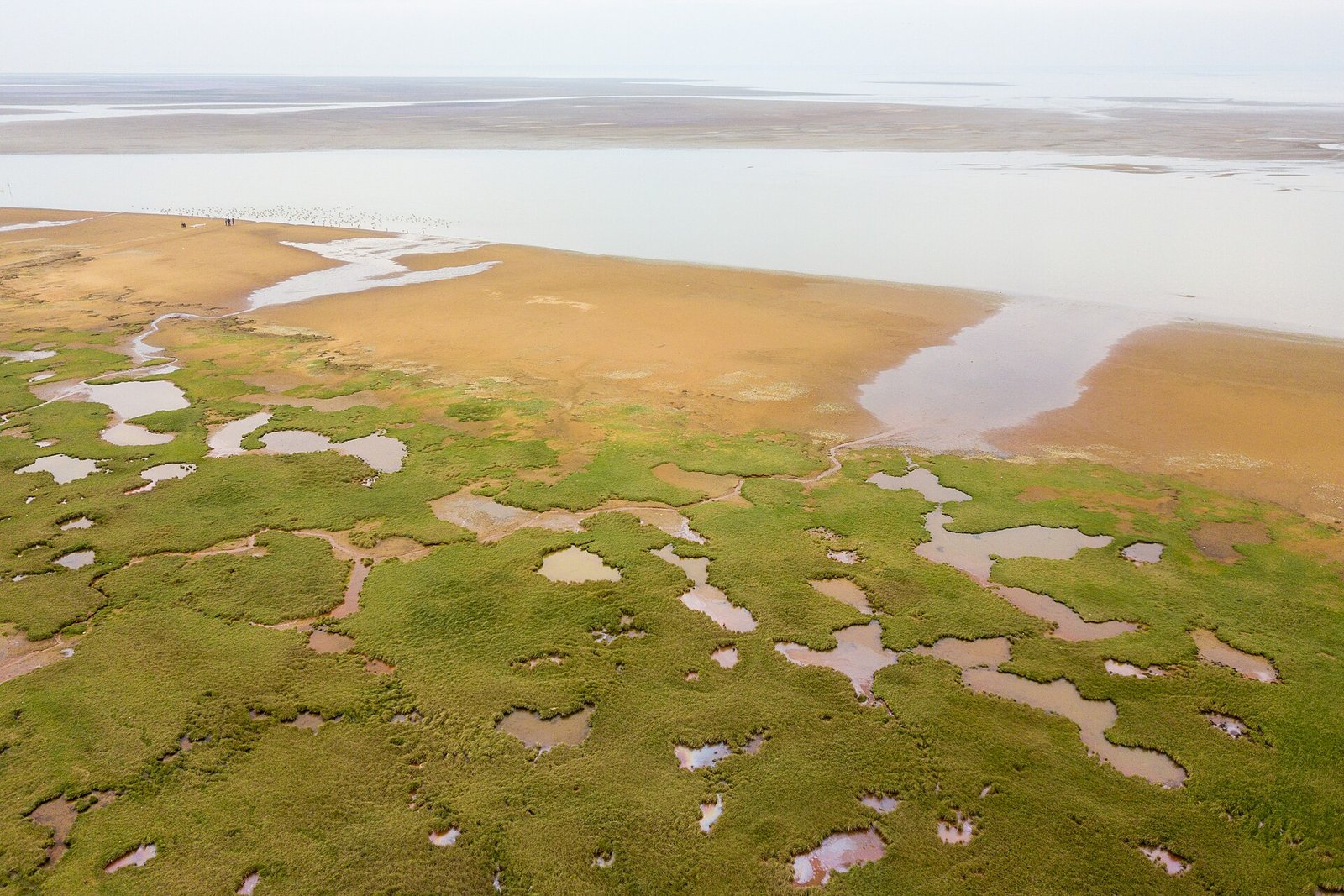
Wucheng is the best base for a first Poyang Lake birdwatching trip, because reserve-core hides, a wetland museum and a walkable old town sit within 15 minutes of each other. The town lies in Yongxiu County, Jiujiang, where the Gan and Xiu rivers meet the lake.
| Base | From Nanchang | Best for | Trade-off |
|---|---|---|---|
| Wucheng | 80 km, 1.5 h | Hides, museum, old town | Shuttle weekends only |
| Nanji | 50 km, 1 h | Closest wetland | Fewer facilities |
| Duchang | 2 h | Open water, porpoise | Needs a car |
Jiangxi keeps 22 designated birdwatching points around the lake, CCTV reported in November 2025; two mornings at Wucheng out-perform a week of driving.
The three hides at Wucheng, and when to stand in them
Dahuachi is the hide to prioritise, because it is the shallowest sub-lake and the first place cranes feed after landing; 20,000–50,000 birds use it in a typical winter. Changhuchi and Zhushihu are smaller, quieter and better for eye-level photographs.
Arrive before sunrise, not at it. Cranes leave the roost in the first 40 minutes of light, and by 09:00 the flocks are spread and head-down.
Finish at Shizishan, the low western hill re-landscaped in 2026, which faces the sunset rather than the dawn. China Daily reported in January 2026 that restored wetlands around the lake are now pulling larger and more varied flocks than a decade ago.
What will you actually see?
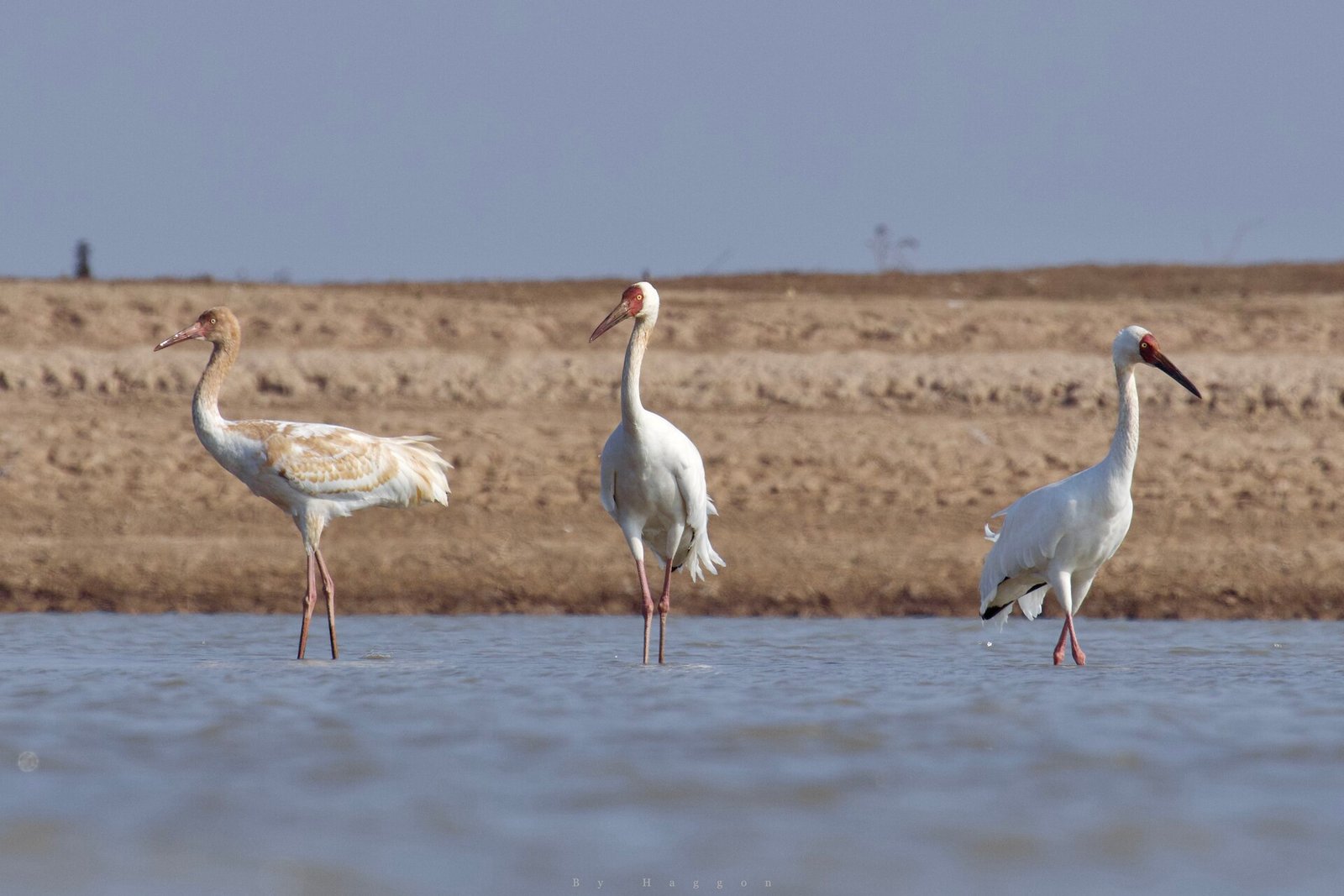
Siberian cranes are the headline of any Poyang Lake birdwatching trip, with over 95% of the global wild population wintering in the reserve, alongside more than 80% of the world’s oriental storks and about 70% of its white-naped cranes, per the Chinese Academy of Forestry’s wetland institute. Add tundra swans, Eurasian spoonbills, swan geese and grey herons, and a slow morning yields 40 species.
The 2025 Poyang Lake Birdwatching Competition, held at Wucheng with 45 teams, logged 236 species in one event, the Jiujiang municipal government reported. A good November day for a casual visitor is 30–50.
Look down as well: about 80 Père David’s deer now live on the flats, descended from 47 released in 2018.
How do you get to Wucheng from Nanchang?
Wucheng is reached from Nanchang by intercity train to Yongxiu plus a short bus or taxi, about 90 minutes door to door.
- Take the Chang-Jiu intercity train from Nanchang West to Yongxiu; the ride takes about 20 minutes.
- Head to Yongxiu bus station for the county bus to Wucheng, roughly 40 minutes and 6 CNY.
- Or share a taxi from the station; drivers charge about 12 CNY per person.
- Driving, take the Chang-Jiu expressway to the Yongxiu exit, then follow Yong-Wu Road.
- Park at the Wucheng visitor centre, about 10 CNY for the day.
- Use the free in-town shuttle at weekends only, roughly 09:00 to 17:00.
Nanchang Changbei is the nearest airport, 40 minutes from Nanchang West. Trains from Shanghai, Hangzhou and Wuhan arrive in under four hours, making Wucheng a two-night add-on rather than an expedition.
What does it cost?
Entry to Wucheng town, the boardwalks and the viewing platforms is free; you pay only for four indoor halls, and the combo is the sensible buy. Prices come from the scenic area’s own ticket page, updated 20 February 2025; hours are 08:00–17:30.
| Ticket | Price | Verdict |
|---|---|---|
| Wetland Bird Museum | 58 CNY | Wet-morning plan B |
| Three-hall combo | 68 CNY | Best value |
| Memory Hall | 30 CNY | Local history only |
| Stargazing hall | 58 CNY | Skip by day |
Over-65s enter free with ID, as do children under 1.2 m, and students pay half. On a clear morning the birds outside beat the ones behind glass.
Will you see the famous “floating highway” in November?
The Yong-Wu Road causeway across Dahuachi only floods when the lake passes 18.67 m, normally June to September. In November it is dry tarmac across grassland, and the spray-soaked photographs you have seen are six months out of date.
How do you watch birds without wrecking the place?
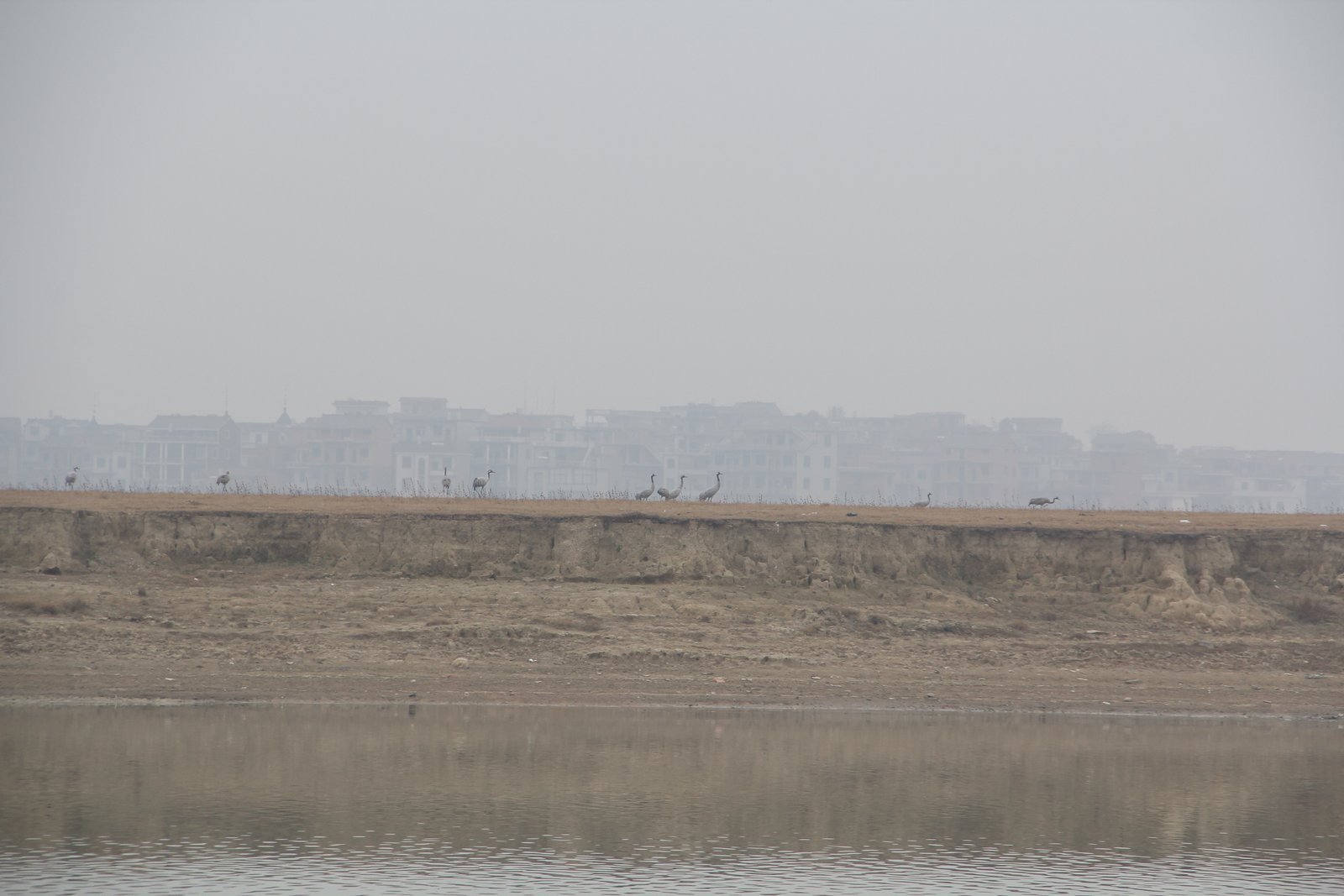
Keep your distance and keep quiet, because these birds have just finished a migration of several thousand kilometres and every flush costs energy they cannot spare. A Duchang ranger told Xinhua in February 2026 that he keeps 1.5 km from the deer and allows himself only long lenses — no drones at all.
- Leave the drone at home. The reserve bans them and they scatter roosting flocks.
- Stay on boardwalks and existing tracks; the mudflats look solid and are not.
- Skip playback apps. Calling a bird in during winter stresses it for no reason.
- Never feed. Bread and rice harm waterfowl and pull birds towards roads.
- Wear muted colours and keep voices low near hides.
- Do not walk into the flowers for a photo; the plants crush and do not recover.
Practical tips for a November visit
Sleep in Wucheng town rather than Yongxiu county seat, so you reach the hides before first light without a 40-minute drive.
- Bring 8×42 binoculars; a scope transforms the day but is awkward to travel with.
- Ask at the visitor centre about scope hire — availability cannot be booked online.
- Set up WeChat Pay before leaving Nanchang; small guesthouses may not take foreign cards.
- Check the lake level first. A very dry autumn concentrates birds but closes some tracks.
- Plan two mornings of Poyang Lake birdwatching. One is weather; two is a trip.
The pink lakebed nobody tells you about
Persicaria — liaozihua locally — carpets the exposed lakebed from late October into mid or late November, turning the flats a soft pink that photographs badly and looks extraordinary in person.
Wucheng has some of the widest stands, and the flowers feed the arriving birds. Walk the edges, use existing paths, and never drive onto the flats.
Final thoughts
Poyang Lake in November is not a tick-box attraction. No cable car, no queue — on a weekday you may share two kilometres of boardwalk with four people and 30,000 birds. Go for the cranes, stay for the scale.
If you have been, tell us which hide worked best. Building a Jiangxi loop? Pair this with our guide to Jingdezhen’s ceramic markets and a slower stay at a Jingdezhen ceramic village. For city time first, read Nanchang’s Tengwang Pavilion; for more wetland wandering, try birdwatching in Sichuan or Wuyuan’s countryside villages.
Frequently asked questions
When is the best time to see birds at Poyang Lake?
November to February is the peak window, with the largest numbers in January and the calmest conditions in November. More than 700,000 waterbirds winter on the lake, and the first cranes usually arrive from late October.
How do I get to Poyang Lake from Nanchang?
Take the Chang-Jiu intercity train from Nanchang West to Yongxiu, about 20 minutes, then a county bus or shared taxi for roughly 40 minutes to Wucheng. The whole journey takes around 90 minutes and no car is needed.
How much does it cost to visit Wucheng Bird Town?
The town, boardwalks and viewing platforms are free; only four indoor halls are ticketed, at 30 to 58 CNY each or 68 CNY for a three-hall combo, per the scenic area ticket page updated 20 February 2025.
Can I see the floating highway in November?
No. The Yong-Wu Road causeway only floods when the lake level passes 18.67 m, which normally happens between June and September. In November it is dry tarmac across grassland, and the exposed lakebed becomes the attraction instead.
How many Siberian cranes winter at Poyang Lake?
More than 95% of the world wild Siberian cranes winter in the Poyang Lake reserve, according to the Chinese Academy of Forestry wetland institute. The global wild population is only about 4,000 birds, so one November morning can hold much of the species.
Are drones allowed at Poyang Lake?
No. Drones are not permitted around the reserve, and rangers work the lake with long lenses instead; one Duchang ranger told Xinhua in February 2026 that he keeps 1.5 km from wildlife. Fly nothing near roosting flocks.