


Wutai Shan: Climbing China’s Five Terraces of Faith
At four in the morning on the North Terrace, the wind arrives before the light does — a hard, dry push off the plateau that sets the prayer flags cracking. Below, the valleys are still black. Then the horizon turns the colour of weak tea, and the other four terraces surface, flat-topped islands in a sea of cloud.
A Wutai Shan pilgrimage has drawn travellers to this corner of Shanxi for close to two thousand years. Mount Wutai is the northernmost of China’s four sacred Buddhist mountains and the earthly home of Manjusri, the Bodhisattva of Wisdom; UNESCO inscribed it in 2009 for its 53 surviving monasteries and an unbroken pilgrimage tradition (UNESCO World Heritage Centre, 2009).
At jusha.travel, we love sharing tips that turn a famous name into a place you can actually walk. Here is how to climb the five terraces, which temples earn your hours, how to reach Taihuai without a tour bus, and what late October really feels like up there.
What is Wutai Shan and why do pilgrims climb it?
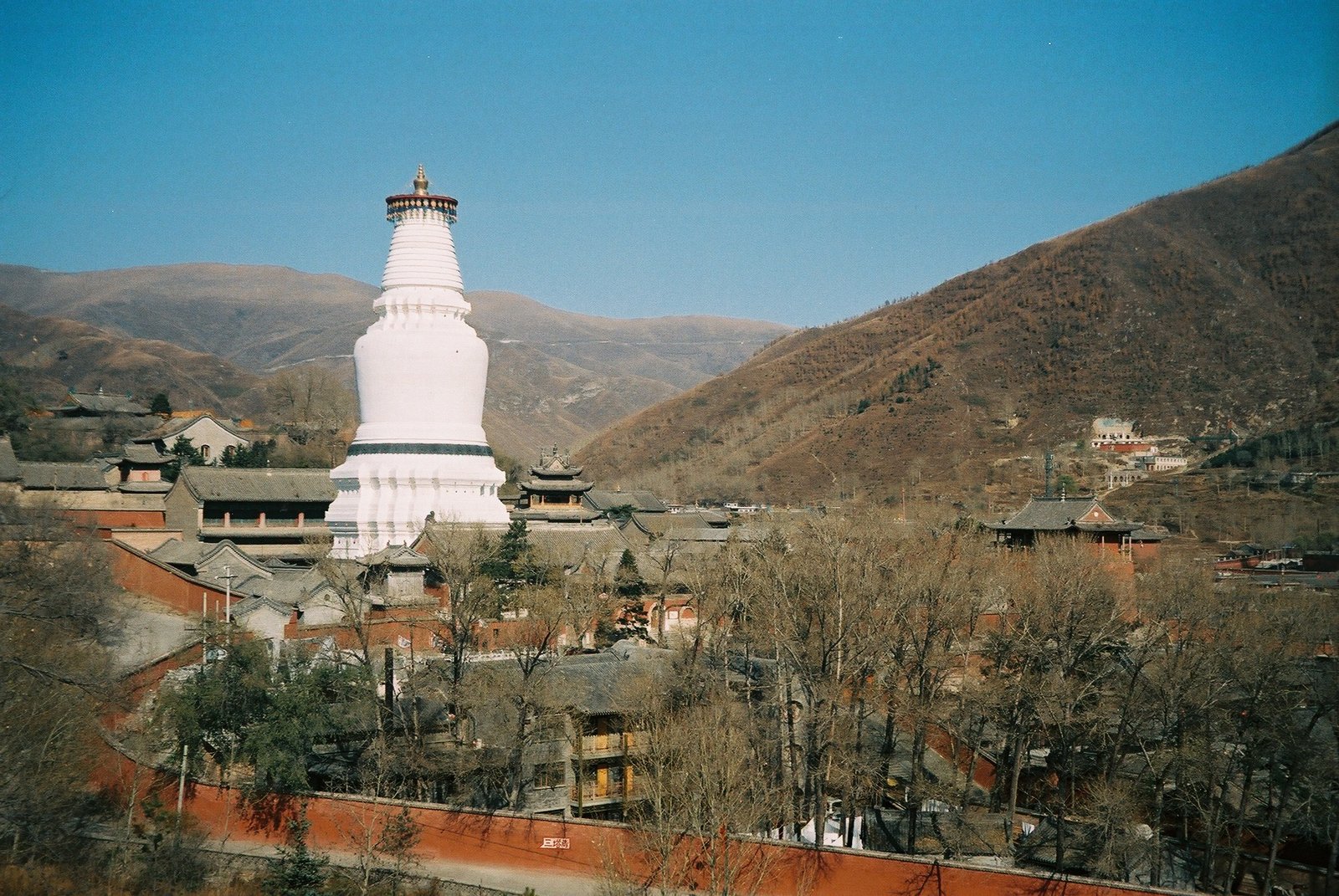
Wutai Shan is a Buddhist mountain complex in Wutai County, Xinzhou prefecture, Shanxi province, built around five flat-topped peaks that ring the monastic village of Taihuai at roughly 1,700 m. Its name means “Five Terrace Mountain”, and the terraces are functional: pilgrims walk a circuit between them as an act of devotion.
The mountain’s weight comes from Manjusri (Wenshu Pusa). According to Encyclopaedia Britannica, Wutai was a Daoist holy mountain in the later Han dynasty before becoming Buddhism’s principal Manjusri centre in the fifth century, and nine emperors made eighteen pilgrimages here, commemorated in steles that still stand in the courtyards.
Tibetan Buddhism arrived under Mongol rule in the late 13th century, and Qing emperors made the mountain a diplomatic stage; yellow-hat monasteries now sit minutes from Han halls.
The five terraces, peak by peak
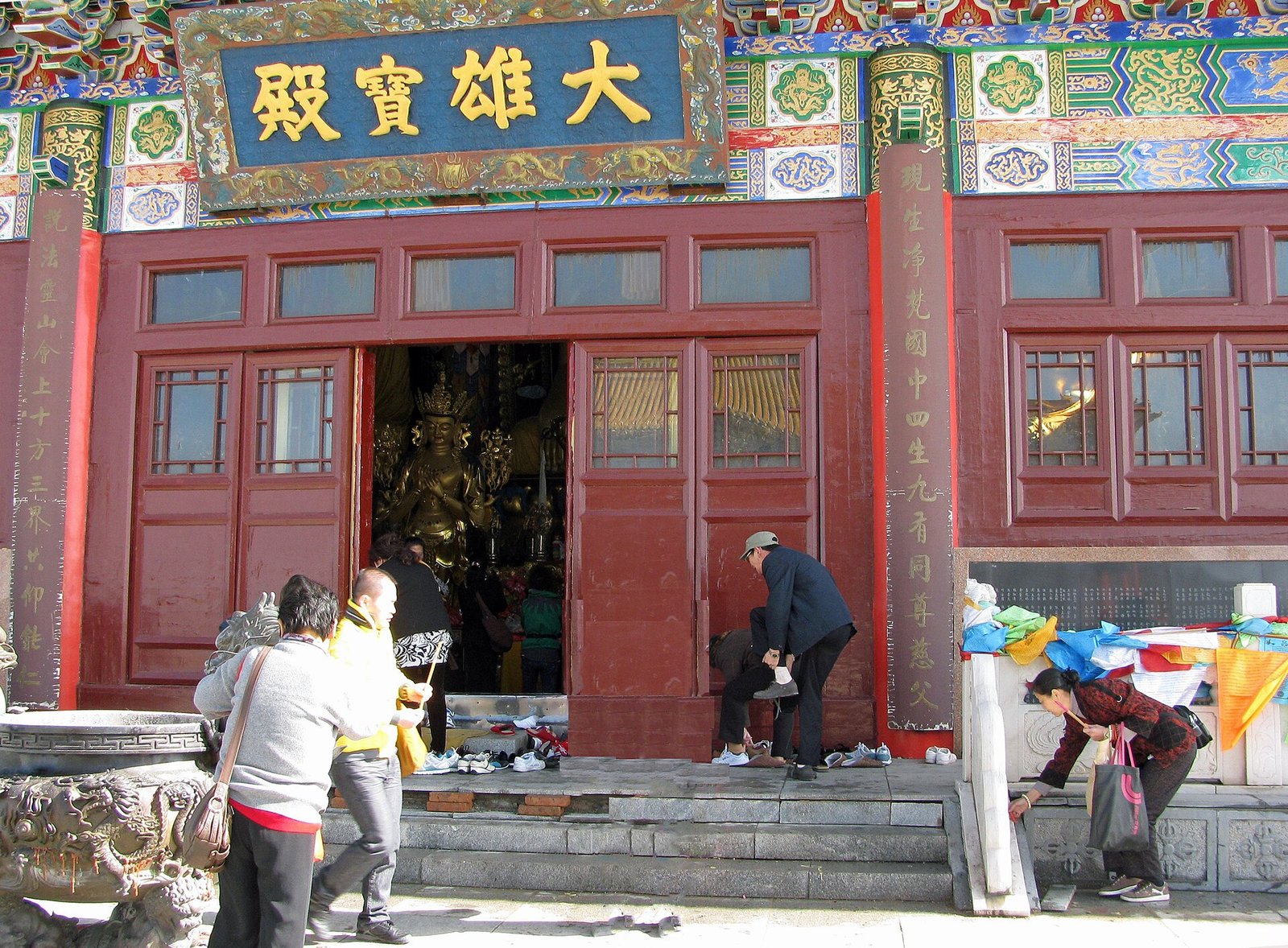
Each terrace has its own name, height and role in the circuit; heights follow Britannica and Shanxi park listings, which differ by a few metres.
| Terrace | Chinese name | Height | Why pilgrims stop |
|---|---|---|---|
| North (Beitai) | 北台 叶斗峰 | c. 3,058 m | Highest point in northern China; snow most of the year |
| Central (Zhongtai) | 中台 翠岩峰 | c. 2,894 m | Moss-covered boulders; views of all four others |
| East (Dongtai) | 东台 望海峰 | c. 2,795 m | Sunrise over the sea of cloud |
| West (Xitai) | 西台 挂月峰 | c. 2,773 m | Quietest terrace; best panorama of the massif |
| South (Nantai) | 南台 锦绣峰 | c. 2,485 m | Wildflower meadows; gentlest climb |
How do you walk the Great Pilgrimage Circuit?
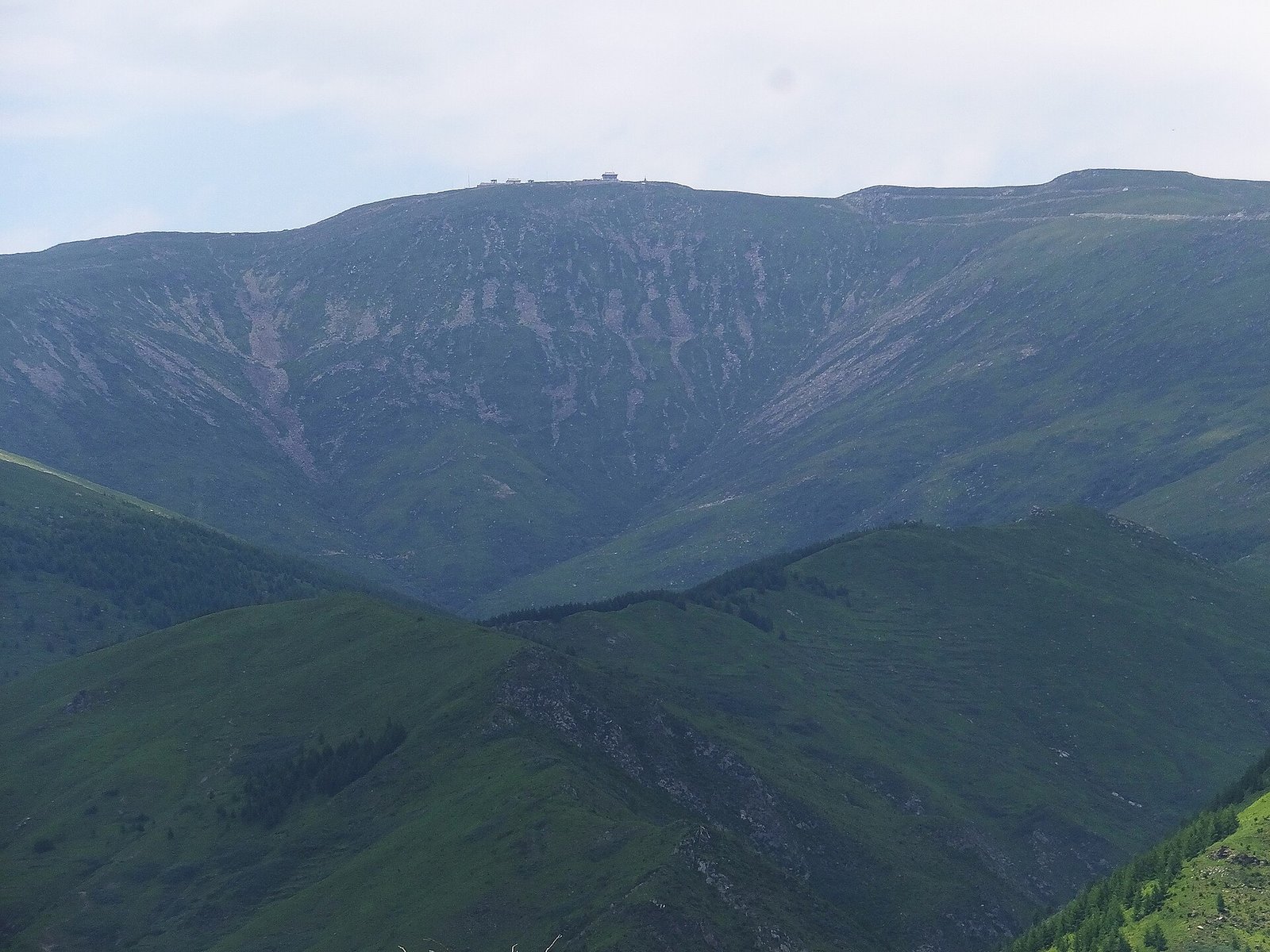
The Great Pilgrimage Circuit (大朝台, dàcháotái) is a two-to-three-day walk linking all five terraces, roughly 50 km in reverse and 70 km forward. There is no official trailhead; most walkers start at Hongmenyan.
- Sleep in Taihuai, then take a shared car to Hongmenyan (around 30 CNY) for a first-light start.
- Day one: East Terrace for sunrise, then across open meadow to the North Terrace — about 15 km.
- Sleep at a temple guesthouse near the Central Terrace: bunks, thin blankets, a 20:30 curfew.
- Day two: Central to West Terrace, then down to Lion’s Nest — around 18 km, with a knee-testing descent.
- Day three: South Terrace and out via Kuantan village, roughly 17 km of easier track.
- Book beds ahead, carry three litres of water, and keep a paper map — signal up there is patchy.
If three days of walking is not your idea of a holiday, every terrace has road access and shared minibuses run from Taihuai.
The valley monasteries you should not skip
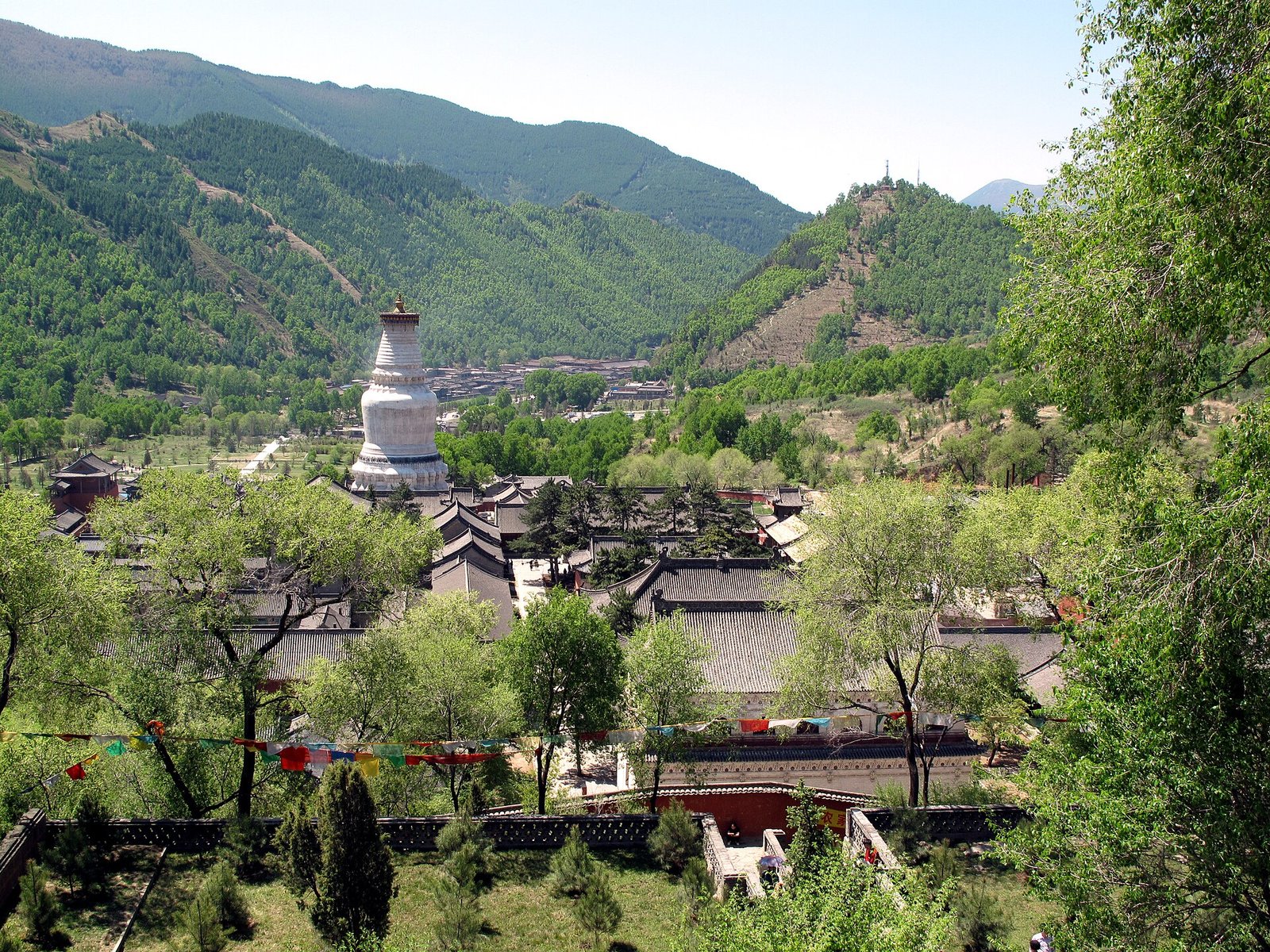
Xiantong Monastery is traditionally the first Buddhist temple here, founded in 68 CE according to temple records, and remains the largest — over 400 rooms climbing the hillside, plus a bronze hall built like a temple within a temple.
Tayuan next door holds the image everyone photographs: a whitewashed Tibetan-style dagoba 56 m tall, bells hanging from base and spire. Walk clockwise and spin the brass prayer wheels along the north wall.
Above the village, Pusa Ding climbs 108 steps to the residence of the Qing court’s lama envoys, and its view back over the white stupa is the best photograph on the mountain. Shuxiang Temple holds a Ming tableau of 500 carved figures, singled out in UNESCO’s statement of Outstanding Universal Value.
Where China’s oldest timber halls survive
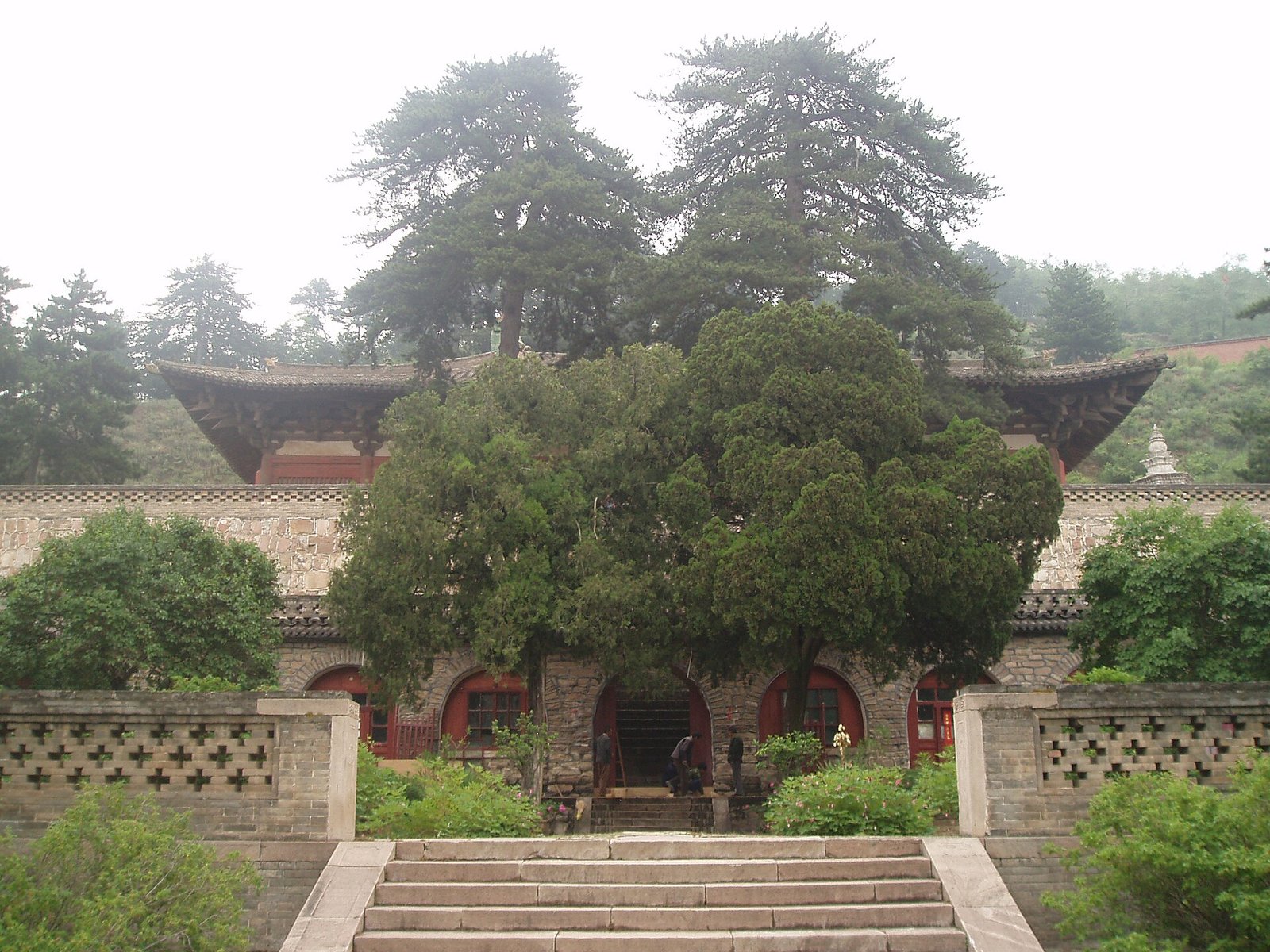
Two Tang-dynasty halls stand on the southern fringe, and they are why architectural historians skip the valley. The East Main Hall of Foguang Temple dates to 857 and is, in UNESCO’s words, the highest-ranking timber building to survive from the Tang dynasty, complete with life-size clay sculptures.
Nanchan Temple’s main hall is older, generally dated to 782 — though Britannica notes a substantial reconstruction in 1974–75. Both lie 30–50 km from Taihuai, charge separate admission, and reward a half-day car hire. Pair them with the Yungang Grottoes near Datong — the same imperial confidence, carved rather than built.
What is the small pilgrimage at Dailuoding?
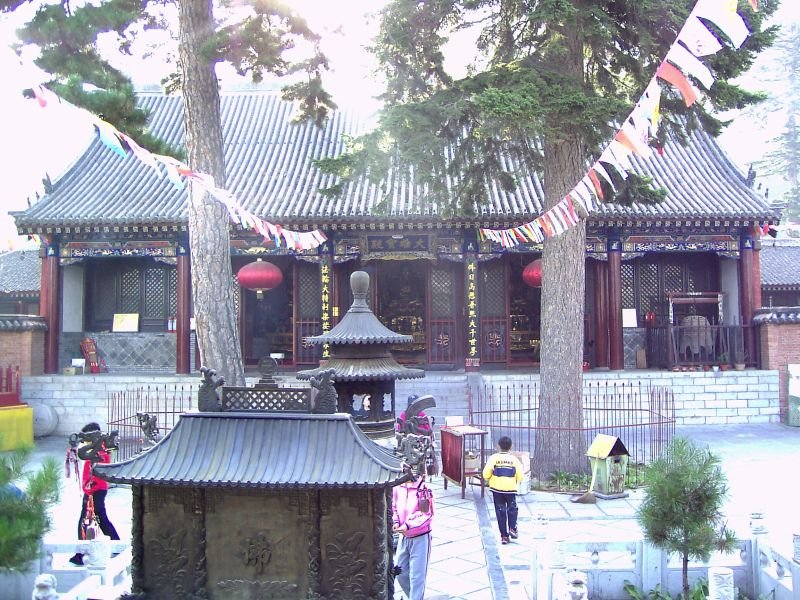
Dailuoding is a hilltop temple reached by 1,080 stone steps, and completing the climb counts as the “small pilgrimage” (小朝台), a recognised substitute for walking all five terraces. Pilgrims without three spare days bow at five shrines. A cable car covers most of the height if your knees object.
How do you get to Wutai Shan?
Wutai Shan is reached through Taihuai town from three directions. Private cars stop at the boundary, so you continue by shuttle.
| Route | How it works | Journey time |
|---|---|---|
| Xinzhou West (high-speed rail) | Bullet train from Taiyuan, then bus to Taihuai | 30–40 min + 2.5–3.5 hrs |
| Wutaishan station (Shahe) | Conventional train, then minibus | About 1 hr (48 km) |
| Xinzhou Wutaishan Airport (WUT) | Domestic flights, then taxi | About 2 hrs (110 km) |
| Datong | Road transfer, useful with Yungang | About 3 hrs (200 km) |
The Taiyuan route is the one we would choose: the high-speed leg is short and buses from Xinzhou North run often.
What is the best time to visit Wutai Shan?
June to September gives comfortable walking; late September to late October gives clear air and thin crowds. The mountain runs a month behind the plains, and the UNESCO listing notes peaks snow-covered for much of the year.
| Season | Conditions | Trade-off |
|---|---|---|
| Jun–Aug | 15–25°C, meadows in flower | Busiest and priciest |
| Sep–late Oct | Autumn colour, walkable terraces | Snow can close the high route |
| Nov–Mar | −20°C nights, snow on all five | Quiet; smaller temples shut |
| Apr–May | Wildflowers, unstable weather | Wind and late snow |
Late October is the hinge: the year’s clearest light and no queue at the stupa, but conditions can swing from T-shirt to blizzard in two hours.
Tickets, opening hours and what things cost
Wutai Shan charged 135 CNY for a scenic-area ticket in 2026, applied year-round rather than seasonally. Shanxi News reported on 30 March 2026 that Pingyao and Wutai had both moved to flat annual pricing, at 125 and 135 CNY. Some listings still show an older 118 CNY winter rate, so confirm at the gate.
Monasteries unlock between 07:00 and 08:00 and close near 18:00 (China Tourism News). Temple entry inside the core area is included; Foguang and Nanchan charge separately, and shuttle charges are disputed between sources.
Where do you sleep, and what do you eat?
Beds for a Wutai Shan pilgrimage are plentiful in Taihuai, from monastery guesthouses at 80–150 CNY a bunk to hotels at 200–600 CNY, all within walking distance of Xiantong. Book ahead for July, August and early October.
Food is plain and mostly vegetarian: taimo mushrooms stewed with tofu, hand-shaved noodles, steamed buns. Temple dining halls serve cheap communal meals at set times — arrive on time and take only what you finish.
Practical tips for a Wutai Shan pilgrimage
- Layer, don’t pack one coat. Valley and summit can differ by 15°C.
- Carry cash. Small temples and shared cars are often cash-only.
- Reserve online. Real-name booking saves an hour at the gate.
- Dress for the temple. Covered shoulders and knees, no photographing active prayer.
- Walk clockwise. Stupas and prayer-wheel routes all run clockwise.
- Watch the altitude. Headaches are common on day one — sleep low, climb slowly.
- Learn four words. Amituofo to greet a monk, xiexie for thank you.
Building a wider Shanxi loop? Our guides to Pingyao’s ancient city walls and Pingyao’s traditional courtyards cover the south, while Datong’s Hanging Temple and China’s mountain monasteries fill in the north.
Final thoughts: why the terraces still matter
Wutai Shan is not an easy mountain. The wind bites, the beds are thin, and the best light comes at an inconvenient hour. But ritual life here is still the main event, not a performance.
Go in late October if you can. Take the long way up, and leave room for the hour after sunrise, when cloud fills the valleys and the five terraces look like what they were named for.
Have you walked the Great Pilgrimage Circuit, or is Wutai Shan still on your list? Tell us in the comments — we read every one.
Frequently asked questions
How long does the Wutai Shan pilgrimage take?
The Great Pilgrimage Circuit takes two to three days on foot, covering about 50 km in reverse or 70 km forward. Visitors with less time can shuttle to individual peaks in a day.
How much does it cost to enter Wutai Shan?
A scenic-area ticket cost 135 CNY in 2026 and applies year-round rather than seasonally, according to a Shanxi News report of 30 March 2026. Temple entry inside the core area is included; Foguang and Nanchan charge separately.
Do foreign visitors need a permit for Mount Wutai?
No separate permit is required beyond the standard ticket and a valid passport, which you should carry at all times.
Can you visit Wutai Shan in winter?
Yes, but the high terraces are usually snow-covered from October until May, with nights near −20°C. Xiantong, Tayuan and Pusading stay open, while some smaller monasteries close.
Where should I stay when visiting Wutai Shan?
Taihuai town is the practical base, with monastery guesthouses from about 80–150 CNY per bunk and hotels from 200–600 CNY. Staying in the valley also lets you catch the 5 a.m. chanting.
How do you get to Wutai Shan from Beijing?
The usual route is a high-speed train to Xinzhou West, then a bus or car to Taihuai, taking six to eight hours in total. Seasonal coaches from Beijing run in warmer months.