


Huashan’s Plank Road: China’s Most Terrifying Footpath
At 6:40 on an October morning the cliff above the South Peak is still in shadow, and the only sound is the click of a carabiner. Huashan’s plank road — Chang Kong Zhandao, the “Walkway in the Empty Sky” — is a ribbon of boards bolted to a vertical granite wall at 2,160 metres. You clip into a steel cable, shuffle sideways above a drop of several hundred metres, and walk back the way you came.
Mount Hua stands in Huayin, Weinan, Shaanxi, 120 km east of Xi’an and 28–40 minutes from Xi’an North by high-speed rail. At jusha.travel, we love sharing tips that save you a wasted day at altitude, so this guide covers the rules most visitors learn too late: entry is time-slotted, and the plank road cannot be walked alone.
What is the Huashan plank road, and where exactly is it?
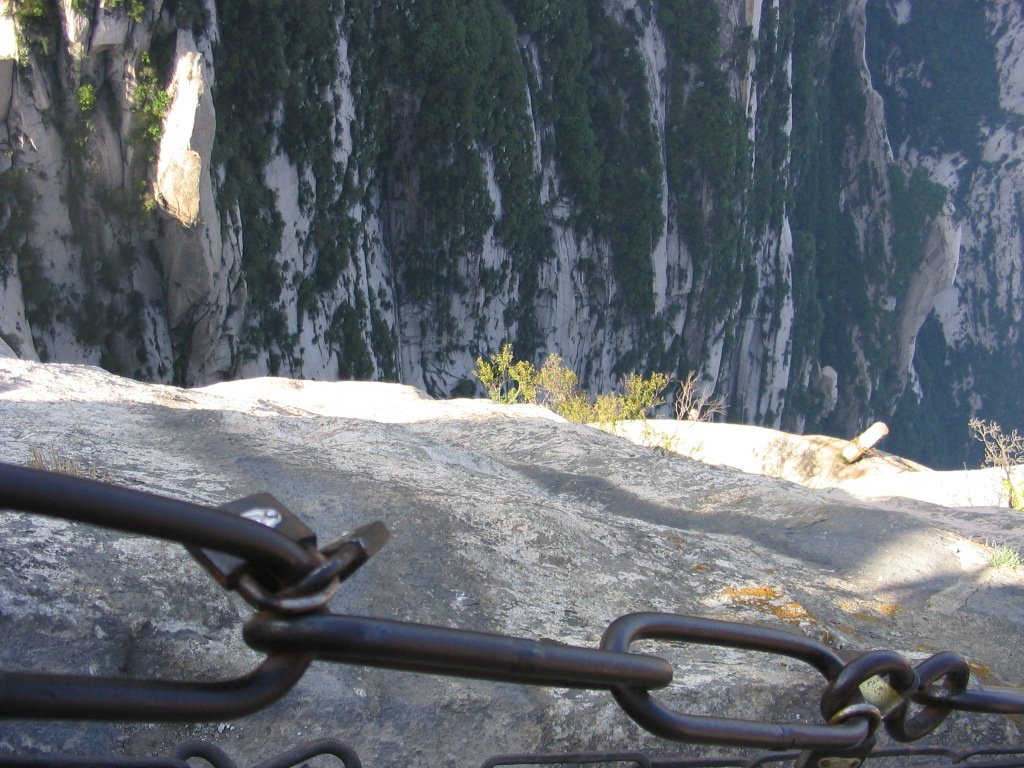
The Huashan plank road is a three-part walkway of timber battens pegged into the south face of the South Peak, at about 2,160 m and roughly 100 m below the summit ridge. It is not part of any ascent route, so everyone who enters must come back out along the same 50-odd metres of board.
The sections escalate. An upper ledge is chiselled into rock from the South Heaven Gate to Chaoyuan Cave; the middle stage drops down a crack on iron rungs, which guides call “the chicken descending the frame”; the lower stage is the part in every photograph — three battens across iron pegs on a wall leaning out over the valley, one steel cable for your hands and nothing on the outer edge.
He Zhizhen, a Yuan-dynasty Taoist, built it to reach a meditation cave, which makes the walkway roughly 700 years old. Boards are replaced on a rota; the pegs, and the drop, are original.
Why Mount Hua earns its reputation
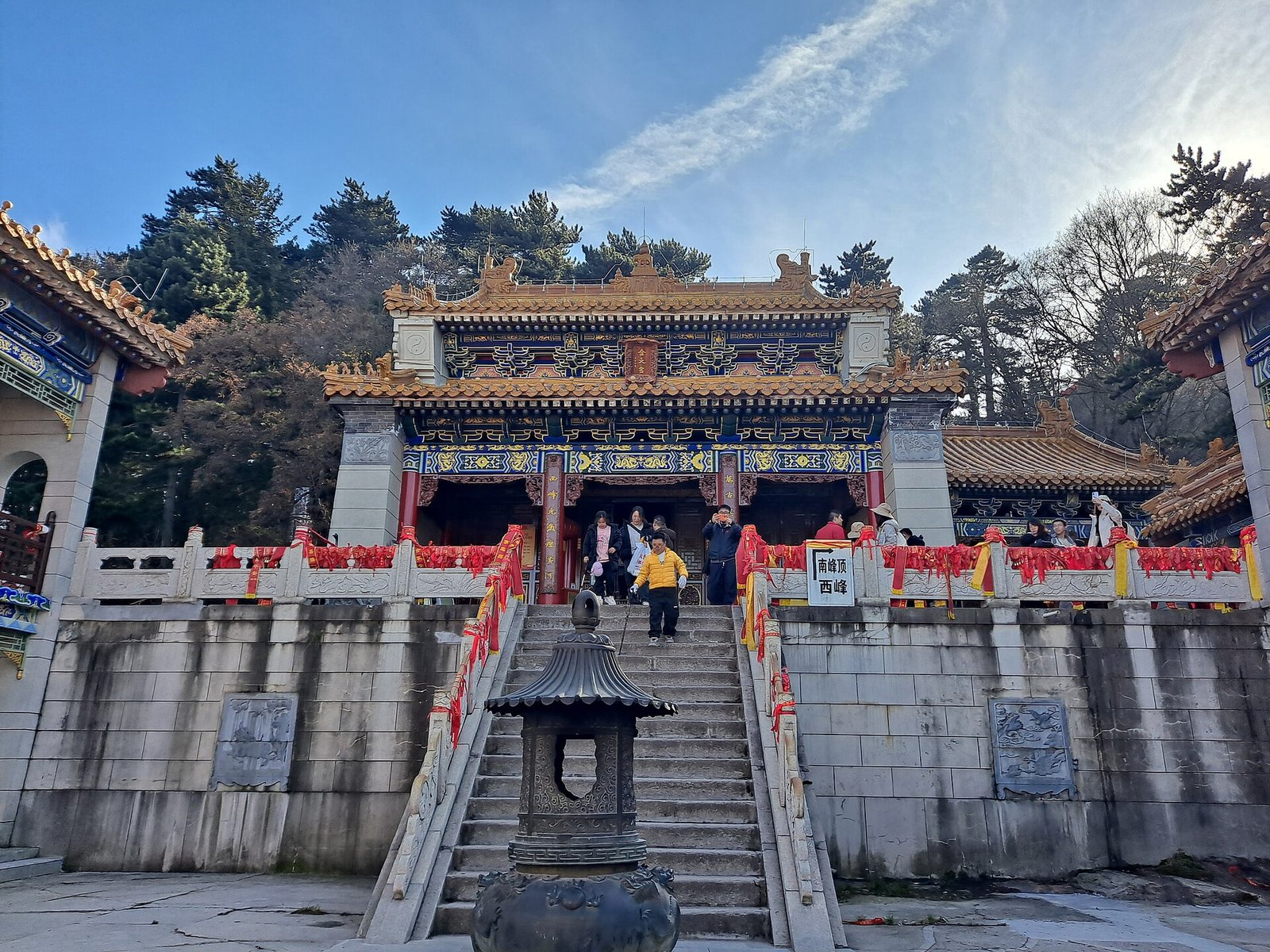
Mount Hua is a granite massif at the eastern end of the Qinling range that rises to 2,154.9 m at the South Peak and falls away in near-vertical walls on every side. It is the Western Mountain of the Five Great Mountains and a national 5A scenic area, and its verticality is geological: one block of granite pushed up along faults and sliced clean by erosion.
| Peak | Chinese name | Elevation | What people come for |
|---|---|---|---|
| South | Luoyan Feng | 2,154.9 m | The summit, and the plank road |
| East | Zhaoyang Feng | c. 2,096 m | Sunrise and the Chess Pavilion |
| West | Lianhua Feng | c. 2,082 m | Best profile, cableway terminus |
| Centre | Yunu Feng | c. 2,042 m | Quiet temples |
| North | Yuntai Feng | 1,614.9 m | Historic trailhead, cheapest exit |
Treat the middle three as approximate: Wikipedia gives 2,038 m for the West Peak in one section and 2,082 m in another. The South Peak figure appears on signage and can be relied on.
How hard is the plank road, honestly?
The plank road is technically trivial and psychologically brutal — no climbing, no scrambling, no route-finding, only 50 m of sideways shuffling with a drop of several hundred metres under your heels. Fitness matters far less than your reaction to exposure.
China Daily reported on 9 October 2026 that the plank road and Hawk Flipping Over both require a partner; solo travellers are turned away at the gate. That rule is enforced, and it catches out independent travellers who assume they can simply queue.
- Book a walkway slot separately, online, at least a day ahead.
- Report to the South Heaven Gate; staff check booking and partner.
- Collect a harness — 30 CNY, same fee as Hawk Flipping Over.
- Clip in with both lanyards on the cable, one hand on the rope.
- Move sideways without lifting both feet at once, facing the rock.
- Turn at the He Lao chamber; overtaking is impossible.
Budget 40–60 minutes including queueing. Wind, rain or lightning closes the walkway, and closures are announced at the gate rather than online.
The walk between the peaks: Canglong Ridge
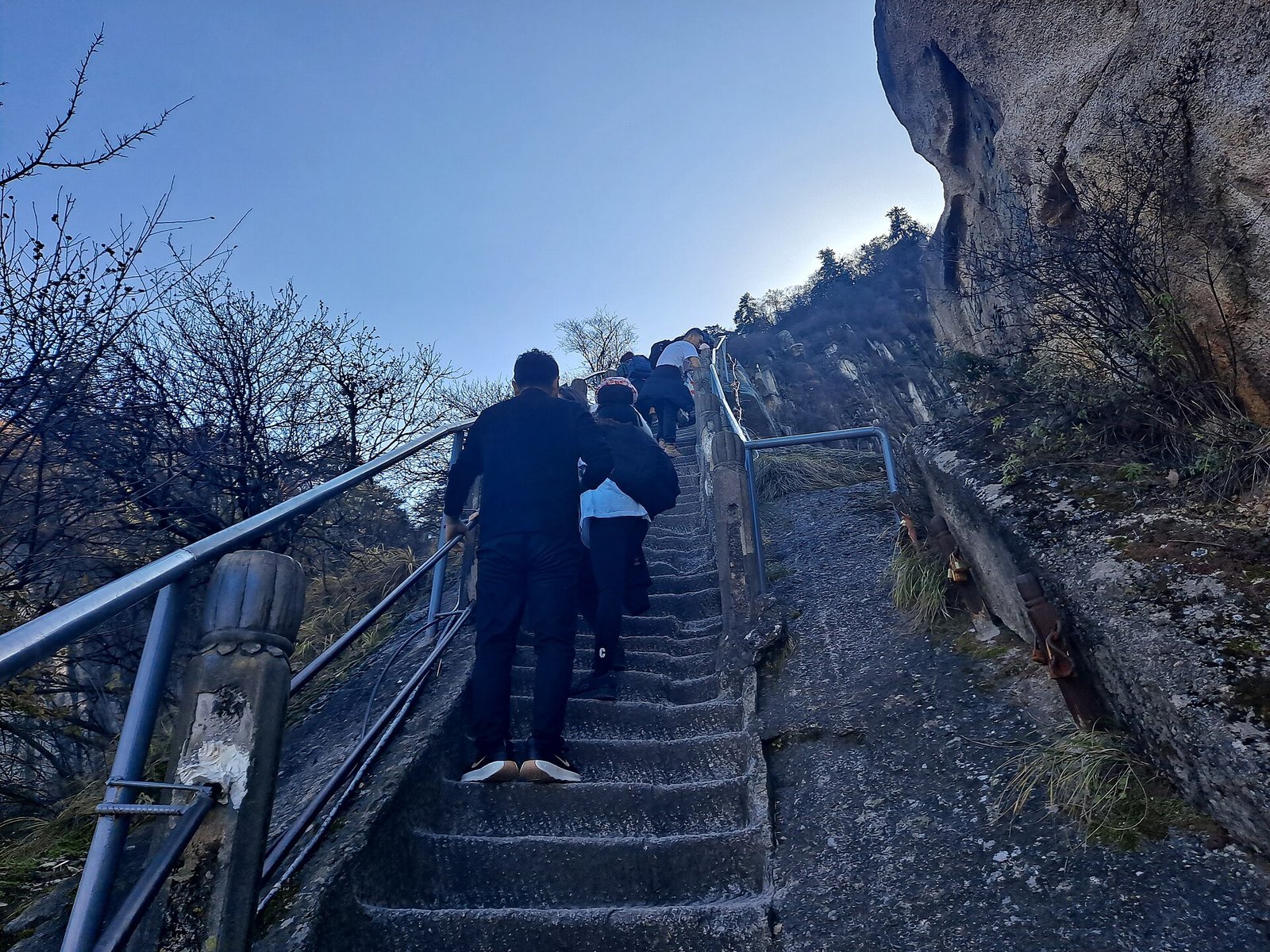
Canglong Ridge is the knife-edge spine linking the North Peak to the four southern summits, climbing more than 300 m along a crest that was the only route through until a bypass was cut in the 1980s.
Steps are cut into the crest itself, chains run along both sides, and there is a sheer drop on either hand. A carved stone marks where the Tang essayist Han Yu supposedly threw his books into the void in despair.
Beyond it the plateau opens out: East Peak has the Chess Pavilion, West Peak the axe-cut fissure of the Sansheng legend. Neither needs a harness.
West Peak or North Peak: choosing your cableway
The West Peak cableway is the longer, higher and gentler approach, running 4,211 m with 894 m of rise in about 20 minutes; the North Peak cableway covers 1,525 m in 6–8 minutes and leaves you 540 m lower. Most first-time visitors should ride up the west side and down the north.
| West Peak | North Peak | |
|---|---|---|
| Length, rise | 4,211 m, 894 m | 1,525 m, 755 m |
| Journey | 18–25 min | 6–8 min |
| Mar–Nov | 140 CNY | 80 CNY |
| Dec–Feb | 120 CNY | 45 CNY |
| Shuttle | 40 CNY, 30 min | 20 CNY, 20 min |
| Best for | Five peaks, no climb | Cheapest exit |
West up and north down takes six to seven hours and covers all five summits. Families should take the west cableway both ways — four to five hours, four peaks — and the north side is for hikers who want the Canglong Ridge climb.
How do you get to Huashan from Xi’an?
High-speed trains run from Xi’an North to Huashan North in 28–40 minutes for about 54.5 CNY, and a free shuttle reaches the visitor centre in 15–20 minutes.
The shuttle runs roughly 08:00–18:00 and you board by scanning your ticket. Outside those hours the public bus costs 3 CNY and takes half an hour; a taxi is 15–25 CNY.
One trap: the visitor centre and the Yuquan Yuan trailhead are different places — the first loads cableway shuttles, the second starts the 24-hour footpath. Tell your driver which.
What a Huashan day costs in 2026
A standard Huashan day in 2026 costs about 440 CNY per adult on the west-up, north-down loop: 160 CNY entry, 140 CNY West Peak cableway, 80 CNY North Peak cableway and 60 CNY of shuttles. Add 30 CNY for the plank road.
| Item | Mar–Nov | Dec–Feb |
|---|---|---|
| Entry | 160 CNY | 100 CNY |
| West cableway | 140 CNY | 120 CNY |
| North cableway | 80 CNY | 45 CNY |
| Shuttles, west / north | 40 / 20 | 40 / 20 |
| Plank road harness | 30 CNY | 30 CNY |
Two discounts have muddied the picture. A 50% entry rate of 80 CNY ran from 15 July to 10 October 2026 and has ended; the notice of 13 February 2026 set a winter policy of 20% off entry and 10% off cableways from 1 January to 28 February. Entry is valid 48 hours and real-name, and China Daily advises booking ten days ahead.
When to go, and what late October feels like
Late October is the most reliable window on Huashan: daytime temperatures at the base sit around 10–15°C, summer queues have thinned, and the summit is cold but usually clear.
Snow is possible from early November, and the West Peak cableway closes first when it arrives. For sunrise, sleep at East Peak and be on the terrace by 06:00; otherwise stay in Huayin town, 5 km from the visitor centre, and take the first shuttle.
Practical tips: what to wear and carry
Gloves are the item people forget and then regret. The chains are cold and often wet, and every metre of the plank road is a hand-over-hand exercise.
- Thin grippy gloves — cotton work gloves work.
- Trail shoes with real tread; the steps are polished.
- Three layers and a windproof shell.
- 1.5–2 litres of water, plus salty snacks.
- A small pack only; bulk is dangerous here.
- Cash in small notes for the harness.
- Power bank, and a headlamp for night hikes.
Who should skip the plank road
Anyone who freezes on a ladder, anyone with a knee or shoulder injury, anyone carrying a child, and anyone visiting in high wind should skip the plank road without guilt. It is a detour, not a rite of passage.
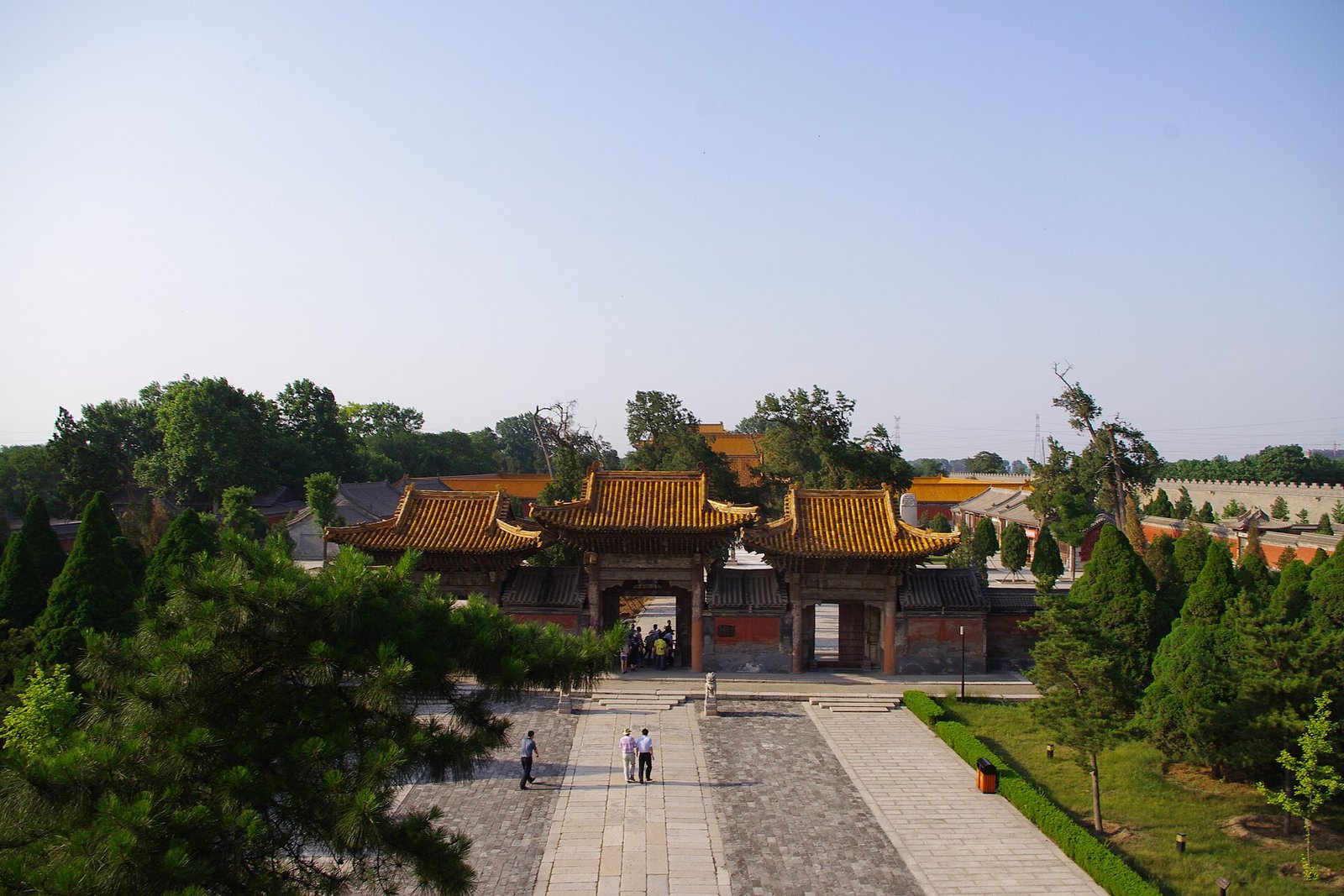
The Chess Pavilion gives you the exposure photograph without a harness, and Canglong Ridge gives the chain-and-drop sensation with a handrail. At the foot of the mountain, Xiyue Temple — Han-dynasty in origin, red walls and yellow tiles on a north–south axis — earned the nickname “the Little Forbidden City of Shaanxi”.
Before you go
Book train, entry and cableway in that order, then add the plank road slot once your partner is confirmed. Build in a weather day: wind closes the walkway more often than snow.
Basing yourself in Xi’an? Our guide to the Terracotta Warriors’ silent army covers the other great day trip, and Xi’an’s Muslim Quarter is where you eat afterwards. For context on how Huashan compares with China’s other sacred peaks, read a budget hiker’s take on the sacred mountains, or browse the country’s best hiking trails and its mountain monasteries.
Tell us in the comments whether you would clip in — and if you already have, which section made your legs go.
Frequently asked questions
How much does the Huashan plank road cost?
The harness costs 30 CNY on top of the 160 CNY peak-season entry, so a crossing adds 30 CNY to a day that already runs about 440 CNY with cableways and shuttles.
Can you walk the plank road alone?
No. China Daily reported on 9 October 2026 that the plank road and Hawk Flipping Over both require a partner, and solo travellers are refused at the gate.
How long does it take to reach the plank road?
Allow 60–90 minutes on foot from the West Peak cableway to the South Heaven Gate, plus 40–60 minutes for the walkway itself including queueing.
Is Huashan worth visiting if you skip the plank road?
Yes. The west-up, north-down loop covers all five summits in six to seven hours without any exposure, and many visitors never touch the boards.
Do you need to book Huashan tickets in advance?
Yes. Entry is real-name against your passport and time-slotted, with bookings open ten days ahead, and the visitor centre stops admitting cable passengers at 16:00.
What is the easiest way to get to Huashan from Xi’an?
Take a high-speed train from Xi’an North to Huashan North, 28–40 minutes for about 54.5 CNY, then the free shuttle to the visitor centre in 15–20 minutes.