


Tengchong’s Ginkgo Village: A Golden November in Yunnan
At 7:40 on a November morning, the lane behind Jiangdong’s old stage is ankle-deep in yellow and nobody has swept it. A woman in a padded jacket crosses the stone threshold with a bowl of steaming rice noodles, kicking up a small storm of leaves. That is the whole show: three people, one lane, ten thousand trees turning at once.
Tengchong ginkgo village is the tourist name for Jiangdong Community, ten old hamlets in Gudong Town, Tengchong, Baoshan, Yunnan, where ginkgo trees grow between the kitchens rather than in a park. Peak gold lasts roughly 20 November to 5 December. The village sits 40 km north of Tengchong town — 45 minutes from Tengchong Hump Airport, two hours from Baoshan railway station.
At jusha.travel, we love sharing tips that turn a nice afternoon into a trip you plan a year ahead for. Here is the leaf window, both routes in, ticket prices, and where to sleep.
What is Tengchong ginkgo village, exactly?
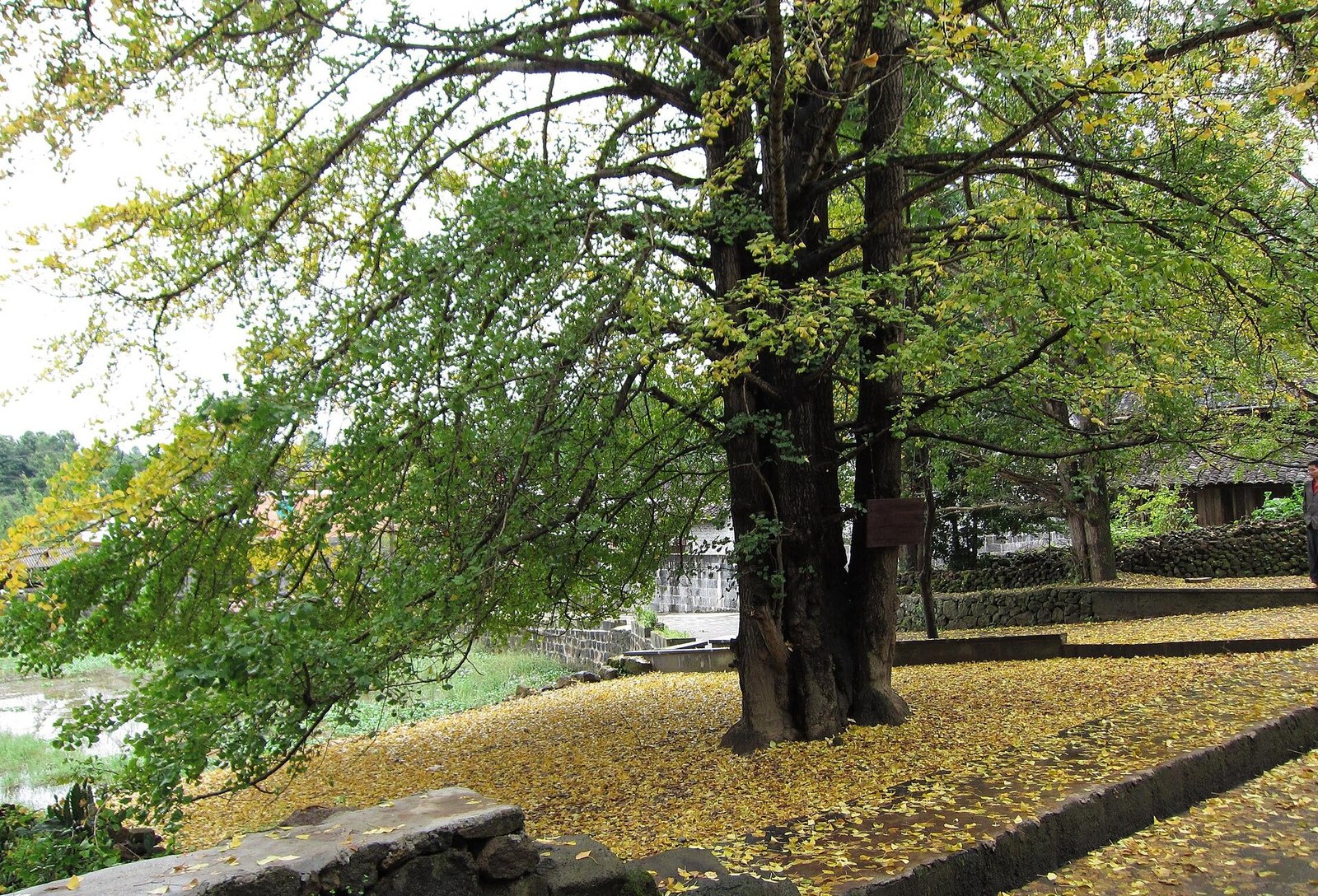
Tengchong ginkgo village is a living settlement of about 4,000 people inside a 10,000-mu stand of ancient ginkgo, and it is the only ginkgo-named scenic area in Yunnan. Trees stand in courtyards, along lanes and beside the primary school rather than in a park.
The village holds 30,000 to 40,000 trees, more than 1,200 of them over a century old, according to Xinhua’s photo report republished by People’s Daily. A 2007 census found 200-odd trees past 300 years and 50 past 500, each with a numbered plaque. The Ginkgo King by the entrance is said to have stood 1,300 years: 29 m tall, a 6 m trunk, a crown spreading 16 by 18 m.
The provincial publicity office’s November 2026 feature says “30,000-plus” (Yunnan Publicity Net, 2 November 2026), while China Weather Network’s 2026 ginkgo map says 40,000-plus; both agree on the 1,200 ancient trees. Four clusters form the walkable core — Chenjiazhai, Jiangyun, Baxin and Sihe — at about 1,750 m. In 2019 the ginkgo became Tengchong’s city tree.
When do the ginkgo leaves actually turn gold?
Peak gold runs from about 20 November to 5 December, and the commonest mistake is arriving in October, when the canopy is still green. Yunnan Net’s seasonal feature puts the window at mid-to-late November through early December.
| Stage | Dates | What you get |
|---|---|---|
| Green to yellow | 25 Oct – 10 Nov | Half-green, thin crowds, low rates |
| Building | 10 – 20 Nov | Mixed gold, best colour-to-crowd ratio |
| Peak | 20 Nov – 5 Dec | 90%+ gold, leaves underfoot |
| Carpet | 5 – 15 Dec | Bare branches, thick gold floor |
Treat those dates as a forecast. A wet summer can push the peak back a fortnight — 2025 ran about 15 days late — and one strong wind strips a courtyard overnight. Ask your guesthouse for photos three days before you travel.
How do you get to Tengchong from outside China?
Tengchong is reached by air to Tengchong Hump Airport (TCZ), 13 km from town, or by rail to Baoshan, 146 km and two hours away. No railway reaches Tengchong itself, which surprises everyone booking a rail ticket to it.
| Leg | Time | Fare (CNY) |
|---|---|---|
| Kunming → TCZ (flight) | 1 h 15 | Seasonal |
| Kunming → Baoshan (rail) | about 4 h | 174 |
| Baoshan North → Tengchong (coach) | 2 h 30 | 60 |
| Baoshan North → Tengchong (van) | 2 h | 90 |
Those figures come from the Heshun scenic area’s transport page (checked November 2026). The coach station faces Baoshan station, so rail-plus-road needs no taxi.
The last 40 kilometres: town to village
The final leg is 40 km of climbing farmland, and independent travellers have five options. Rural buses, a Gudong transfer, seasonal free coaches, taxis and your own car all work, but private vehicles cannot enter the core lanes in peak season.
- Start at the west gate bus station, where Gudong-bound buses leave every 15 minutes.
- Pay 7–10 CNY and ride about an hour to Gudong town.
- Switch to a minivan or taxi for the last few kilometres, 5–10 CNY, and ask for the ticket gate.
- In peak season, free coaches may run from Yanhu Square — four a day, first around 08:30.
- If you drive, park outside (about 10 CNY a day) and walk in.
A taxi from town is 100–150 CNY one way; a day covering village, Heshun and Rehai charters for 300–400.
Which of the four ginkgo clusters should you walk first?
Chenjiazhai is the densest cluster and the one to walk first, Jiangyun second for lanes and Baxin for reflections. Nearly everyone photographs the same 300 m, so 20 minutes in any direction buys an empty courtyard.
Chenjiazhai holds the oldest trees and photogenic volcanic-stone walls with gold spilling over. Jiangyun is the lane cluster, branches meeting overhead; Baxin has a pond that doubles the canopy; Sihe is quietest of all.
Two cautions: many courtyards charge 10–20 CNY as a photography fee, so ask first; the best overview is the hill platform behind the village.
What does a ginkgo-season trip cost?
A ginkgo-season day costs about 30 CNY in village admission plus 15 CNY for the optional shuttle, with Heshun Old Town at 55 CNY and Rehai hot springs at 50 CNY per person. Prices below are official as of November 2026.
| Item | Price (CNY) | Note |
|---|---|---|
| Ginkgo village | 30 | 60–69 half, 70+ free |
| Heshun Old Town | 55 | Valid 7 days |
| Rehai hot springs | 50 | Bathing extra |
Opening hours are 08:00–18:30, last entry 18:30 — early enough that sunset needs planning, and out of season admission is sometimes waived.
Should you sleep inside the village or in Heshun?
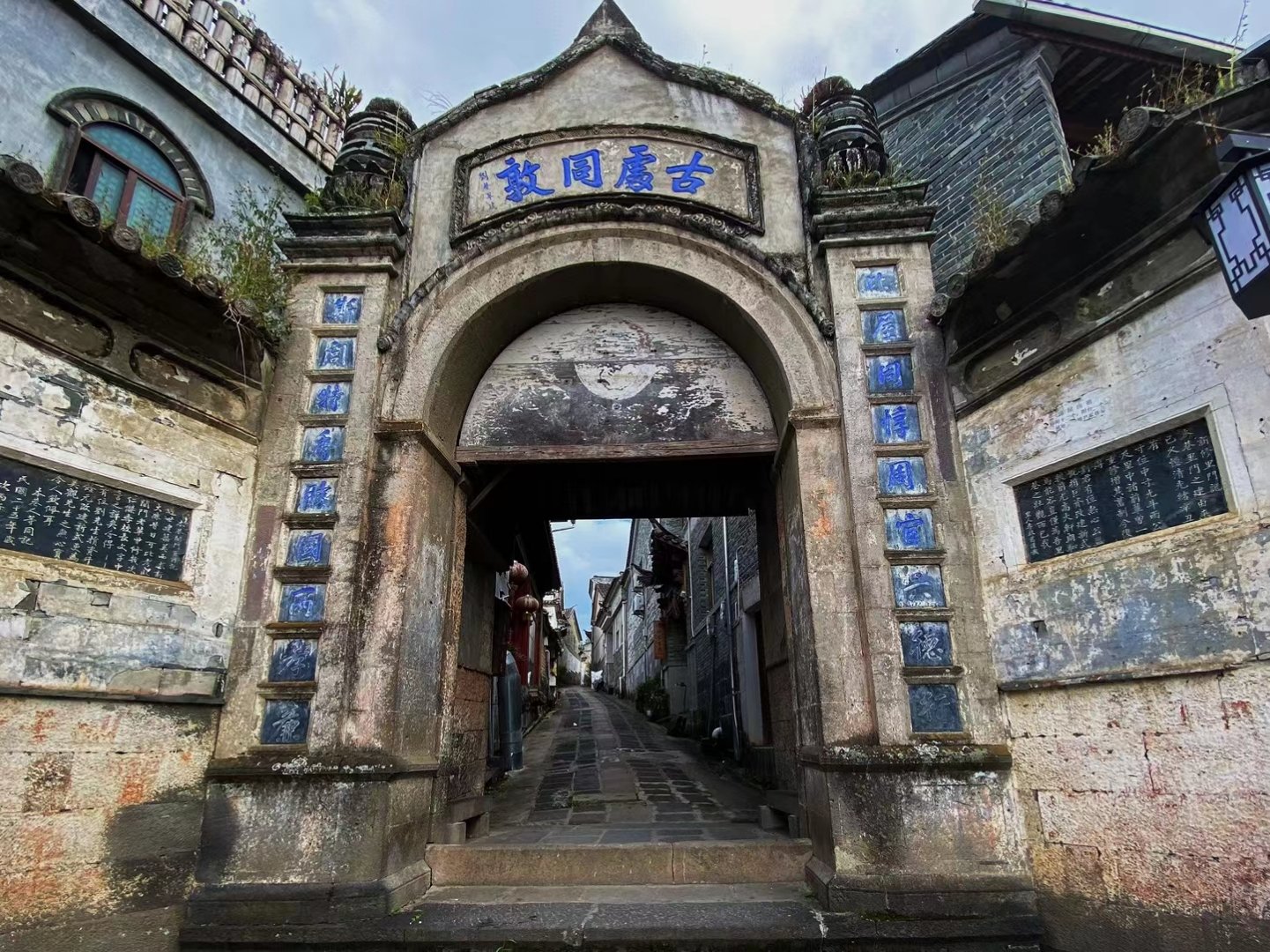
Sleeping inside Jiangdong buys you the 7 a.m. village before the first coach; sleeping in Heshun buys comfort, restaurants and a lit street after dark. The real question is whether you photograph or simply wander.
Village guesthouses run 200–500 CNY in peak season, family-run, usually with courtyard breakfast. Hardware is plain: thin walls, hot water on a schedule, rooms that double in the last week of November. Book two weeks ahead for a window-facing room. Heshun’s merchant houses start near 300 and pass 800 for courtyard suites with underfloor heating, which matters at 1,750 m in December.
Is Heshun Old Town worth the extra day?
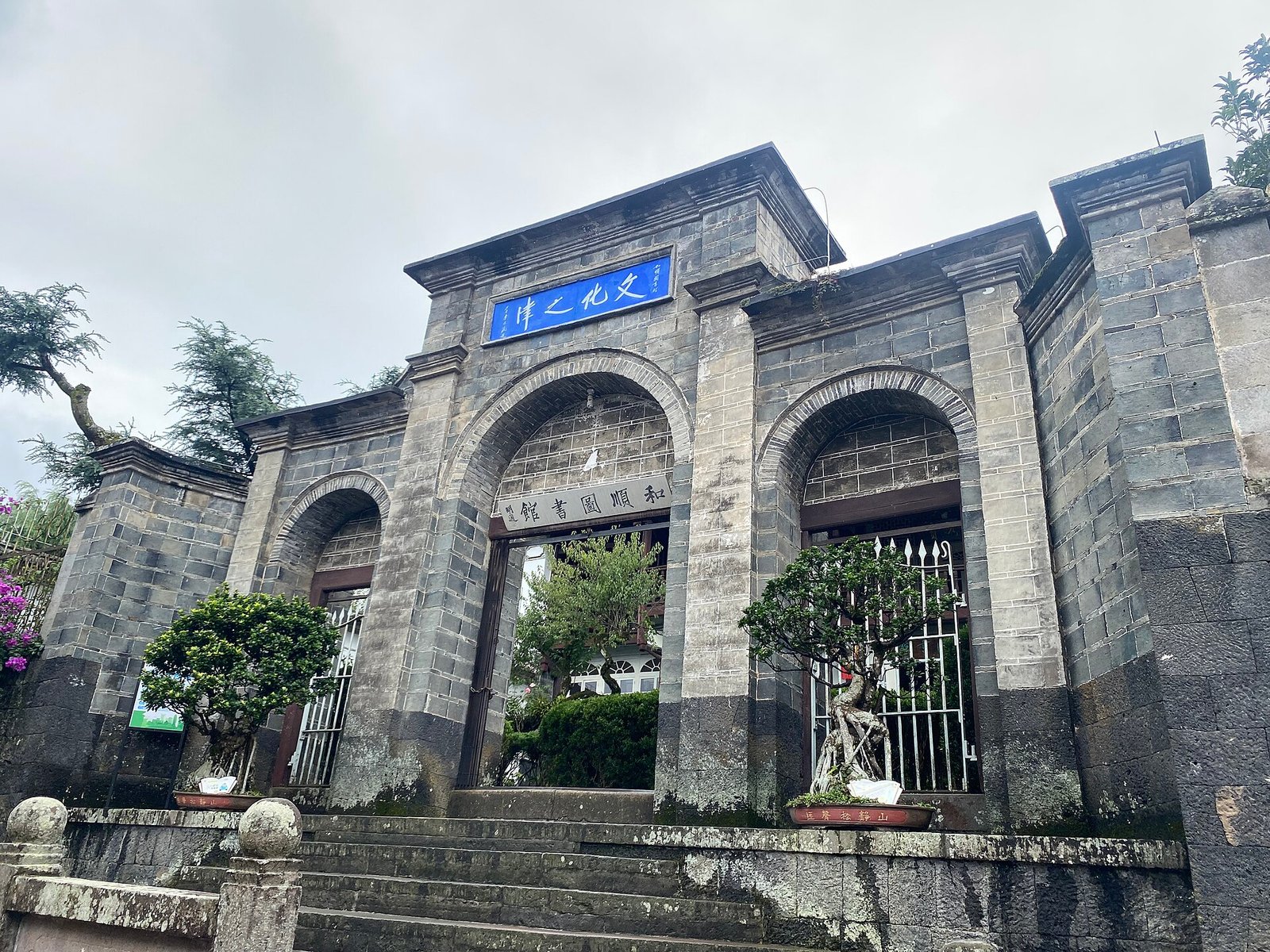
Heshun is a 600-year-old overseas-Chinese merchant town 4 km from Tengchong town, and it earns its 55 CNY ticket if you give it a slow morning rather than a checklist hour. The ticket stays valid a week.
The centrepiece is the Heshun Library, founded in the 1920s and still one of China’s largest rural libraries — a stone gateway, a reading room with green lamps, and volumes carried home from Burma. Around it: laundry pavilions where women beat clothes against stone, the Yin ancestral hall and Ai Siqi’s former residence.
Where do the hot springs fit in?
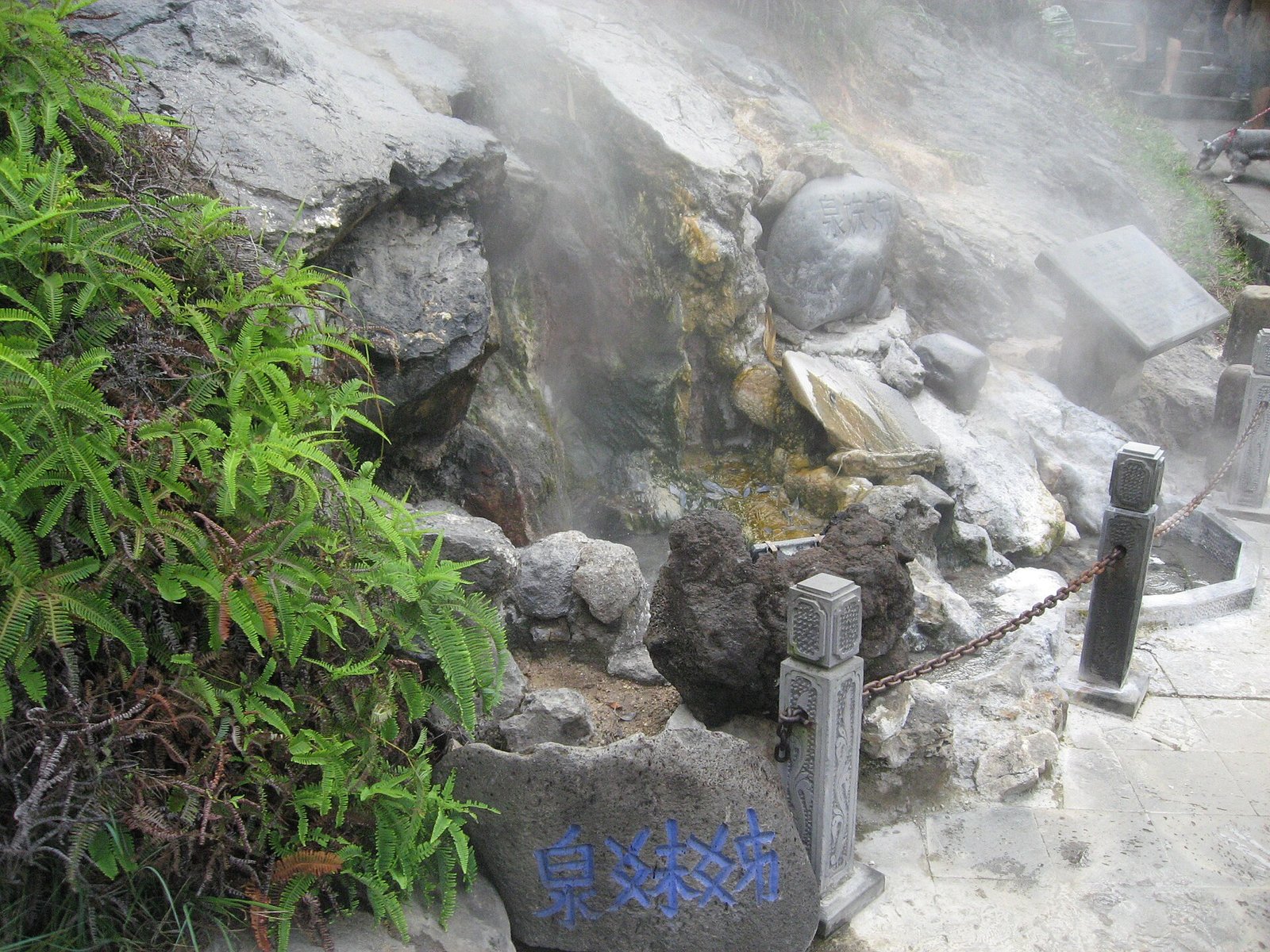
Rehai, 20 km southwest of town, is the evening pairing, with the 96 °C Dagunguo pool and 80-odd springs on a 5 km loop. Tengchong sits on the Indian-Eurasian collision zone, which produced 99 volcanoes and 88 hot springs within 1,000 sq km.
The county lies inside the Gaoligong Mountains UNESCO biosphere reserve, designated in 2000, so the drive to Gudong passes forest unlike the terraced postcards of eastern Yunnan. Go late: the valley steams harder as the air cools. Bathing is priced separately from the 50 CNY ticket.
What should you eat in ginkgo season?
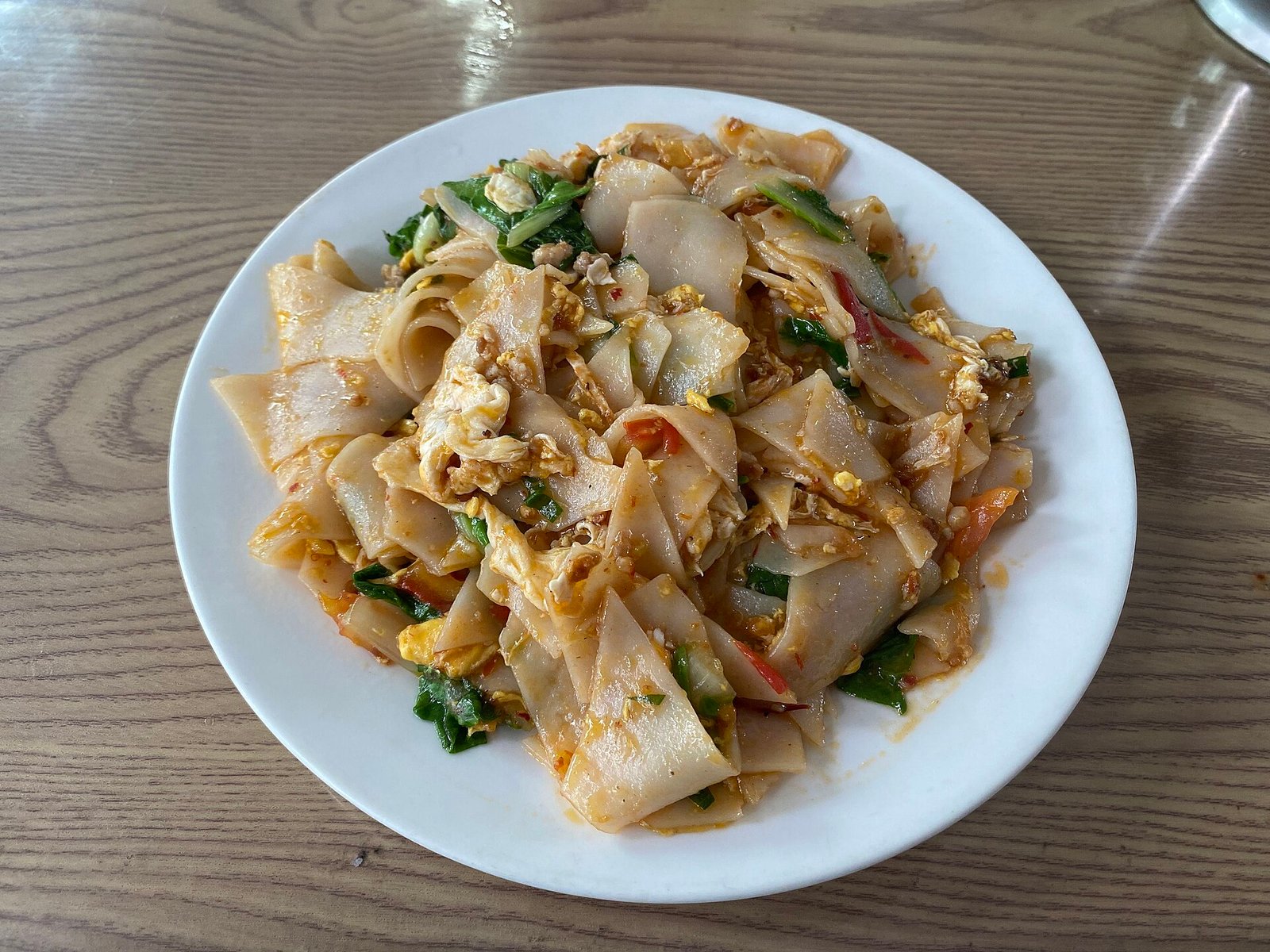
The one dish to order is ginkgo-braised chicken, made with fresh nuts and a local free-range bird, and it is why village restaurants exist in November. The nuts are starchy and faintly bitter, closer to chestnut than almond.
Beyond it, Tengchong’s table is border food: Dajiujia, rice cakes stir-fried with egg and pickled greens; tuguazi, a charcoal-fired clay pot of pork and taro. Village restaurants charge 60–100 for a ginkgo chicken hotpot that feeds two.
One safety note: ginkgo nuts must be cooked, and adults should not eat more than a small handful a day.
Practical tips for a golden-week visit
Arriving early is the highest-value decision you will make, because coach groups reach the village from about 10:00 and the lanes stay empty until then. These are the habits that separate a good visit from a crowded one.
- Be at the gate for 08:00, or stay inside and be out by 07:30.
- Choose a weekday; late-November weekends double the crowd.
- Pack layers and grip-soled shoes — dawn sits near 0–5 °C, midday 15–20 °C, and wet leaves on stone are slippery.
Tengchong rewards a slower itinerary than most Chinese scenic areas. Two nights covers the ginkgo and Heshun; three adds Rehai and the volcano park. If you are building a longer Yunnan loop, our guide to budget trekking in Yunnan’s highlands pairs well with this province.
Ejina’s poplar forest runs a similarly narrow window in early October, and Tachuan’s red village peaks in the first three weeks of November. Tengchong is the latest of the three, which makes it the best November bet.
Have you been to Tengchong in ginkgo season? Tell us in the comments which cluster you walked first. For the food side, our piece on dining in Yunnan’s villages explains what else to order, and China’s best hot springs covers how Rehai compares with the rest of the country.
Frequently asked questions
When is the best time to visit Tengchong ginkgo village?
The best window is 20 November to 5 December, when more than 90% of the canopy has turned and leaves cover the lanes. Before 10 November the village is half-green; after 15 December the branches are largely bare.
How much is the entrance fee?
Admission is 30 CNY per adult in the November–December peak season, plus an optional 15 CNY return shuttle. Visitors aged 60–69 pay half; over-70s enter free with ID.
How do I get there from Baoshan railway station?
Baoshan station is 146 km from Tengchong, roughly two hours by road. Coaches from the bus station opposite the exit cost about 60 CNY and take 2.5 hours; 7- or 9-seat vans 90 CNY and two hours.
Can I stay overnight inside the village?
Yes. Family-run guesthouses inside Jiangdong charge 200–500 CNY a night in peak season and are the only way to see the village before coaches arrive at 10:00. Book two weeks ahead.
Is one day enough for the ginkgo village?
Three to four hours covers the four clusters on foot, but a day trip from town wastes the best light; one night gives you the 07:00 mist and the late glow.
What else is worth seeing nearby?
Heshun Old Town is 40 km away at 55 CNY for a 7-day ticket, Rehai hot springs 50 CNY, and the Volcano Geological Park 35 CNY. All three fit a two-night stay.