


Shennongjia: A Walk Through China’s Last Primeval Forest
Fog arrives before the birds do. It slides between the firs at 2,500 m, swallows the boardwalk, and for a few minutes the forest has no edges at all.
Shennongjia is a forestry district in western Hubei whose 73,318-hectare core has been a UNESCO World Heritage site since 2016, protecting the largest block of primary forest in central China. The Shennongjia primeval forest is worth the journey because these beeches and hemlocks have never been clear-felled, and the same slopes hold golden snub-nosed monkeys and 3,767 plant species. You reach it by high-speed rail to Shennongjia station, then three hours of mountain road.
At jusha.travel, we love sharing tips that turn a good trip into a memorable one, so this guide stays practical: what the reserve protects, how the six areas differ, what November does to the summit, and what entry costs in 2026.
What is Shennongjia, and why does it matter?
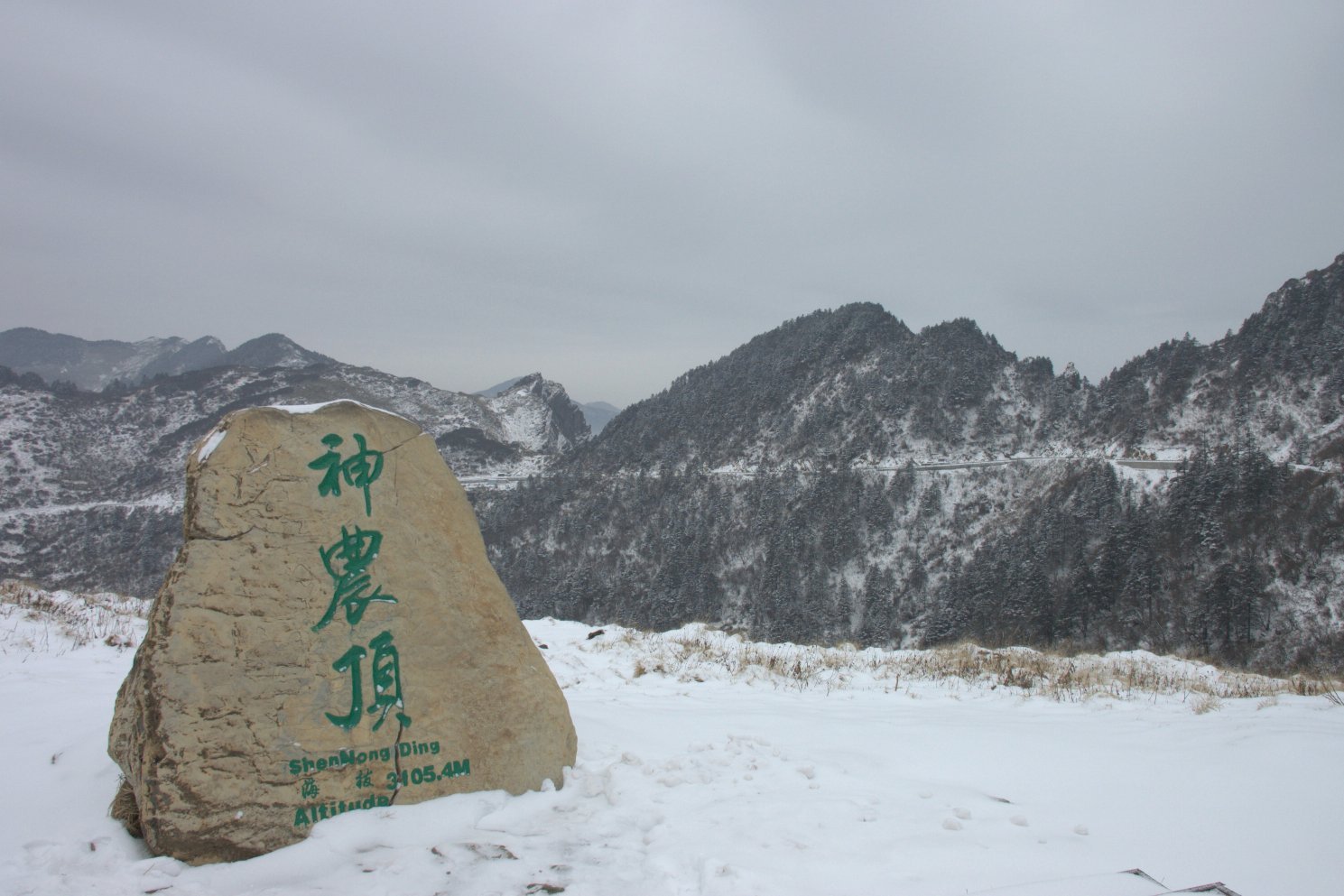
Shennongjia is a mountain district in northwest Hubei that forms the highest ground in central China, with six peaks above 3,000 m and an average elevation of roughly 1,700 m (China Today, December 2020). UNESCO inscribed it under criteria (ix) and (x) in 2016, citing 11 vegetation types spread across six altitudinal gradients.
The listing covers 73,318 ha in two blocks — Shennongding/Badong in the west, Laojunshan in the east — inside a 41,536 ha buffer (UNESCO Decision 40 COM 8B.7, 2016). Inside that line: 3,767 vascular plants, 205 of them found nowhere else, more than 600 vertebrates and 4,365 insects.
Protection came in layers — reserve in 1982, national status in 1986, UNESCO biosphere in 1990 — and the forest you walk through is the same one plant collectors pulled 500 new species from in the 1880s.
Where is Shennongjia, and how do you reach it?
Shennongjia lies in the northwest corner of Hubei, roughly 400 km west of Wuhan, and the fastest approach is the Zhengzhou–Chongqing high-speed line to Shennongjia station in Xinhua Town, opened with the Hubei section in June 2022.
The station sits about 100 km from the gates, a deliberate buffer against traffic. A timed shuttle meets the trains, runs eight paired departures daily, covers 127 km in about three hours and calls at Tianyan, Hongping Gallery, Shennongding and Muyu (The Paper, 2022). Miss the last coach and you are chartering a car.
Otherwise fly into Hongping, 67 km and roughly 97 minutes from Muyu, or drive in from Yichang in about three and a half hours — a route that pairs naturally with the engineering of the Three Gorges Dam and a night near Wuhan’s Yellow Crane Tower.
Which of the six scenic areas should you choose?
The joint ticket covers six areas, and three carry most of the reason to come: Shennongding for the summit and old-growth, Dajiuhu for the wetland and mist, Shennongtan for the story of the deity the district is named after.
| Area | Height | Time | Go for |
|---|---|---|---|
| Shennongding | to 3,106 m | Full day | Summit, valley, monkeys |
| Dajiuhu | c. 1,700 m | Half day | Nine lakes, dawn mist |
| Shennongtan | c. 1,100 m | 2 hours | Statue, ancient tree |
| Tianyan | c. 2,200 m | 2–3 hours | Rainbow Bridge |
| Guanmenshan | c. 1,200 m | 2 hours | Cliff hives |
| Tianshengqiao | c. 1,000 m | 1 hour | Karst arch |
With two days, skip Tianyan and Guanmenshan without guilt.
What the Shennongjia primeval forest feels like on foot
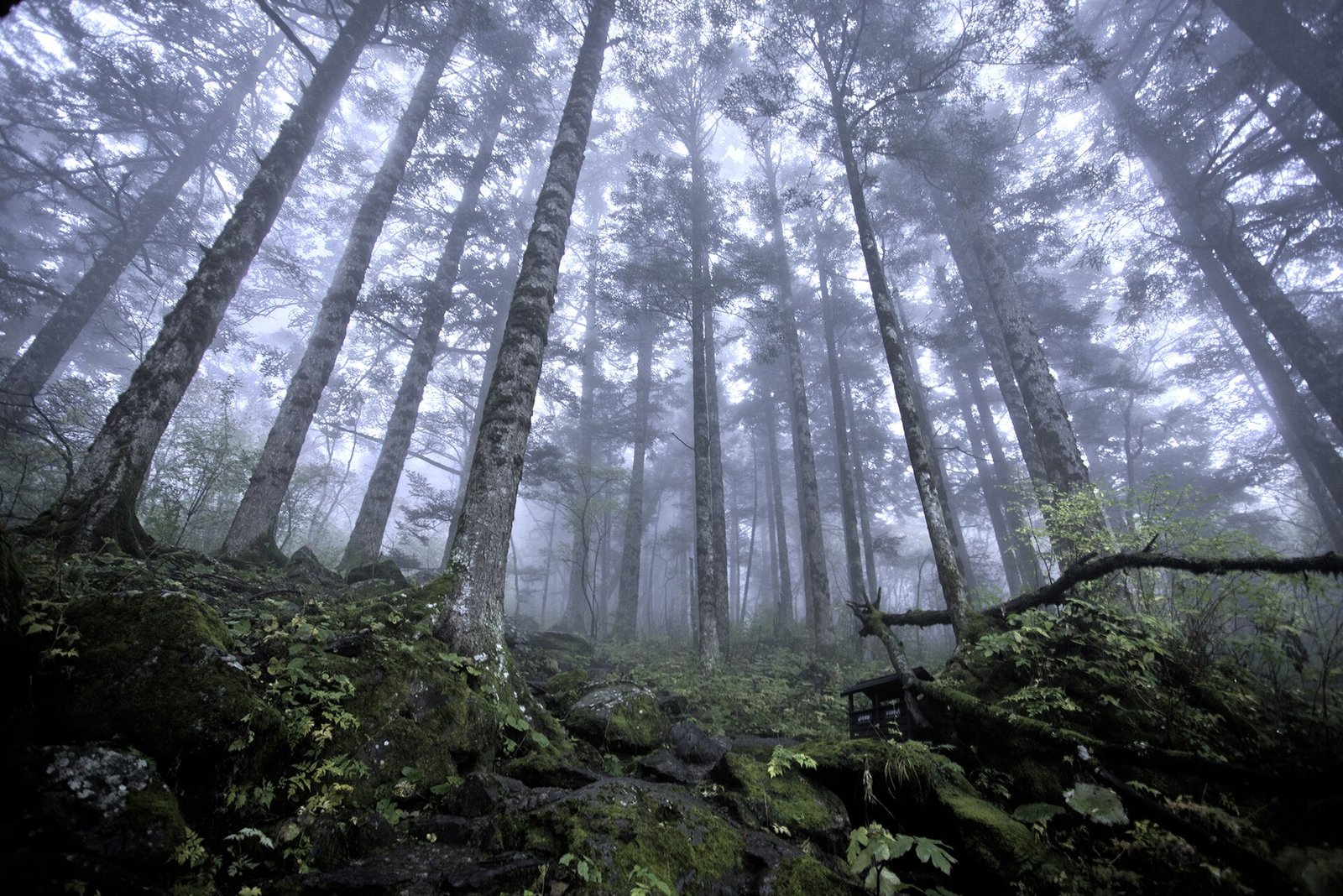
Old-growth begins where the road stops climbing. Above roughly 2,000 m the canopy closes into fir, hemlock and birch, and UNESCO counts 874 deciduous woody species in 260 genera here — richness it calls unparalleled for this forest type anywhere in the Northern Hemisphere.
Shennong Valley is where to feel it. A boardwalk drops through the trees into a gorge, and after rain the cloud pours over the rim and fills the valley below your feet. Give it three hours and start early.
Higher up, Banbiyan is a field of limestone slabs standing on end in alpine meadow, and the Liaowang tower gives the only true panorama of the ridge line.
Can you still see golden snub-nosed monkeys?
Yes, but not on demand. Around 1,470 golden snub-nosed monkeys live in Shennongjia as of 2024, more than 200 above the 2005 count, with habitat expanded from 210 to over 350 square kilometres (CGTN, 8 April 2024).
The species lives year-round in forest between 1,500 m and 3,300 m, which makes timing beat luck: troops climb to 2,500–3,000 m in summer and drop to about 1,500 m in winter. November is a transition month, so mid-elevation ridges beat the summit.
Dalongtan, the research centre, saw six cubs born in spring 2024. The monkeys passing through are wild, so keep your distance and never offer food.
Is Dajiuhu worth the early alarm?
Yes — if you sleep at Pingqian and enter at first light. Dajiuhu is a nine-lake alpine wetland at around 1,700 m, and between roughly 06:30 and 08:00 in autumn the water holds a layer of mist that turns the basin into a woodcut.
Cars stop at the Pingqian transfer centre, where the compulsory shuttle costs 70 CNY; inside, small trains move between lakes for free (The Paper, 2022). Semi-wild elk graze the meadows, and boardwalks keep you off peat that runs metres deep.
The cost is logistics: Pingqian sits 40 minutes beyond Muyu, so a sunrise here means sleeping out there.
Why early November is the sharpest season
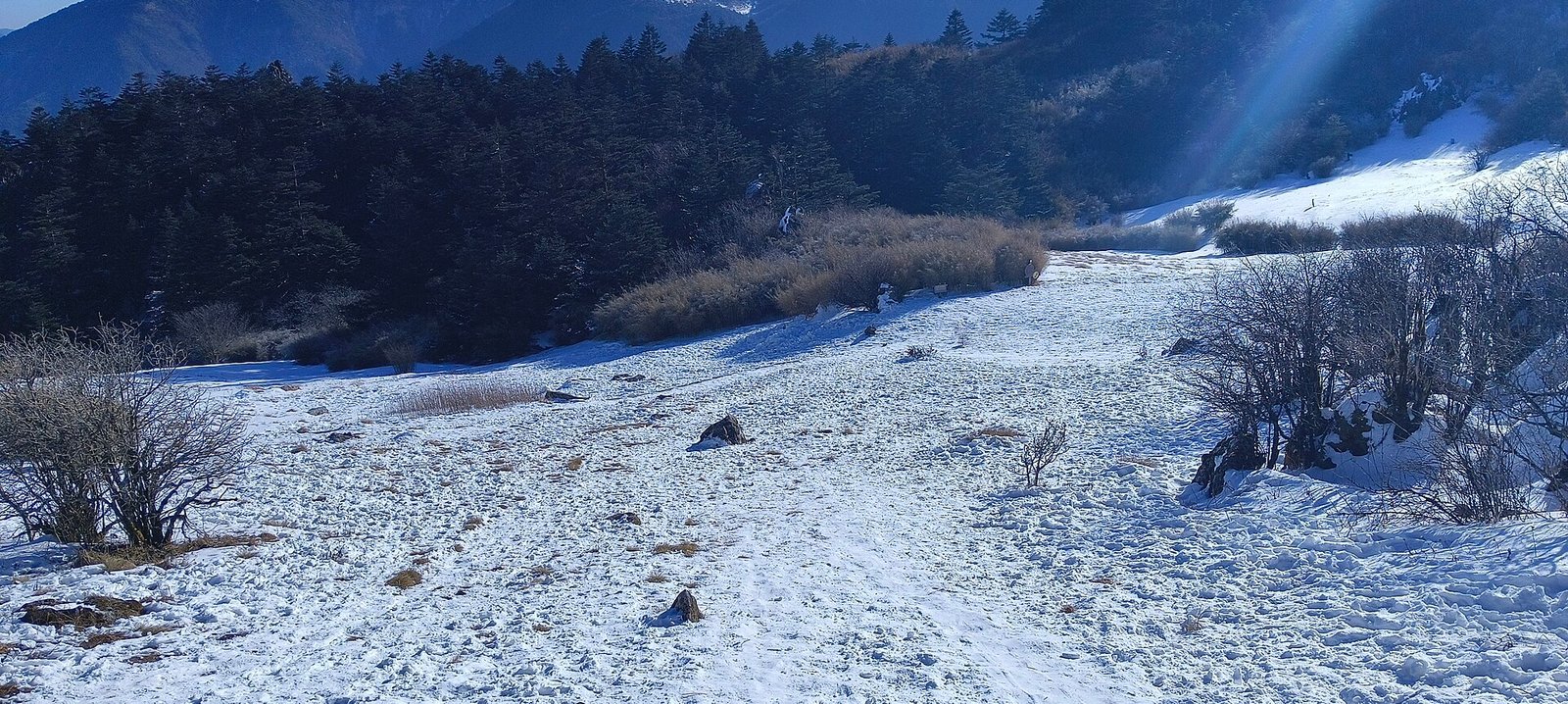
Early November separates Shennongjia’s colour by altitude. Larch, birch and maple turn gold above 2,000 m, the conifers stay near-black, and valleys below 1,500 m still hold green — so one drive from Muyu to the summit passes three seasons in ninety minutes.
Weather does the same. On 1 November 2026 the district logged 10 °C by day and 1 °C at night with light rain, and by 4 November the forecast low was 0 °C (Moji Weather, 1 November 2026). The summit takes snow first; the stone marker there reads 3,105.4 m against an official 3,106.2 m.
Layer rather than brave it — shell, fleece, hat. After mid-November the nights sit at freezing and the high trails begin to close.
Where the Shennong legend comes from
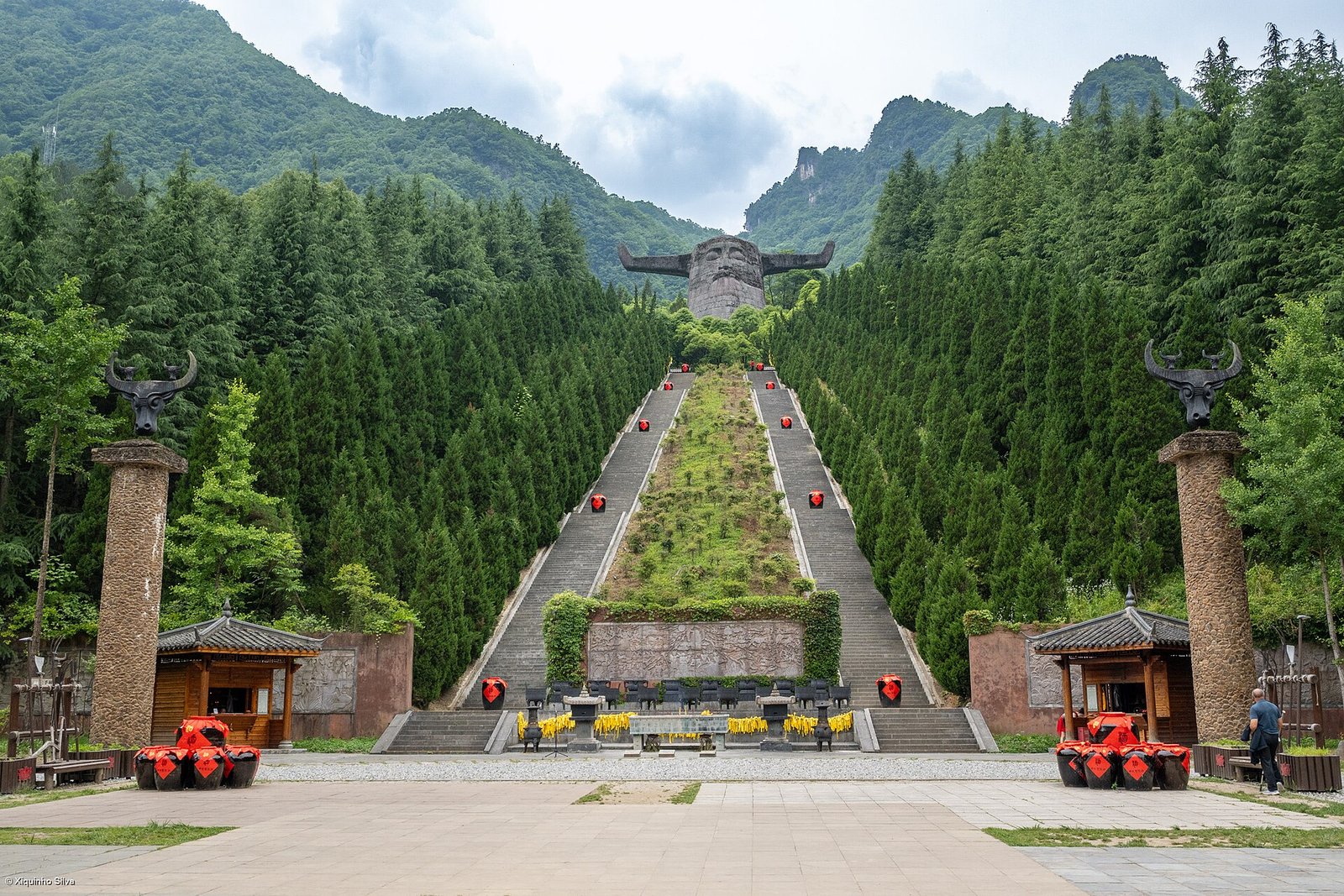
Shennongjia means Shennong’s scaffold, after the Yan Emperor, the mythical ruler credited with teaching China agriculture and tasting hundreds of herbs. The story says he built wooden frames against these cliffs to reach the plants growing out of them.
Shennongtan stages it: a colossal stone head set into the hillside above a long grassed stair, with an ancient tree behind it said to be over a thousand years old.
The other legend is the wild man — reported from the 1970s onward, investigated, never confirmed. Local museums still display the casts. Enjoy it as folklore.
How much does it cost, and how do you book?
The six-area joint ticket costs 299 CNY for adults from 21 April to 31 December 2026, with a 150 CNY concession rate, per the Shennongjia forestry district government. Low season, 1 January to 20 April, is 159 CNY and 99 CNY.
| Period (2026) | Adult | Concession |
|---|---|---|
| 1 Jan – 20 Apr | 159 CNY | 99 CNY |
| 21 Apr – 31 Dec | 299 CNY | 150 CNY |
It stays valid for multiple entries across five days, so three days usually beats single-area tickets. Two things sit outside it: the Dajiuhu shuttle at 70 CNY and the Shennongding transfer at 60 CNY for vehicles of nine seats or more.
Book through the official WeChat accounts and bring a passport, since foreign visitors are ticketed on passport number. Platforms still advertise 269 CNY, a figure that predates the current schedule. Gates run 08:00 to 17:00 as of November 2026.
Practical tips for a first visit
Build the trip around two nights and three days, and put the two headline areas at opposite ends so you never drive the same road twice.
- Take the shuttle from Shennongjia station to Muyu and sleep there.
- Enter Shennongding early and walk Shennong Valley before the coaches.
- Add Banbiyan and the summit marker, then descend to Pingqian.
- Enter Dajiuhu at first light for the mist.
- Stop at Shennongtan and Tianshengqiao on the way out.
- Confirm your return shuttle time the night before.
Five smaller things matter. Cash helps at small stalls. The stairs at 3,000 m cost more breath than you expect. Signal dies in the valleys, so download offline maps. Rain gear beats an umbrella on boardwalks. Drones and open fires are banned outright.
Is Shennongjia worth three days?
Three days is the honest minimum; two is a sprint that leaves you the summit and nothing else. The third day buys the quiet hour in Shennong Valley before the coaches, the mist on Dajiuhu, and the slow road between them where the forest changes species by the hundred metres.
It is a different kind of Chinese mountain trip: no cable car, no glass walkway, just old trees, cold air and animals that were here first. For vertical drama instead, see Zhangjiajie’s floating peaks; for water, Jiuzhaigou’s turquoise lakes.
Go in the first ten days of November, sleep in two places rather than one, and give the forest a morning without a schedule. Tell us in the comments which season you would pick.
Frequently asked questions
What is Shennongjia famous for?
Shennongjia is famous for holding the largest block of primary forest in central China, listed by UNESCO in 2016. Its 73,318-hectare core shelters 3,767 plant species, more than 600 vertebrates and around 1,470 golden snub-nosed monkeys as of 2024.
How much is the Shennongjia joint ticket in 2026?
The six-area joint ticket costs 299 CNY for adults from 21 April to 31 December 2026, with a 150 CNY concession rate. From 1 January to 20 April it drops to 159 CNY, or 99 CNY concession, and stays valid for five days.
How do I get to Shennongjia from Wuhan?
Take the Zhengzhou–Chongqing high-speed line to Shennongjia station in Xinhua Town, then a shuttle bus that covers 127 km in about three hours. The station sits roughly 100 km from the gates, so the bus is not optional.
When is the best time to visit Shennongjia?
The first ten days of November give the sharpest colour and the first snow on the summit, with daytime highs near 10 °C. Late September to October is milder, while after mid-November the nights drop to freezing.
Can you see golden snub-nosed monkeys there?
Sightings are possible but never guaranteed, because the troops move with altitude and season. Around 1,470 live in the reserve as of 2024, spending summer at 2,500–3,000 m and winter near 1,500 m, so mid-elevation ridges give the best odds.