


Songyang’s Hidden Villages: Rural China Before Renovation
Fog sits in the valley at dawn, then lifts off the tea terraces and leaves the rooftops steaming. Songyang is a mountain county in Lishui, Zhejiang, where 78 villages on the national traditional-settlement list still hold families, woodsmoke and vegetable plots instead of ticket gates. These Songyang ancient villages cost nothing to enter, sit three and a half hours from Hangzhou by train, and look their best from late October to late November, when cloud fills the gaps between hills.
At jusha.travel, we love sharing tips that get you past the postcard, so this guide covers the three villages worth your time, the trains and drivers that reach them, and what a decade of renovation has quietly changed.
What makes Songyang’s ancient villages different?
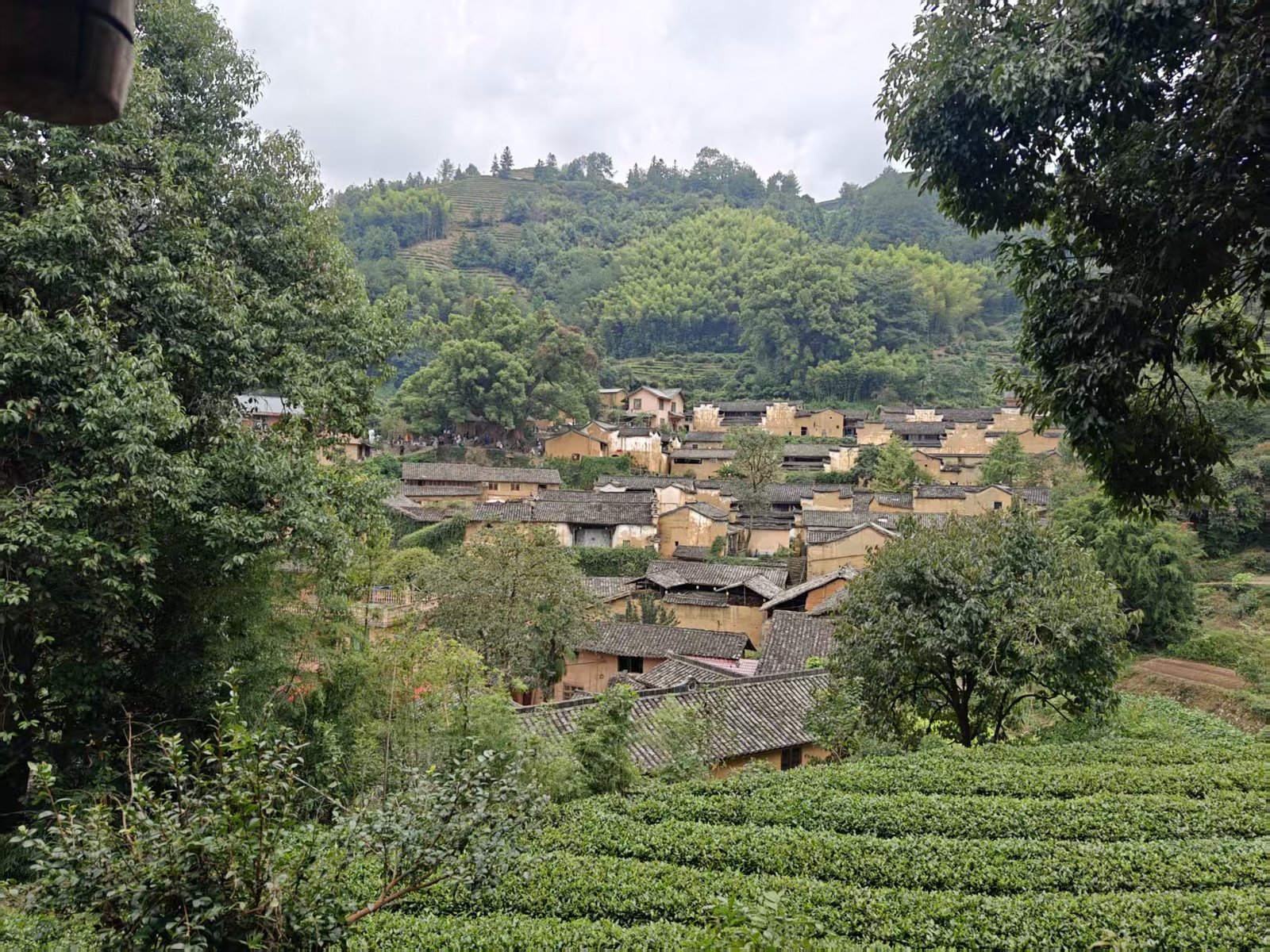
Songyang is the only county in China designated a national pilot for traditional-village revitalisation, and its listed villages remain lived-in communities rather than staged sets — no ticket gates, no rows of souvenir stalls, no residents moved out to make room for shops.
China Daily reported on 9 November 2026 that entry is free and that each village has grown around its own character since 2012. Of the 100-odd settlements with intact layouts, 78 carry national listing — the highest county count in East China, per the Songyang county government. The county was founded in AD 199, during the Eastern Han, making it the oldest seat in this corner of Zhejiang.
Where is Songyang and how do you get there?
Songyang sits in the mountains of southwestern Zhejiang, roughly 200 km southwest of Hangzhou, and the fastest way in is a C-series train to Songyang Station, which opened with the Quzhou–Ningde line in September 2020.
The station handles about 13 trains a day and none start here, so you always join a through service. Hangzhou is the easiest gateway: C481 leaves at 08:43 and reaches Songyang at 12:21. From the north, change at Quzhou, where the hop takes under an hour. From the station, bus 8 runs to the old street for CNY 2, ten times a day from 09:30; a taxi covers 8 km in 15 minutes.
| Route | Journey | Fare, 2nd class | Note |
|---|---|---|---|
| Shanghai South → Songyang (C481) | 5 h 25 min | CNY 144 | Direct, 06:56 departure |
| Hangzhou → Songyang (C481) | 3 h 38 min | — | Same train, no change |
| Quzhou → Songyang (C494) | 51 min | CNY 24 | Fastest from the north |
| Station → old street | 15 min | CNY 10–15 | Bus 8 is CNY 2 |
Nearest airports are Wenzhou, Quzhou and Yiwu, none close; rail plus a hired car makes sense.
Yangjiatang: the village that turns gold before dusk
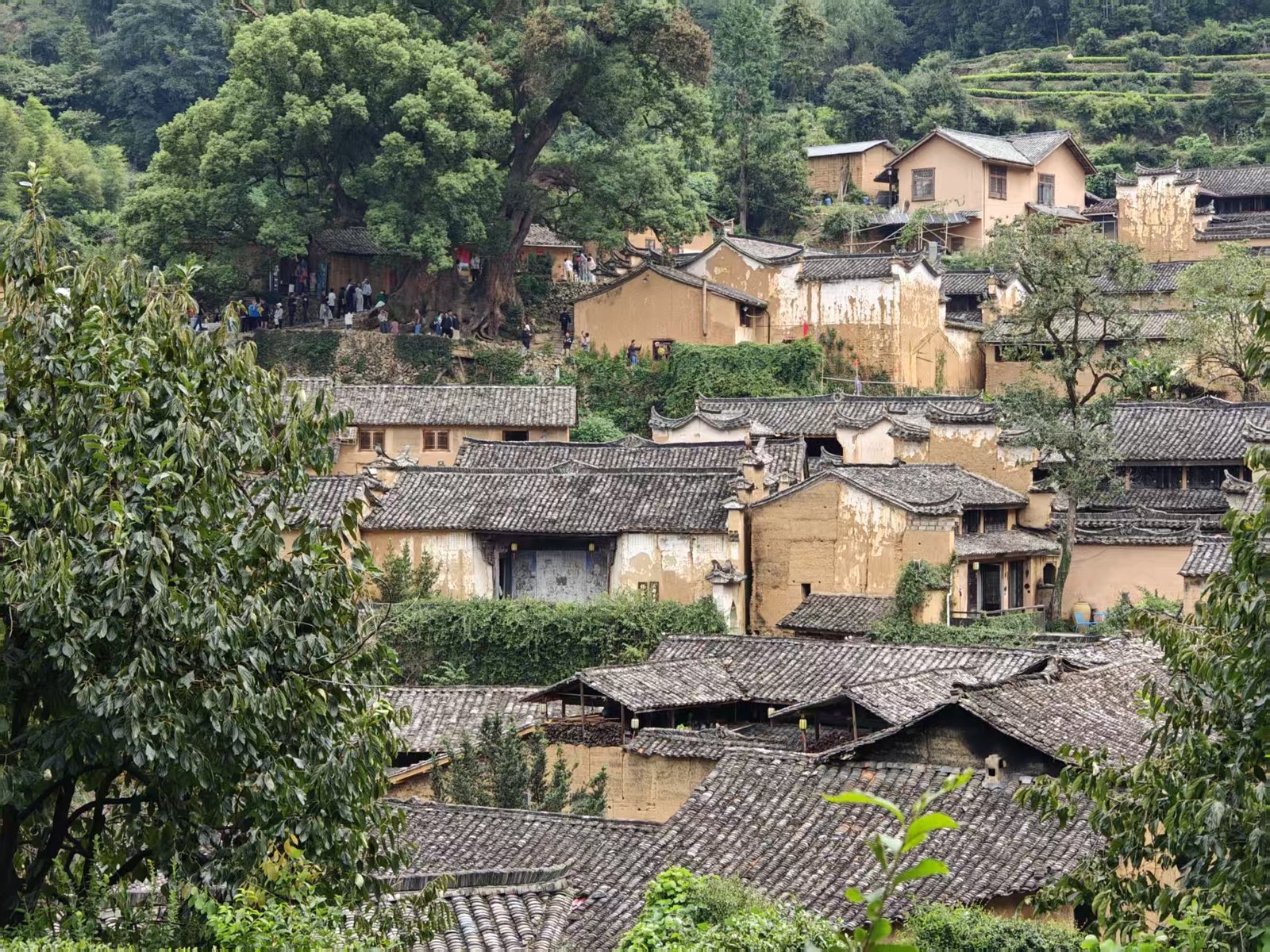
Yangjiatang is a Qing-era hillside hamlet in Sandu township, where some twenty rammed-earth houses step down the slope in tiers — the reason Chinese visitors call it the little Potala Palace of Jiangnan, and photographers time their arrival to the hour before sunset.
Two camphor trees guard the entrance, and villagers put the pair at around 500 years old, though no plaque agrees. The walls are the real subject: ochre clay, grey tile, lime plaster stained dark by four centuries of rain. Between 16:00 and 17:30 in November the low sun turns the whole slope honey-coloured. Entry is free and cars park on the hairpin below.
Chenjiapu: a cliff village with a bookshop on the edge
Chenjiapu is a 600-year-old cliff-side settlement in Sidu township, 18 km from the county town and 750 to 850 m above sea level, and the one village here where a cultural anchor matches the view.
On 16 June 2018 Librairie Avant-Garde opened the Chenjiapu Pingmin Bookstore in the disused village hall. Architect Zhang Lei cut two floors into one vertical shaft of shelving, 20,000 titles deep, with a reading gallery against three walls of glass facing the gorge. Fifteen guesthouses now operate here, and tourism revenue passed CNY 45 million last year, per the county government. Arrive by 07:00 for the cloud sea.
Pingtian and the villages that stayed quiet
Pingtian is a small farming hamlet in Sidu township at around 600 m, and it became the county’s first real test case for rural tourism when the Yunshang Pingtian guesthouse cluster moved into a row of abandoned stone-and-timber farmhouses.
The draw is craft rather than spectacle: bamboo weaving, rice-cake pounding, a workshop that still presses brown sugar. Beyond the famous three, Shankouyang lays its lanes out in a bagua pattern 15 minutes from town, Jieshou keeps a stone post road and a boat-shaped footprint, and Houzhou hides 200-odd Ming and Qing houses in bamboo. All are free, all are quiet.
Songyang Old Street: 1,800 years in one lane
Songyang Old Street is the market lane of the county seat, in continuous use for 1,800 years, and the only place in Songyang where Ming and Qing shopfronts still trade as working shops rather than stand as heritage exhibits for tourists.
Blacksmiths hammer at the south end, a herbal pharmacy weighs roots by the liang, and noodle shops pull wheat noodles by hand at six in the morning. Nothing here is curated. Walk it before 09:00, when shutters are still going up and tea smoke hangs in the lane.
Tea country: the crop that kept the hills populated
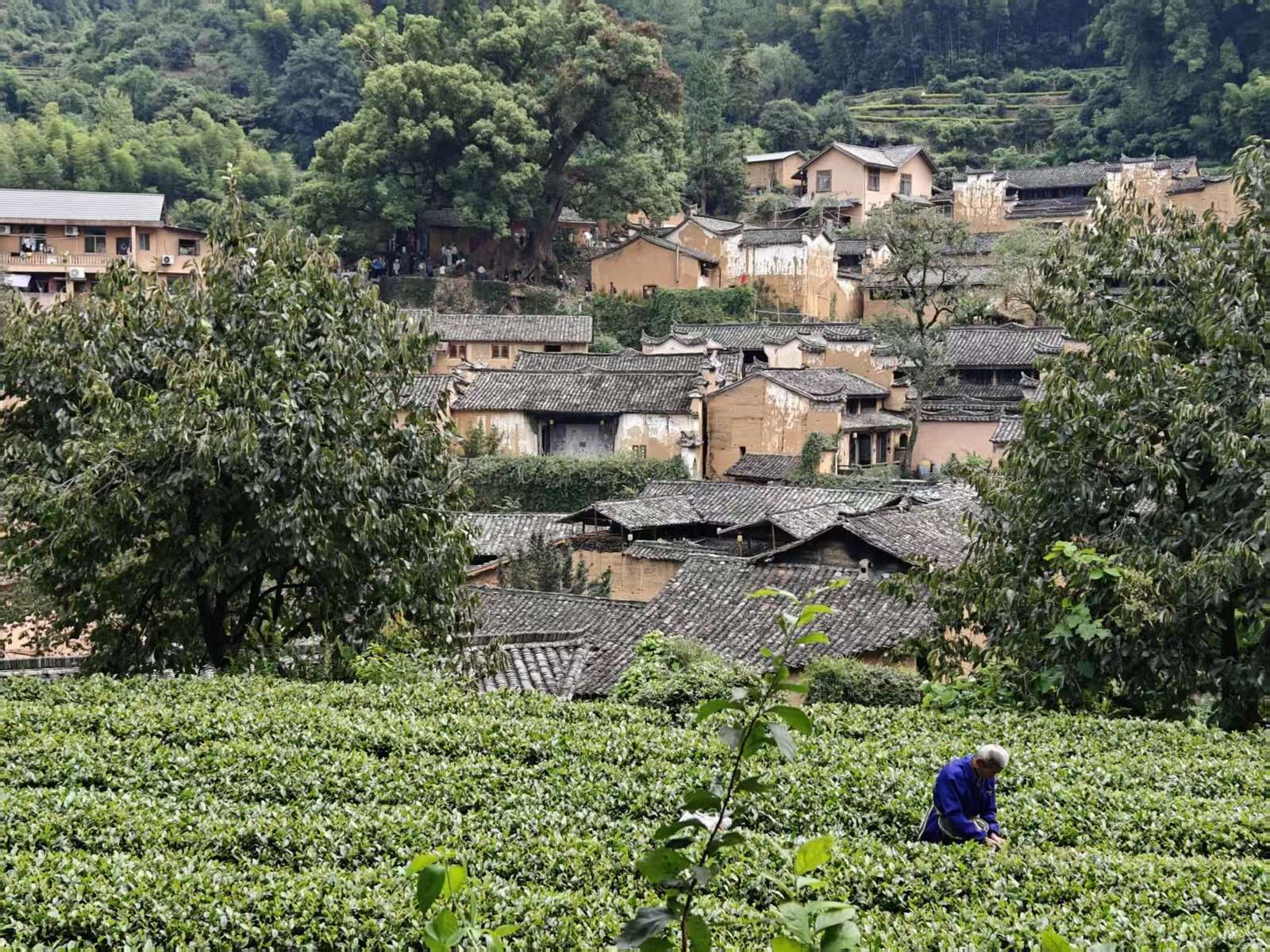
Songyang runs the largest green-tea producing market in China, and tea is the reason these hills were never emptied out by migration, which is why the villages still have residents to renovate houses for and terraces that still get picked.
Trade volume and value at the county’s tea market have ranked first nationally for twenty consecutive years, the Lishui city government reported in July 2026. Damushan Tea Garden, 20 minutes from town, is a 4A-rated plantation with an 8.3 km cycling loop through 8,000 mu of continuous bushes; entry is CNY 40. Pickers work the terraces below Yangjiatang through October.
What renovation changed, and what it did not
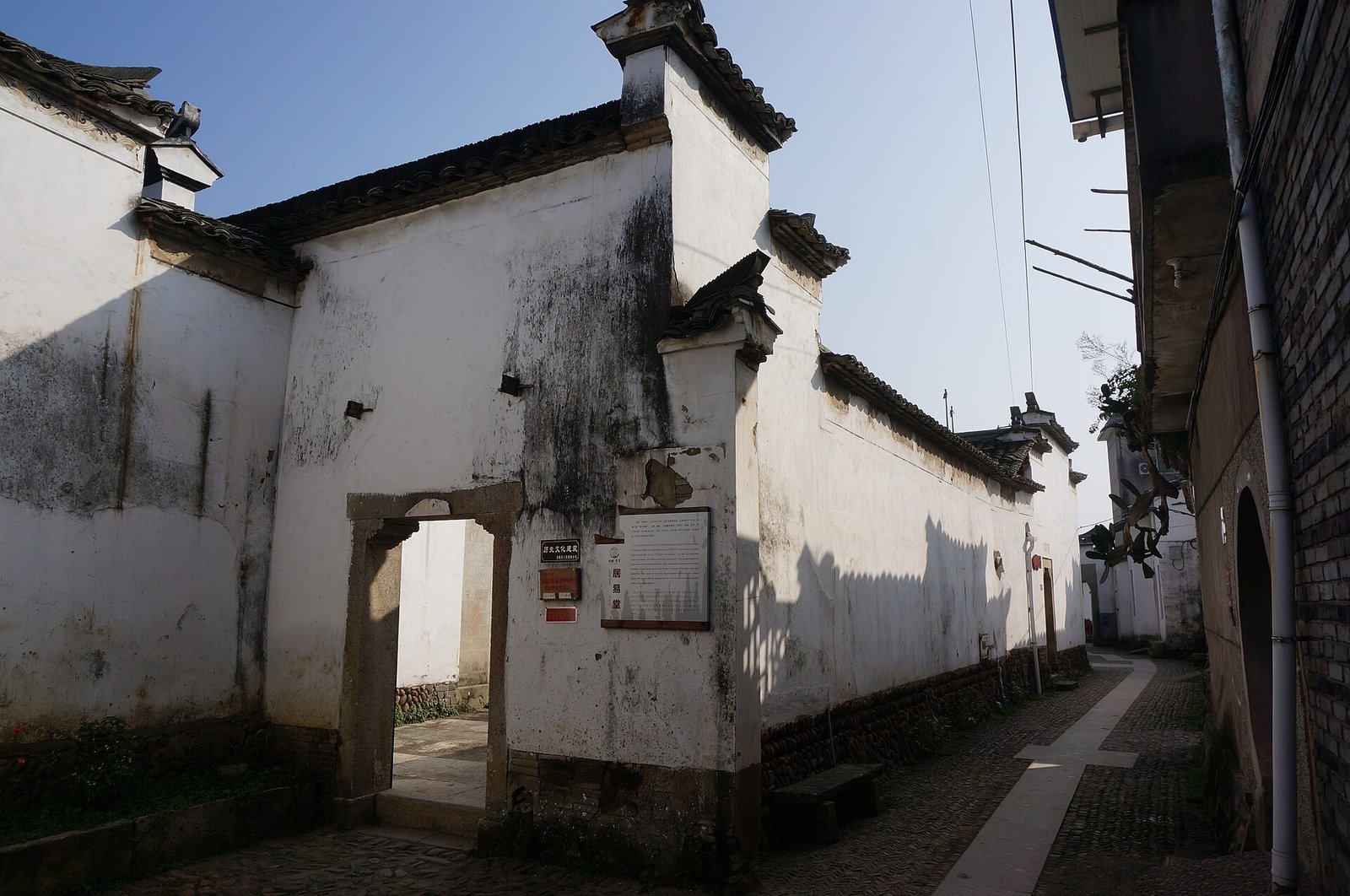
Renovation in Songyang began as salvage rather than tourism: a 2016 Rescue Old Houses programme has repaired more than 300 buildings on a minimal-intervention basis, and the county now reviews every repair plan before a single roof tile is lifted in any village.
The visible changes are roofs that no longer leak, bathrooms, fibre, and fifteen guesthouses where there were none. The invisible one is scheduling: Chenjiapu and Yangjiatang cap visitor numbers on peak days and run shuttles when lanes jam. What has not changed is more interesting — old men still sit out at dusk, women still dry chillies on stone steps. Some villages are mid-works, so check before committing a day.
When should you go?
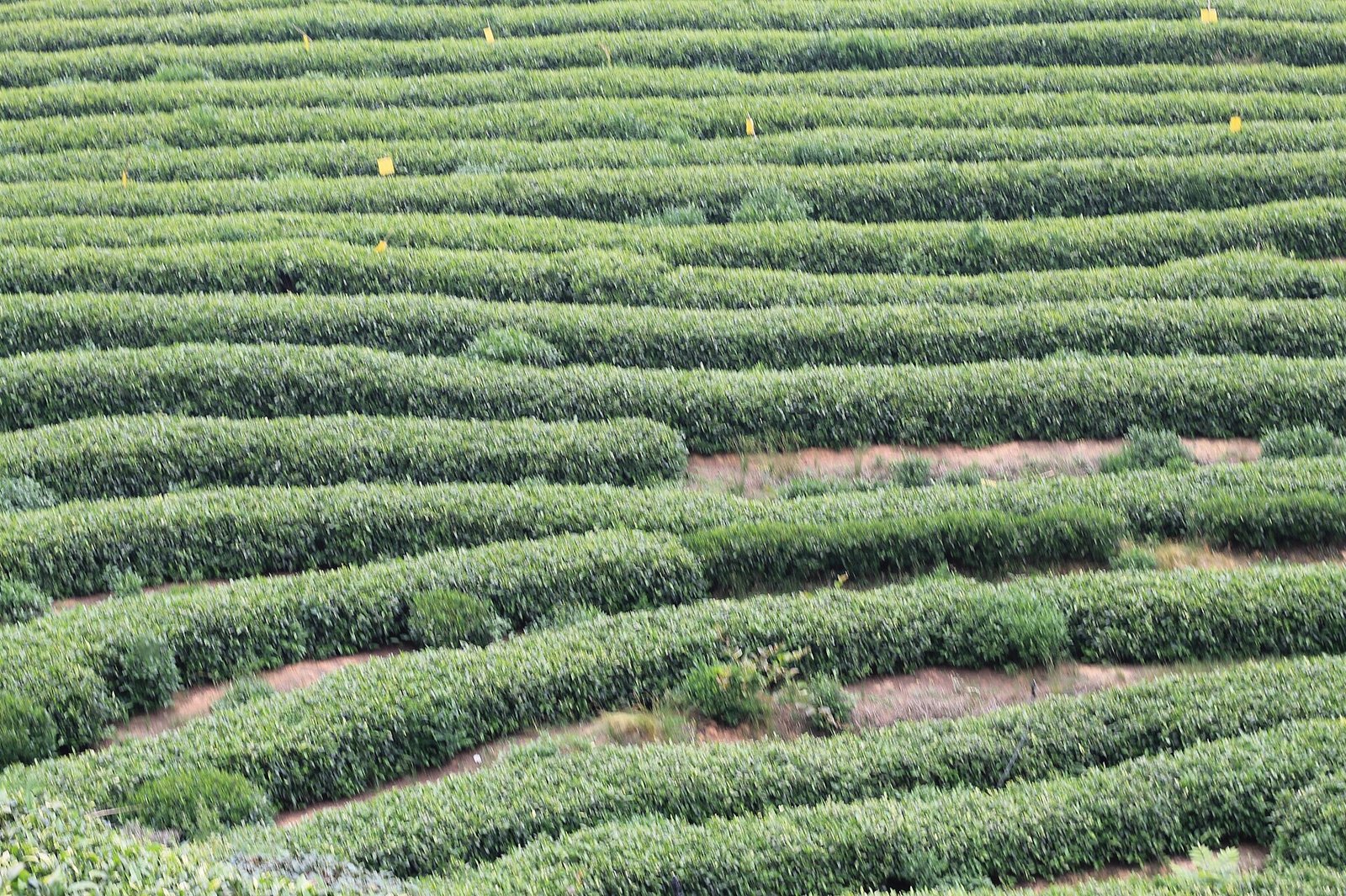
Late October to late November is the best window for Songyang ancient villages: cloud seas form on most clear mornings, highs average 21 °C against lows of 12 °C, and the tea terraces are still green under gold light.
| Season | Weather | What you see | Crowds |
|---|---|---|---|
| Mar–May | 15–25 °C, wet | Tea picking, new green | Low midweek |
| Jun–Aug | 30 °C+, humid | Cool relief at 800 m | School holidays |
| Oct–Nov | 12–21 °C, dry | Cloud sea, gold walls | Heavy at weekends |
| Dec–Feb | 4–14 °C, frost | Bare trees, rare snow | Quietest |
A frost warning was issued for the high villages on 9 November 2026, with dawn temperatures below 4 °C at Sidu and Sandu. Bring a warm layer.
Two days, four villages
Two days covers the four core villages comfortably if you have a car or a hired driver, because rural buses between hamlets are too thin and infrequent to build an itinerary on, and stop running well before dark.
- Day 1, 14:00 — walk Songyang Old Street while the light is flat.
- 16:00 — drive 20 minutes to Yangjiatang for the golden hour.
- Day 2, 06:30 — climb to Chenjiapu or Xikeng for the cloud sea.
- 10:00 — coffee and books at the Chenjiapu bookshop.
- 14:00 — Pingtian for bamboo weaving and a slow lunch.
- 17:00 — back to town, dinner on the old street.
Practical tips for a first visit
Songyang rewards preparation more than most rural destinations in China, because its villages scatter across a mountain county and the public transport linking them thins out fast once the last afternoon bus has gone, leaving taxis as the only option.
- Hire a driver for CNY 200–300 a day; cheaper than two taxis.
- Carry cash; village workshops rarely take foreign cards.
- Wear shoes with grip; every stone lane is polished.
- Book guesthouses one to two weeks ahead in autumn.
- Check shuttle rules the day before.
- Download a translation app; English is rare.
Songyang is no longer a secret, but it is still a place where the renovation has not finished — and that unfinished edge, scaffolding on one house and woodsmoke from the next, is what makes it worth the train ride. If you want more mountain villages without the crowds, our guide to Lishui’s older settlements covers the next valley over, and Huangshan’s cloud-sea mornings make a natural extension north. Tell us which village you would stay in, and read our honest take on Wuzhen’s canals before you book a water town.
Frequently asked questions
Are Songyang’s ancient villages free to visit?
Yes. All 78 nationally listed villages in Songyang are free to enter, with no ticket gates and no souvenir strips, as China Daily confirmed on 9 November 2026. Only separate attractions charge: Damushan Tea Garden is CNY 40.
How do I get to Songyang from Shanghai or Hangzhou?
Take a C-series train to Songyang Station on the Quzhou–Ningde line. C481 leaves Shanghai South at 06:56 and arrives 12:21 (CNY 144); from Hangzhou it is 3 hours 38 minutes on the same train, then bus 8 or a 15-minute taxi.
Which village should I visit first?
Start with Yangjiatang if you have one afternoon, because its tiered yellow walls state most clearly what makes these villages distinctive. Choose Chenjiapu if you want the bookshop, the cliff setting and an overnight stay.
Do I need a car in Songyang?
You need private transport to see more than one village a day. Hamlets sit 15–20 minutes apart and rural buses run roughly hourly, so a hired driver at CNY 200–300 a day is the practical choice for most visitors.
When is the best time to see the cloud sea?
Late October to late November gives the most reliable cloud sea, forming on clear, cold mornings after humid nights. Be in position by 06:30, since mist usually lifts within two hours of sunrise, which falls around 06:20 in early November.
Can I stay overnight in the villages?
Yes. Chenjiapu alone has 15 guesthouses, several converted from century-old rammed-earth houses, and Pingtian and Yangjiatang have smaller clusters. Weekend rates run CNY 300–600 in autumn, so book one to two weeks ahead.