


Dawn on the Micang range arrives sideways: mist sliding between beech trunks, one ridge of red burning above a valley still in shadow, and nobody else on the boardwalk. Guangwu Mountain red leaves cover 680 square kilometres of north-east Sichuan — the largest contiguous colour forest in Asia, and one of the least visited by anyone who does not read Chinese. The mountain sits in Nanjiang County, Bazhong City, about 128 km and two hours by road from Bazhong East railway station, and all three valleys open daily at 08:00. As of November 2026 the colour is still holding.
What is Guangwu Mountain?
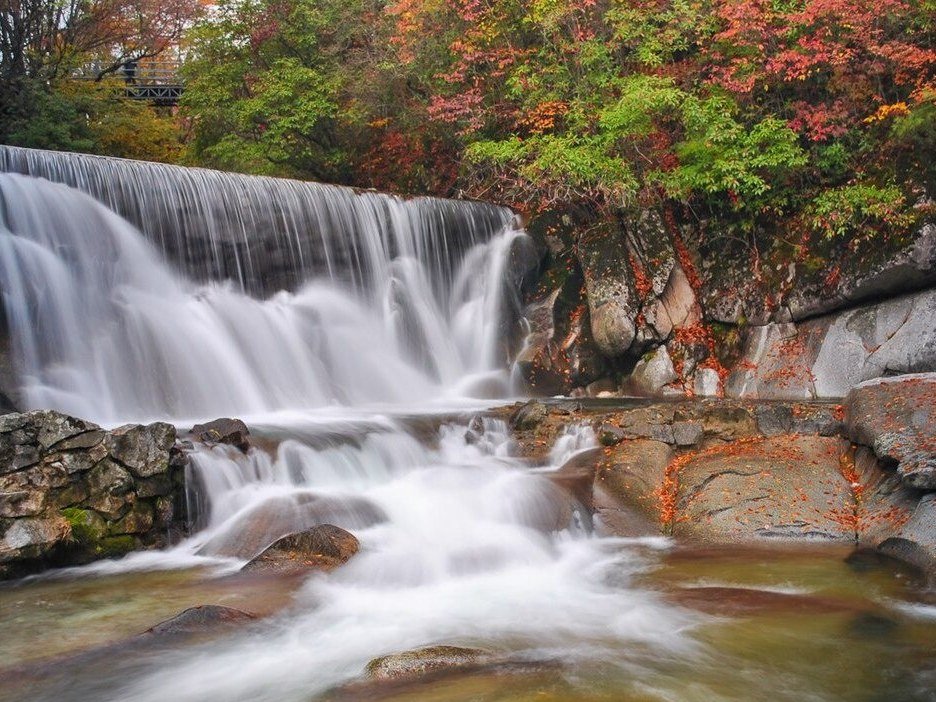
Guangwu Mountain is a 680-square-kilometre colour-forest area in Nanjiang County, Bazhong City, Sichuan Province, sitting inside the Guangwu Mountain–Nuoshui River UNESCO Global Geopark listed in 2018. The Taoyuan valley was rated a national 5A scenic area in December 2020.
The highest summit stands near 2,507 m, and the surrounding park runs to 820 km² with forest cover above 97 percent. Three separately ticketed valleys — Taoyuan, Micang Mountain and Shibayue Tan — sit up to 60 km apart.
What it lacks is an English profile. Chinese state media call it “Asia’s longest natural red carpet”; English reviews number in the dozens. In practice that means empty boardwalks at 08:30 and no cable-car queue.
Where exactly is Guangwu Mountain?
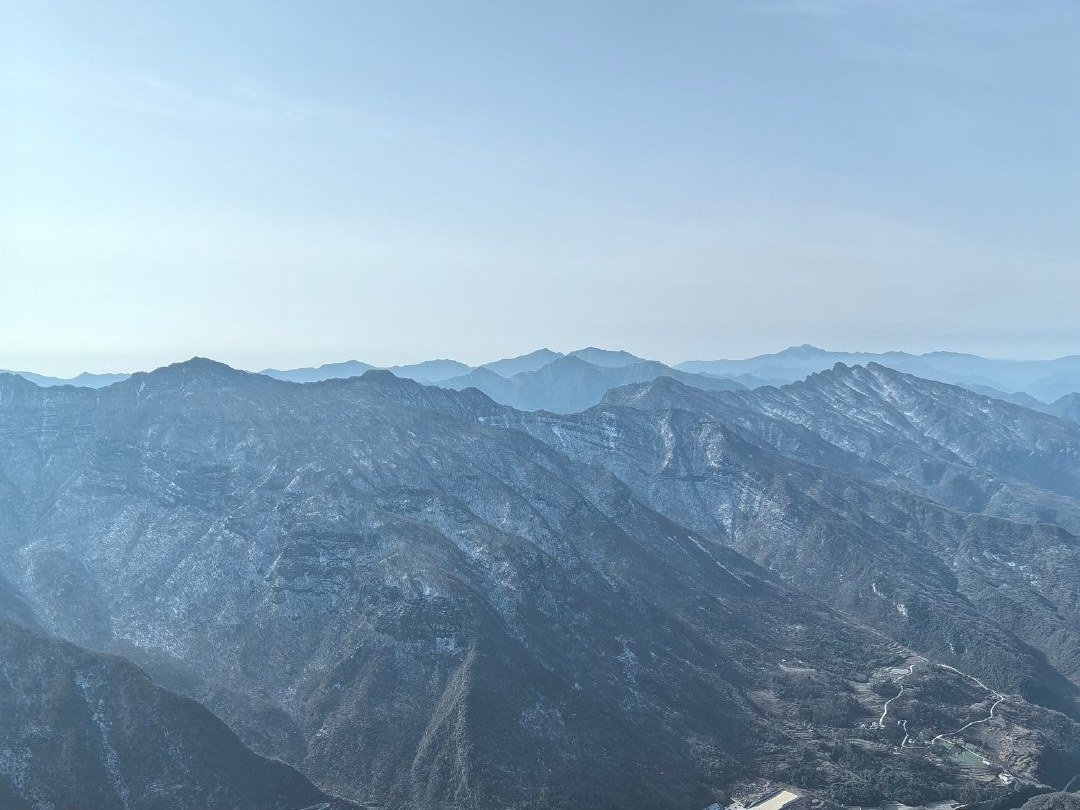
Guangwu Mountain sits on the southern slope of the Micang range, where Bazhong in Sichuan meets Hanzhong in Shaanxi, and the geopark itself straddles the provincial border across 1,818 km². Administratively the scenic area belongs to Nanjiang County.
The park counts 122 geological sites, five rated international, spread across karst peak clusters and the Micang Ancient Road — one of the three great Shu roads that linked the Sichuan Basin to the Yellow River plain since the Qin dynasty (Bazhong Culture and Tourism Bureau, 2026).
Nanjiang County covers 3,383 km² with forest cover above 70 percent. Three gates matter, and they are not interchangeable:
| Area | What it holds | Colour window, 2026 | On foot |
|---|---|---|---|
| Micang Mountain (Daba) | Natural Gallery, Heixiong Valley, Xianglu Mountain | Mid-Oct to late Nov | 6–8 h |
| Guangwu Mountain (Taoyuan) | Karst peaks, cloud seas, Yanzi Ridge | Early to late Oct | 4–5 h |
| Shibayue Tan | Eighteen pools in a 3.5 km gorge | Late Oct to late Nov | 2 h, downhill |
When do the Guangwu Mountain red leaves peak?
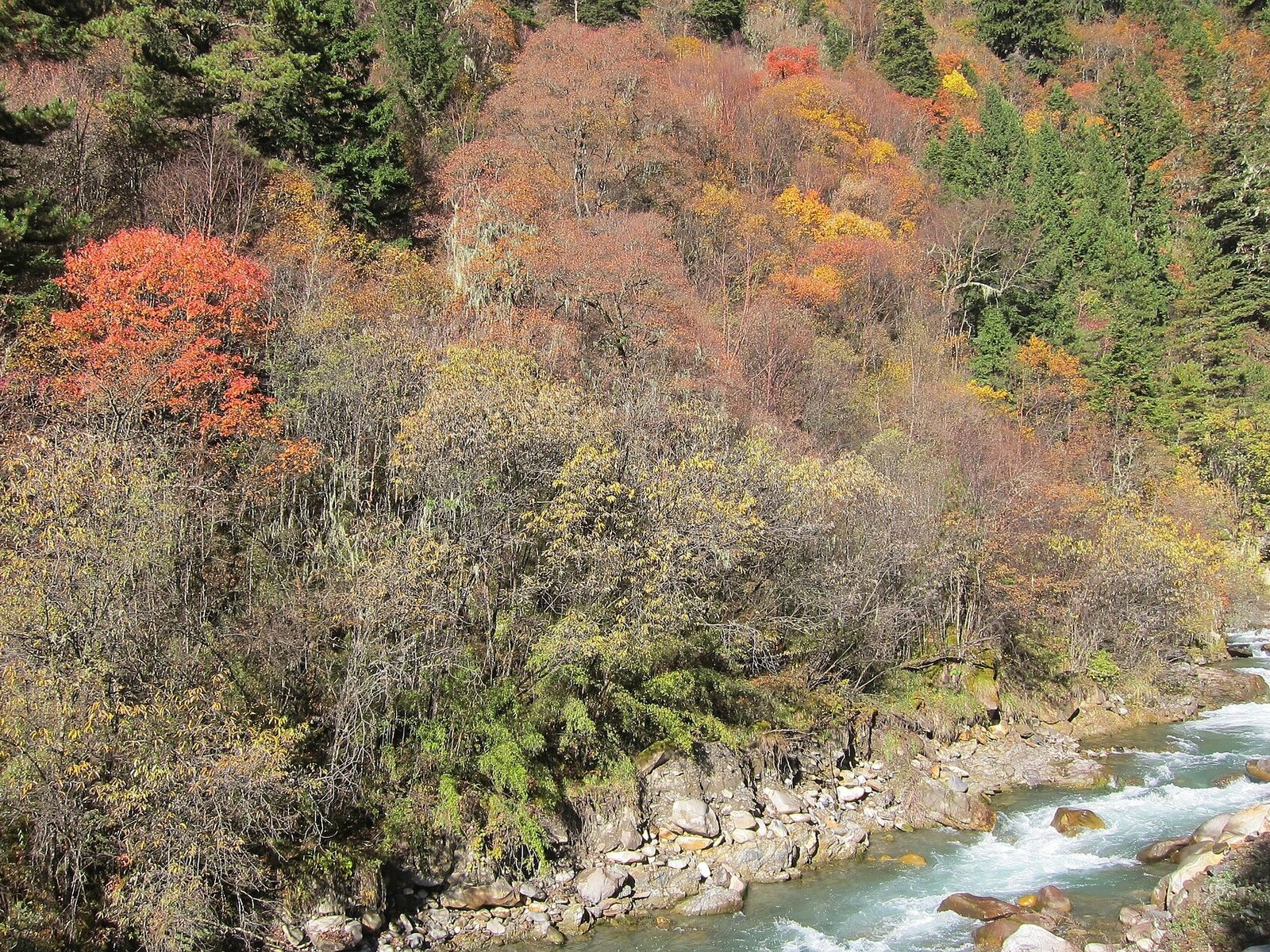
Guangwu Mountain red leaves peak between 15 October and 15 November, with colour descending from the high beech belt to the valley floors over roughly five weeks. The window differs by valley, so a single “best date” misleads.
Autumn 2026 ran five to seven days early. The 24th Guangwu Mountain International Red Leaf Festival opened on 18 October, and the Pacific Asia Travel Association used the occasion to name the park “Asia’s largest red-leaf viewing area” (Red Star News, 18 October 2026). Organisers extended the season: Natural Gallery and the Yanzi Ridge loop should hold colour into late November, Shibayue Tan into the last week.
The park publishes a daily red-leaf index. Grade I means 10–35 percent of leaves have turned, Grade II 35–60 percent, Grade III 60–95 percent — and Grade III is the photograph you came for (People’s Daily Sichuan, 19 October 2026).
How do you get to Guangwu Mountain?
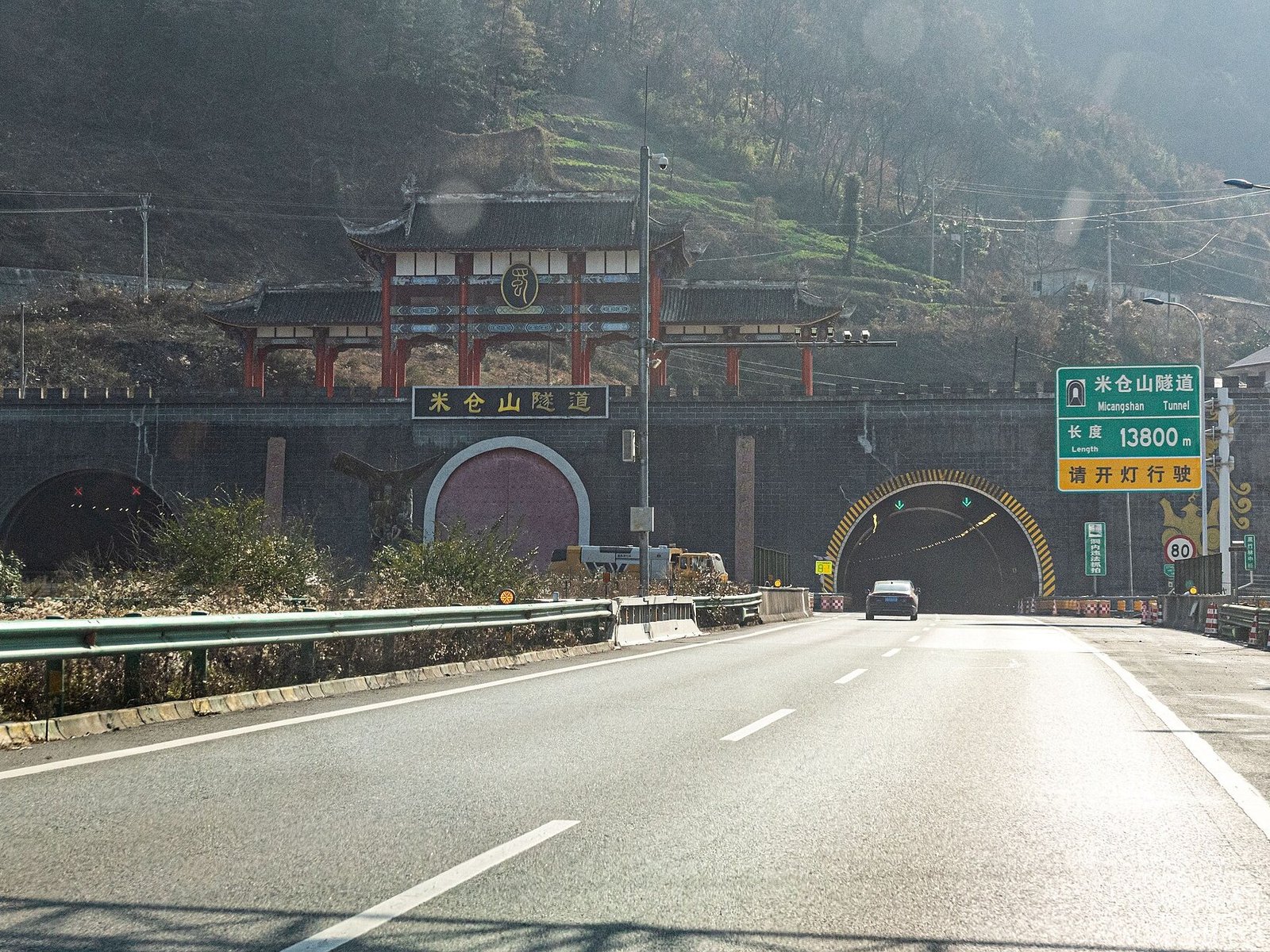
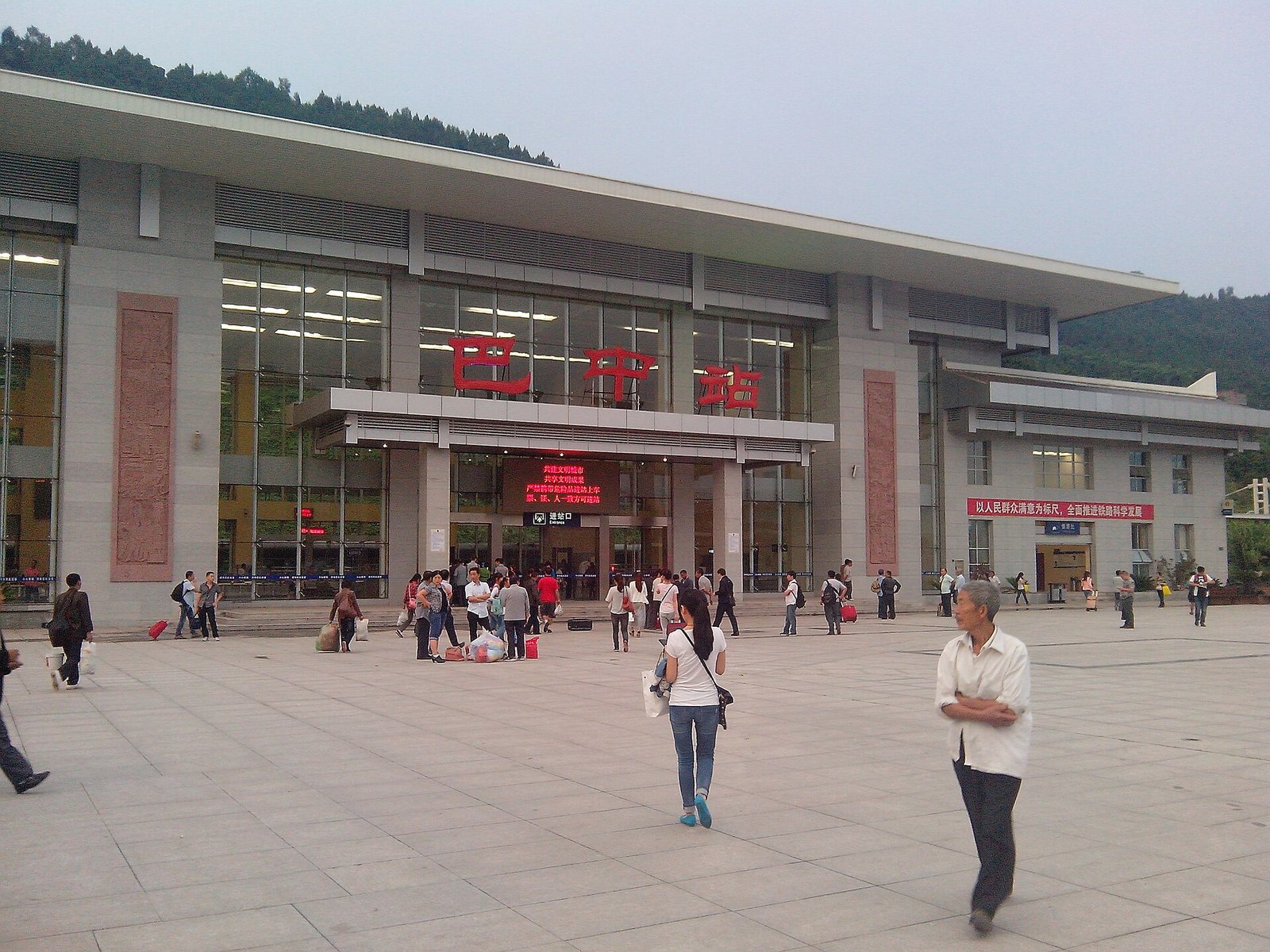
Two high-speed rail stations serve Guangwu Mountain: Bazhong East, 128 km and about two hours by road, and Hanzhong in Shaanxi, 66 km and roughly 80 minutes from the gate. Bazhong East suits anyone arriving from Chengdu or Chongqing.
The Bazhong–Nanchong line opened on 27 June 2024 and cut rail time from Chengdu to 2 h 16 min (Bazhong Culture and Tourism Bureau, 2026). Nine-seat shuttles then reach the Taoyuan gate in about two hours for 70–80 CNY, bookable a day ahead. Bazhong Enyang Airport serves 18 cities and sits 131 km, or two hours, from the park.
Here is the sequence that works:
- Book to Bazhong East, not Bazhong station.
- Reserve a shuttle seat the day before; they sell out.
- Sleep in Guangwu Mountain town, five minutes from the gate.
- Buy Micang Mountain tickets online; walk-up allocation is thin.
- Keep one buffer day — fog closes the Xianglu cableway without notice.
Which of the three areas should you choose?
Micang Mountain holds the thickest colour and the easiest access, which makes it the default for a first visit. Taoyuan trades leaf density for karst peaks and cloud seas. Shibayue Tan trades scale for water.
| If you want | Go to | Why |
|---|---|---|
| The classic red carpet | Micang Mountain | A kilometre of beech canopy |
| Cloud seas and cliffs | Taoyuan | Yanzi cable car to 1,800 m |
| Water and reflections | Shibayue Tan | Pools, few people, flat path |
A free bus links Taoyuan and Micang Mountain; Shibayue Tan lies 60 km away with no public service, so it needs a car or charter.
What does Shibayue Tan add that the others don’t?
Shibayue Tan is a 3.5 km gorge holding eighteen named pools, each fed by its own waterfall, and it is the only valley where you walk downhill the whole way. Admission is 55 CNY, plus 20 CNY for the shuttle up.
Start at the top. The path passes Yunti Pool, Pearl Pool, Lovers’ Pool, Five-Colour Pool and the Wedding Dress Waterfall, a fall of some 30 m that photographs best around 10:00, once sun reaches the gorge floor.
Local guides call it “north-east Sichuan’s Jiuzhaigou”, which oversells it. What it truly offers is the park’s best red-on-green reflection shots, at a tenth of the crowd at Natural Gallery.
Why is this forest so red?
More than forty deciduous species turn here, and the anchor is Bashan beech, a tree that survived the last ice age in these valleys. Four of the world’s eleven beech species grow inside the geopark across about 70 km².
The British Royal Society classified Bashan beech (Fagus pashanica) as a “living plant fossil”, and its leathery leaves hold colour longer than maple — which is why the season runs nearly two months rather than two weeks (Cover News, 17 April 2018).
Altitude does the rest. Colour starts in the 2,000 m beech belt in early October and drops roughly 100 m a week, so late visitors should aim low, not high.
What does a ticket cost in 2026?
Three separate tickets apply, and none covers the others, so budget for the valley you actually plan to walk. Peak pricing runs from 1 March to 30 November, taking in the whole leaf season.
| Area | Peak / off-peak | Shuttle | Cableway |
|---|---|---|---|
| Taoyuan | 80 / 40 CNY | 40 CNY | Yanzi, 110 return |
| Micang Mountain | 90 / 45 CNY | 60 CNY | Xianglu, 150 return |
| Shibayue Tan | 55 CNY flat | 20 CNY | None |
Admission is free for ages 65 and over, children 1.2 m or shorter, serving military, disabled visitors and licensed guides; half price for ages 60–64, students and children 6–18. Shuttles and cableways are never discounted, and the nightly Dream of Guangwu Mountain show adds 168 CNY.
Where should you sleep, and what should you eat?
Guangwu Mountain town, five minutes from the Taoyuan gate, holds most of the beds, from 100 CNY guesthouses to glass-roofed capsules inside the Micang forest. Weekend rates roughly double in leaf season, and the town sells out about three weeks ahead.
Dinner is the reason to stay in town. Nanjiang yellow goat arrives as a clear-broth hotpot, simmered with local radish and eaten with a chilli dip; Bashan chicken and da su rou, thick battered pork fried in slabs, fill out the table. Budget 60–90 CNY a head.
Carry water up the mountain: shops inside the gates are few. For the chilli vocabulary, our guide to why Sichuan’s spicy cuisine is a must-try explains the hierarchy.
Practical tips for a first visit
Cold mornings decide comfort: expect close to 0 °C at 2,000 m before sunrise and 15 °C by noon in the same jacket.
- Enter at 08:00. Tour buses arrive at 10:30 and the boardwalk turns single-file.
- Wear shoes with grip; wet beech leaves make wooden steps slippery.
- Carry small cash — signal is patchy and QR payment sometimes fails.
- Read the red-leaf index each morning, not the night before.
- Leave the drone at home; the core zone is protected forest.
Is Guangwu Mountain worth the detour?
Guangwu Mountain rewards two nights and a tolerance for mountain weather, because the park is a range rather than a single gate. The scale is the argument: 680 km² of continuous colour has no equivalent among the well-marketed autumn destinations.
Aim for the second week of November, the safest overlap between Micang Mountain and Shibayue Tan. Book the bed and the shuttle before the train, then let the morning index choose your valley.
Tell us which one you picked. If you are chasing autumn across China, our guide to Tachuan, the village that turns red every November, covers Anhui’s smaller version, while Tengchong’s ginkgo village swaps red for gold in Yunnan. Birders heading to Sichuan in spring should bookmark our Sichuan birdwatching guide.
Frequently asked questions
When is the best time to see Guangwu Mountain red leaves?
The safest window is 15 October to 15 November. Micang Mountain peaks from mid-October, Taoyuan turns earliest in early October, and Shibayue Tan runs a week behind. Colour moves downhill about 100 m a week, so late arrivals should start low.
How do I get to Guangwu Mountain from Chengdu?
Take a high-speed train from Chengdu East to Bazhong East, about 2 h 16 min, then a nine-seat scenic shuttle for roughly two hours and 70–80 CNY to the Taoyuan gate. Trains also reach Hanzhong in Shaanxi, 66 km from the park.
Do I need separate tickets for each area?
Yes. Taoyuan, Micang Mountain and Shibayue Tan are ticketed separately at 80, 90 and 55 CNY in peak season, and no ticket covers another valley. Shuttle buses, at 40, 60 and 20 CNY, are charged on top.
Can I visit Guangwu Mountain without a car?
Partly. Shuttles reach Taoyuan and a free bus links Taoyuan with Micang Mountain, but Shibayue Tan sits 60 km away with no public service. Two valleys by public transport is realistic; three is not.
How many days do I need at Guangwu Mountain?
Two nights covers Micang Mountain and Taoyuan without rushing. Add a third for Shibayue Tan, which needs a two-hour drive each way from Guangwu Mountain town and is best walked in morning light.
Is Guangwu Mountain crowded?
Less than its scale suggests. Chinese public holidays fill every gate, but on an ordinary November weekday Natural Gallery is quiet before 10:30 and the Shibayue Tan path stays near-empty.