


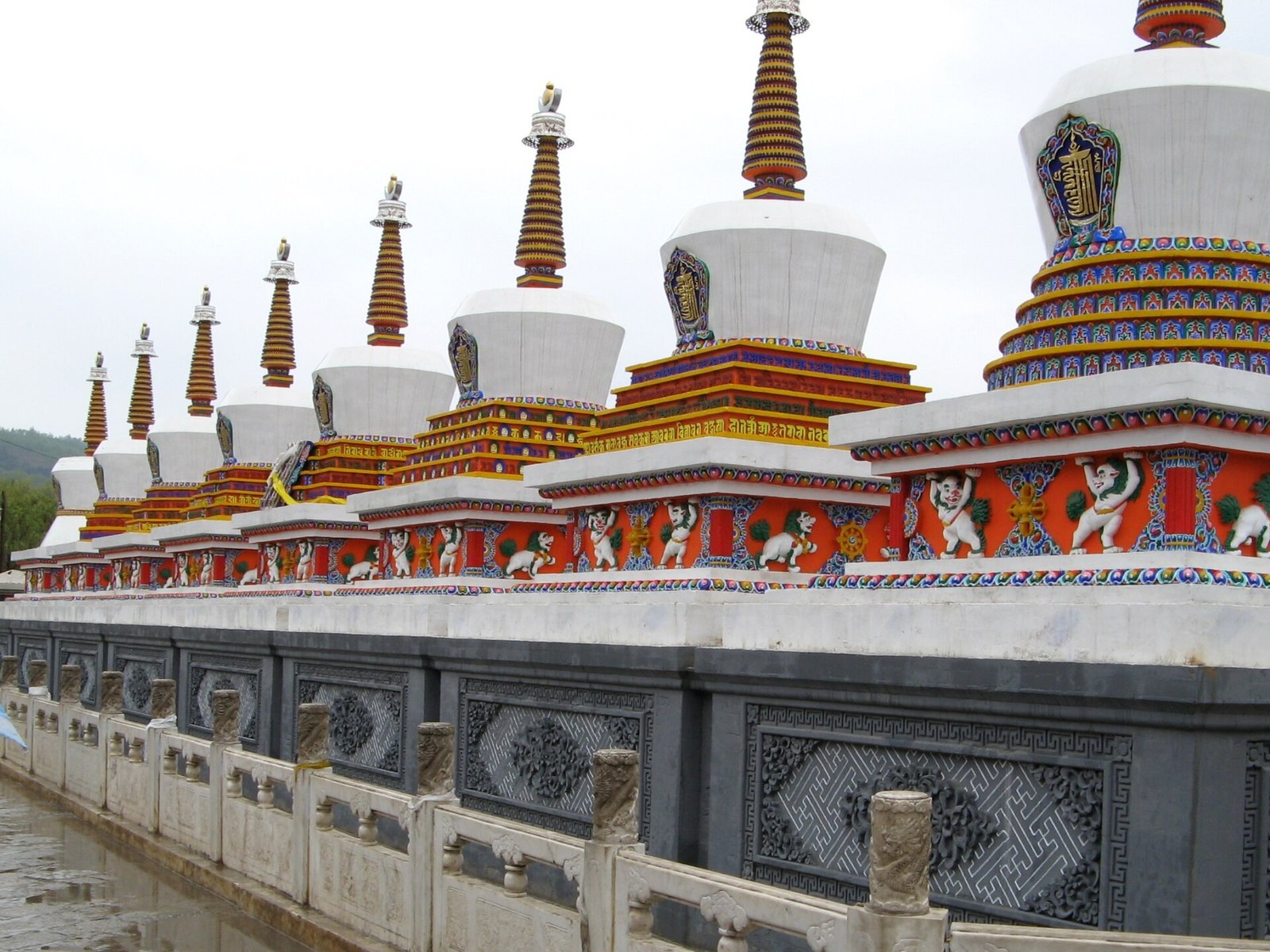
Dawn at Kumbum Monastery arrives quietly: frost on the gilded roofs, the wooden clack of prayer wheels, and pilgrims already circling the Eight Stupas with butter lamps cupped in both hands. Kumbum Monastery (Ta’er Si) is a Tibetan Buddhist complex in Lusar Town, Huangzhong District, about 26 km southwest of Xining in Qinghai Province. It is the birthplace of Tsongkhapa, founder of the Gelug school, and its butter sculptures, murals and appliqué survive nowhere else at this scale. Bus 909 from Xining Railway Station reaches the gate in roughly 90 minutes for CNY 4.
At jusha.travel, we love sharing tips that turn a hurried photo stop into a memory you keep. Give Kumbum three hours rather than ninety minutes and it opens up: the silver reliquary inside the Great Golden Hall, the chilled butter-sculpture gallery, the courtyard where young monks slap their palms in debate. This guide covers the history, the halls worth your time, 2026 prices, transport and etiquette.
What is Kumbum Monastery?
Kumbum Monastery is a Gelug Tibetan Buddhist monastery founded in 1379 at the birthplace of Tsongkhapa; the complex covers 0.45 square kilometres on the slope of Lotus Mountain and holds roughly 9,300 halls and monk cells, making it one of the six great Gelug monasteries.
The Han name is blunter: Ta’er Si means “the monastery of the stupa”, because a stupa stood here long before any hall did. You still enter through a working pilgrim town, past eight white towers.
Why “kumbum” means a hundred thousand images
Tsongkhapa was born here in 1357, two decades before he left for central Tibet and reformed Tibetan Buddhism. His mother, longing for a son who would not return, received a self-portrait in his own nose blood and a message: build a stupa over the sandalwood tree that grew where he was born, and it is as good as meeting him. She did, in 1379; pilgrims still press against the railing to see the tree’s descendant.
From one stupa to a monastery city
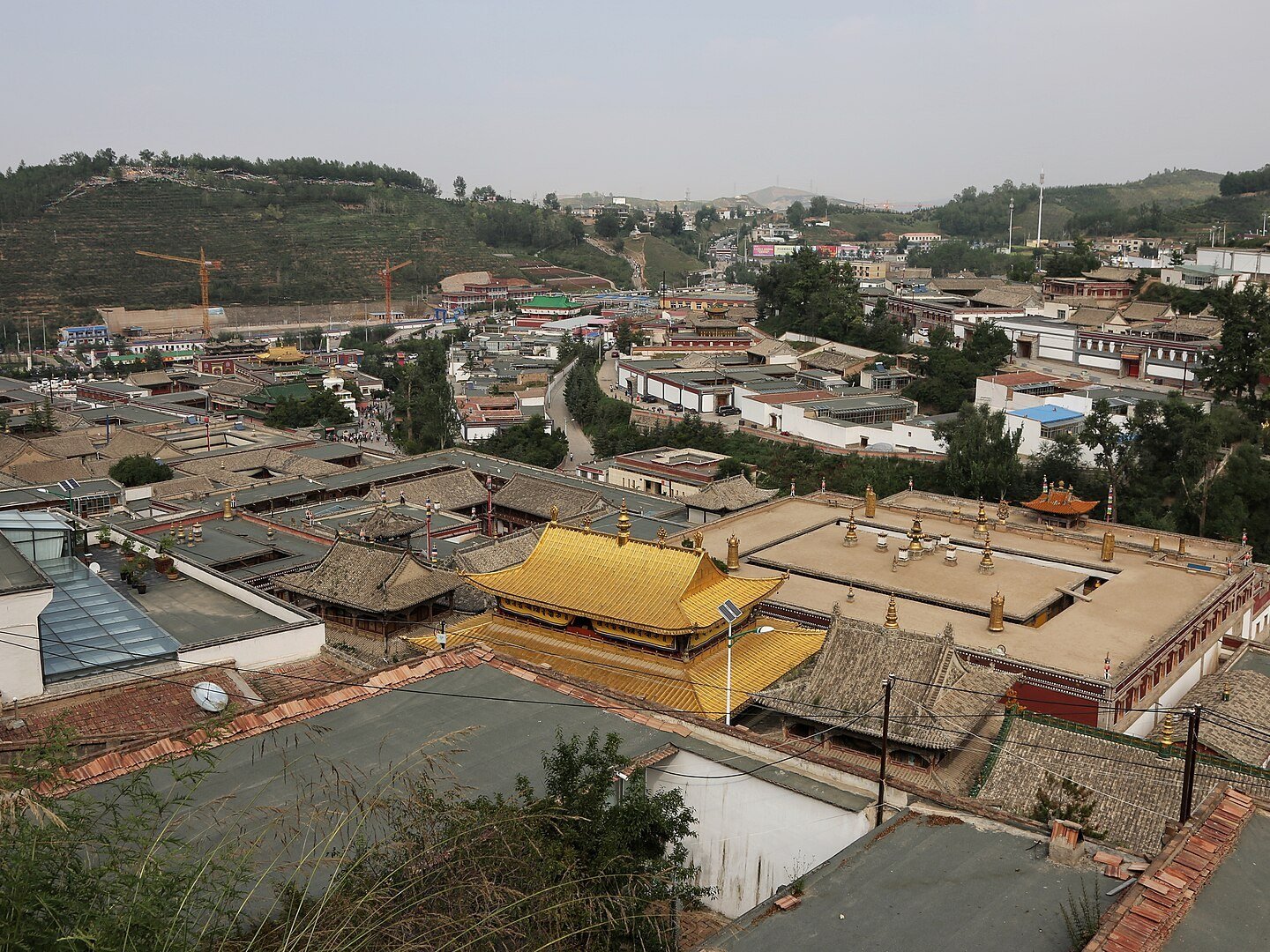
A meditation cell followed in 1560, then the Maitreya Hall in 1577, then colleges as the order grew. By 1711 the roofs were gilded with 1,300 taels of gold, and the result is a hillside town of red walls and gold eaves laid along a ravine.
Why does a monastery in Qinghai matter so much to Tibetans?
Kumbum matters because Tsongkhapa was born here, which makes it a pilgrimage site second only to Lhasa for many Tibetan Buddhists, and one of the six great Gelug monasteries — the only one within a half-day of a Chinese rail hub.
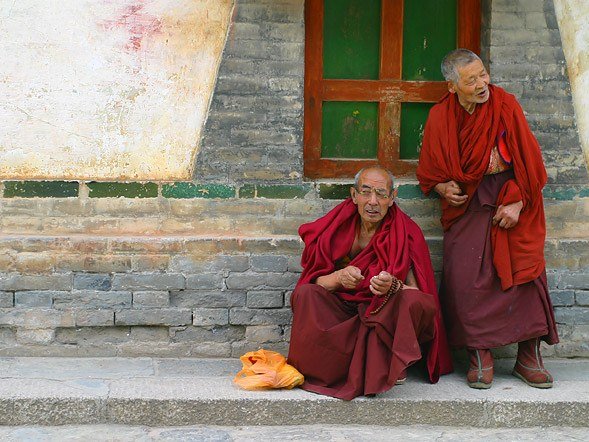
That access changes the crowd. On a November morning you share the courtyards with Tibetan families from Qinghai and Gansu who travelled overnight, Hui traders from the town below, and a few foreigners who came for the architecture.
This is a working monastery, not a museum: around 800 monks study sutra, tantra, medicine and the Kalachakra calendar. Our notes on first impressions of Tibet’s spiritual sites describe the wider tradition.
What are the three masterpieces of Kumbum?
The three masterpieces at Kumbum are butter sculpture, mineral-pigment mural painting and appliqué embroidery, a trio the monastery calls its three wonders of art and the reason art historians make the trip.
Butter sculpture: art that is meant to melt
Monks shape yak butter into flowers, deities and whole narrative scenes, working in unheated rooms with their fingers chilled in iced water so the butter holds. A single piece can take three months, and the Upper and Lower Butter Flower Courts compete each year, only seeing each other’s work on the night it goes on display. China News Service, describing the 2026 Lantern Festival show, noted monks returning to the ice bucket between strokes.
The gallery keeps finished pieces behind refrigerated glass year-round, but photography is banned inside. The public showing falls on the fifteenth day of the first lunar month, when the town turns out after dark.
Murals and appliqué: pigment and silk
Murals cover the inner walls in mineral colours — malachite green, cinnabar red, ground gold — that hold their tone because the pigment is stone, not dye. Appliqué is the quieter craft: silk cut and padded into three-dimensional figures, then stitched onto banners. Ask a guide to point out the Sixteen Arhats banner in the Great Assembly Hall.
Which halls should you actually see?
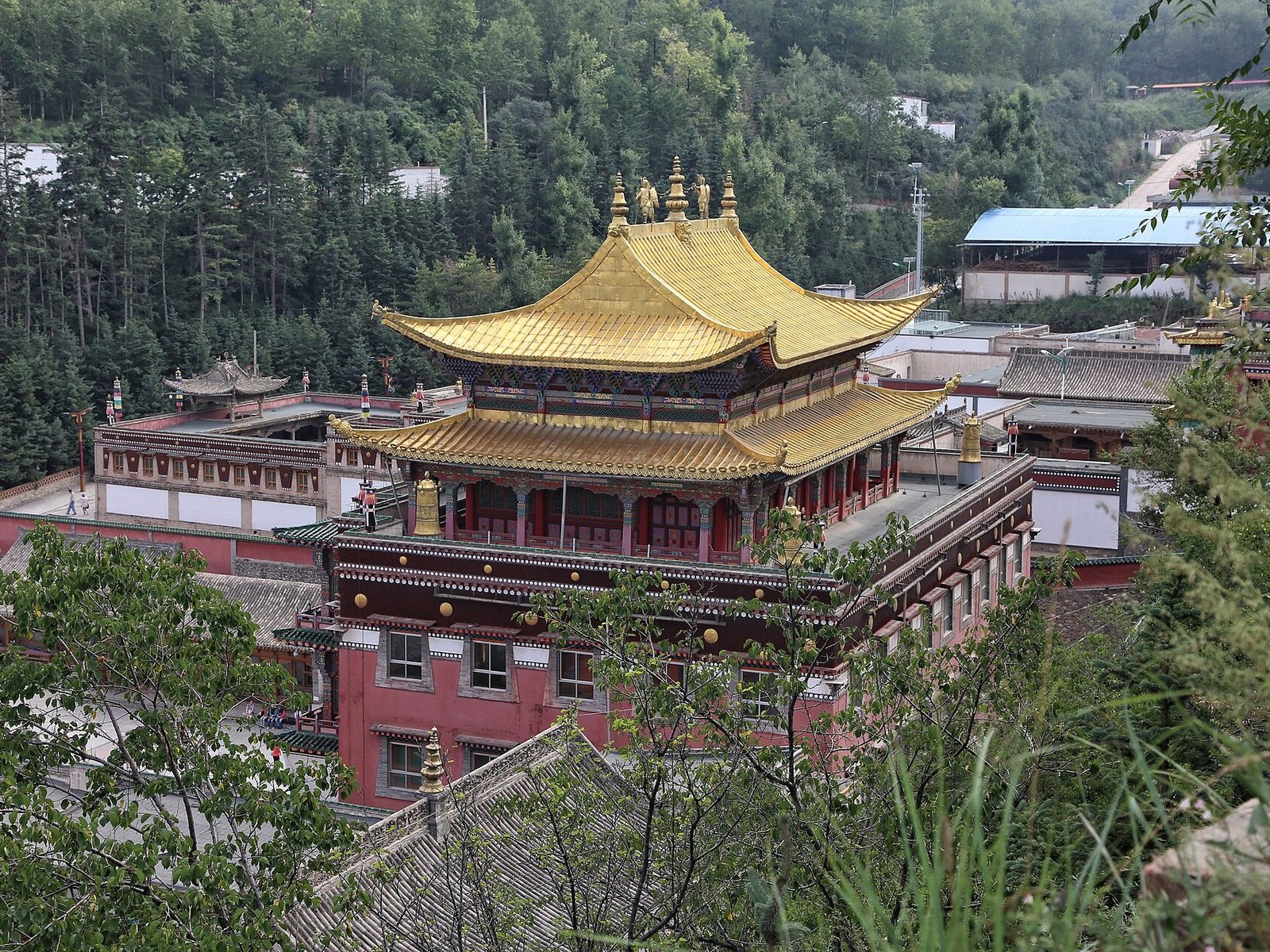
Five halls carry most of the meaning here, and seeing them in this order saves steps, because the complex climbs a ravine and backtracking costs a steep walk.
| Hall | What to look for | Time |
|---|---|---|
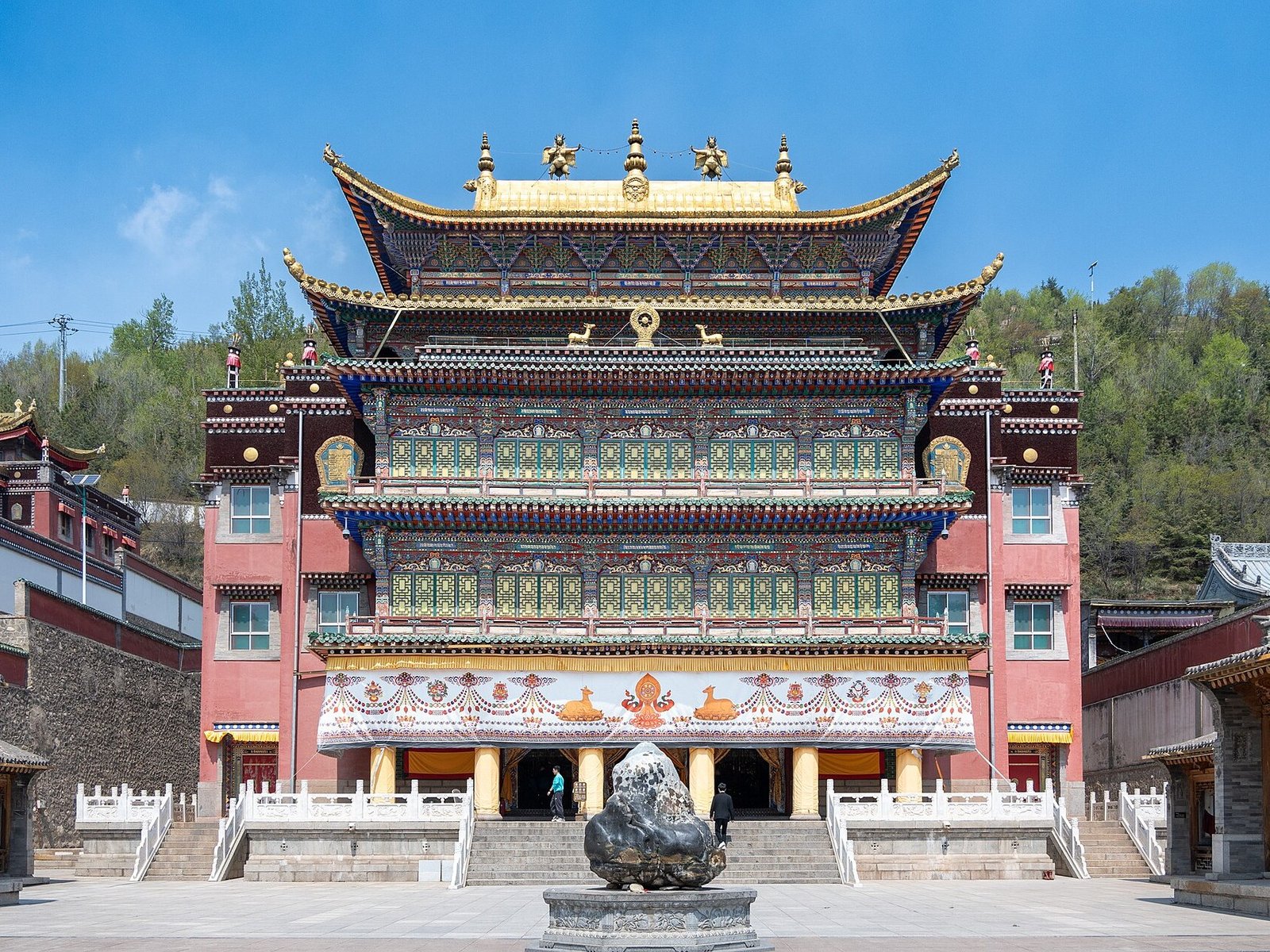
| Great Golden Hall | Silver reliquary, gilded copper roof | 30 min |
| Great Assembly Hall | 154 pillars, 6,000 monk seats | 25 min |
| Butter Sculpture Gallery | Refrigerated sculptures, no photos | 20 min |
| Small Golden Hall | Protector deities, animal specimens | 15 min |
| Eight Stupas | Built 1776, 6.4 m each | 15 min |
The Great Golden Hall sits at the centre. Xinhua’s profile of the monastery, published 20 February 2016, records a silver stupa about 11 metres tall rising through the gloom, set with coral and turquoise and holding Tsongkhapa’s relics.
How do you get to Kumbum Monastery from Xining?
The monastery is about 26 km from central Xining, and bus 909 from the railway station is the cheapest way there, running 60 to 90 minutes for CNY 4.
| Method | Cost | Time | Notes |
|---|---|---|---|
| Bus 909 | CNY 4 | 60–90 min | Station east square |
| Express shuttle | CNY 5.5 | 40 min | Xinning Road, every 5–10 min |
| Shared taxi | CNY 10–15 | 20–30 min | Fills with four passengers |
| Taxi | CNY 60–80 | 30 min | One way, agree the fare first |
| From the airport | CNY 120–180 | 50–60 min | About 40 km, direct |
- Take bus 909 from the east square of Xining Railway Station, or the express shuttle from Xinning Road.
- Get off at the East Gate stop and walk uphill past the souvenir arcade to the ticket office.
- Buy your ticket and keep it — it is checked again at several halls.
- Walk clockwise around the Eight Stupas before entering the main courtyard.
- Climb to the Great Golden Hall first, then work downhill through the remaining halls.
One arrival note: the car park sits below the gate, and the shuttle inside the scenic area charges CNY 35 each way. Walking up takes fifteen minutes. Our guide to Xining’s Tibetan Buddhist heritage covers the rest of the city.
What does a ticket cost in 2026?
A ticket costs CNY 70 in high season, from 1 April to 31 October, and CNY 40 in low season, from 1 November to 31 March, with half-price tickets at CNY 35 and CNY 20.
Those figures come from a Qinghai price commission notice still in force as of November 2026, confirmed on the provincial government’s public reply page on 10 May 2025. Children under 1.2 metres and visitors over 70 enter free. Hours shift too: 07:30 to 18:00 in high season with last entry at 17:00, and 08:00 to 17:30 in low season with last entry at 16:00.
Guides are extra. An official guide costs around CNY 160 for five people or fewer; unofficial guides outside quote less and often route you through shops.
When is the best time to visit?
November is the best month for Kumbum if you want quiet courtyards, because visitor numbers drop sharply after October, the low-season ticket applies and the light stays low and warm all day.
Spring and autumn bring the clearest skies; July and August bring the crowds. The May Day holiday alone drew nearly 50,000 visitors in its first four days in 2025, according to Huangzhong’s own count reported on 5 May 2025. Winter is genuinely cold at 2,600 metres, so dress in layers and expect a few halls to be shut.
What etiquette should you follow inside?
Kumbum asks visitors to dress modestly, keep voices low and never photograph the interiors of halls; free aprons are lent at the gate to anyone in shorts or sleeveless tops.
Walk clockwise around stupas and prayer wheels, remove your hat before entering a hall, and step over thresholds rather than on them. Do not touch statues, thangkas or ritual instruments. To photograph monks or pilgrims, ask first — a nod is usually enough.
Offerings are part of the visit rather than an add-on. A jar of yak butter from a stall outside costs a few yuan and can be added to the lamps in the Great Golden Hall; nobody expects it from foreigners, and it is received warmly.
Practical tips for a first visit
- Arrive at opening: empty courtyards and the best light on the gold.
- Allow three hours, or you will miss the debate courtyard.
- Bring cash for butter and tea; card readers fail on the hill.
- Walk slowly. 2,600 metres is not extreme, but the stairs are.
- Skip the souvenir arcade unless you enjoy haggling.
Final thoughts
Kumbum rewards both the believer and the merely curious. The experience is direct: cold air, gold light, the smell of butter and juniper, and monks chanting at morning assembly. Come early, stay longer than you planned, and leave the camera in your bag where it counts.
If Kumbum whets your appetite for the plateau, our guide to the Potala Palace in Lhasa explains what changes when you cross into Tibet proper, and our Silk Road route shows how Xining fits a longer trip.
Have you stood in the courtyard at Kumbum? Tell us what surprised you in the comments — we read every one.
Frequently asked questions
How far is Kumbum Monastery from Xining?
Kumbum Monastery is about 26 km southwest of central Xining, a 30-minute taxi ride or a 60 to 90-minute trip on bus 909, which costs CNY 4.
How much does it cost to enter Kumbum Monastery?
Entry is CNY 70 from 1 April to 31 October and CNY 40 from 1 November to 31 March, with half-price tickets at CNY 35 and CNY 20 for students and seniors.
Can you take photos inside Kumbum Monastery?
Photography is banned inside every hall, including the butter sculpture gallery, though you may photograph the exterior buildings and stupas freely.
What is Kumbum Monastery famous for?
Kumbum is famous for its three art masterpieces — butter sculpture, mineral murals and appliqué embroidery — and as the 1379 birthplace of Tsongkhapa, founder of the Gelug school.
Is half a day enough for Kumbum Monastery?
Half a day covers the main halls, but three hours inside the complex is better, and most travellers pair it with an afternoon back in Xining.
How do you reach Kumbum from Xining airport?
A direct taxi from Caojiabao Airport takes 50 to 60 minutes and costs CNY 120 to 180, while the airport bus plus bus 909 takes about two hours for under CNY 30.