


Shanhaiguan: Where the Great Wall Walks Into the Sea
On a November morning the Bohai Sea is the colour of brushed steel, and the wall does something no wall should do: it walks into the water. Nine courses of granite step off the beach and keep going until the surf closes over the last block, 22.4 metres out. Shanhaiguan is the Ming fortress town in Qinhuangdao, Hebei, that anchors the eastern end of the Great Wall, two hours ten minutes from Beijing by high-speed train.
At jusha.travel, we love sharing tips that turn a name on a map into a place you can actually walk. Below is how the sea wall was built, what the First Pass Under Heaven looks like up close, what tickets cost in 2026, and the half-day route that fits both in.
What is Shanhaiguan, and why does the Great Wall end here?
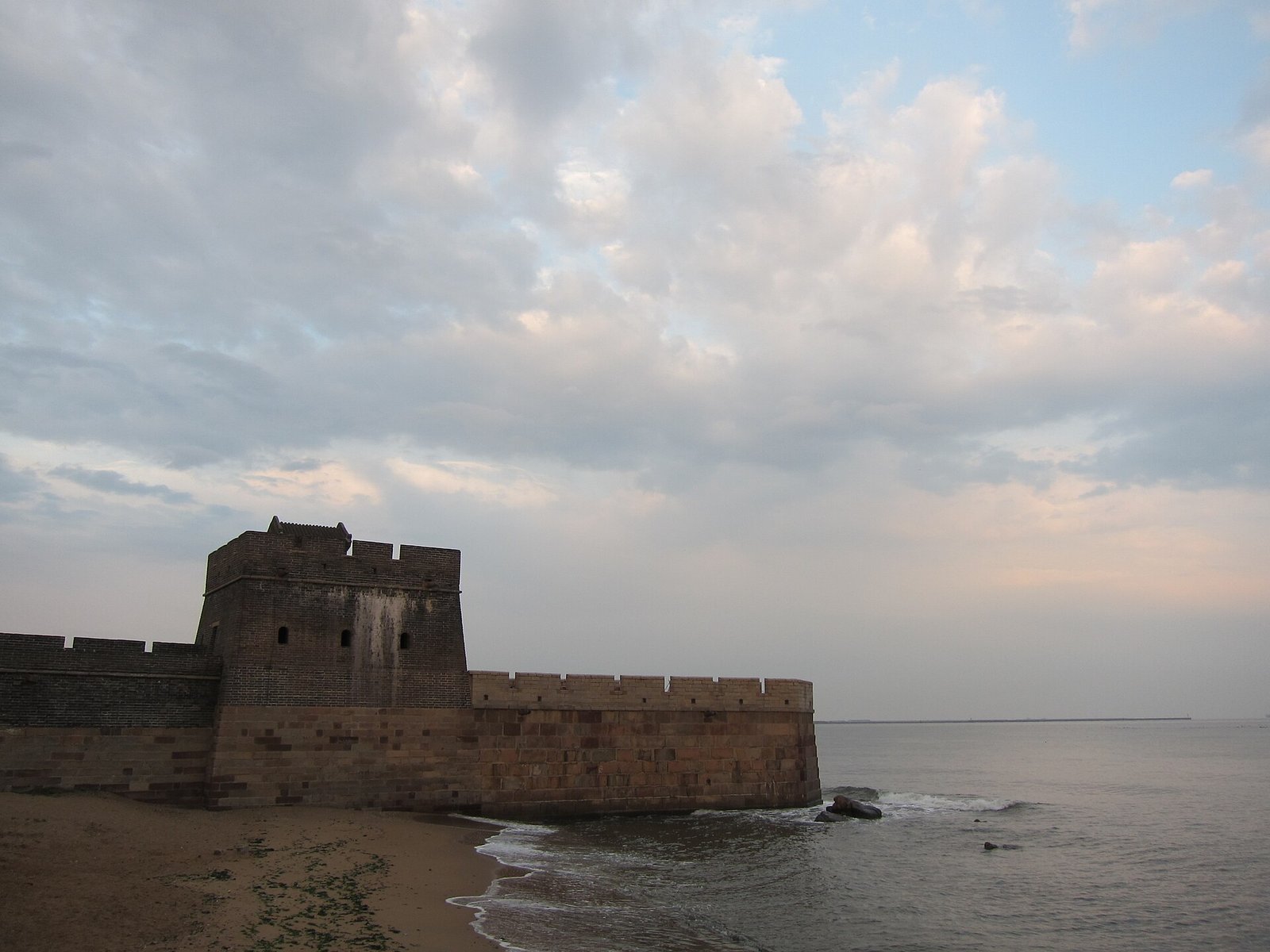
Shanhaiguan is a Ming garrison city in Qinhuangdao, Hebei, built in 1381 by general Xu Da, where the Great Wall’s eastern line reaches the Bohai Sea. Its ramparts run 4 km around the old town, stand 14 m high and are 15 m thick at the base.
Four gates pierce the circuit — Zhendong east, Ying’en west, Wangyang south, Weiyuan north — and the eastern one carries the tower everyone photographs. Seven linked enclosures made the fortress, including Ninghai City at Laolongtou.
Why push masonry into salt water at all? Cavalry could not swim, but in cold winters the shallows here froze for roughly a month and riders crossed the ice to slip around the pass. The sea wall closed that gap. UNESCO listed the Great Wall in 1987; the pass has been protected since 1961.
Laolongtou: the 22-metre wall that has stood in salt water since 1579
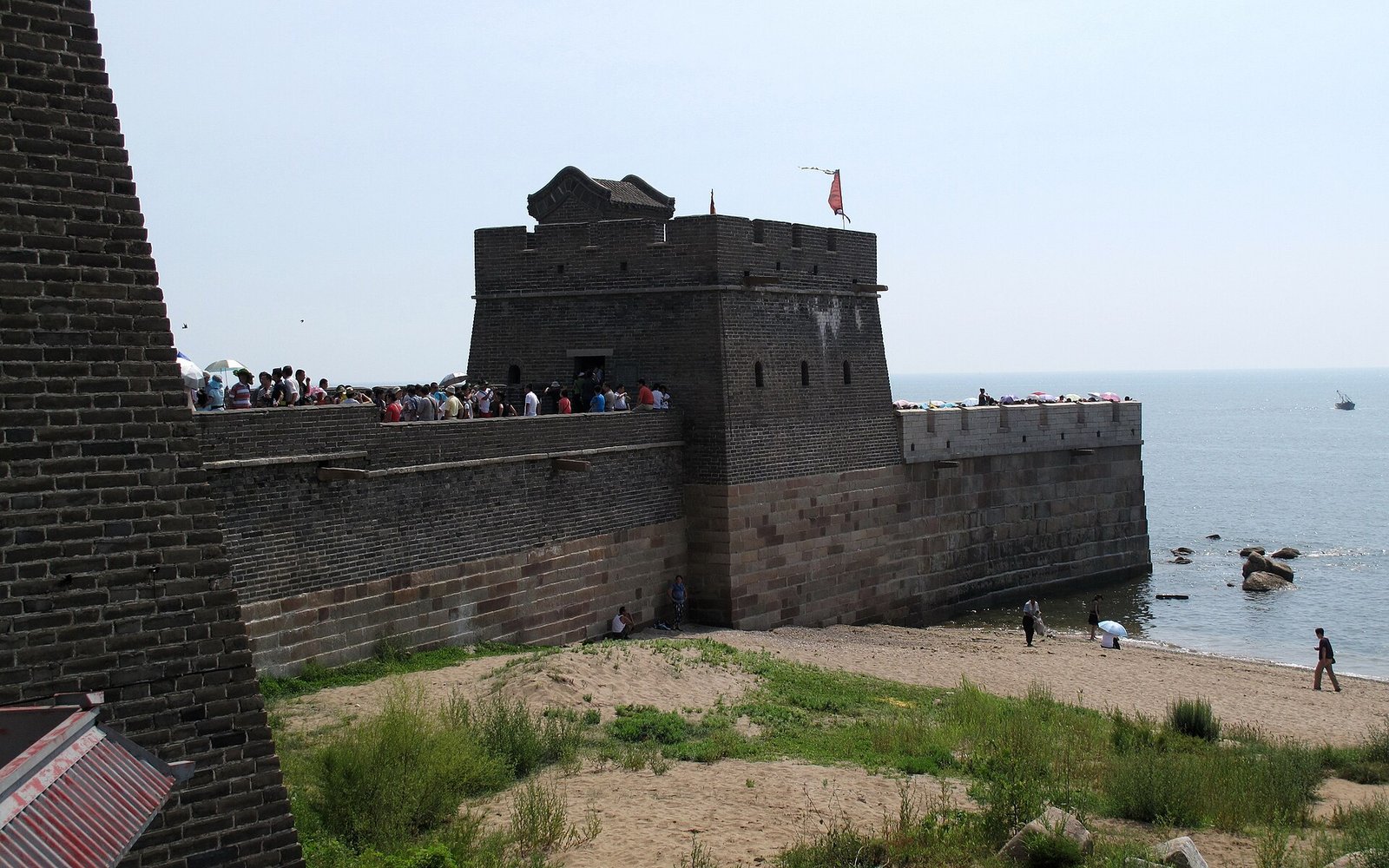
Laolongtou, or Old Dragon’s Head, is the 22.4-metre granite spur that carries the Great Wall into the Bohai Sea, built in 1579 under Qi Jiguang, the Ming general commanding the Ji garrison.
Qi sent his deputy Wu Weizhong to extend the wall seven zhang — about 22 metres — past the tideline. The spur stands 9.2 m high and 8.3 m wide in nine courses. Offshore, surveyors mapped 300-plus fallen blocks across 500 square metres, with the base running near 30 m. Shelling in 1900 left rubble; the present structure is a 1987 rebuild.
Walk to the tip and you stand on Jinglu Terrace, the only offshore bastion on the entire Wall. Behind you the masonry climbs back onto land and runs west for 6,000 km or so.
How does a stone wall survive 440 years of waves?
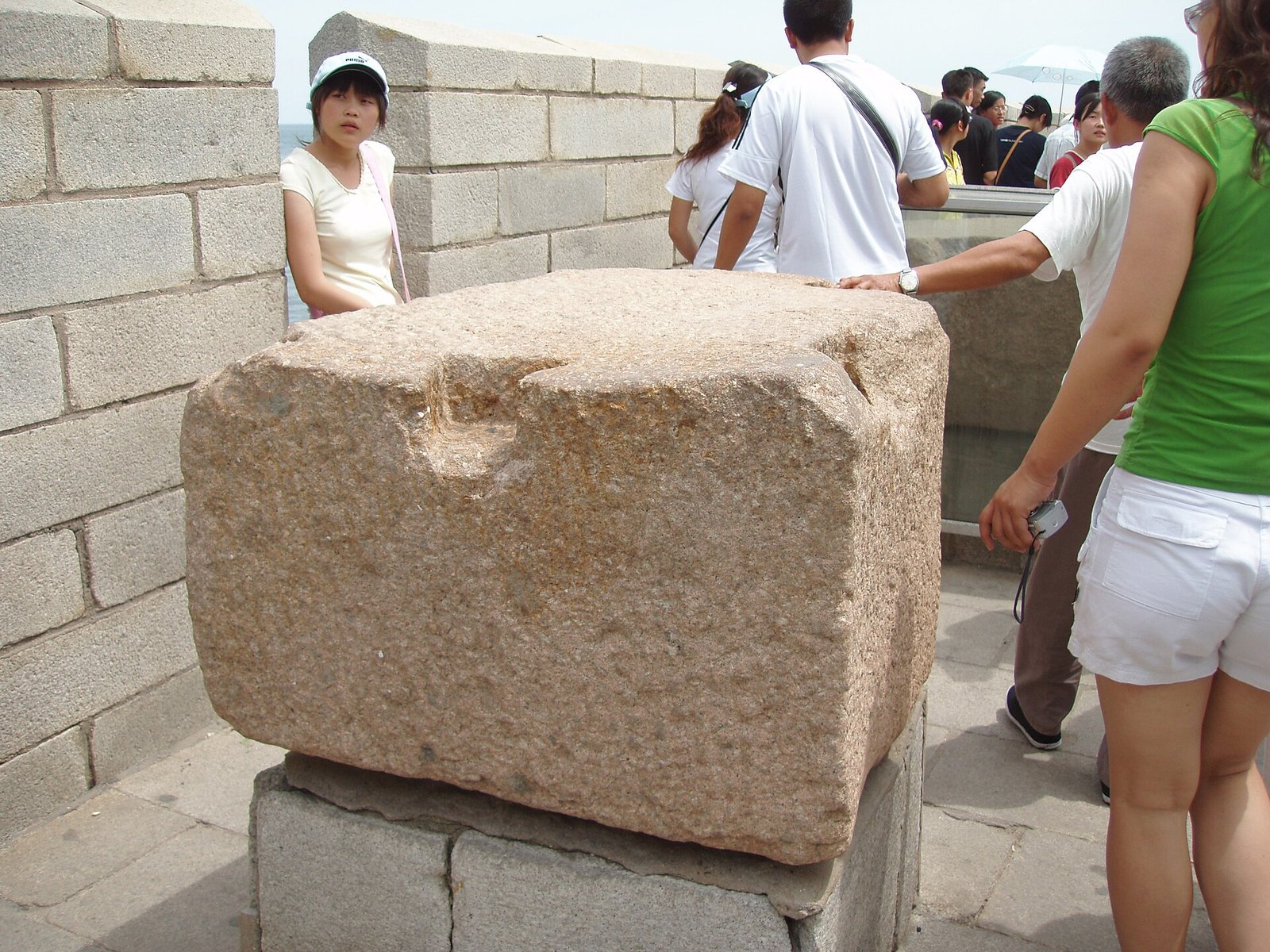
Three decisions keep Laolongtou standing: a foundation cut into bedrock rather than sand, granite blocks keyed together with poured iron, and a tapered plan that sheds wave energy instead of absorbing it.
The first was the survey. Qi’s engineers rejected the beach, found the Laolonggang dyke — a hard rock spur of the Yan Shan running under the sea — and chiselled it flat. Sand settles under load; bedrock does not. Hebei’s heritage bureau (15 July 2026) describes the same sequence.
The second was the joint. Every block carries carved sockets on all four faces; two sockets meet and form a dovetail channel, filled with molten iron mixed with alum, rosin and iron powder. The method, the silver-ingot iron tenon, was already old in Chinese underwater work. Blocks up to 2.6 m long and 3 tonnes each locked into one continuous mass.
The third was the shape. The plan narrows seaward like a blade, so the face meeting the swell stays small — less surface, less leverage on the joints.
One myth dies at the tideline. The Kangxi emperor’s account claimed the base rested on iron cauldrons; when the site was cleared before rebuilding, not one shard appeared — only tool-marked bedrock.
Climbing the First Pass Under Heaven
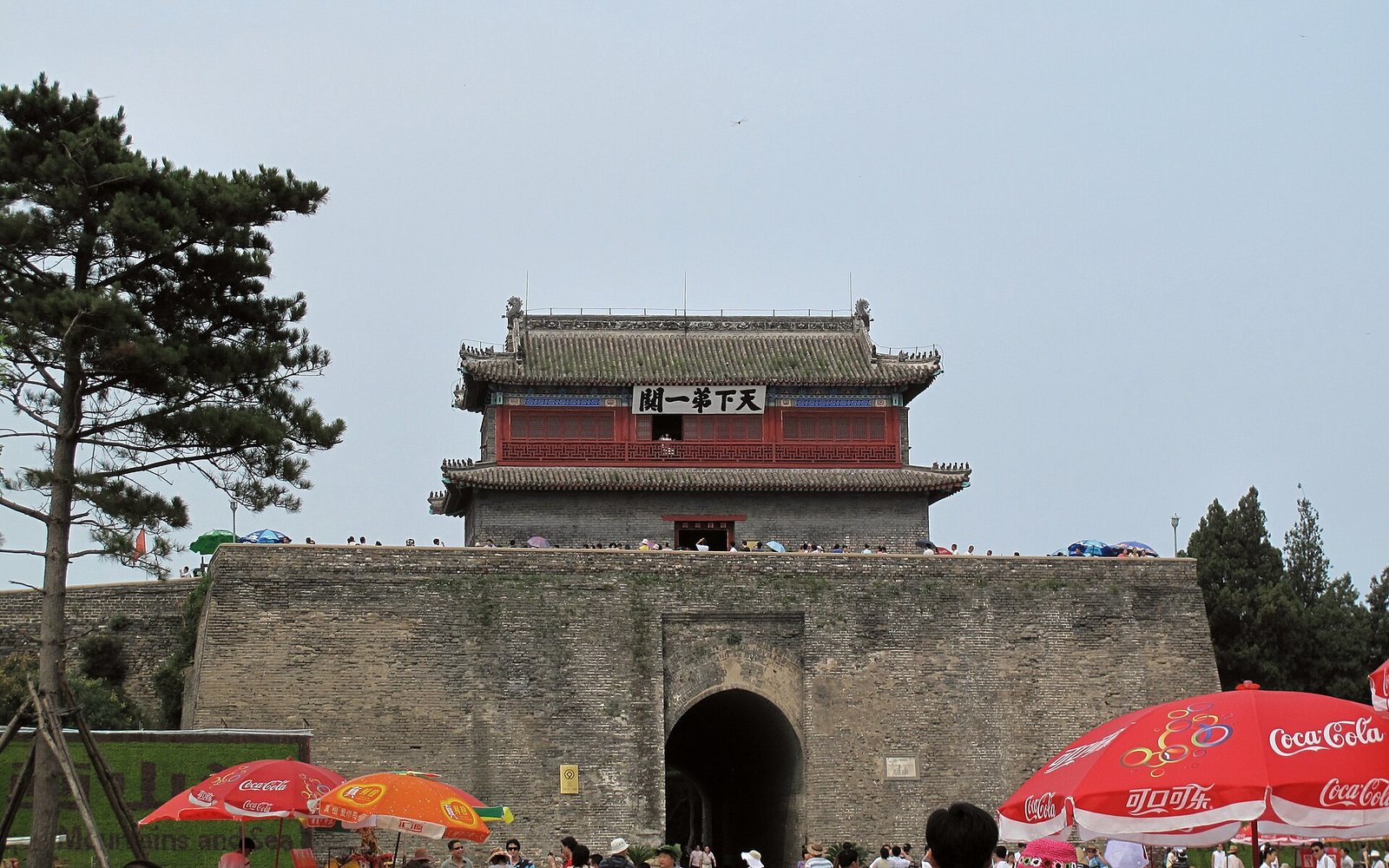
The First Pass Under Heaven is the east gate tower of Shanhaiguan’s walled city, a 198-square-metre hall of dark timber and grey tile on a 14-metre rampart.
Its plaque runs 5.19 m long and 1.5 m high, five characters in firm regular script, attributed to Xiao Xian, a jinshi of 1472. North, east and south faces carry 68 arrow windows; hall plus platform rises about 27 m.
Climb in the morning if the air is clear. North is the Yan Shan ridge where the wall climbs to Jiaoshan; south, on a good day, the Bohai Sea. The gate comes with a barbican, two flanking towers and 1,350 m of flat Ming wall.
Why November is the best month to see the wall meet the sea
November gives Shanhaiguan its cleanest light, because dry continental air sweeps the Bohai haze away and the low sun rakes the granite so every joint shows.
It is also quiet. The district counted 4.42 million visits between 1 July and 26 August 2026, up 11.37%, Hebei Broadcasting reported — that is the summer you are avoiding. Expect 5–12°C, a hard wind, and ramparts where you hear your own footsteps. Sunrise falls near 06:50 mid-month, which explains the 06:20 gate at Laolongtou.
How do you reach Shanhaiguan from Beijing?
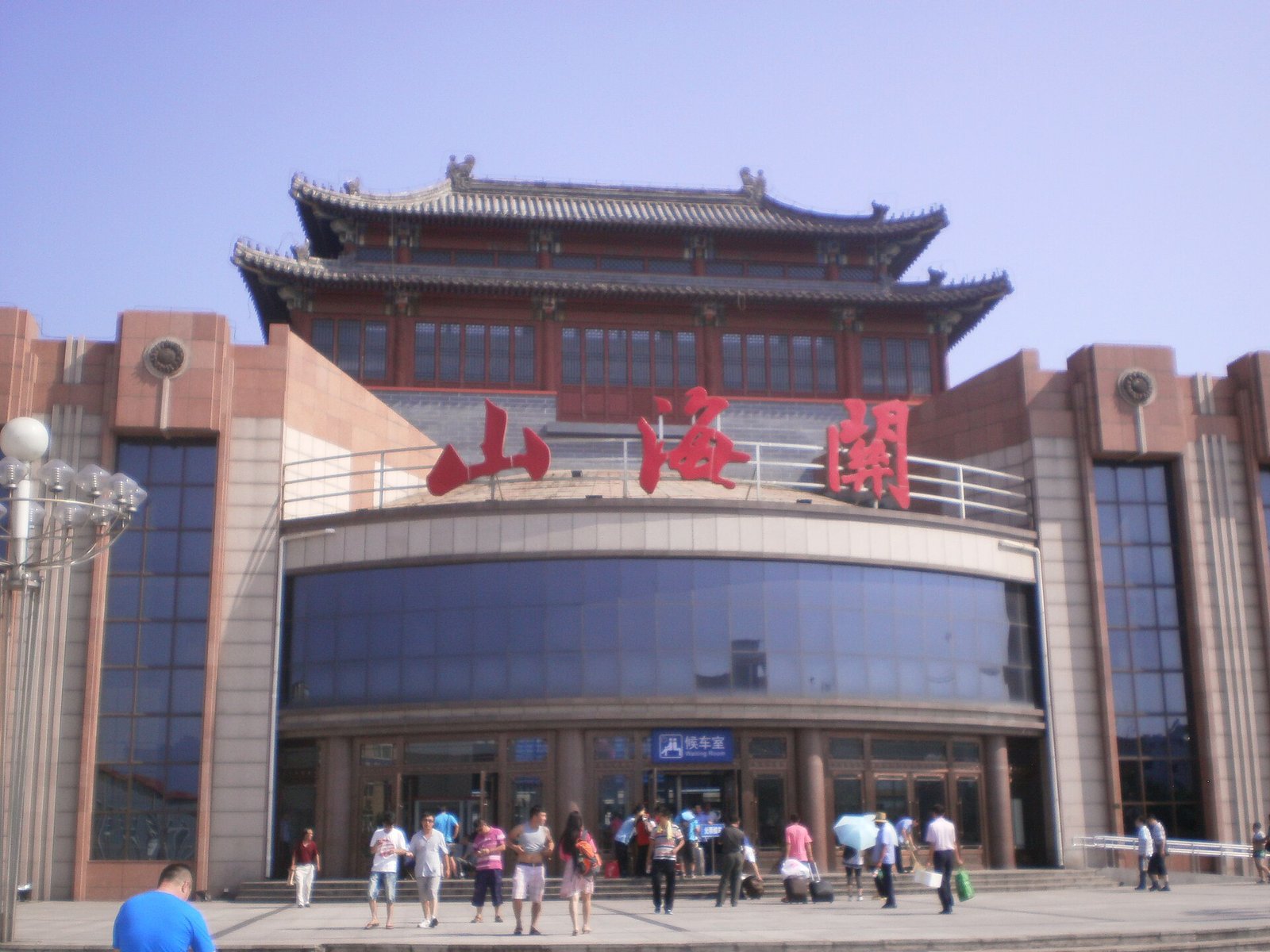
Shanhaiguan station sits on the Beijing–Shenyang corridor 321 km from Beijing, and G-series trains cover it in a little over two hours for 149–179 yuan.
| Train | Departs Beijing | Arrives | Journey | 2nd class |
|---|---|---|---|---|
| G1797 | 07:06 | 09:14 | 2h 08m | 149 CNY |
| G3619 | 12:04 | 14:34 | 2h 30m | 174 CNY |
| G3685 | 13:48 | 16:02 | 2h 14m | 175 CNY |
| G1389 | 15:42 | 17:53 | 2h 11m | 174 CNY |
The station is 1.5–2 km from the old town; a taxi costs 5–10 yuan. Buses 25 and 33 reach both sites for 2 yuan, roughly every ten minutes between 06:00 and 19:00. Laolongtou and the First Pass are 4–5 km apart, about fourteen minutes by car.
How much does a Shanhaiguan visit cost in 2026?
Official prices published on 13 July 2026 put Laolongtou at 60 yuan and the First Pass at 50 yuan, with a 140-yuan pass covering both plus three smaller sites and the shuttle.
| Ticket | Full price | Concession |
|---|---|---|
| Combined pass, 6 sites + shuttle | 140 CNY | 70 CNY |
| Laolongtou | 60 CNY | 30 CNY |
| First Pass + Bell and Drum Tower | 50 CNY | 25 CNY |
| First Pass, tower + Chuangguandong | 60 CNY | 30 CNY |
| Meng Jiangnü Temple | 25 CNY | 12 CNY |
| Jiaoshan Great Wall | 40 CNY | 20 CNY |
Two singles cost 110, so the pass only pays if you also want the Bell and Drum Tower, the Wang courtyard and the Chuangguandong exhibit. Admission is free under 1.2 m or six, and at 70 and over; half price for ages 6–18, students and 60–69. The scenic area lists every price (13 July 2026).
In November Laolongtou opens 06:20–17:00 and the First Pass 08:00–17:00.
A half-day route that fits both sites
Start at the gate and end at the sea, and the light stays behind you; the reverse order leaves you shooting into the sun.
- 08:00 — enter the First Pass as the doors open; the tower stays empty for twenty minutes.
- 09:00 — walk the 1,350 m of flat Ming wall to Jingbian Tower.
- 10:00 — bus 25 from the old town to Laolongtou, 2 yuan, fifteen minutes.
- 10:30 — follow the nine granite courses out to the tip at low tide.
- 11:15 — climb Chenghai Tower, the only sea-facing tower on the Wall.
- 12:00 — loop back past the Sea God Temple and out the main gate.
The Great Wall Museum, and what to eat afterwards
The Shanhaiguan Great Wall Museum holds 11,000 objects and a 24 m by 9 m glass wall that frames Jiaoshan ridge inside the gallery.
It opens 09:00–17:00, closed Mondays except public holidays, last entry 16:00, by real-name booking; the museum’s site confirms both. Afterwards eat like a local: si tiao baozi (steamed pork buns), hunguo — a copper pot of pork, seafood and pickled cabbage — and mung-bean cakes sold by the box.
Practical tips for Shanhaiguan
- Wear shoes with grip; the granite at Laolongtou is polished by spray and slick.
- Check the tide first: at high water the last blocks sit under the surface.
- Carry cash for small old-town shops, which may not take foreign cards.
- Book the museum a day ahead; walk-ins are turned away at busy weekends.
- Pack a windproof shell rather than a heavy coat; the Bohai wind cuts through wool.
- The last bus 25 leaves around 19:00, well before the site closes.
Where the wall stops being a wall
Shanhaiguan is the rare Great Wall site where architecture stops being scenery and becomes a problem to solve. The wall ends not because the land does, but because a general decided the sea was a gap worth closing — then closed it in a way that outlasted his dynasty by four centuries.
Go in November, take the 07:06 train, and be on the granite before the coaches arrive. Our guide to Yulin’s Great Wall history covers the desert frontier, and what makes the Great Wall a bucket-list destination explains why this section rewards a detour. Building a longer loop? Chengde’s imperial autumn is a few hours up the road.
Frequently asked questions
Can you visit Shanhaiguan and Laolongtou in one day?
Yes, and half a day is enough. The sites are 4–5 km apart, fourteen minutes by car or fifteen by bus 25, so a morning starting at the First Pass at 08:00 reaches the sea wall by 10:30.
How much is the ticket to Laolongtou?
Laolongtou costs 60 yuan for adults and 30 yuan for concessions as of November 2026. The 140-yuan pass adds the First Pass, the Bell and Drum Tower, the Wang courtyard and the shuttle.
Is Shanhaiguan really the eastern end of the Great Wall?
Shanhaiguan marks the eastern terminus of the Ming wall, and Laolongtou is where it enters the Bohai Sea. The 1579 spur extends 22.4 m offshore, the only section standing in salt water.
How long is the train from Beijing to Shanhaiguan?
High-speed trains take 2 hours 08 minutes to 2 hours 30 minutes, with second class at 149–179 yuan. The 07:06 G1797 arrives at 09:14, early enough to reach the gate at opening.
When is the best time to see the Great Wall meeting the sea?
November brings the clearest light and thinnest crowds, with days of 5–12°C and sunrise near 06:50. Summer is busiest: 4.42 million visits between 1 July and 26 August 2026.
Do you need to book Shanhaiguan in advance?
No booking is needed for the wall; buy at the gate or through the official WeChat account. The Great Wall Museum does require a real-name reservation and closes on Mondays.