


China’s Rural Buses: Reaching Villages Without a Tour
The China rural bus network is the largest public transport system in the country, and it is open to anyone with a few yuan and a passport. County stations sell walk-up tickets, minibuses leave when they fill, and routes run to villages no tour itinerary includes. As of November 2026, a Ministry of Transport briefing on 21 July 2026 confirmed that every town and village with road access is served.
At jusha.travel, we love sharing tips that let you step off the coach and into ordinary life. Here is how the system is built, how to buy a ticket at a counter that has never seen a foreign passport, and what the last kilometres feel like.
What is a China rural bus, exactly?
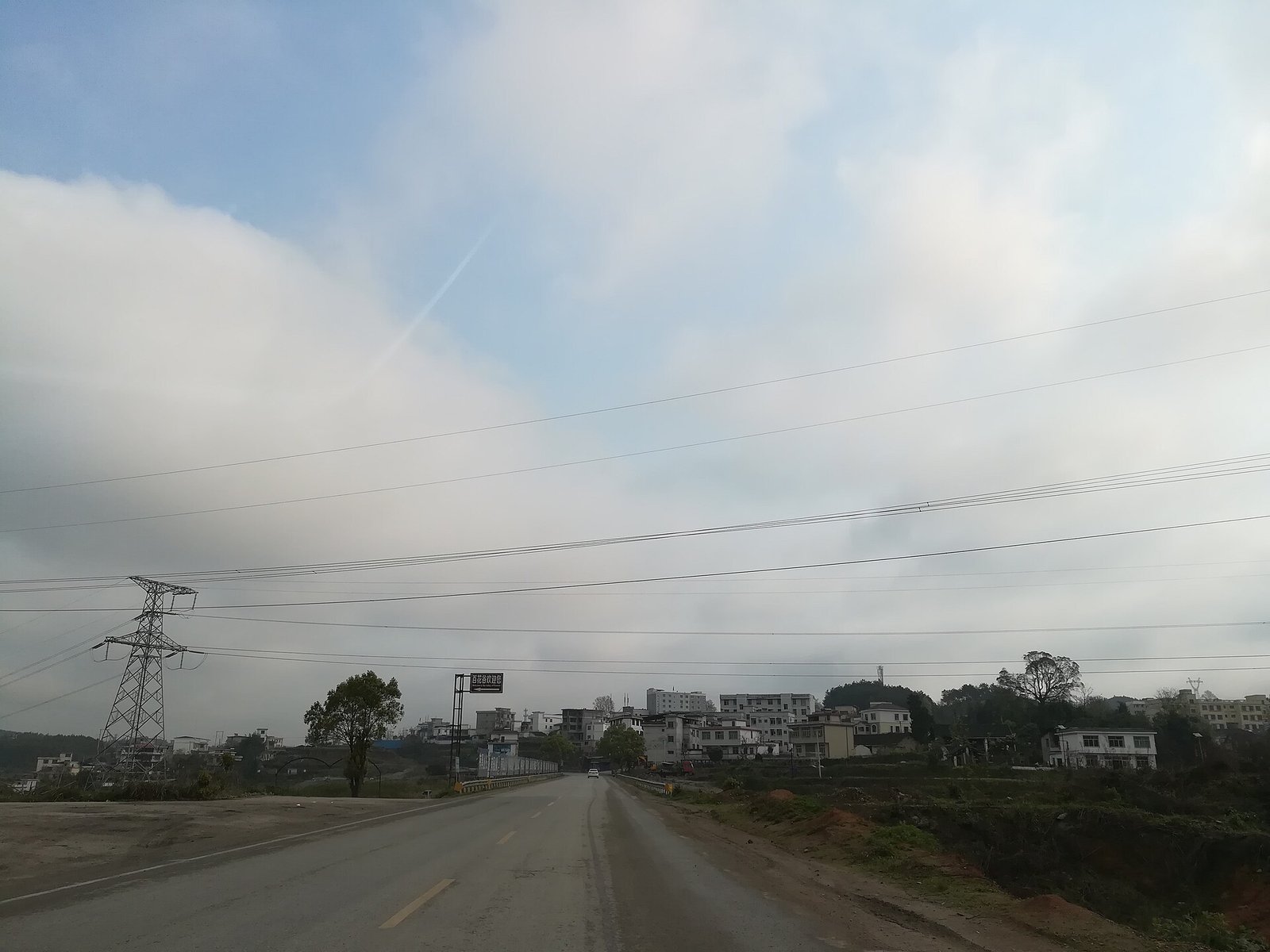
A China rural bus is a scheduled minibus linking a county town to its townships and villages, usually 12 to 19 seats, run by a private company under a county franchise. It sits one layer below the intercity coach network, and most visitors never see it.
Three types matter. Village transport, or nongcun keyun, is the classic model: fixed route, fixed fare, two or three departures daily. Urban-rural bus, or chengxiang gongjiao, adds numbered routes and flat fares. On-demand transport, or dingzhi keyun, is booked by phone and serves thin routes.
Guizhou shows the pattern. It is the only province in China without a plain, and its villages cling to ridges rather than sit along rivers. Administrative villages there reached full bus access in 2017, and the provincial government’s own account, published in September 2021, describes how thinly demand was spread.
How does a county bus station actually work?

Every China rural bus station runs on the same loop: a route licence, a fixed fare table, and a departure board that fills as vehicles arrive. Each county has one main station, plus township stops that may be a shed, a yard and a phone. Tickets come from a window, sometimes a plastic stool.
The Qiandongnan transport bureau’s April 2026 table lists 16 counties with hundreds of departures, fares and mobile numbers. No booking app carries these routes, which makes it the most useful document to read before the hills.
| Service type | Vehicle | Where you buy | ID check | Guizhou fare |
|---|---|---|---|---|
| Village transport | 12–19-seat minibus | Station window | Rarely | CNY 10–46 |
| Urban-rural bus | 8–10 m city bus | On board | No | CNY 2–5 flat |
| Cross-county coach | 30–45-seat coach | Window or app | Passport | CNY 20–110 |
| On-demand transport | 7–19 seats | Phone or mini-program | Passport | Coach-level |
Is the ticket counter different from the bus stop?
Ticket counters and bus stops are different institutions in rural China, and confusing them costs you a morning. A station sells seats on routes beginning there. A roadside shelter with a painted board serves passing vehicles, and on a China rural bus of that kind you pay the conductor.
Foreign riders need a passport for anything classed as a Class II coach route or above, under a 2022 joint notice from China’s immigration, foreign affairs and transport authorities. Village services inside one county sit below that threshold, which is why a conductor takes CNY 15 and waves you to a seat.
Cash matters. QR codes are taped to most dashboards, but a foreign card can fail where signal is weak. Carry CNY 100 to 200 in small notes.
How do you read a timetable built for villagers?
China rural bus timetables list departures, not arrivals, and the last service decides your plan. Boards give a first bus, a last bus and a headway such as “every 40 minutes”; the number of vehicles on the route determines whether it holds.
Leishan County’s table is a good specimen. The county station runs to Kaili every 40 minutes from 06:40 to 18:20 for CNY 15; the station inside Xijiang Miao Village runs hourly from 08:30 for CNY 16.
| From | To | Departures | Fare |
|---|---|---|---|
| Leishan county station | Kaili | 06:40–18:20, every 40 min | CNY 15 |
| Leishan county station | Rongjiang | 09:30, 14:20 | CNY 45 |
| Leishan county station | Danzhai | 09:00, 14:00 | CNY 21 |
| Xijiang Miao Village station | Kaili | 08:30–18:00, hourly | CNY 16 |
| Xijiang Miao Village station | Libo | 09:00, 15:00 | CNY 110 |
| Yongle township station | Kaili | 08:00, 13:30 | CNY 30 |
| Dadi township station | Kaili | 06:10, 13:30 | CNY 46 |
Fares are set per route by the county price bureau, not per kilometre, so a 40-minute hop can cost more than a 90-minute one. Dadi to Kaili is CNY 46 from 06:10, because the road climbs.
Why do the buses follow the market and festival calendar?

China rural bus departures swell on market and festival days, because the same vehicle carries shoppers, produce and pilgrims. Guizhou towns rotate their markets on the lunar calendar, so one township trades on days ending in 1, 4 and 7, its neighbour on 2, 5 and 8, and a third on 3, 6 and 9.
The Zunyi Daily described that rotation in a December 2023 feature: Anchang markets on 2-5-8, Ruixi and Longxing on 1-4-7, Yangxing and Sanjiang on 3-6-9. Operators add vehicles on those mornings, and the first leaves before dawn.
Festivals follow the same logic. The 2026 Leishan Miao New Year runs from 1 November to 2 December, with the costume parade on 12 November from 13:00 to 15:00 and the opening ceremony at 15:00. Villages hold their own New Year on scattered dates, which is why China rural bus services run extra for four weeks.
Which villages can you reach without a tour?

Xijiang Qianhu Miao Village is the easiest test case, with 1,468 households stacked on a hillside, a station inside the village and hourly departures to the prefecture capital. It is also where China rural bus routes meet mass tourism, so you can watch the system behave under load.
The Xijiang tourist station sits at the north gate car park and sells to Kaili for CNY 16. During Miao New Year the yard absorbs charter groups, and the 08:30 queue says more than any schedule. Our night-view guide to Xijiang covers what to do up the hill.
Smaller villages need patience. Kongbai, Maliao and Wudong in Leishan are served by township vehicles that may run twice daily and stop before dusk; our guide to Guizhou’s traditional villages lists the most reliable.
What does the last mile really look like?
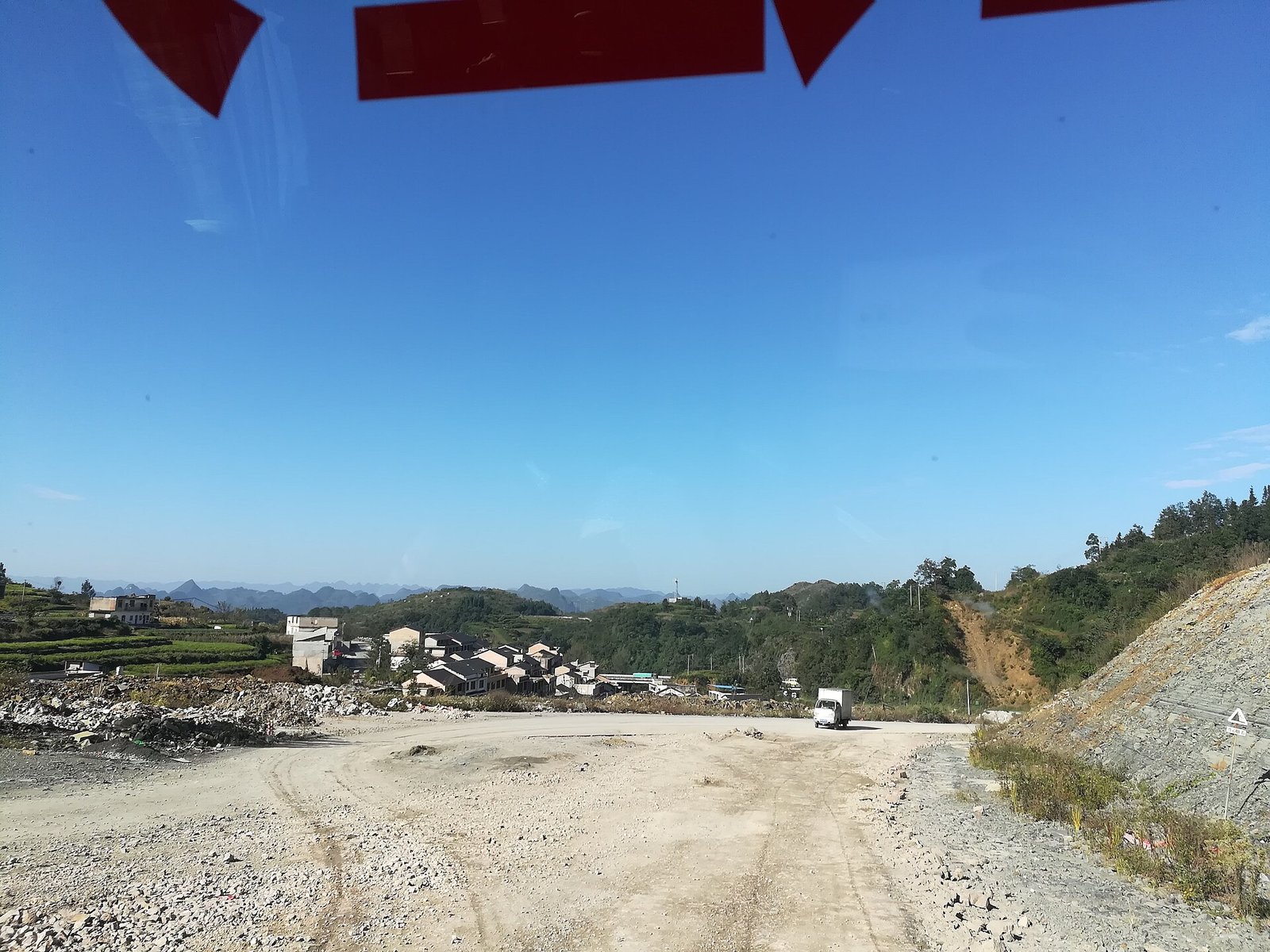
The last kilometre is where China rural bus travel stops being a timetable exercise and becomes a road. Concrete strips narrow to a single lane, passing places appear every few hundred metres, and the driver uses the horn as a navigation instrument, not a warning.
Surface quality varies by county, not by province. Zhenning’s approach roads were photographed mid-upgrade in October 2020, gravel and all, while Yuping’s county roads were already sealed. The programme that rebuilt over 770,000 km of rural road between 2021 and 2026, lifting the national total to 4.7 million km, explains why the surface changes every few years.
Step by step: riding a rural bus
- Start at the county station, not the app. Search the county name plus qichezhan; Amap often has the address when no booking platform does.
- Photograph the departure board, then show it to a clerk or driver.
- Buy at the window with your passport open, say the destination, and hold up fingers for the ticket count.
- Load luggage in the hold, not the aisle; 50 kg is a normal allowance on farm-service routes.
- Take the early bus; departures between 06:00 and 08:00 leave on time, while afternoon services wait for a full load.
- Ask the driver for the return time before you step off and write it down; return vehicles often leave from another corner.
How much does a China rural bus ticket cost?
A China rural bus ticket costs CNY 2 to 46 on the routes covered here, and the range reflects road difficulty rather than distance. Urban-rural buses charge a flat CNY 2 to 5, village services run CNY 10 to 30, and cross-county coaches climb past CNY 45.
China rural bus fares undercut every alternative by a wide margin, and the gap grows with distance. The catch is time: a run a chartered car covers in 40 minutes may take 90, with stops in three villages and a wait at a junction.
Practical tips for foreign riders
- Carry CNY 100 to 200 in small notes; China rural bus conductors rarely have change for a 100.
- Save the station’s phone number; township stops list mobiles, and a call can hold a seat.
- Dial 12328 for enquiries and complaints. It is China’s national transport hotline, staffed around the clock.
- Board early: seats are unnumbered and luggage fills the aisle within ten minutes.
- Expect an afternoon gap. Many village routes finish between 15:00 and 17:00, and the last bus is the fullest.
- Bring your passport even on a short run; rules are applied by route class.
Where to take this next
Guizhou rewards the traveller who treats the China rural bus network as the itinerary, not the obstacle. Ride from Kaili to Leishan, on to Xijiang, then take a township vehicle to Kongbai or Wudong and walk the final kilometre. You arrive with the people who live there.
If you have taken a village bus worth mentioning, tell us in the comments; we add reader routes regularly. For the villages, start with our guide to Guizhou’s traditional villages, then read the Tongren Miao festival guide for the calendar behind those buses.
Frequently asked questions
Can foreigners ride rural buses in China?
Yes. China rural bus services inside a county rarely check identification, and a conductor will sell you a seat for cash. Carry your passport anyway; cross-county coaches require it under the 2022 real-name rules.
How much does a rural bus cost in China?
Between CNY 2 and CNY 46 for most Guizhou routes as of November 2026. Urban-rural buses charge CNY 2 to 5, county-to-village minibuses CNY 10 to 30, and coaches CNY 45 to 110.
Do rural buses run on Sundays and public holidays?
Yes, though frequency drops and market-day extras do not operate. Expect two or three departures instead of an hourly service, and confirm the last bus before you travel.
Where can I find a rural bus timetable in English?
Almost nowhere. Use the county transport bureau’s Chinese table, Amap for station addresses, and the 12328 hotline for confirmation. Translation apps handle station names well enough to show a driver.
What happens if I miss the last village bus?
Call the township station’s mobile number first, then 12328. If nothing runs, a shared taxi is the fallback, costing several times the last China rural bus fare of the day.