
Contemplating Eternity at the Terracotta Warriors’ Silent Army

Imagine standing before an army that has guarded the afterlife for over 2,000 years, their silent gazes frozen in time, whispering tales of ancient ambition and eternal legacy. Welcome to the Terracotta Warriors, China’s eternal guardians unearthed from the soil near Xi’an. As a cornerstone of silent China history, this archaeological wonder invites travelers to ponder the boundaries between life, death, and immortality. Here at jusha.travel, we love sharing tips to make your China journey unforgettable, blending cultural depth with practical advice for an immersive experience. Whether you’re a history buff, a culture enthusiast, or simply curious about the Middle Kingdom’s wonders, this Xi’an ancient army offers profound reflections on eternity. In this post, we’ll explore its discovery, symbolism, craftsmanship, and essential visitor tips, incorporating insights into China’s rich heritage to inspire your next adventure.
Discovery of the Xi’an Ancient Army: A Farmer’s Accidental Legacy
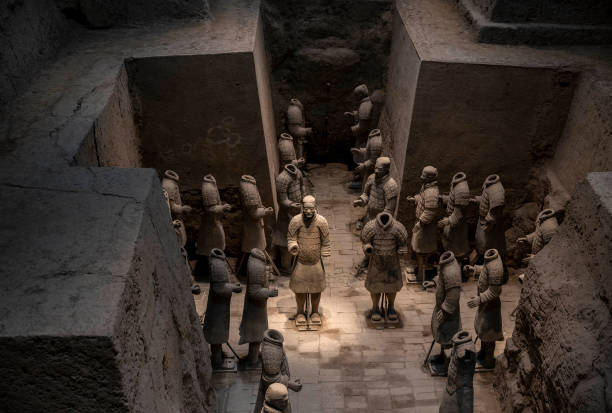
The story of the Terracotta Warriors begins not with emperors or scholars, but with humble farmers in 1974. While digging a well in Lintong District outside Xi’an, local villagers stumbled upon fragments of what would become one of the greatest archaeological finds in modern history. This chance discovery revealed the Xi’an ancient army, a vast underground necropolis built for China’s first emperor, Qin Shi Huang, who unified the warring states in 221 BCE. As detailed in Smarthistory’s exploration, archaeologists uncovered four massive pits over the following years, housing an estimated 8,000 life-sized soldiers, 600 horses, and 100 chariots—forming a complete military formation to protect the emperor in the afterlife.
Only about 2,000 figures have been fully excavated to date, with the rest preserved underground to prevent deterioration from exposure. This careful approach highlights China’s commitment to safeguarding its silent China history. For travelers, visiting the site feels like stepping into a time capsule; the air is thick with the scent of earth, and the warriors’ stern expressions evoke the emperor’s unyielding quest for power. Fun fact: The necropolis spans 56 square kilometers, including replicas of palaces and rivers made from mercury to simulate the empire’s flow—though the central tomb remains unopened due to preservation concerns and legends of curses, as noted in Live Science.
To reach this marvel, consider Xi’an’s efficient high-speed rail connections from Beijing or Shanghai. For more on navigating China’s transport, check out our guide on Transportation in China: A Comprehensive Guide for Western Travelers.
Purpose and Symbolism: China’s Eternal Guardians in the Afterlife

At its core, the Terracotta Warriors embody Emperor Qin Shi Huang’s obsession with immortality. Having conquered China at age 13 and standardized everything from weights to writing, he sought to extend his dominion beyond death. These figures, the ultimate China eternal guardians, were designed to serve as his protectors in the underworld, reflecting ancient beliefs in a mirrored afterlife where the emperor’s spirit needed an army to maintain order. As explained in World History Encyclopedia, the army’s layout mimics real military tactics, with archers in the front, infantry behind, and chariots for mobility—a testament to Qin’s strategic genius.
Culturally, this site reveals profound insights into ancient Chinese cosmology. The warriors symbolize the harmony of heaven, earth, and man, with their eastward orientation guarding against eastern threats. Visitors often feel a chill contemplating the human cost: Up to 700,000 laborers, including convicts and artisans, toiled for decades, many buried alive to guard the tomb’s secrets. Today, as a UNESCO World Heritage Site since 1987, it invites reflection on legacy—Qin died at 49, poisoned by his immortality elixirs, yet his silent China history endures.
For a deeper dive into China’s historical tapestry, explore our post on Historical Places in China: A Comprehensive Guide to Ancient Sites and Cultural Landmarks, which covers the Terracotta Army alongside other icons like the Great Wall.
The Philosophical Echoes of Eternity
Standing among these statues, one can’t help but ponder eternity. Influenced by Taoism and Confucianism, the warriors represent humanity’s eternal struggle against impermanence. Their broken states—smashed during peasant uprisings after Qin’s death—remind us that even grand ambitions fade. Pair your visit with nearby Xi’an sites like the City Wall, a Ming Dynasty marvel, for a full day of historical immersion.
Craftsmanship and Realism: The Artistry of the Silent Army
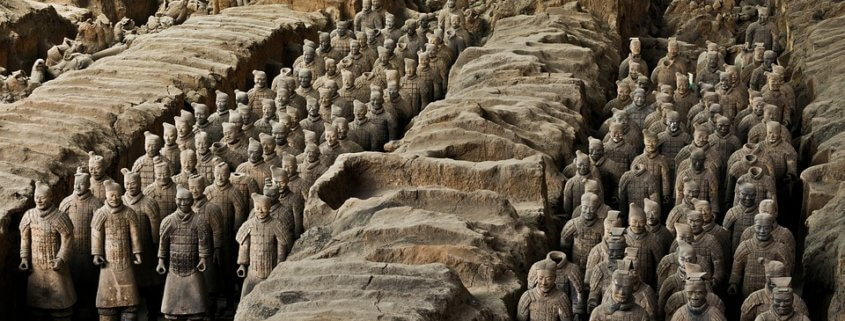
What makes the Terracotta Warriors truly mesmerizing is their unparalleled craftsmanship. Each soldier stands 5.8 to 6.5 feet tall, molded from local clay but individualized with hand-sculpted faces, hairstyles, and expressions—suggesting they were modeled after real troops. Bodies were mass-produced using assembly-line techniques, an ancient form of standardization, while armor details reflect ranks: Generals in elaborate plumes, archers with taut bows. As per Muhlenberg College’s analysis, bronze weapons, some chrome-plated to prevent rust, were functional, blending art with utility.
This realism extends to horses and chariots, capturing the chaos of battle in serene silence. Influences from Eurasian steppes appear in some armor styles, hinting at Silk Road exchanges. For modern travelers, the site’s museum displays restored pieces and excavation tools, offering a glimpse into ongoing work. Interesting fact: Pigments once colorful have faded, but traces of lacquer reveal the army’s original vibrancy.
Xi’an’s food scene complements this visit—try biangbiang noodles or roujiamo (Chinese burgers) in the Muslim Quarter for a taste of Silk Road fusion. Discover more culinary adventures in our article on Top 5 Chinese Dishes You Can’t Miss on Your Foodie Tour.
Warrior Excavation Tips: Practical Advice for Your Visit

Planning a trip to the Terracotta Warriors? Start with warrior excavation tips for a seamless experience. The site is 40 minutes from Xi’an by bus or taxi—opt for the public shuttle from the North Square for efficiency. Tickets cost around 120 CNY (about $17 USD) in peak season (April-October); book online via the official app to skip lines. Visit early (8:30 AM opening) to beat crowds, and allocate 3-4 hours: Pit 1 for the grand army view, Pit 3 for officers, and the museum for artifacts.
- Dress comfortably: Expect dust and walking on uneven paths; wear sturdy shoes and layers for variable weather.
- Hire a guide: English tours (100-200 CNY) provide context—look for licensed ones via WeChat.
- Tech aids: Use translation apps like Pleco for signage, and download offline maps. No drones allowed, but photography is fine (no flash in pits).
- Sustainable tips: Follow paths to avoid damaging grounds; the site promotes eco-tourism with electric shuttles.
For broader Xi’an planning, read our dedicated piece on Why Xi’an’s Terracotta Warriors Are Worth the Hype. Also, for essential travel prep, see China Visa Requirements: Essential Guide to Planning Your Trip.
Combining with Xi’an’s Cultural Delights
Extend your day to the Big Wild Goose Pagoda or a tang dynasty show—Xi’an pulses with living history. Local tech like Alipay simplifies payments, blending ancient wonders with modern ease.
Modern Legacy: Reflections on the Silent Army Today
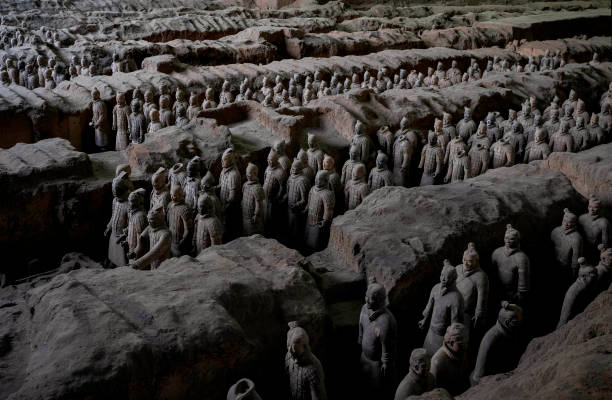
The Terracotta Warriors aren’t relics of the past; they’re a living bridge to China’s future. Annual excavations reveal new details, like crossbows with advanced mechanics, influencing global archaeology. As China eternal guardians, they inspire art, films, and even robotics in modern Xi’an’s tech scene. Traveling here reveals how ancient innovations—standardized production, detailed realism—echo in today’s high-speed rails and smart cities.
For history-modernity blends, our post on Exploring China: History, Culture, and Modernity dives deeper into this evolution.

Conclusion: Eternal Echoes and Your China Journey
Contemplating the Terracotta Warriors’ silent army leaves an indelible mark—a meditation on power, mortality, and the human spirit’s reach for forever. These China eternal guardians stand as silent sentinels of Xi’an ancient army legacy, inviting us to reflect on our own quests for meaning amid silent China history. With warrior excavation tips in hand, your visit can transform from sightseeing to soul-stirring exploration.
At jusha.travel, we’re passionate about guiding you through China’s tapestry of past and present. Ready to plan your trip? Share your thoughts on the Terracotta Warriors in the comments below—what aspect of eternity intrigues you most? For more inspiration, explore related articles like Best Places to Visit in China: Discover Iconic Landmarks and Hidden Gems or Top 10 Must-Visit Cities in China for 2025 Adventures. Your epic China adventure awaits!
Word count: 1,156
