


Tachuan: The Village That Turns Red Every November
At half past six on a November morning, Tachuan disappears. Mist fills the valley, the white walls go soft, and the only solid thing left is a line of crimson trees above the roofs. Then the sun clears the ridge and thirty photographers start shooting at once.
Tachuan is a hillside Huizhou village in Yi County, Anhui, about 2 km from Hongcun and 90 minutes by bus from Huangshan North station. A Tachuan autumn village trip is really a scheduling problem: the tallow trees hold colour for only about 15 days a year, usually 5 to 20 November, as of October 2026.
At jusha.travel, we love sharing tips that turn a famous photograph into a place you can walk. Here is when the colour peaks, how to reach the village by train and bus, which viewpoints earn the climb, and what a 6am start buys you.
Where is Tachuan, and why does it look like a pagoda?
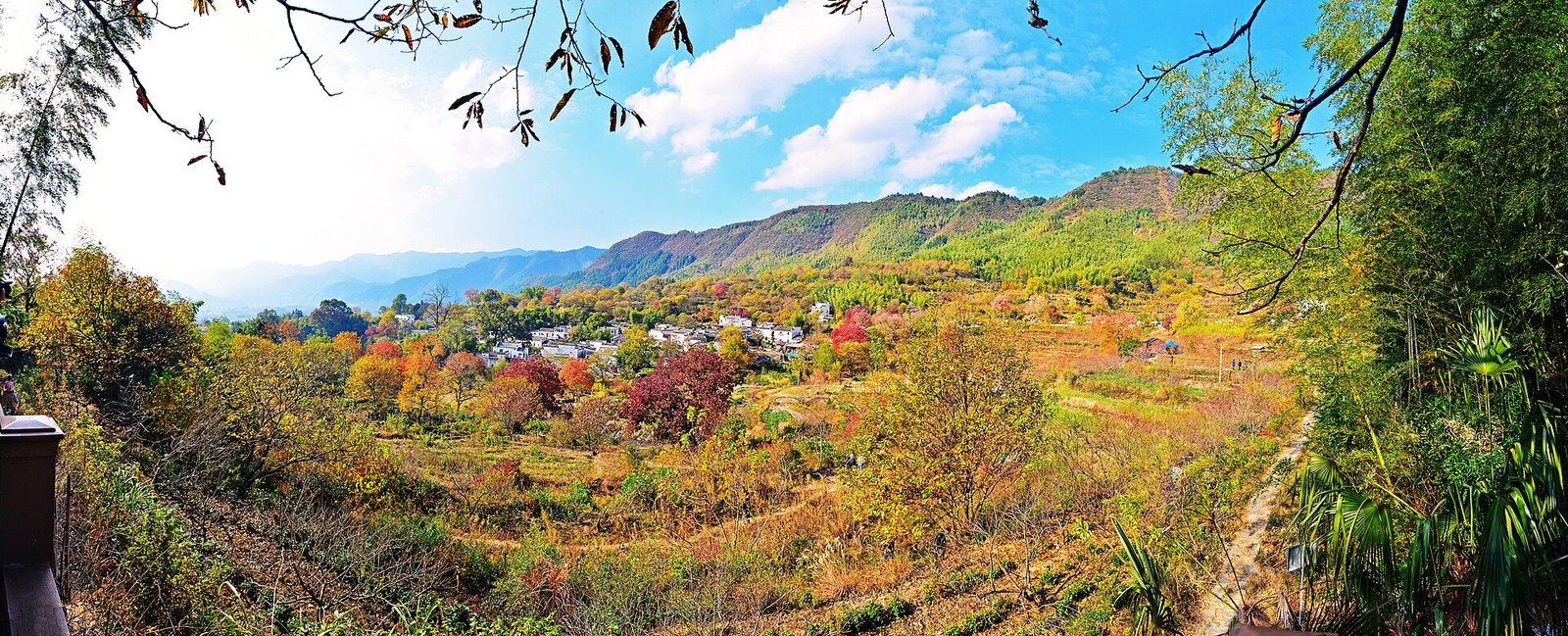
Tachuan is a farming village in Hongcun Town, Yi County, Huangshan City, Anhui, sitting at roughly 500 m on the northern edge of the Huangshan range. Local accounts say the name describes the shape: houses climb the slope in tiers like a pagoda (ta), with a stream (chuan) through the middle.
The village backs onto Anhui Tachuan National Forest Park, a 2,129-hectare reserve approved in January 2017, where forest cover reaches 90.16% and Gao’an Peak tops out at 1,048 m (Baidu Baike, accessed October 2026). Hongcun is 2 km east, a 30-minute walk, and both sit inside the UNESCO-listed village landscape inscribed in 2000 (UNESCO World Heritage Centre, ref. 1002).
Those gables were paid for by salt and tea merchants, as our guide to Huizhou’s merchant mansions explains the money behind them.
Why do the tallow trees turn red for only two weeks?
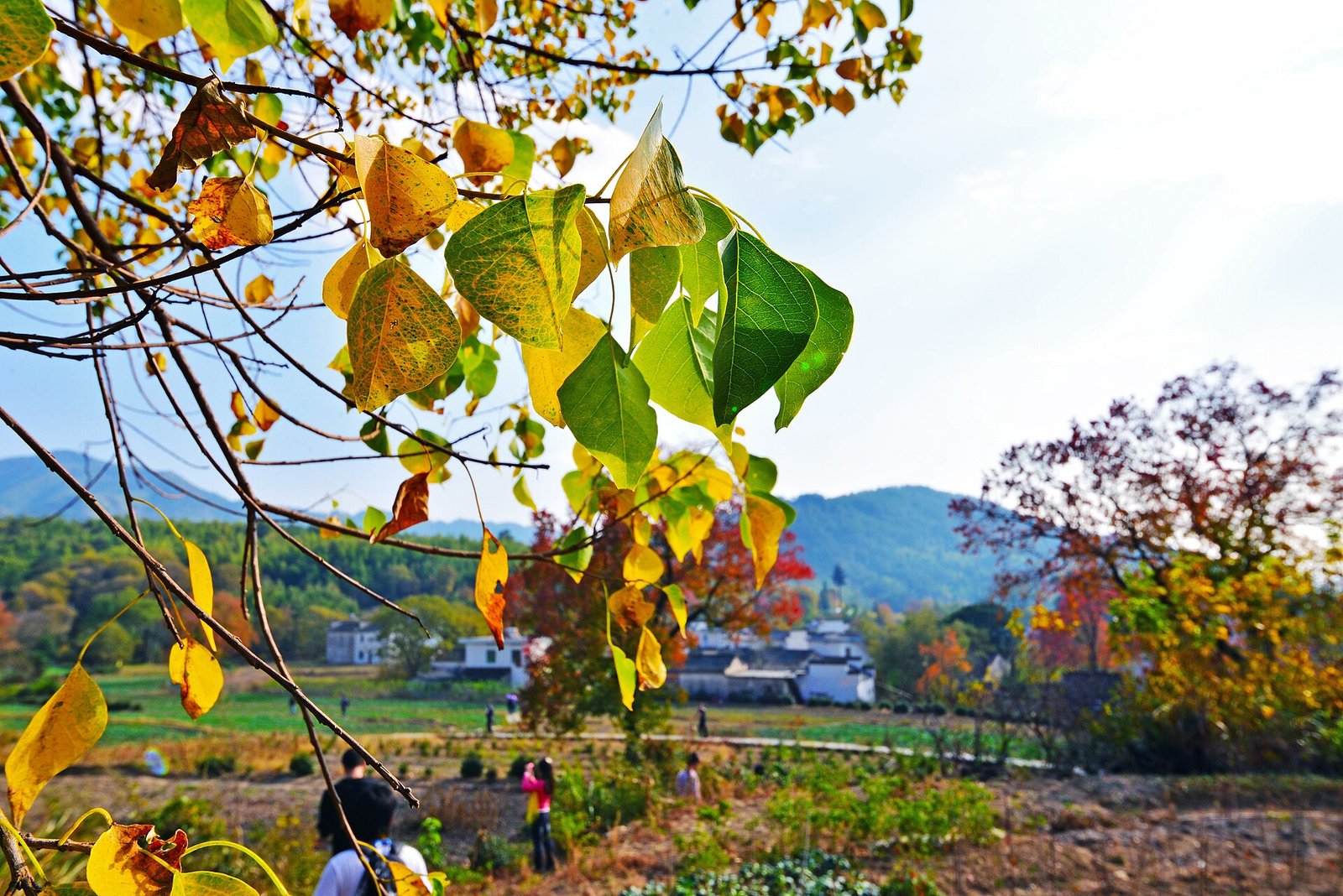
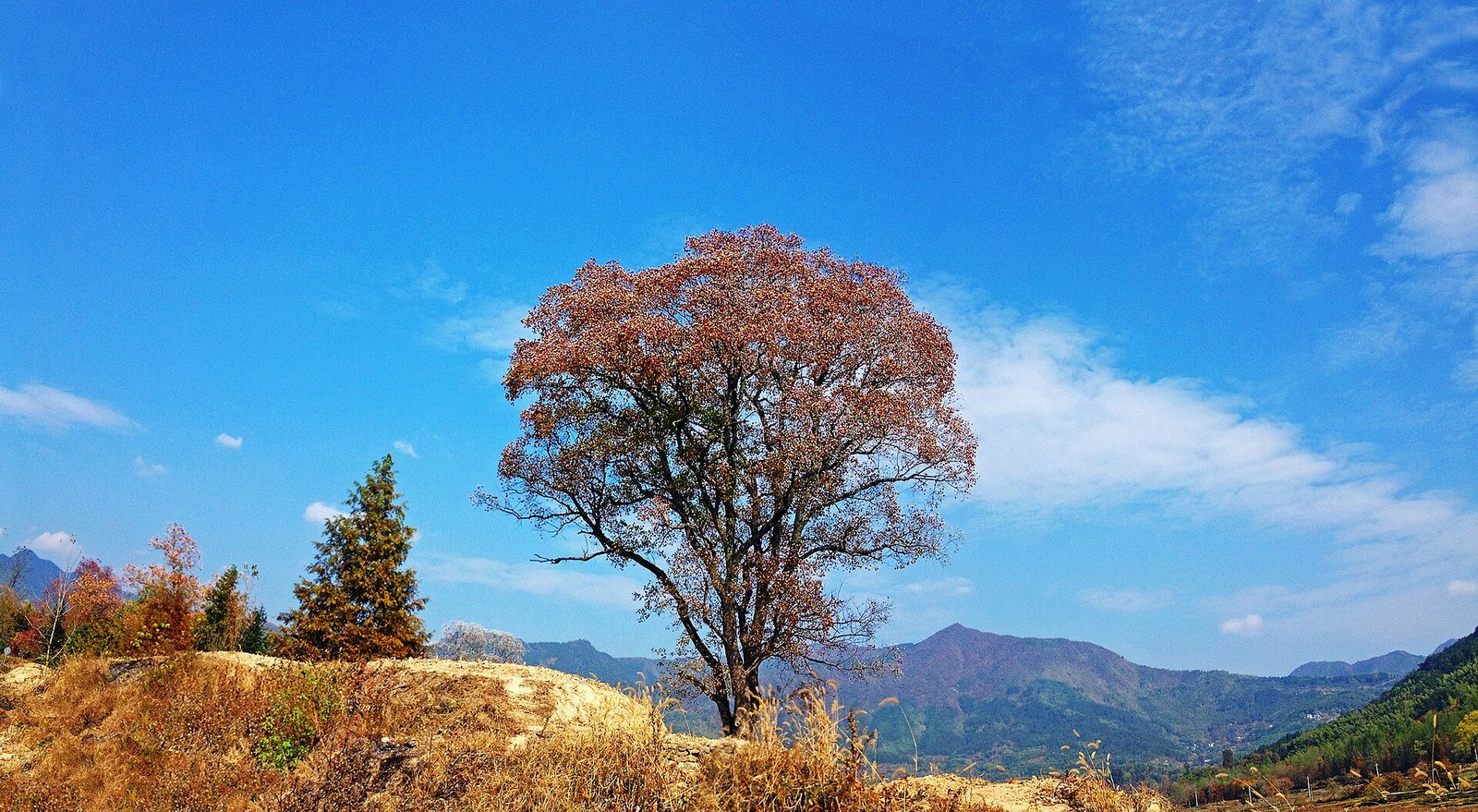
Chinese tallow (Triadica sebifera, 乌桕) made Tachuan famous, and it changes colour on a temperature trigger rather than a fixed date. Yi County’s meteorological bureau puts the thresholds at 12–15°C nightly minimums for yellow, 8–12°C for red and below 8°C for leaf drop (reported by local media, October 2026).
Sweetgum and tallow woodland around the village covers about 100 hectares and 12,000 trees. Tallow accounts for roughly 70% of the red foliage, and around 300 trees are over a century old (Hong Kong Commercial Daily, 2024).
A single tree can hold green, yellow, orange and crimson at once, so the valley never looks uniformly red — it looks layered. Triadica sebifera is native to central and southern China and was farmed for seed wax long before anyone photographed it.
Tachuan Autumn Village: When Do the Colours Peak?
Tachuan’s colour peaks for about 15 days, most often 5–20 November, with the best light from 6 to 8am. The Huangshan Meteorological Bureau put the optimum window at roughly 7–20 November in 2024 and 2025, and China Daily’s Yixian forecast (12 September 2026) points to mid-November.
| Period | What you actually see | Crowds |
|---|---|---|
| 20–31 Oct | First reddening, patchy colour, green-gold fields | Light on weekdays |
| 1–7 Nov | Half the canopy turning; mist most mornings | Building |
| 8–20 Nov | Peak colour, the postcard mornings | Heaviest |
| 21–30 Nov | Late red, bare branches, leaf litter | Falls away |
Wind and rain can strip the trees in one night, so a non-refundable booking three weeks out is a gamble; Hongcun’s leaves also turn about a week earlier.
How do you reach Tachuan without a car?
The nearest high-speed stations are Huangshan North, best connected to Shanghai, Hangzhou and Nanjing, and Yixian East, closer but with fewer trains. Buses from Huangshan North to Hongcun run roughly hourly between 08:00 and 17:30, take 1.5 hours and cost about 30 CNY (China Tourism News, 2026).
From Yixian East, bus No. 10 reaches Hongcun in 40 minutes for 8 CNY. From Hongcun, county Route 1 continues through Lucun, Tachuan and Mukeng Bamboo Sea, and a three-wheeler covers the 2 km for 15–20 CNY. Hire a day driver if you want both sunrise and sunset, because nothing public runs at dawn.
What does a 6am morning in Tachuan actually look like?
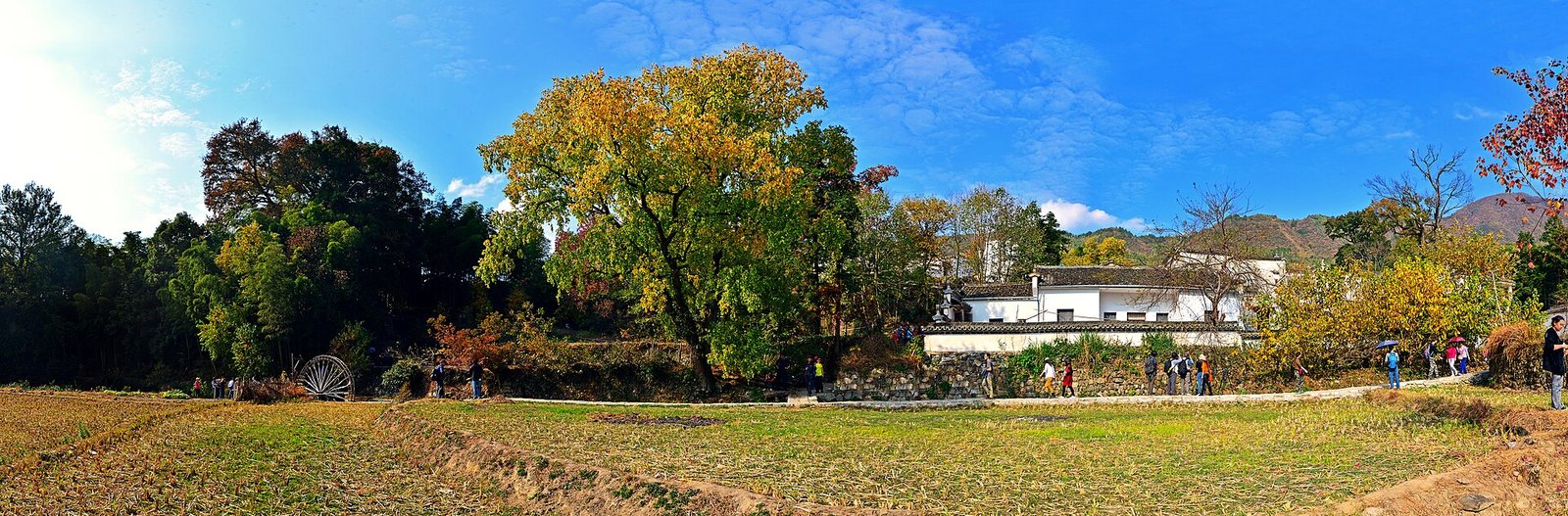
A productive Tachuan morning starts before sunrise and ends by 09:00, when the Hongcun tour buses arrive and the platforms fill. This six-step sequence is what local photographers repeat through November, and it needs no guide, no ticket and no app.
- Sleep in Hongcun or Tachuan. Leaving Hongcun’s west gate at 05:45 gets you to the first platform before the sky greys.
- Walk 2 km west along the Hongru highway to the signed wooden deck — free, and the classic overview.
- Continue 200 m to the second signpost for a tighter frame: white walls behind a treeline, then climb fewer than 100 stone steps to the third platform for the best panorama.
- Enter the village once the sun is up for lanes, drying racks and woodsmoke.
- Leave by 09:00, or return at 15:00–17:00 when side light turns the leaves translucent.
Bring a jacket. November mornings sit near freezing and the gap between 06:00 and noon is easily 10°C.
Which viewpoints are actually worth the walk?
Three free roadside platforms and one village path cover almost every Tachuan autumn village photograph you have seen, and none of them needs a ticket. The paid entrance matters only if you want to walk the lanes and courtyards inside the village itself.
The wooden deck at 2 km frames the whole valley and is the safest first stop. The hillside platform above it produces the postcard panorama; the tea terraces give a lower, more graphic angle. Inside, the field path towards Xieli stays quiet even at peak.
Tachuan or Hongcun: which should you choose?
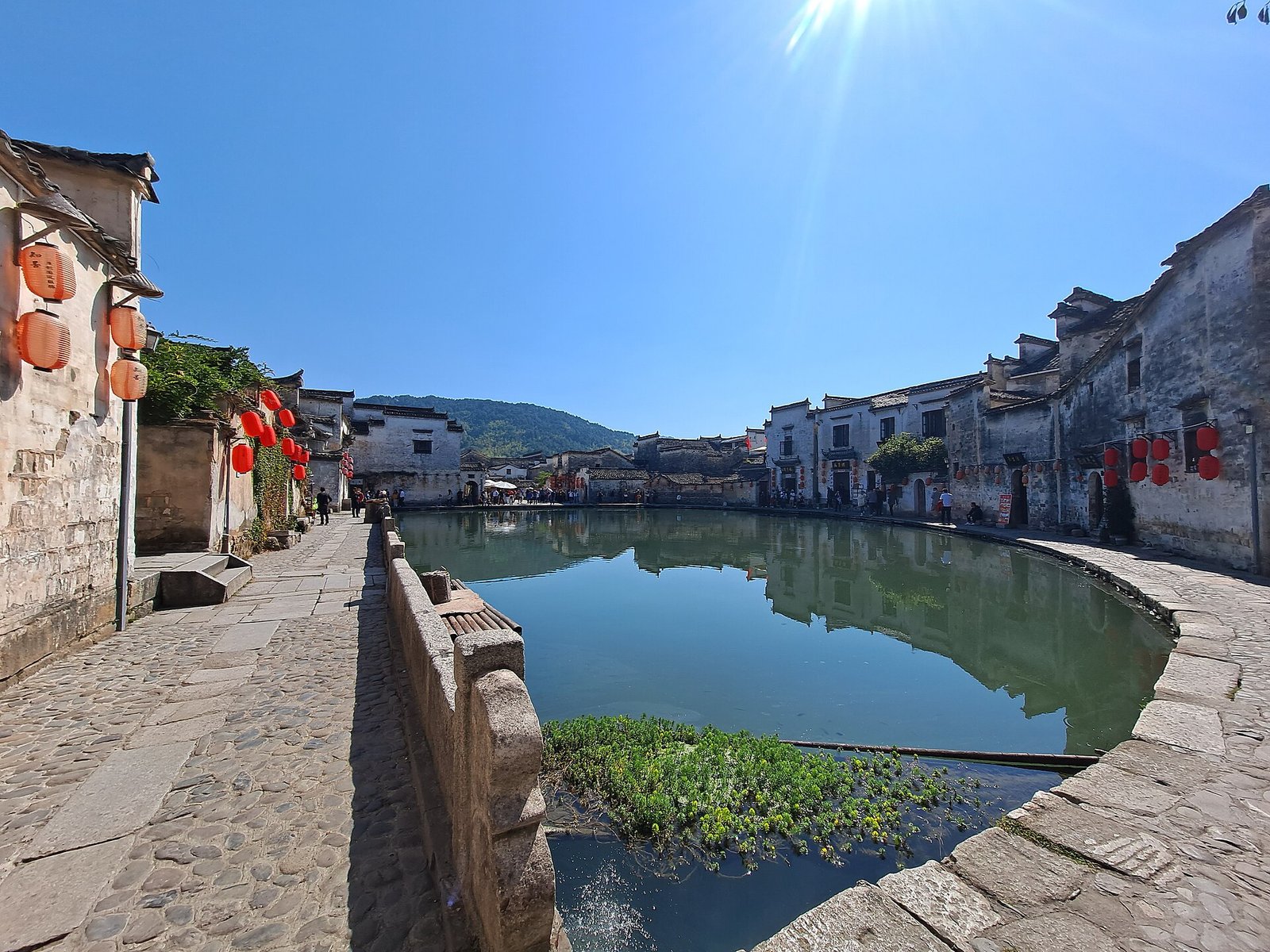
Hongcun is the architectural destination and Tachuan is the seasonal one, so the answer is both — at different hours. Hongcun’s Moon Pond and South Lake are best before 07:00 or after 17:00; Tachuan’s trees are best from 06:00 to 09:00.
| Aspect | Tachuan | Hongcun |
|---|---|---|
| Reason to come | Tallow foliage, valley views | Ming-Qing architecture, water system |
| Ticket | About 40 CNY in autumn | About 94 CNY online, 3-day entry |
| Best hours | 06:00–09:00, 15:00–17:00 | Before 07:00, after 17:00 |
| Crowds | Weekend crush at platforms | Heavy 09:00–16:00 |
| Time needed | 2–3 hours | Half a day |
With one morning only, shoot Tachuan at dawn and give Hongcun the afternoon. If architecture is why you came, reverse the order.
Is Tachuan too crowded now?
Tachuan is crowded in the compressed way a 15-day season creates: empty at 06:00, jammed by 09:30, unpleasant on a mid-November weekend. Art students arrive with easels from October and stay through the peak, so anyone wanting an empty frame has to plan around both.
Three fixes work. Come on a weekday, arrive before sunrise, and walk five minutes past the main platform onto the field path, where the crowd thins to nothing. The village stays open year-round, so a green November in a bad leaf year is still a quiet Tachuan autumn village with a good bowl of noodles.
What does a visit cost, and when is it open?
The autumn ticket for Tachuan is 40 CNY, set by the Yi County operator for the red-leaf season, and the site opens daily from early morning until dusk. A Hongcun-plus-Tachuan pass is usually quoted near 100 CNY; a multi-village pass covering Lucun, Pingshan, Mukeng and Tachuan has been listed at 80 CNY.
You do not need cash — Alipay and WeChat Pay work at the gate — but carry your passport, because scenic areas across Anhui run real-name checks. Students and seniors generally get half price with ID; confirm at the window.
Practical tips for a November visit
November in southern Anhui is cold at dawn, mild by noon and unpredictable between, so most Tachuan autumn village mistakes are packing or timing mistakes rather than navigation ones. A little planning turns a rushed photo stop into a two-night stay.
- Book refundable rooms two weeks ahead for 8–20 November, then commit three days out.
- Stay in Hongcun or Tachuan; Huangshan city is 65 km away and useless as a base.
- Wear layers and non-slip shoes; dawn is near freezing and the lanes hold dew.
- Pack a polariser and a 70–200mm lens for compressed layers.
- Eat locally: stinky mandarin fish, hairy tofu, bamboo shoots with cured pork. Our guide to Anhui’s stinky mandarin fish explains what you are ordering.
- Add Tunxi Old Street on the way back if your train leaves in the evening.
Final thoughts
Tachuan is not a secret; it is a small place with a very short season, which is a different kind of fragility. The trees do their part between the first cold nights and the first hard wind, and your job is to be on that hillside at six, with a jacket, before the buses arrive.
Have you timed a trip to Tachuan, or found a quieter Huizhou village in November? Tell us in the comments. For a wider Anhui loop, start with Huangshan’s misty mountains, then add Wuyuan’s countryside villages on either side.
Frequently asked questions
When is the best time to see the Tachuan autumn colours?
The best window is 5–20 November, with peak colour usually 8–20 November and the strongest light from 06:00 to 08:00. The season runs late October to late November, but full colour lasts only about 15 days.
How much is the Tachuan entrance ticket?
Tachuan charges about 40 CNY per adult in the autumn red-leaf season, half price for children, students and seniors with ID. A combined Hongcun-and-Tachuan ticket is usually near 100 CNY.
How do I get to Tachuan from Huangshan North Station?
Take the tourist bus to Hongcun — about 1.5 hours and 30 CNY, hourly from 08:00 to 17:30 — then continue 2 km by Route 1 bus or a 15–20 CNY three-wheeler. Yixian East station is closer, with bus No. 10 taking 40 minutes for 8 CNY.
Can I visit Tachuan and Hongcun in one day?
Yes. The villages are 2 km apart — a 30-minute walk or a 15–20 CNY three-wheeler — so dawn at Tachuan and an afternoon in Hongcun is the standard single-day plan. Allow 2–3 hours for Tachuan and half a day for Hongcun.
Do I need to book accommodation in advance for November?
Book about two weeks ahead for the 8–20 November peak, and choose a refundable rate, because leaf colour depends on temperature and can shift by a week. Weekends then are the tightest nights of the Yi County year.