


China’s EV Charging Network: A Road Trip Without Petrol
At half past seven the forecourt at Huocun service area smells of coffee and wet asphalt. A Shenzhen-bound driver plugs in, walks inside for a bowl of congee, and comes back to a car that has gained 300 km. Nobody queues. Nobody opens a wallet.
China’s EV charging network is the largest in the world: 23.06 million guns by June 2026, five million of them public, at more than 98% of expressway service areas. That means you can cross Guangdong in an electric rental without hunting for petrol. At jusha.travel, we love sharing tips that turn a daunting idea into a booked car, so this guide covers how the network works, how to pay, what it costs and where it still fails.
What does China’s EV charging network look like in 2026?
China’s EV charging network reached 23.06 million guns by the end of June 2026, up 43.2% in a year, according to the National Energy Administration (28 July 2026). Public posts account for 5.01 million of them and average 49.35 kW, which suits a lunch stop rather than a pit stop.
Motorway coverage is what matters on a road trip. Expressway service areas held 85,400 EV charging guns by the same date and covered more than 98% of sites, with county-level coverage at 98.61% (Xinhua, 13 August 2026). The Ministry of Transport wants 40,000 more highway chargers rated 60 kW or above by the end of 2027.
How do you start a charge as a foreign driver?
EV charging in China runs on a QR code, not a card reader. Scan the code with Alipay or WeChat Pay, confirm the amount, and the session starts — no membership and usually no app.
- Set up both wallets before you fly, with your passport and a linked international card.
- Search 充电 in Amap, which shows live free or busy status.
- Plug in, then scan, then approve the pre-authorised amount.
- Read the kW figure: 30 kW at a 120 kW post means the cabinet is shared.
- Stop the session in the app before unplugging, or the cable stays locked.
Operator apps such as State Grid’s e充电 add reserved bays and invoices, but their Chinese-only sign-up is optional. Where an EV charging post refuses an international card, the next site is usually a few kilometres away.
What does charging actually cost?
Public EV charging bills CNY 0.75–1.65 per kWh, split between electricity and a service fee that national rules capped at CNY 0.5 per kWh in April 2026. A 60 kWh pack therefore costs about CNY 45 at midday and CNY 100 on an evening peak.
| Cost per 100 km | Unit price | Per 100 km |
|---|---|---|
| Petrol car, 8 L/100 km | ~CNY 7.5/L | ~CNY 60 |
| Fast charge, 11:00–15:00 | ~CNY 0.8/kWh | ~CNY 12 |
| Fast charge, 18:00–21:00 | ~CNY 1.6/kWh | ~CNY 24 |
| Hotel AC charger | free–CNY 0.6/kWh | ~CNY 0–9 |
Every EV charging post displays its price before you pay, so there is no haggling. Two traps remain: mall parking fees that can double a small top-up, and occupation fees of CNY 0.5–1 a minute once the battery is full.
Where should you charge on a Pearl River Delta road trip?
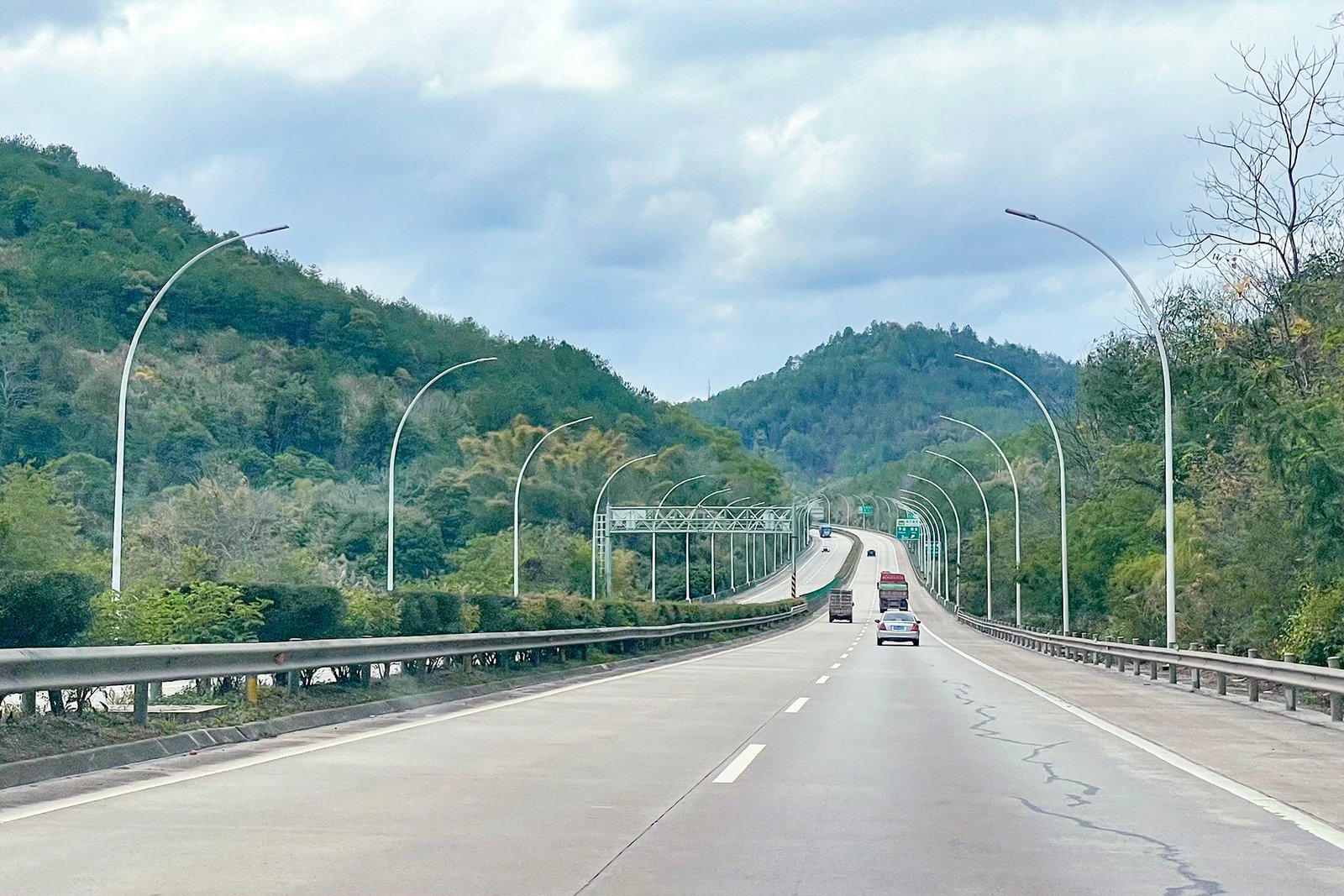
The Guangzhou–Shenzhen corridor is the easiest place in China to learn electric driving: about 120 km of expressway, three service areas, and a city at each end where a 480 kW post is rarely a kilometre from your hotel.
The G4/G15 is the busiest intercity road in China, which is why it is the best supplied. Huocun service area runs six EV charging piles around the clock; Houjie, in Dongguan, has more posts and the longest holiday queues.
| Leg | Distance | Charging plan |
|---|---|---|
| Guangzhou → Shenzhen | ~120 km | Leave at 80%, charge in Shenzhen |
| Shenzhen → Huizhou | ~90 km | City charger before the coast |
| Huizhou → Guangzhou | ~140 km | One motorway stop, 15 min |
Shenzhen resets expectations: 1,227 stations rated 480 kW or above by July 2026, 536,000 charging facilities of every kind, and a one-kilometre supercharging circle across most districts (Shenzhen Development and Reform Commission, 26 July 2026).
How fast is fast charging in China?
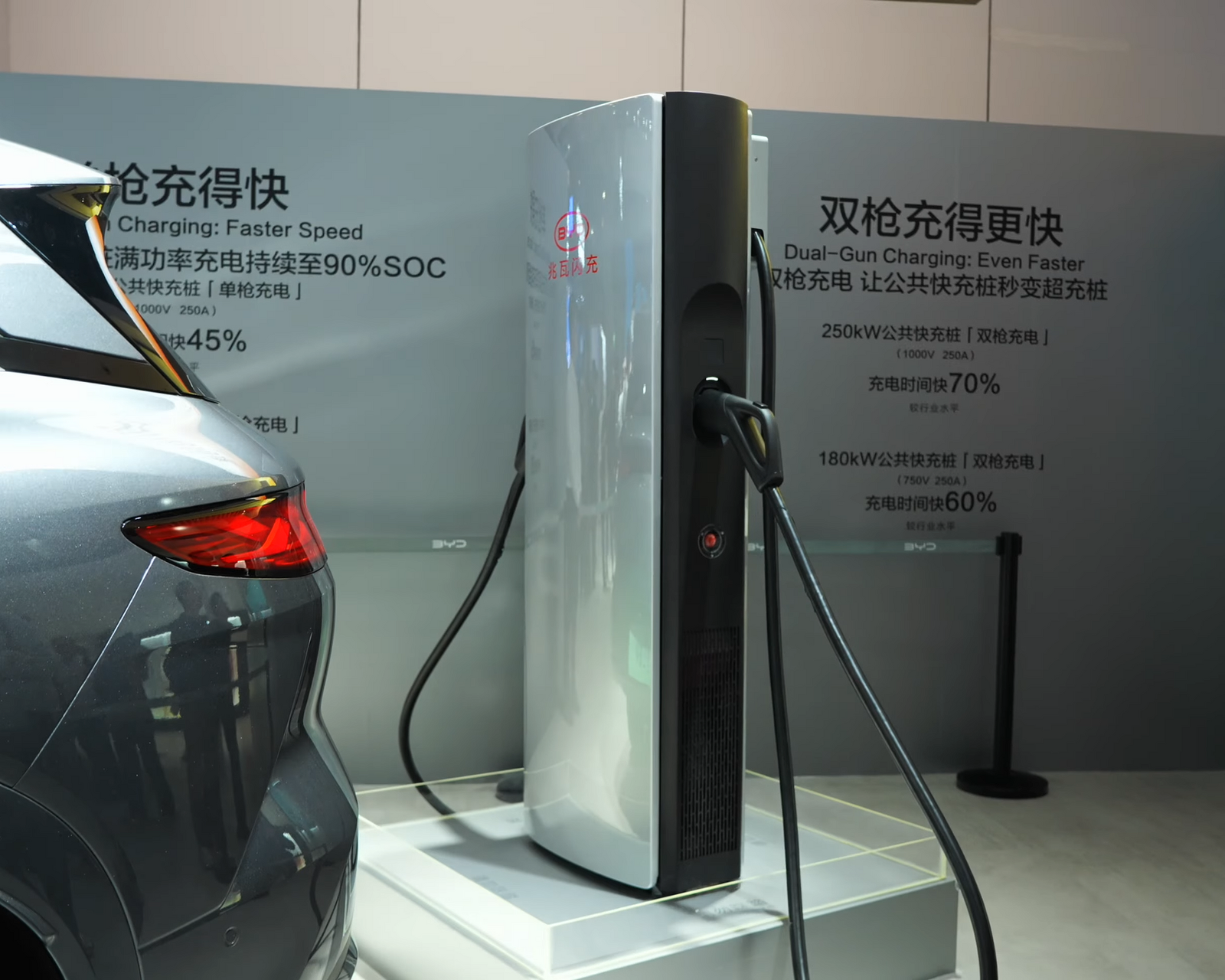
A 480 kW post can add roughly 300 km in ten minutes, but only to a car that accepts the rate. Most rental EVs peak at 60–120 kW, so the realistic figure is 20 to 35 minutes to go from 20% to 80%.
| Charger class | Power | 20–80% on 60 kWh | Where |
|---|---|---|---|
| AC destination | 7 kW | ~5 hours | Hotels, car parks |
| Standard DC | 60 kW | ~40 min | Older service areas |
| Fast DC | 120–180 kW | ~20 min | New motorway sites |
| Ultra DC | 480 kW+ | ~12 min | Shenzhen, trunk routes |
| Megawatt flash | 1,000 kW+ | ~6 min | Flagship stations |
Hardware is no longer the constraint. Huawei and BYD both launched megawatt-level charging in 2025, and Shenzhen is approaching 200 megawatt-class stations. What limits you is the car, the battery temperature, and whether the cabinet feeds two bays at once.
When will you hit a queue?

Queues appear on four or five days a year, not on ordinary weekends. Over the 2026 May Day holiday the network logged 3.98 million sessions and 94.93 GWh on expressways alone, and popular service areas reported waits beyond 2.5 hours (National Energy Administration, 30 July 2026; China Business Journal, 16 July 2026).
The pattern is predictable: first morning out, last afternoon back. Charge to 80% rather than 100%, because the final fifth takes as long as the first three. Start before 08:00 or after 20:00, and if an EV charging forecourt is full, take the next exit — town chargers sit within 10 km of most interchanges.
Does battery swapping beat charging for a rental?
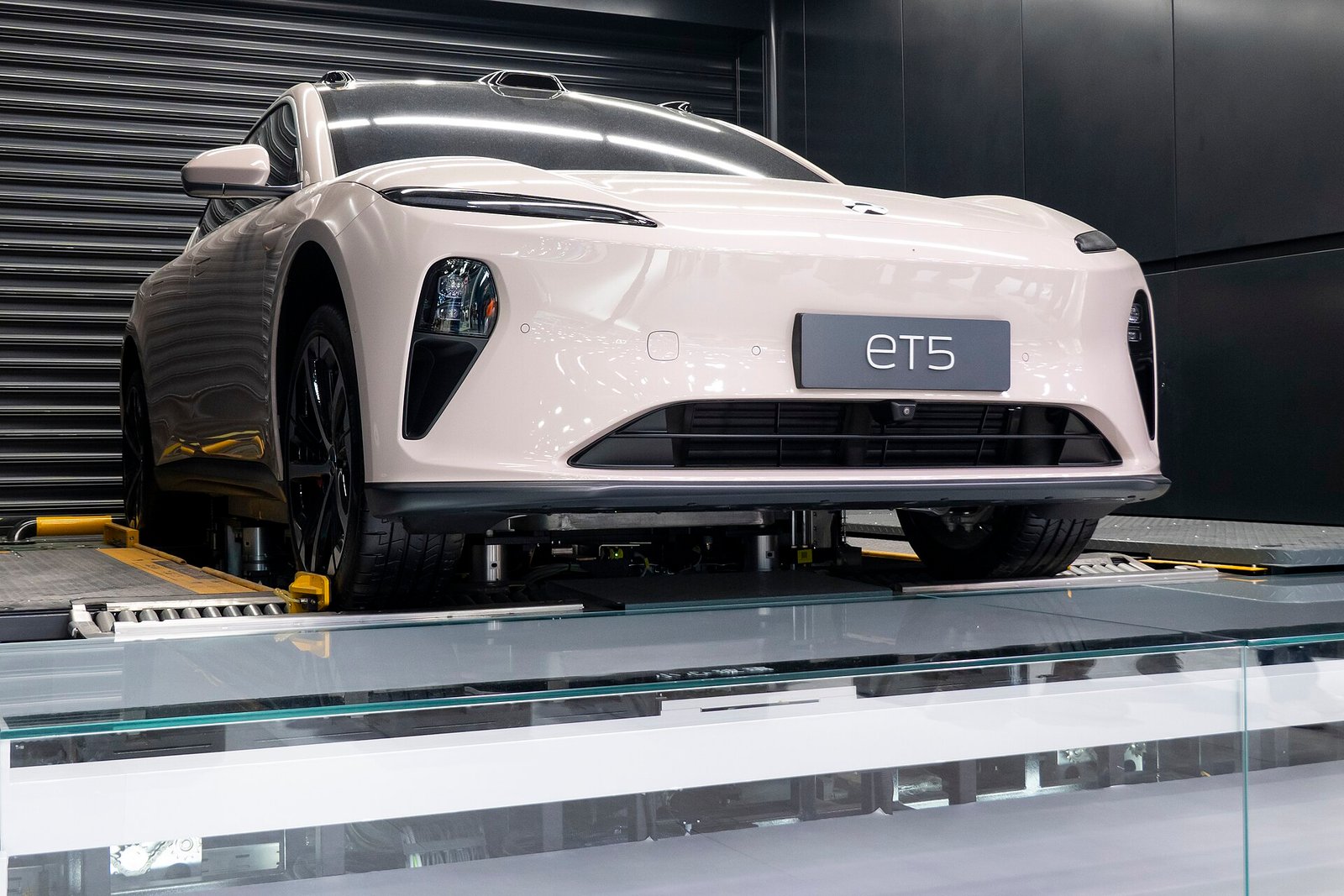
Battery swapping beats any cable — about three minutes — but only in a car from the network that built it. NIO runs 3,927 swap stations, 1,043 of them on expressways, and they serve NIO, Onvo and Firefly models only (China National Radio, 23 June 2026).
That makes swapping a bonus rather than a plan. In a NIO rental the expressway EV charging network is a genuine petrol-station substitute; in a BYD or a GAC it is a building you drive past.
Can foreigners rent an EV in China?
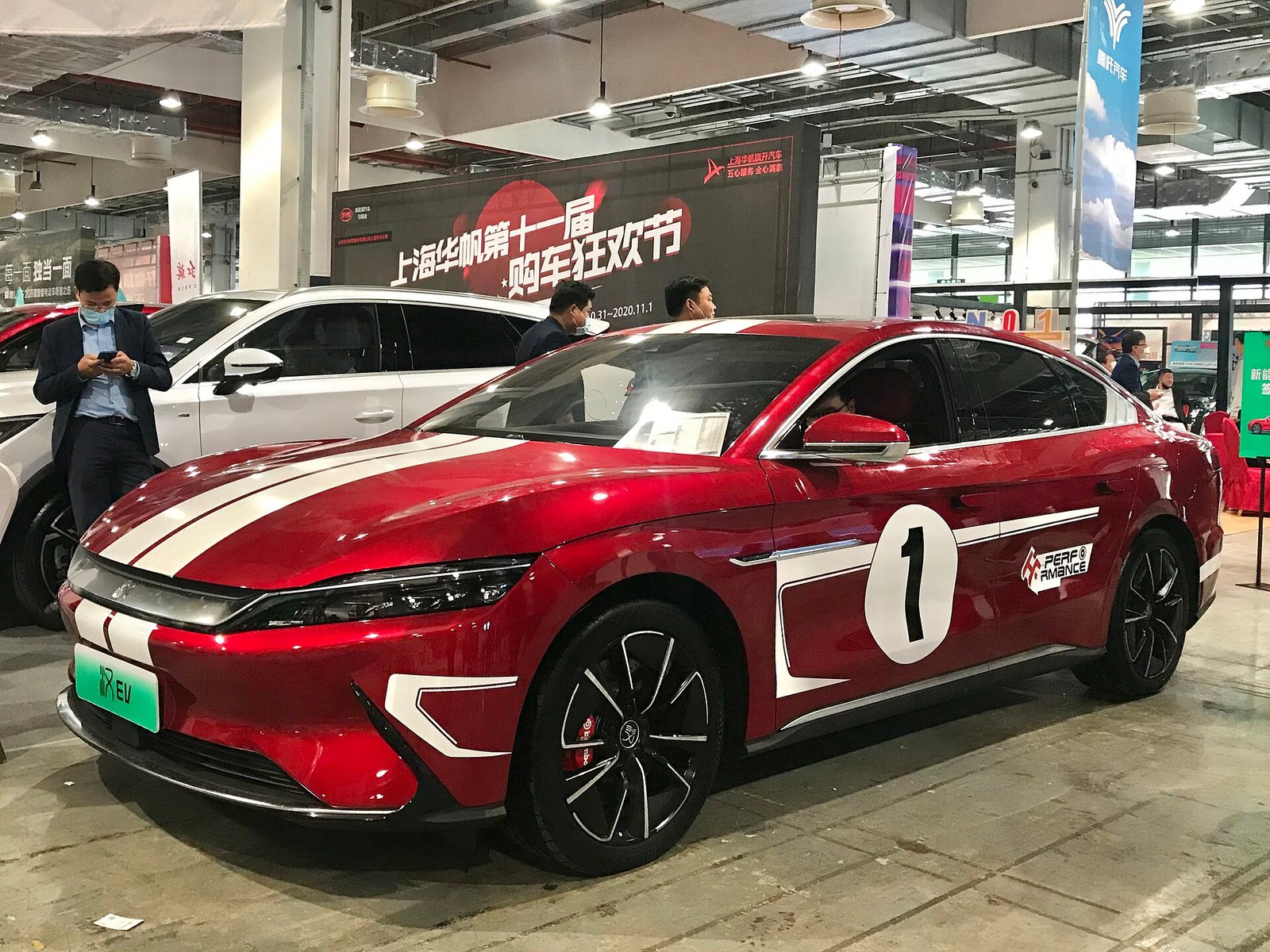
Foreigners can legally rent and drive an electric car in China, but not with an International Driving Permit. China never joined the conventions behind the IDP, so you need a Chinese Temporary Driving Permit from a vehicle management office, usually issued within a day.
For stays under three months the permit runs three months and needs no written exam: passport, visa, home licence, certified Chinese translation, photograph and a road-safety session. Rentals are limited to C1 and C2 cars, which covers every standard EV (Chongqing Municipal Government, 10 June 2026).
eHi and CAR Inc both rent to foreign licence holders, and BYD has fleet deals with Hertz. Ask for the exact model rather than the class, and photograph the state of charge on collection.
What are the practical tips worth knowing?
- Set up Alipay and WeChat Pay at home, both with a card attached.
- Download Amap, not Google Maps: only Chinese maps carry live EV charging status.
- Treat 20% as empty and 80% as full; the middle band is where the car is quick.
- Book hotels with destination charging to delete one stop from every morning.
- Carry the rental contract: police checks expect it beside the permit.
Where does the network still fail?
The last 1.4% of service areas without EV charging sit in high, cold country — Tibet, Qinghai, western Sichuan — where official advice is to leave the motorway and find a town charger, usually within 10 km.
More common: dead EV charging posts, apps that demand a mainland number, and mall chargers whose parking fee exceeds the electricity.
Is an EV road trip in China worth it?
Yes, on any route between provincial capitals, and especially in Guangdong, where charger density turns range anxiety into scheduling. The car is quiet, the fuel costs a tenth of petrol, and the motorways now have more charging bays than fuel islands.
Book the car, set up the two wallets, and treat the first charge as a rehearsal rather than a test. If you are still assembling an itinerary, our guide to planning a Shenzhen day trip around food pairs well with a morning top-up, and the dim sum morning in Guangzhou is a natural first stop before the expressway. For more on what else runs on Chinese infrastructure, read about drone delivery in Shenzhen and the rural bus network reaching villages this road never touches.
Frequently asked questions
Can I pay for EV charging in China with a foreign credit card?
Yes, indirectly. Alipay and WeChat Pay accept passport registration and international cards, so you scan the post and pay through the wallet. Chargers have no card slot, so set the wallets up before you arrive.
Do I need a Chinese phone number for charging apps?
Not for the mainstream networks. State Grid, TELD and Star Charge all accept payment through Alipay or WeChat Pay mini-programs, which work on a foreign number. A mainland SIM still helps for hotel wi-fi and mall-only stations.
How much does a full charge cost in China?
About CNY 45 to CNY 100 for a 60 kWh battery, depending on the hour. Midday is cheapest at roughly CNY 0.75–0.9 per kWh, evening peaks and motorway forecourts reach CNY 1.6 or more, and the service fee is capped at CNY 0.5.
Can foreigners rent an electric car in China?
Yes, with a Chinese Temporary Driving Permit, which is not the same as an International Driving Permit. The permit takes about a day, needs a certified translation of your home licence, and restricts rentals to C1 or C2 cars, which includes every standard EV.
Is it realistic to drive an EV to Tibet or Qinghai?
Only on the main corridors. Xining, Qinghai Lake and Dunhuang have fast chargers with 200–250 km gaps, but high passes and side roads fall below that. Cold cuts range by a third, so plan stops every 150 km and never arrive below 20%.
What happens if a charger is broken or occupied?
Move to the next site rather than waiting. Cities and trunk corridors usually have a second network within a few kilometres, and Amap lists live availability. An hour queueing at 5% charge is the one mistake that derails a day.