


Dali’s Winter Cherry Valley: China’s December Pink
At 6:40 on a December morning, frost still lies along the tea rows below the viewing deck, and the trees above them are already pink. Dali winter cherry blossom means the winter-flowering cherries of Wuliang Mountain in Nanjian Yi Autonomous County: more than 10,000 trees among a thousand-odd mu of tea terraces at 2,175 metres, flowering for about 25 days from late November, five months before the rest of China’s cherry season. Entry costs 45 yuan and the valley sits 56 km from Nanjian town, 144 km from Dali. This guide covers the window, the three gardens, the road in, and what to do if you arrive to bare branches.
What is the Dali winter cherry blossom valley?
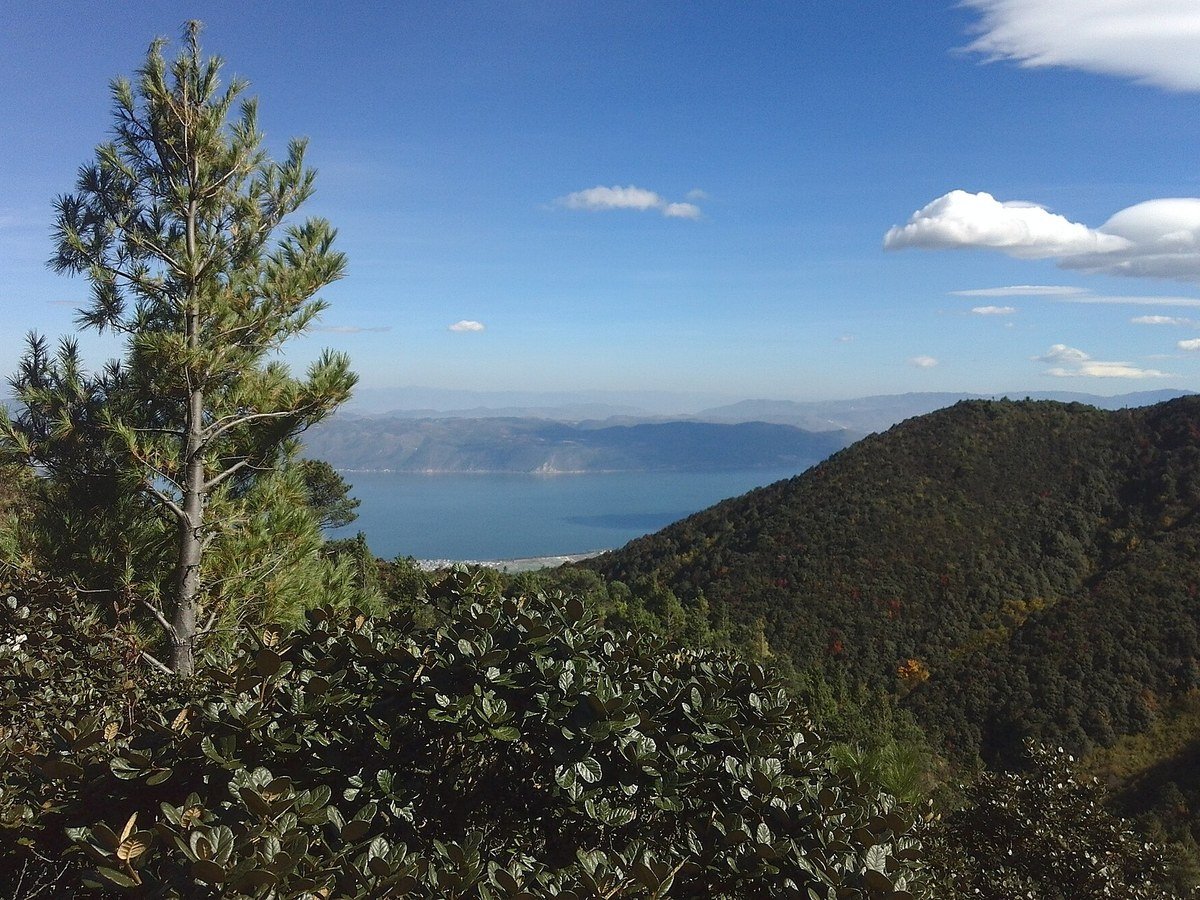
The Dali winter cherry blossom valley is a working tea estate in De’an village, Wuliangshan town, Nanjian Yi Autonomous County, Dali Bai Autonomous Prefecture, Yunnan. It fills a fold of the Wuliang range at 2,175 m beside the G214 highway, split into three gated gardens called One, Two and Three.
Nobody planted these trees for tourists: tea farmers set them out decades ago to shade the bushes, and the pink-over-green pattern is what photographers now queue for (Xinhua, 25 December 2025). The estate belongs to the Huaqing tea factory, so navigation only behaves if you type the full name.
Why do the cherries flower in December?
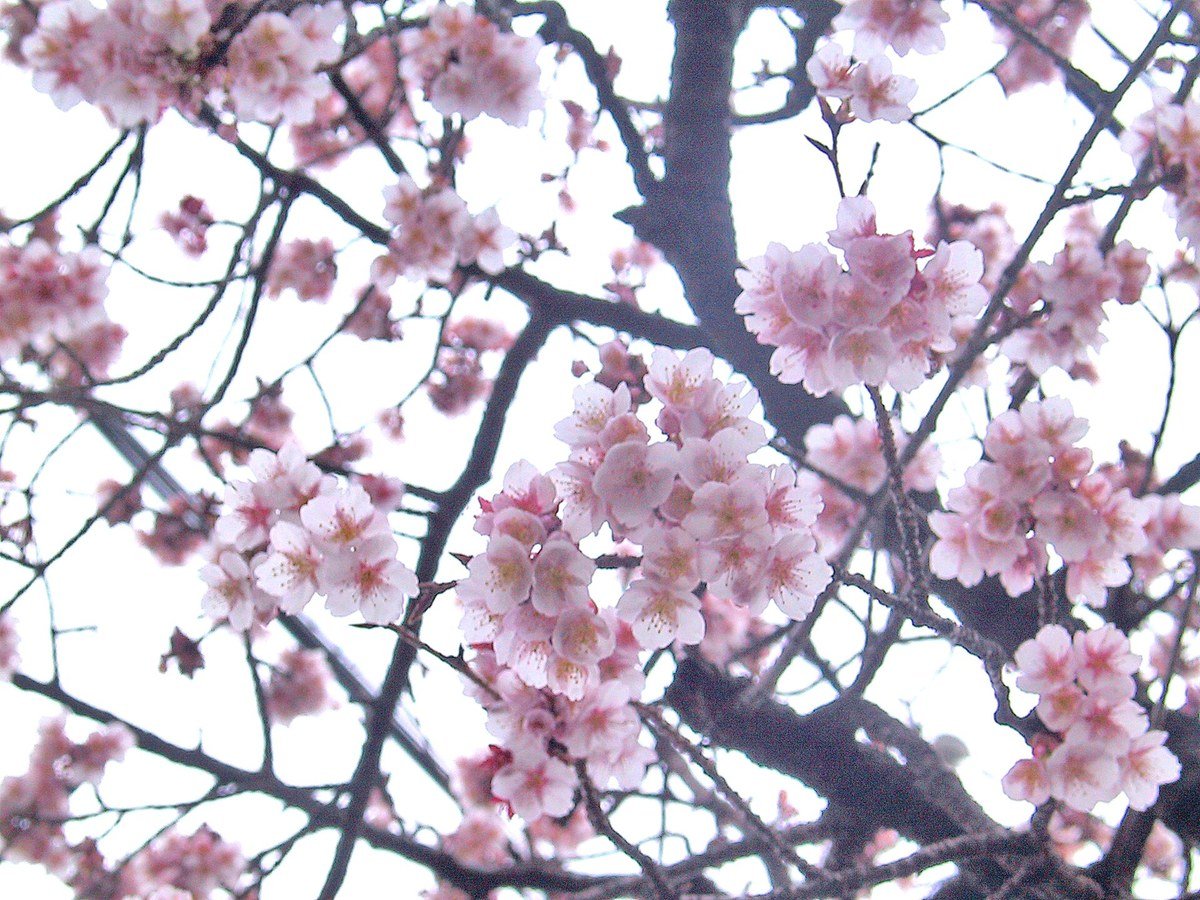
Prunus cerasoides, the wild Himalayan cherry that Yunnan calls winter cherry, needs almost no cold to break dormancy. It opens once nights lengthen and the air cools, which at 2,175 m in southern Yunnan happens in late November rather than April (Wikipedia, Prunus cerasoides).
That makes the Dali winter cherry blossom season a different species on a different clock, not an early spring. The trees are old enough to arch over the tea rows, so the colour sits at eye level, and a valley that traps moisture adds the second ingredient: cloud in the gorge at dawn, gone half an hour after sunrise.
When should you time a Dali winter cherry blossom trip?
The Dali winter cherry blossom bloom runs from roughly 20 November to early January, holding full canopy for about ten days in mid-December — two weeks that decide whether the hills read green or pink — with dates drifting a week either way as autumn temperatures move (Xinhua, December 2025).
| Phase | Typical dates | What you see | Trade-off |
|---|---|---|---|
| First colour | 20–30 Nov | Scattered pink, green dominant | Quiet roads, thin photos |
| Opening | 1–8 Dec | 40–60% of trees out | Best balance of space and colour |
| Peak | 9–20 Dec | Full canopy, dawn cloud | Weekend crowds, higher rooms |
| Fading | 21 Dec–early Jan | Petals on the tea rows | Patchy trees, easy parking |
Three days out, check the county’s own feeds for flower reports rather than trusting a calendar. A cold snap can push peak back a week; rain strips petals in a night.
How do you reach the valley from Dali?
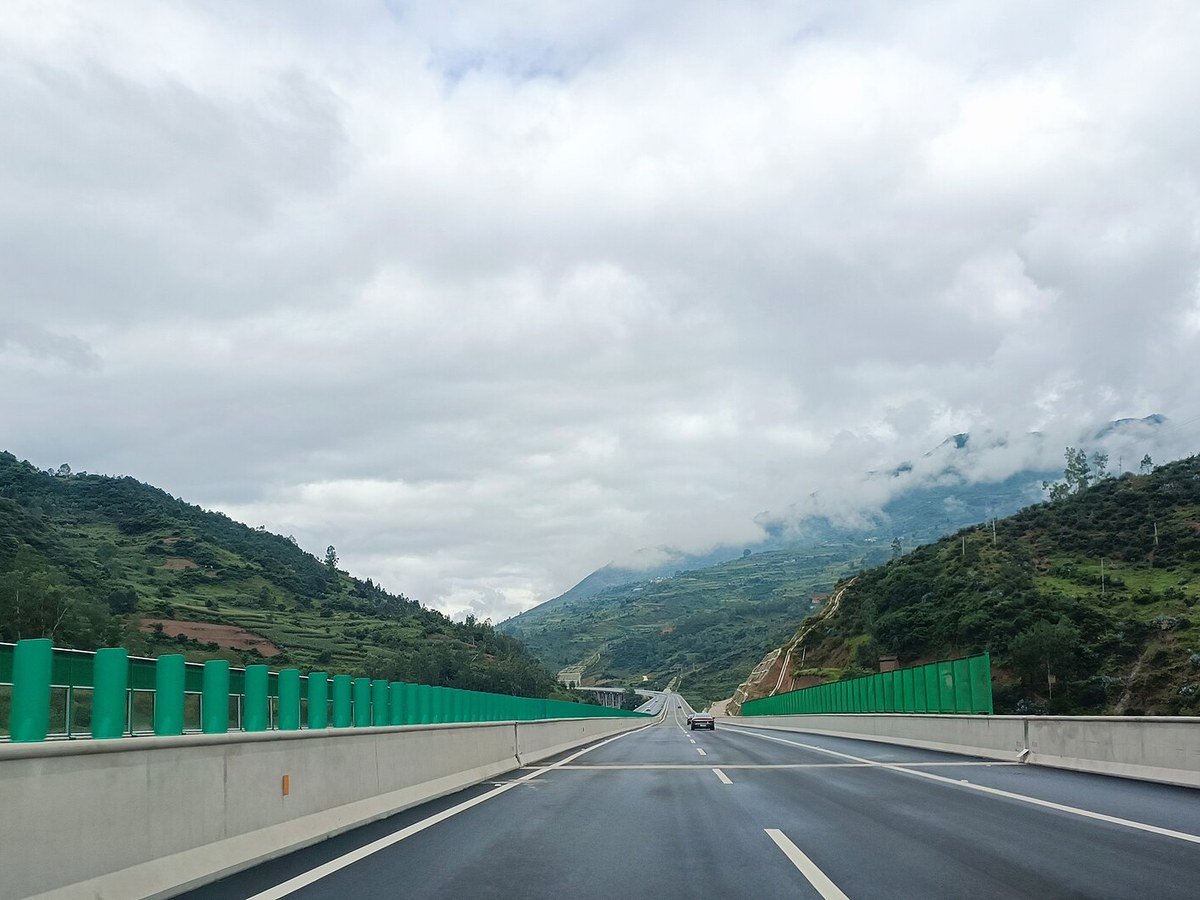
The drive to the Dali winter cherry blossom valley takes two and a half to three hours, and the last 56 km from Nanjian town climbs a steep third-class road, slow by day and unwise after dark. Fuel up in the county; there is no station near the gate.
| Mode | Time | Cost | The catch |
|---|---|---|---|
| Chartered car from Dali | 2.5–3 h each way | About 600 yuan a day | Only way to catch sunrise and sunset |
| Shared car | Same | 80–100 yuan a seat | Departs when full |
| Bus chain | 4–5 h | 28–30 yuan plus local fare | Last return about 14:00 |
| Self-drive | 2.5–3 h | Fuel, tolls, 10–20 yuan parking | Mountain corners, dawn frost |
By rail, Kunming to Dali is 2 to 2.5 hours and 114.5 to 155.5 yuan in second class (China Railway 12306, checked 29 November 2026); the road then runs to Weishan in 30 minutes and Nanjian in another 40. A Xiaguan bus reaches Nanjian for 28 to 30 yuan, after which a county bus crawls to Shale a few times daily — fine for a day trip, useless for a sunrise.
Searching simply for “Wuliang Mountain” can drop you at Wuliang Jian Lake near Jingdong, a different mountain 90 minutes away with a 30 yuan ticket and no cherries. Type the tea factory into the search box.
Which of the three gardens deserves your morning?
Garden One, Mingying, holds the Lancui platform where the classic Dali winter cherry blossom frame is made: cherry canopy in front, cloud below, sun breaking over the ridge. Garden Two, Menghuan, is a gentle three-kilometre loop of tea paths and a stream, best for portraits in side light. Garden Three, Diecai, sits higher, needs a car, and trades crowds for sunset and stars.
Your Dali winter cherry blossom ticket covers all three, but each garden admits you once and refuses re-entry. Plan the route before you pay:
- Reach the gate by 06:30 and take the Lancui platform before 07:00 for a front-row tripod space.
- Stay through sunrise and the ten minutes when cloud lifts off the gorge.
- Move to Garden Two between 09:00 and 11:30, when side light softens faces.
- Leave at midday; light is hard and the car park is fullest from 10:00 to 14:00.
- Return to Garden One for backlit petals at 16:30, or drive to Garden Three for sunset.
Why are the cherries growing inside a tea garden?
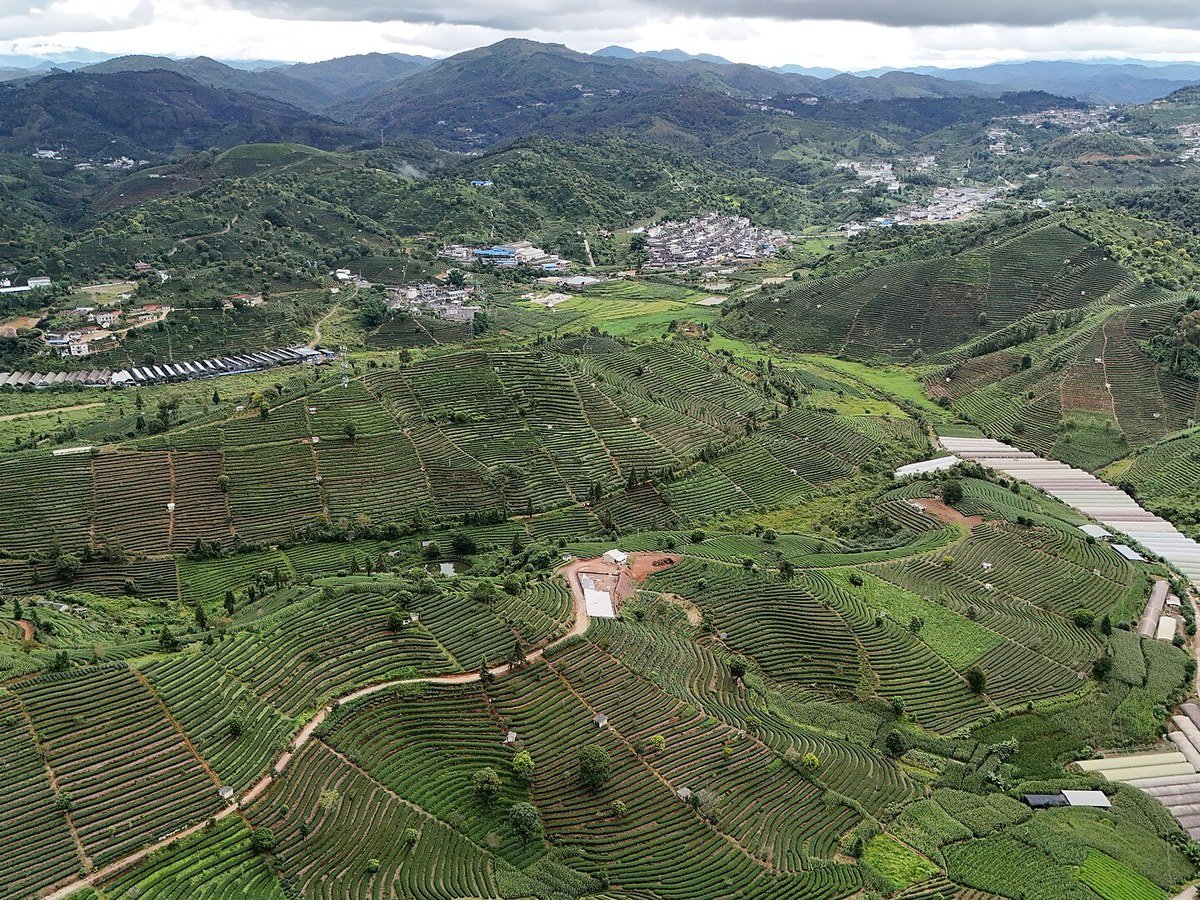
Interplanting gives the Dali winter cherry blossom slopes two harvests: spring tea from March to May, blossom in December, with the trees cutting wind and holding soil between the rows. The county’s green tea is a protected geographical product, picked from bushes between 1,800 and 2,200 m.
This is farmland with a ticket gate, not a walled attraction, and the tea rows are somebody’s income. Walk the paths, never the bushes. For the tea side in detail, see our guide to China’s tea plantations.
Where should you sleep for the Dali winter cherry blossom sunrise?
Sleep inside the valley if you want the dawn, because the county town is 40 to 60 minutes of dark mountain road away. Guesthouses beside Gardens One and Three listed at 201 to 253 yuan in November 2026; rooms in Nanjian start near 142 yuan.
Book a week ahead and confirm by phone rather than trusting a platform listing. Bring a down jacket: mornings run 3 to 8°C at this altitude while afternoons pass 20°C, and village heating is often a blanket and an electric pad.
What should you eat in Nanjian?
After a cold Dali winter cherry blossom dawn, Nanjian cooking does the warming: ham, chicken and sour papaya simmered together as huotui mugua ji, and Wuliang Mountain black-boned chicken, listed in the national livestock gene bank in 2010, poached whole with a chilli dip.
At breakfast, look for guoba youfen, a pea-flour soup thickened with rice crust, sold for a few yuan. For dinner with a group, book a tiaocai banquet at 80 to 120 yuan a head; the meal arrives with choreography.
What is tiaocai, the dance that carries dinner?
Tiaocai is Nanjian’s Yi banquet ritual in which servers dance platters from kitchen to table, balancing trays on head, shoulder and teeth. It joined the national intangible cultural heritage list in 2008 as project Ⅲ-71, number 668, with Nanjian as the recognised home (China’s Intangible Cultural Heritage inventory).
The county was named a home of folk tiaocai art by the Ministry of Culture in 2003, and the form has travelled: a Nanjian troupe played Lancaster House in London in 2015 and the CCTV Spring Festival Gala in 2016 (Dali Prefecture government). Winter village weddings remain the real thing.
What else is worth a stop on the way?
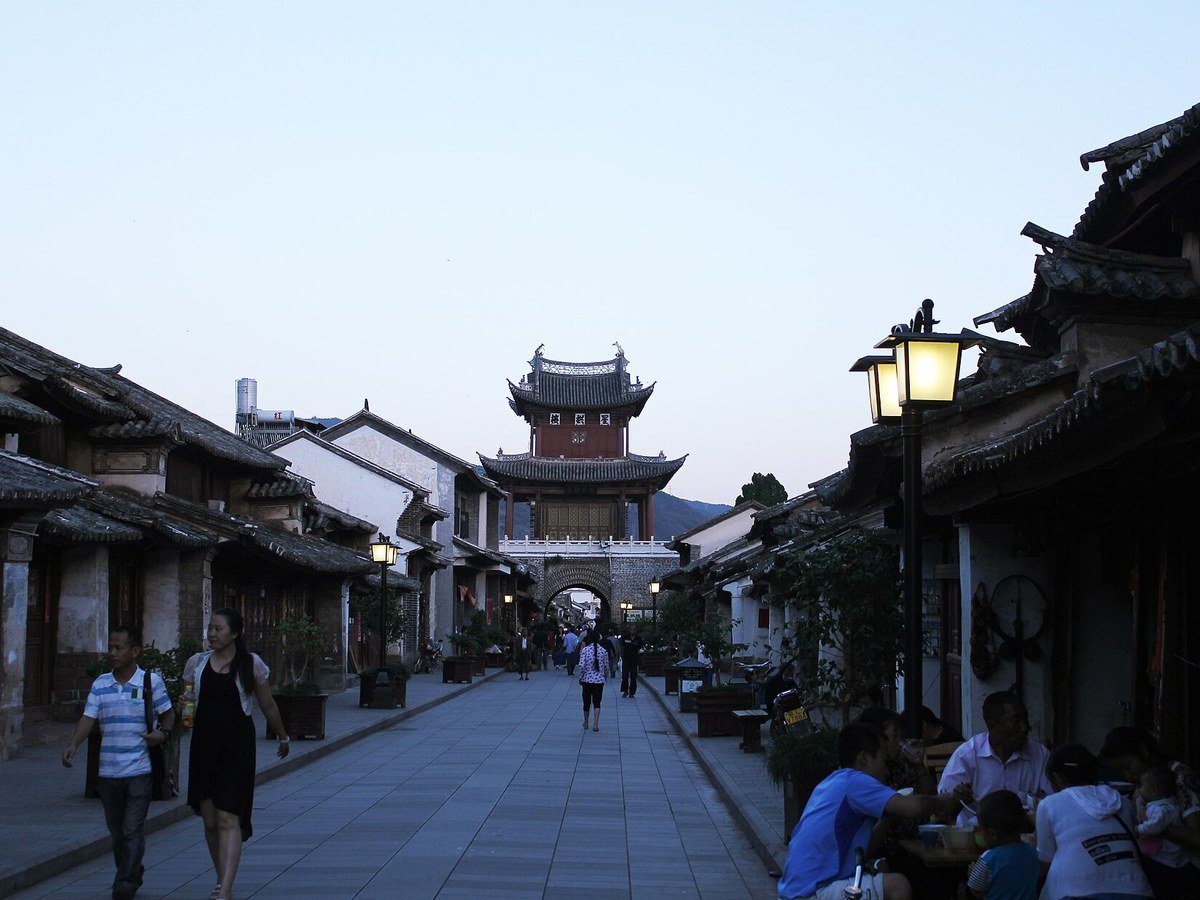
Weishan, 30 minutes from Dali on the expressway, is a quieter old town than Dali’s: a Ming gate, a long stone street, honey-glazed bread at the stalls. Beyond Nanjian, Lingbao Mountain forest park and the county earth forest add half a day each.
Anyone chasing pink in another form should read about Tengchong’s ginkgo village, four hours west, where November is gold instead.
Practical tips for the Dali winter cherry blossom valley
Tickets run 45 yuan for adults, under-1.2 m and over-70s free, students half price, parking 10 to 20 yuan. Dali Daily quoted 40 yuan in December 2025, so treat 40 to 45 as the honest range and read the board at the gate (Dali Daily, 29 December 2025).
- Dress in layers and wear shoes with grip; paths frost over before sunrise.
- Download offline maps and carry cash for village stalls.
- Start before 07:00 at weekends, when coach groups arrive from 10:00.
- Register any drone with the scenic area; wardens ask for the record.
- Keep two spare days if the bloom is your only reason for coming.
Bringing it home
The Dali winter cherry blossom trip rewards a narrow window and punishes loose planning: three hours of mountain road, one ticket, three gardens, and about twenty-five days in which the whole thing exists. Go early, sleep high, and let the cloud do the rest.
At jusha.travel, we love sharing tips that turn a good trip into an easy one. If you are building a Yunnan loop around the flowers, start with Dali Old Town’s Bai courtyards, then compare the winter terraces at Yuanyang and the trails in Yunnan’s highlands. Tell us in the comments whether you caught the peak or the petals.
Frequently asked questions
Is the Dali winter cherry blossom valley worth the detour?
Yes, within a week of peak bloom in mid-December, when 10,000 trees flower above the tea rows at 2,175 m. Outside that 25-day window the slopes are a plain green tea estate.
How much does a visit cost?
Budget 45 yuan for the ticket, 10 to 20 yuan for parking and about 600 yuan a day for a chartered five-seat car. Guesthouses inside the valley start near 201 yuan in peak season.
Can I get there by public transport?
Yes, but not for sunrise: the Xiaguan bus to Nanjian costs 28 to 30 yuan, then a county bus to Shale runs a few times a day with the last return around 14:00.
When will the Dali winter cherry blossom peak in 2026?
Expect full canopy between 9 and 20 December 2026, with first colour from about 20 November. Dates shift roughly a week with autumn temperatures, so check county flower reports three days out.
How cold is it at the viewpoint?
Mornings at 2,175 m run 3 to 8°C before sunrise while afternoons pass 20°C. Bring a down jacket, gloves and grippy shoes, because the tea paths frost over.