


Xi’an’s Yangrou Paomo: Breaking Bread Into Hot Soup
Steam curls off a bowl the colour of milky tea, and somewhere beneath the surface are a few hundred pieces of flatbread you tore apart yourself twenty minutes ago. That is Xi’an yangrou paomo — lamb soup with broken bread — and it is less a dish than a lunchtime ceremony. You break the bread, a cook finishes the bowl, you eat from the rim inward. A standard bowl costs around ¥30 (US$4) as of November 2026, and the whole affair takes an hour. Here is how the ritual works and where locals actually queue.
What is yangrou paomo?
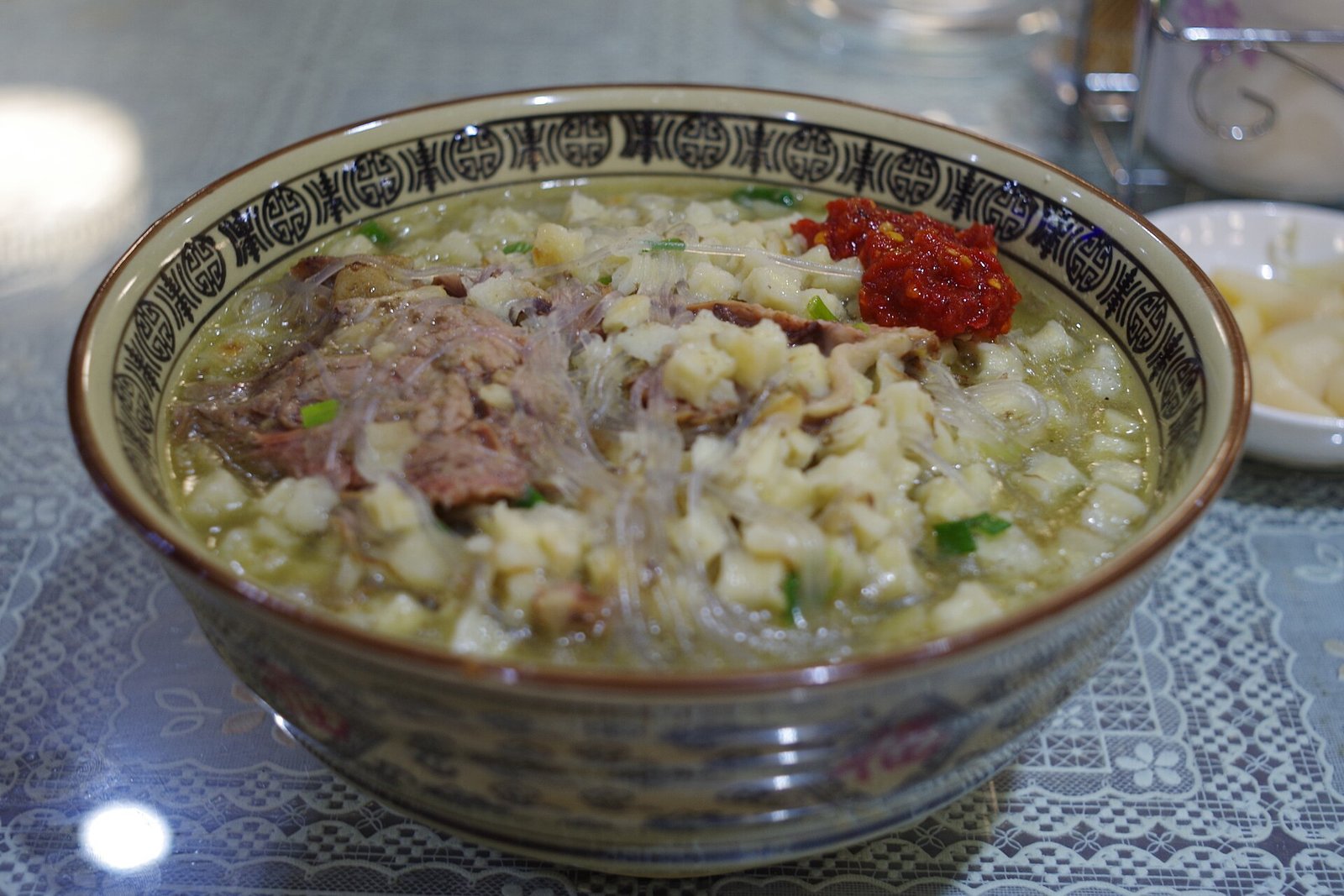
Yangrou paomo is a Xi’an lamb dish in which the diner crumbles a dense flatbread into a bowl, hands it to the kitchen, and gets it back flooded with slow-simmered lamb broth, glass noodles and sliced meat. The name is literal: pao means to soak, mo means bread.
Its ancestor, yang geng or lamb broth, appears in Song-dynasty verse; the poet Su Shi ranked lamb broth above every other dish of the Qin region. The Chinese Wikipedia entry on yangrou paomo traces the modern bowl through Xi’an’s halal kitchens, which is why almost every serious paomo house is a qingzhen (halal) restaurant.
Two things surprise first-timers: the bowl arrives twice, once as bread and once as soup, and the broth is not a spicy assault but a milky, herb-scented lamb stock simmered with ginger, fennel, star anise and black cardamom. The China Daily food desk (27 November 2025) calls it “rich, milky-white” and the tearing “a ritual in itself”.
Why the bread matters more than the meat
The flatbread, called tuotuo mo, is baked from a nine-to-one blend of unraised and raised dough, weighs about 100 grams per cake, and decides whether your bowl succeeds. Get the pieces wrong and no amount of good lamb will save the soup.
Each bowl comes with two or three pale discs, baked to hold a shape while staying underdone inside. Bakers judge a good mo by three features: a golden ring at the edge, a domed “tiger back” and a faint chrysanthemum pattern at the centre. All three produce a crust that survives twenty minutes in hot broth.
How do you order yangrou paomo?
Ordering yangrou paomo follows six fixed moves, and staff will guide you through them if you look lost. The vocabulary is small: standard or premium, lamb or beef, which of the four broth styles you want, and how finely you plan to tear.
- Pay at the counter. Say “yangrou” for lamb, then “putong” (standard) or “youzhi” (premium, extra meat).
- Wash your hands. Most shops have a basin near the door; you are about to eat with your fingers.
- Tear the bread by hand. No knives. Split each disc into pieces roughly the size of a soybean.
- Leave a signal if you want it dry. A chopstick laid across the bowl means ganba, the dry style.
- Hand the bowl back. A cook adds meat, glass noodles, daylily, wood ear and boiling broth to your pieces.
- Accept the sides. Sweet pickled garlic and chilli paste arrive free with the bowl.
Which broth style should you choose?
Xi’an kitchens recognise four traditional broth styles, and the one you pick changes both the soup-to-bread ratio and how finely you should tear the bread. First-timers are usually steered towards kou tang, which keeps the dish hot without drowning it. People’s Daily (13 May 2019) lists all four as standard ordering terms.
| Style | What arrives | Bread size |
|---|---|---|
| Dan zou | Bread and broth served apart | Any size |
| Ganba | Almost dry; chopsticks stand up | Soybean |
| Kou tang | One spoonful left at the end | Peanut |
| Shui wei cheng | Wide broth, bread afloat | Broad bean |
The logic holds across all four: the wetter the bowl, the larger the pieces. Cooks read your bread and adjust the ladle accordingly.
How do you eat it without offending the table?
Eat yangrou paomo from the rim inward in a slow spiral and never stir the bowl, because stirring cools the broth and turns the bread to paste. Xi’an calls the technique canshi, “silkworm eating”, and it keeps the last spoonful as hot as the first.
Spoon in the left hand, chopsticks in the right. Lay chilli paste on the surface instead of mixing it through, so each mouthful can be dialled up or down, and take a clove of sweet garlic between spoonfuls to cut the fat. Do not add black vinegar — it flattens the lamb. When the bowl is empty, many shops pour you a small cup of clear broth to finish.
Is xiaochao paomo better than yangrou paomo?
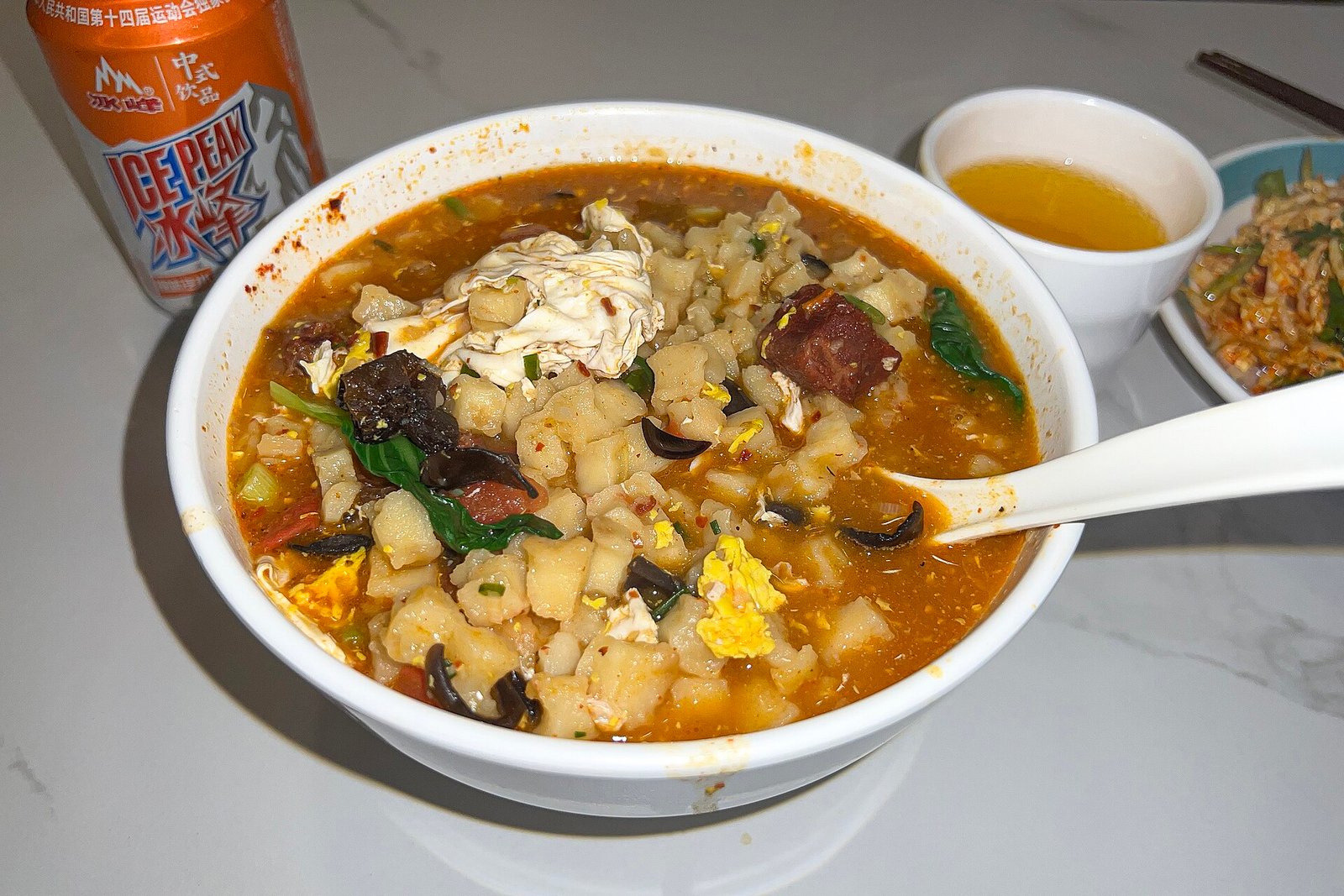
Xiaochao paomo is the stir-fried sibling of the soup version, and it suits anyone who finds the classic bowl too mild. The same torn bread goes into a wok with beef, tomato, chilli, vinegar and cumin, producing a sour-hot, nearly dry result instead of a milky broth.
| Yangrou paomo | Xiaochao paomo | |
|---|---|---|
| Method | Simmered in lamb broth | Stir-fried with beef, tomato |
| Flavour | Milky, herbal, gentle | Sour, hot, cumin-forward |
| Best for | Cold days, first visits | Repeat visitors, chilli eaters |
| Typical price | ¥28–45 | ¥30–48 |
Both are ordered the same way. With two lunches in Xi’an, do the soup version first; the stir-fried one makes more sense once you know how the bread should feel.
Muslim Quarter main street or the back lanes?
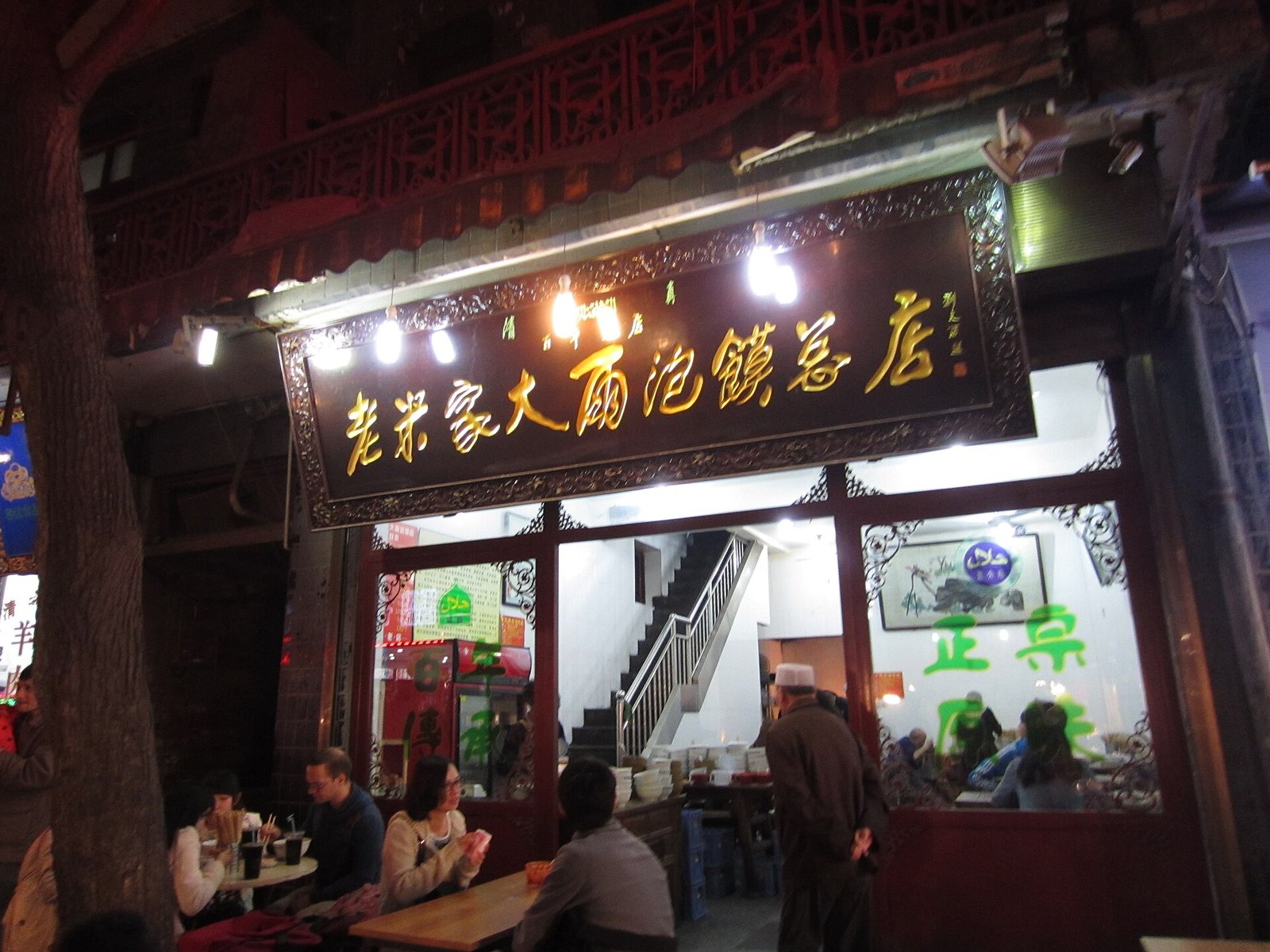
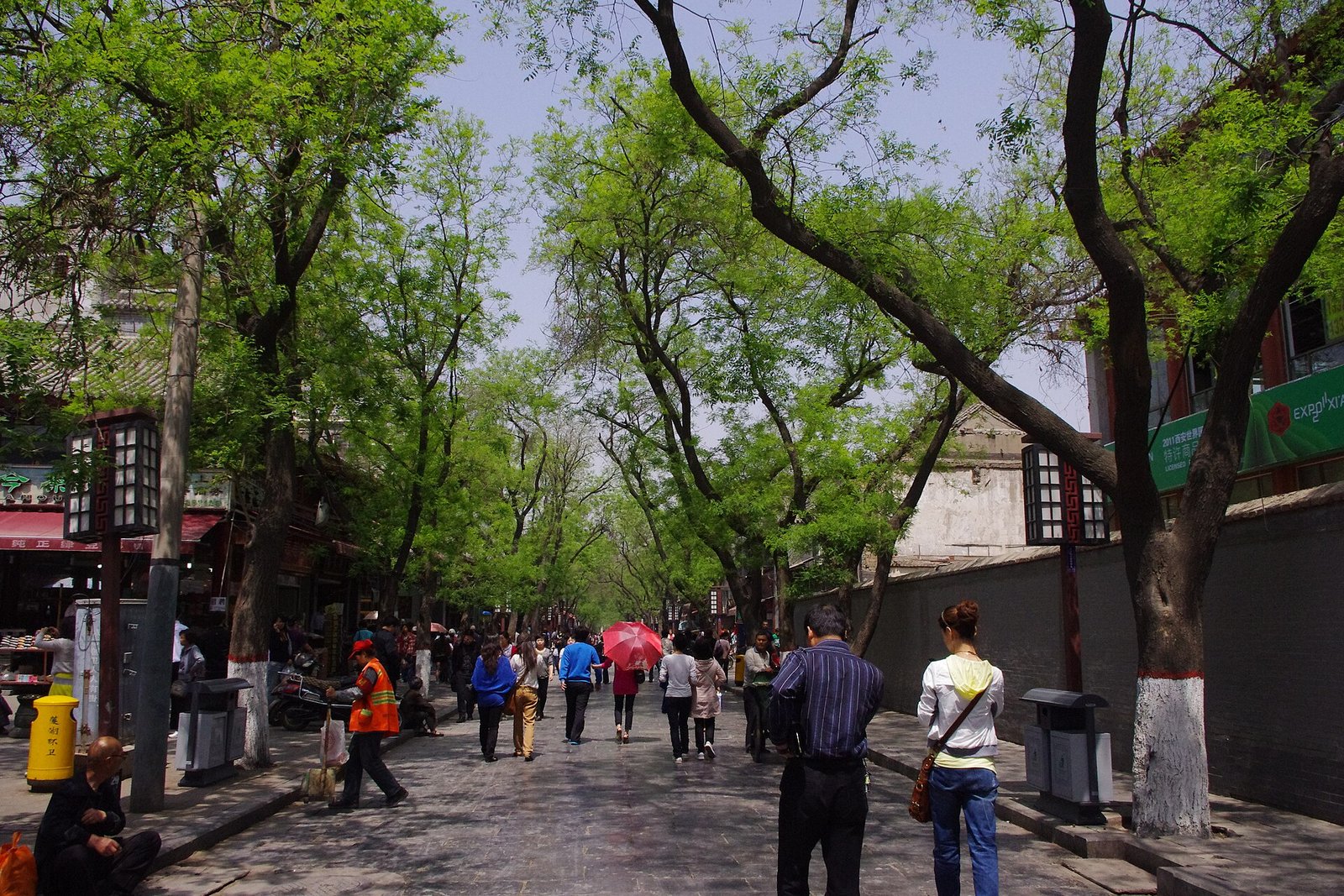
Beiyuanmen, the postcard lane behind the Drum Tower, is where most visitors eat yangrou paomo, while Dapiyuan, Sajinqiao and Xiyangshi are where Xi’an residents eat the same dish for less. The gap is roughly ¥15 a bowl and a great deal of atmosphere.
The main drag is not a scam — several serious kitchens sit on it — but rents are high and menus come in three languages. Walk five minutes into Dapiyuan or Sajinqiao and the rooms shrink, the menus vanish, and the tables fill with people tearing bread in silence.
| Shop | Where | Since | Spend |
|---|---|---|---|
| Lao Sun Jia | Dongdajie, near Bell Tower | 1898 | ¥40–60 |
| Tong Sheng Xiang | Bell and Drum Tower square | 1920 | ¥40–60 |
| Lao Mi Jia Dayu | Xiyangshi 127 | 1984 | ¥35 |
| Yizhen Lou | Beiguangji Street | Local veteran | ¥25–30 |
Lao Sun Jia and Tong Sheng Xiang both hold national intangible cultural heritage status for paomo craft — Tong Sheng Xiang’s technique was listed in 2008, Lao Sun Jia’s in 2021. Lao Mi Jia Dayu is the opposite: a family shop that often sells out by mid-afternoon.
What does a bowl cost in 2026?
Yangrou paomo in Xi’an costs ¥25–60 a bowl as of November 2026, with a standard serving near ¥30. Neighbourhood shops charge ¥25–30, old-brand standard bowls ¥28–35, old-brand premium (with about 250 grams of meat) ¥40–60, and tourist-strip “premium” bowls ¥38–60.
Premium buys meat, not craft: if broth matters more, order two bowls in a back lane.
How do you get to the Muslim Quarter?
The Muslim Quarter sits five minutes’ walk from Zhonglou (Bell Tower) station on Xi’an Metro Line 2, which runs from Xi’an North railway station in about 25 minutes. Line 2 is the city’s north-south spine — 33.4 km, 25 stations — opened in September 2011, according to the Xi’an Metro network map.
Xi’an North is the high-speed gateway and, at 34 platforms, the largest railway station in northwest China, with direct trains from Beijing in roughly 4.5 hours, Zhengzhou in 2 and Chengdu in 3. Metro Lines 2, 4 and 14 all call there.
Metro Line 14 and the airport intercity railway both run from Xi’an Xianyang International Airport, 40 km northwest, to Xi’an North. Allow 70–90 minutes door to door.
Practical tips before you sit down
Four small habits make a first bowl of yangrou paomo noticeably better, and none require Mandarin beyond a few food words. Timing matters most: the broth is clearest early, and the busiest shops run out of bread by mid-afternoon on winter weekends.
- Go early. Most houses open around 09:00 and the broth is clearest before the 13:00 queue.
- Order standard first. You can add meat; you cannot un-order a bowl that is too rich.
- Bring cash. Small lanes may take only cash or WeChat Pay; foreign cards often fail.
- Skip it if you are vegetarian. The broth is bone-based and there is no meat-free version.
Why this bowl is worth an hour of your trip
Xi’an has faster pleasures, but almost nothing else on a traveller’s itinerary makes you participate. Tearing bread is slow, social and slightly meditative, and it produces a bowl tuned to your own hands and your own patience with the bread.
If you like food you have to assemble, our guide to Chaoshan beef hotpot and its cut-by-cut ritual covers the same idea in Guangdong, while Cantonese claypot rice is the winter equivalent further south. Xi’an roujiamo is the quick lunch locals eat between bowls, and liangpi in the Muslim Quarter markets makes a good cold counterpoint.
At jusha.travel, we love sharing tips that turn a meal into a memory, and this is one of China’s best examples. Give the bread twenty minutes of attention before you visit why Xi’an’s Terracotta Warriors are worth the hype, then tell us how small you tore your pieces.
Frequently asked questions
How much does yangrou paomo cost in Xi’an?
A bowl of yangrou paomo costs ¥25–60 in Xi’an as of November 2026, with a standard serving around ¥30 and premium versions at ¥40–60. Neighbourhood shops in Dapiyuan and Sajinqiao charge ¥25–30, while heritage restaurants near the Bell Tower charge roughly double for extra meat.
Do you have to break the bread yourself?
Yes, at traditional shops you break the tuotuo mo by hand into pieces the size of a soybean, which takes 10–15 minutes. A few modern outlets offer machine-broken bread for speed, but classic houses expect hand-torn pieces and cooks adjust the broth based on their size.
What is the difference between paomo and xiaochao paomo?
Yangrou paomo simmers torn bread in milky lamb broth, while xiaochao paomo stir-fries the same bread with beef, tomato, chilli and vinegar for a sour-hot, nearly dry result. Both cost ¥28–48 a bowl and both require hand-torn bread, but xiaochao suits chilli eaters.
What is the best time of day to eat yangrou paomo?
Lunch is the best time, ideally between 11:00 and 12:30 before the office crowd arrives and the broth is still clear. Most shops open around 09:00, and popular family restaurants such as Lao Mi Jia Dayu often sell out by mid-afternoon.
How do you get to the Muslim Quarter from Xi’an North station?
Take Metro Line 2 from Beikezhan to Zhonglou, a journey of about 25 minutes, then walk five minutes to Beiyuanmen. Line 2 connects with Line 14 from the airport, so the whole trip from arrivals to a bowl takes 70–90 minutes.