


From the ridge above Tianluokeng, the valley looks like something dropped from orbit: four round buildings and one square one, arranged in a ring, their grey-tiled roofs floating on a sea of tea bushes. Locals call the arrangement four dishes and a soup. Architects call it one of the most original forms of communal housing ever built. Either way, the Fujian Tulou are unlike anything else you will see in China.
These are not temples or palaces. They are houses — enormous, fortified, circular houses, some of them nine decades old and still lived in, rising three and four storeys out of the rice fields of south-western Fujian. Inside a single one, an entire clan once ate, stored grain, married, mourned and defended itself behind walls a metre thick.
At jusha.travel, we care about the details that make a rural China trip work — which county, which cluster, which bus, and how to visit respectfully when people still live inside the monument. In this guide we cover what a tulou is, why the Hakka built them, how they were constructed, which clusters are worth your time, and how to get there.
What Is a Tulou?
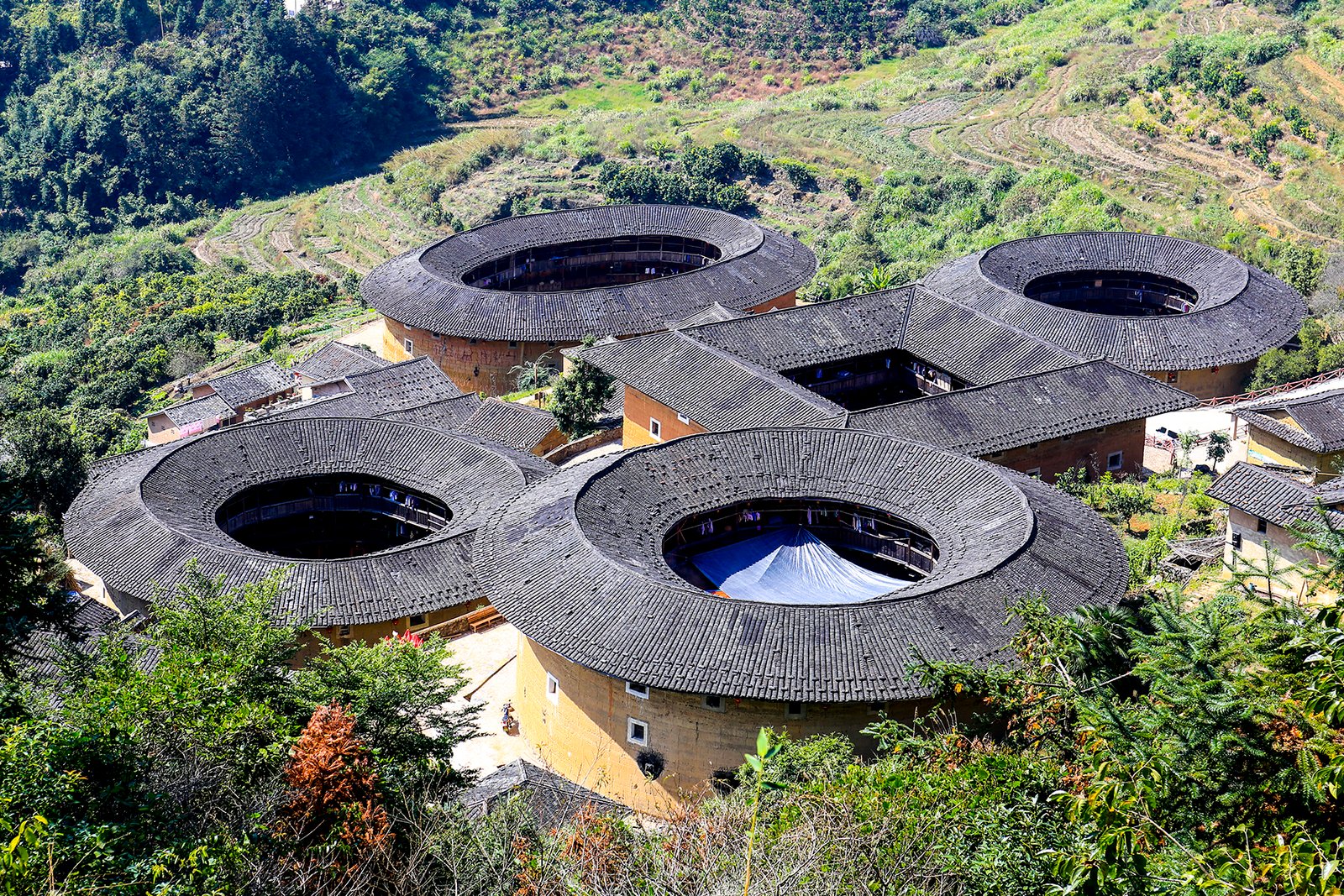
A tulou is a large, fortified earthen dwelling built by Hakka and Minnan communities in the mountainous south-west of Fujian province, most of them erected between the 15th and 20th centuries. The word means simply “earthen building”, and that is exactly what they are: walls of rammed raw earth, up to two metres thick, raised in layers around a central courtyard.
More than 3,000 tulou survive across the region. Of those, 46 buildings arranged in six clusters, plus four individual structures, were inscribed on the UNESCO World Heritage List in 2008, spread across Yongding, Nanjing and Hua’an counties. UNESCO’s own description calls them “a unique and beautiful example of raw earth residential buildings” — the strongest concentration, the best construction and the finest surviving examples of the form. The Fujian provincial government’s heritage summary sets out the same three counties, and the full technical case is in the original nomination dossier submitted to the World Heritage Committee. China’s Ministry of Culture and Tourism records that the decision was taken on 6 July 2008 at the 32nd session of the World Heritage Committee in Québec City, making the tulou China’s 36th World Heritage property.
Tulou come in three broad types: circular, square, and the stepped Wufeng (“five phoenix”) halls. Circular ones are the icons, and for good reason — a round plan removes the blind spots a square building leaves at its corners, and it resists wind and earthquakes better. Chinese visitors often describe them, not unkindly, as flying saucers come to rest in the hills. If fortified rural architecture appeals to you, our piece on China’s ancient forts covers the wider family of defensive building traditions, and our guide to China’s UNESCO World Heritage sites shows where the tulou sit in the national picture.
Why Were the Tulou Built?
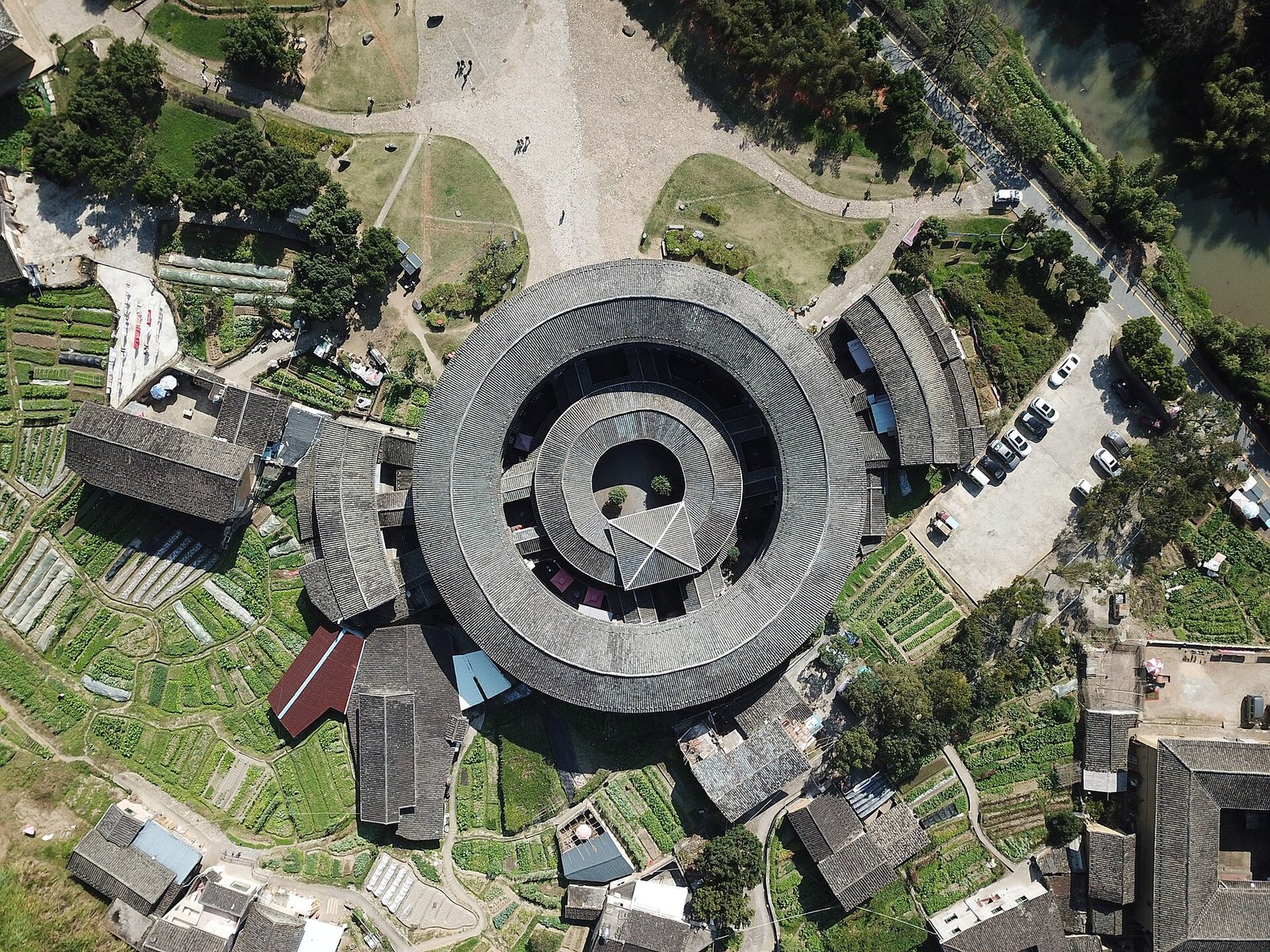
The tulou were built for safety: by clans who had migrated south from the Central Plains and needed homes that could shelter an extended family, store its grain and resist bandits, all at the same time. In the remote valleys of Yongding and Nanjing, a single defensible building made far more sense than scattered farmhouses.
That defensive logic shapes everything about them. A large tulou has only one heavy main gate. The first and second floors have no outward-facing windows at all; higher floors carry only narrow slits and watchtowers on the roof. Once the gate closed, the building could hold out for a long siege.
Inside, the arrangement is equally deliberate: kitchens on the ground floor, grain storage on the second, bedrooms on the third and fourth, and a shared courtyard at the centre with a well and the ancestral hall. Rooms are allocated on an equal footing within the clan, so no family line is housed better than another. It is a building designed around a social contract, not just a floor plan.
How Are the Tulou Built?
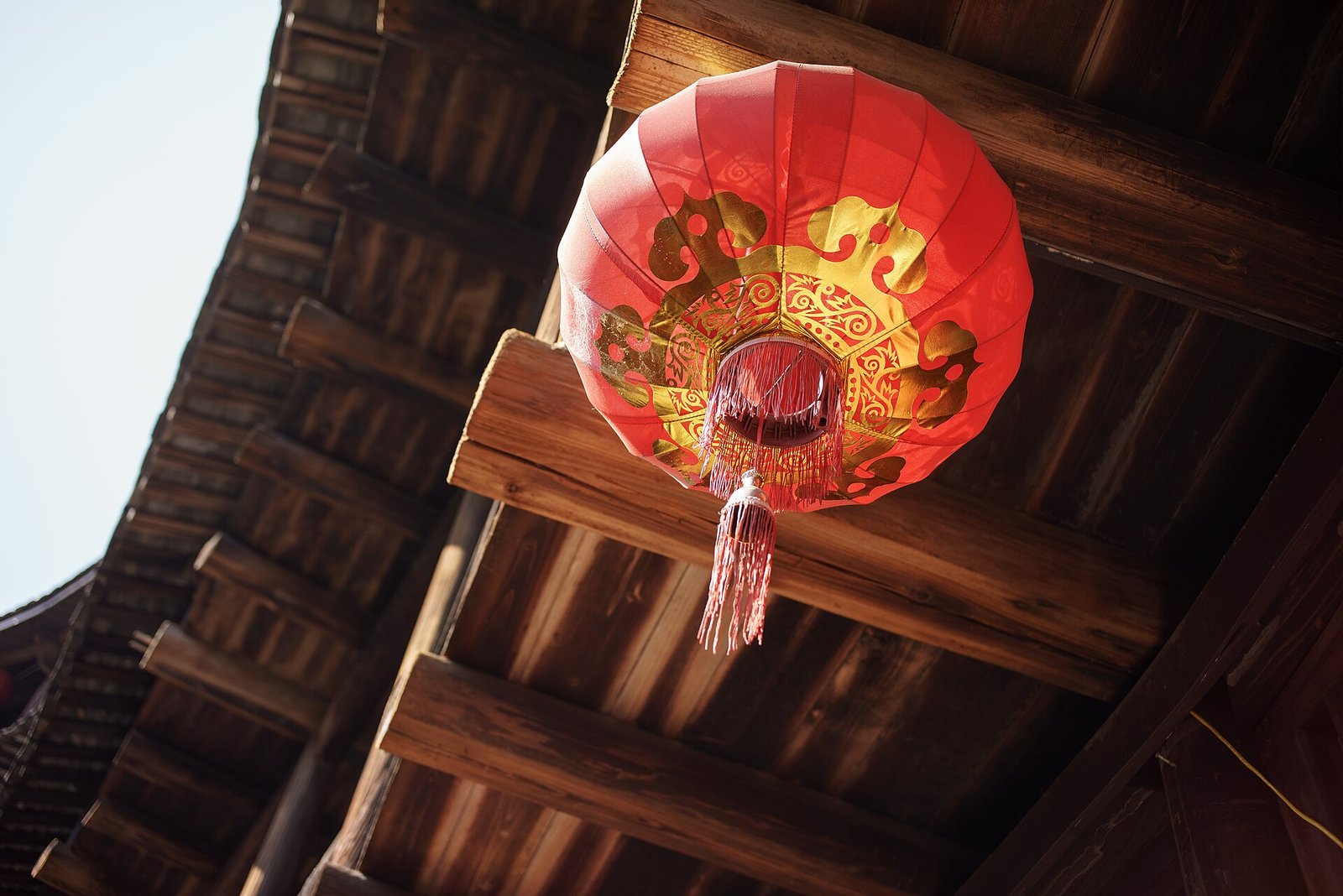
Tulou walls are rammed earth, laid layer upon layer from a mix of mountain loam, bamboo strips, glutinous rice paste and sandstone, sitting on cobbled foundations for stability and damp resistance. The rice paste acts as a natural binder; the bamboo twigs add flexibility, which is part of why these buildings have survived earthquakes.
- Wall thickness: up to one to two metres at the base, tapering as it rises.
- Timber frame: Chinese fir assembled with mortise-and-tenon joints, with almost no iron nails used anywhere.
- Materials: almost entirely local — earth, timber, stone and bamboo, all from within a short walk.
- Orientation: siting followed feng shui principles, placing each building between mountain and stream.
- Labour: raising a large tulou could consume the wealth and manpower of several generations of one clan.
A circular tulou symbolises the roundness of heaven, the square ones the squareness of earth — a pairing repeated throughout Chinese architecture, in which the building is never just a building but a small model of the cosmos.
Which Tulou Clusters Should You Visit?
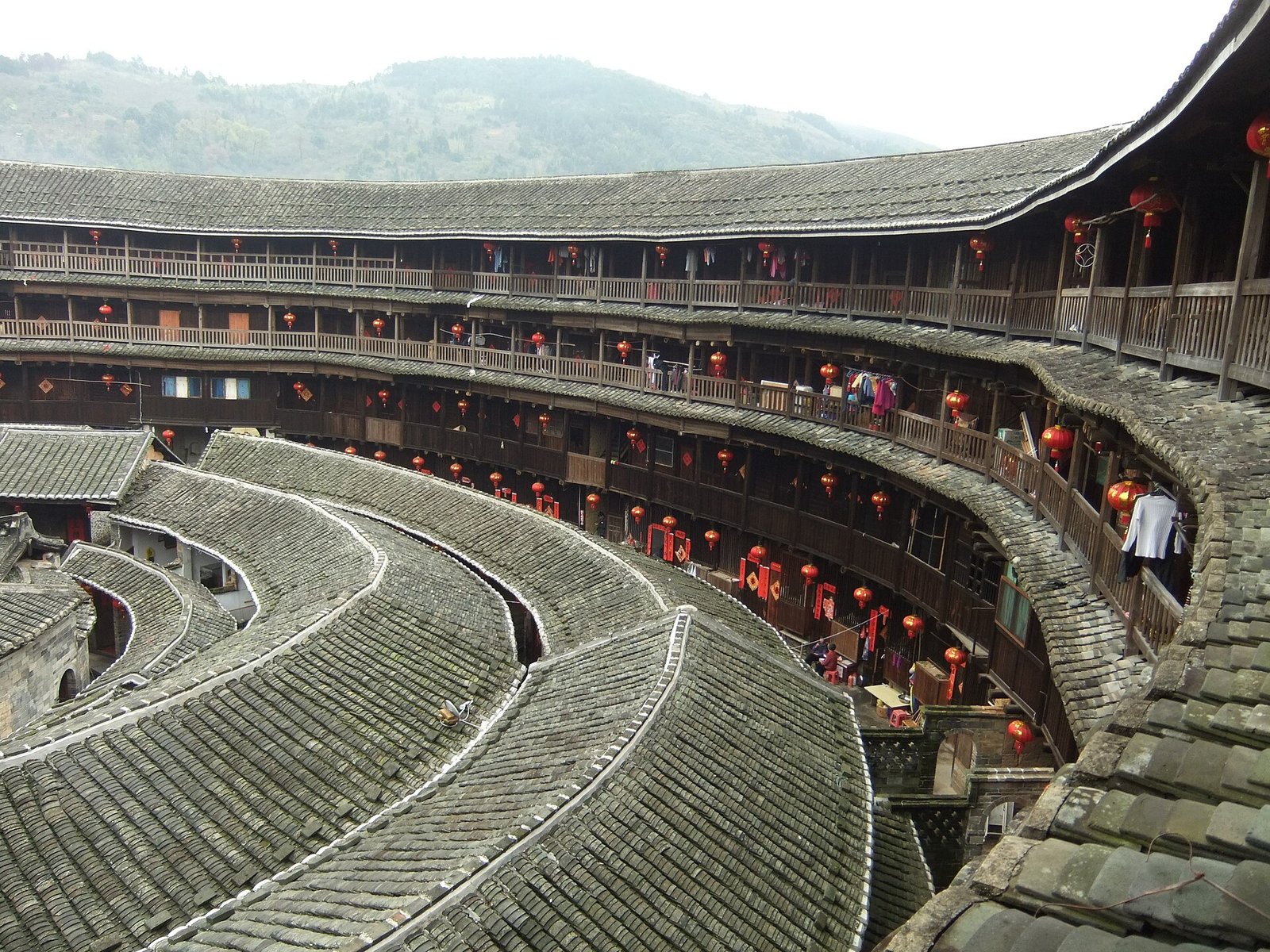
For a first visit, the two clusters that justify the journey on their own are Tianluokeng in Nanjing county for its famous arrangement, and Hongkeng or Gaobei in Yongding county for scale and interior detail. Each cluster is ticketed separately, so build a route rather than trying to see everything.
| Cluster | County | Why go |
|---|---|---|
| Tianluokeng | Nanjing | The “four dishes and a soup” layout, best seen from the viewing platform above |
| Hekeng | Nanjing | A dense valley of surviving tulou, quieter than Tianluokeng |
| Hongkeng | Yongding | Variety — round, square and Wufeng halls in one walkable village |
| Gaobei | Yongding | Home to Chengqi Lou, the largest and best-known circular tulou |
| Chuxi | Yongding | Five circular tulou in a row on a slope, with excellent views |
| Dadi | Hua’an | Er Yi Lou, a good example of the square type |
Two practical points. First, several of the famous buildings are still homes: residents live, cook and farm inside them, so treat doorways as someone’s front door rather than a photo set. Second, observation platforms can involve a short but steep climb — the Tianluokeng viewpoint is the postcard shot for a reason, and you have to earn it.
Tourism is now part of how these villages survive. Yongding district alone contains 1,768 tulou, and its tulou scenic area drew more than 4.6 million visitors in 2023, according to China Daily (12 June 2024), which also reports that more than 20 per cent of tulou-related operating income is channelled into a preservation fund. Some non-listed tulou have been converted into small hotels and homestays, which is how several of the buildings stay weatherproof and occupied.
How Do You Get to Fujian Tulou?
Most foreign travellers reach the tulou from Xiamen, using high-speed rail to Longyan or Nanjing county and then a local bus or taxi into the villages. Xiamen is the practical hub, with the international airport, and the rail line inland passes through the tulou counties.
Once in the region, the clusters are spread across three counties and are not within walking distance of each other. A hired car and driver for a day or two is the realistic option if you want to see more than one cluster; local buses connect the small towns but are slow and infrequent. Confirm current timetables locally, since rural services change with the season.
If your Fujian trip stretches further, Xiamen and Quanzhou deserve a day each — the temple quarter in Quanzhou makes a fine contrast to the countryside, and the tulou’s neighbours in the province are worth exploring on the way back to the coast.
When Is the Best Time to Visit?
Autumn (October to November) and spring (March to May) are the best seasons for the Fujian tulou, with dry, mild weather and good light. The tea terraces are green and the rice fields are either golden or freshly planted, depending on the month.
Summer is hot, humid and sits in the coastal typhoon belt, which can disrupt travel in the region. Winter is mild but often damp and grey — perfectly manageable, and by far the quietest. As with any rural destination, build in a spare day: rain on a village road changes what is walkable.
Practical Tips for Your First Visit
- Stay a night in a village, not in a city. The tulou empty out in the late afternoon, and that is when they are at their best.
- Visit early. Tour buses arrive mid-morning; the courtyards are calm before about 09:00.
- Carry cash. Small village stalls, guesthouses and local transport may not take cards or QR payments from foreign accounts.
- Ask before photographing people. These are living communities, and a nod goes a long way.
- Book the viewpoint walk, not the shopping street. The best photographs are from above, not from the ticket gate.
- Buy something from a village tea stall. Rural heritage survives partly on the money visitors leave behind.
Standing in a courtyard at dusk, with woodsmoke drifting through a doorway that has been open for two hundred years, the tulou stop being architecture and become a way of life that simply refused to disappear. It is one of the great rural sights of China, and almost no foreign traveller sees it. At jusha.travel we love pointing people towards exactly this kind of place — the ones that are still real.
Planning a Fujian or Guangdong route? Tell us in the comments which cluster you would put on your list — and for more minority-culture travel, start with our piece on Lijiang’s Old Town and Naxi culture.
Frequently asked questions
What exactly is a Fujian Tulou?
A Fujian Tulou is a large fortified earthen dwelling built by Hakka and Minnan communities in the mountainous south-west of Fujian province, most of them between the 15th and 20th centuries. The thick rammed-earth walls, single main gate and central courtyard were designed to house and protect an entire extended clan.
Are the Fujian Tulou a UNESCO World Heritage Site?
Yes. Forty-six tulou buildings in six clusters, plus four individual structures across Yongding, Nanjing and Hua’an counties, were inscribed on the UNESCO World Heritage List in 2008. They were recognised as the finest surviving examples of large rammed-earth communal housing, chosen from more than 3,000 tulou still standing in the region.
Which tulou cluster is best for a first visit?
Tianluokeng in Nanjing county is the best single cluster for a first visit, because of its famous “four dishes and a soup” arrangement viewed from the hillside platform. For scale and interior detail, add Chengqi Lou at the Gaobei cluster in Yongding county, the largest circular tulou ever built.
How do I get to the Fujian Tulou from Xiamen?
From Xiamen, take a high-speed train to Longyan or Nanjing county, then a local bus or taxi onward to the villages. The clusters are spread across three counties and are not within walking distance of each other, so a car and driver for a day or two is the practical choice for most visitors.
Can you stay inside a tulou?
Yes. Several tulou in Yongding and Nanjing counties operate as small guesthouses, which is the best way to experience them once the tour buses have gone. Facilities are simple, so book ahead and expect a village-level standard of comfort rather than a hotel one.
When is the best time of year to visit the tulou?
October to November and March to May are the best months, with mild, dry weather and good light on the terraces. Summer is hot, humid and in the coastal typhoon belt, while winter is mild, quiet and often damp.