


There is a moment that only a dai pai dong delivers: the roar of a wok over a flame you can feel from two tables away, a plate of noodles arriving still hissing, and a plastic stool wobbling on uneven pavement while the city rushes past your elbow. No air conditioning, no reservations, no menu in English — and food that tastes like nothing you can reproduce at home.
Hong Kong’s open-air cooked food stalls are among the last living pieces of the city’s post-war street culture. They are loud, cheap, occasionally uncomfortable, and genuinely irreplaceable. They are also disappearing fast.
At jusha.travel, we care about the details that turn a meal into understanding — why these stalls exist, why so few remain, what to order, and how to behave when you sit down. In this guide we explain what a dai pai dong is, what happened to them, and how to eat at one properly while you still can.
What Is a Dai Pai Dong?
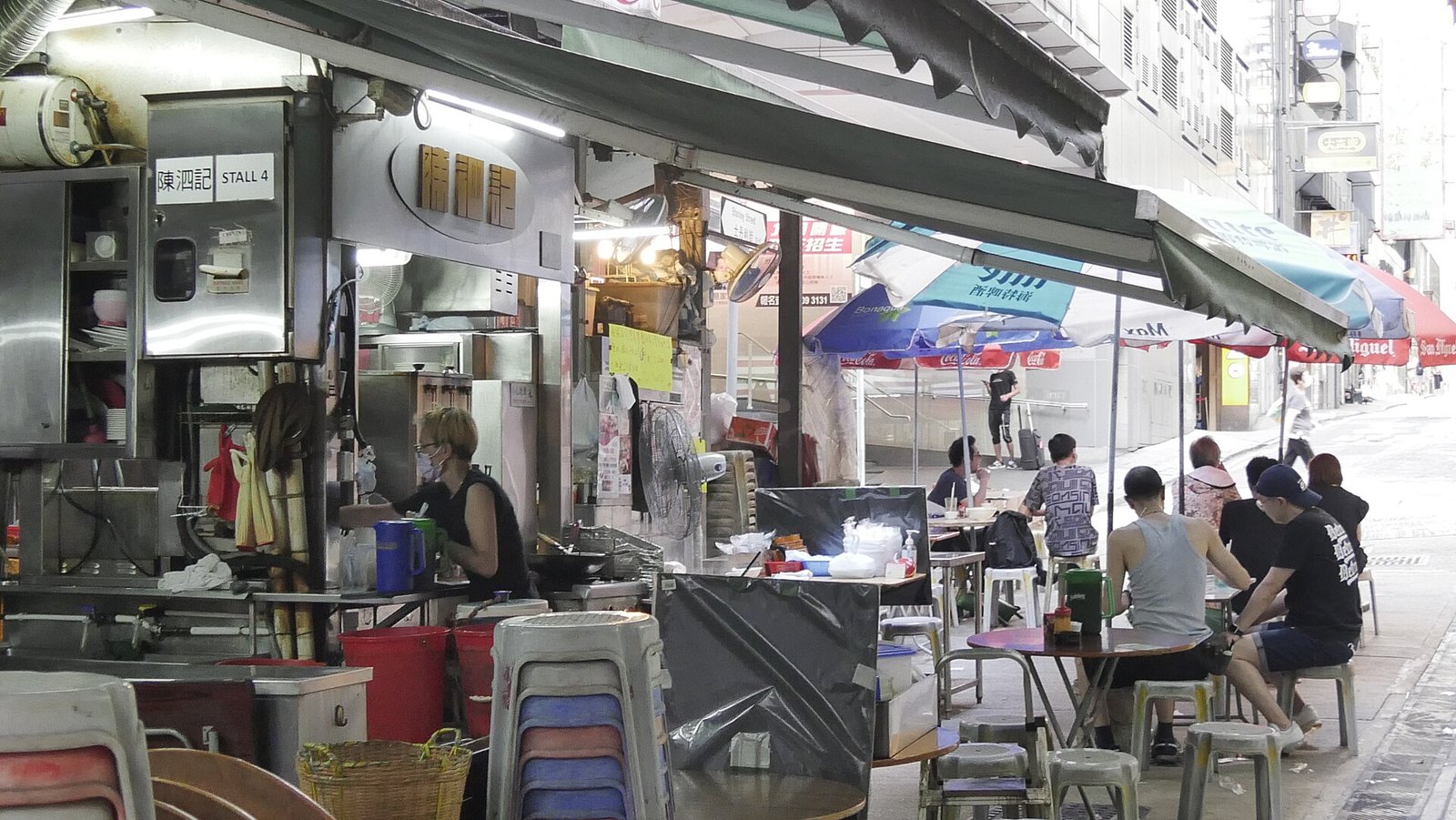
A dai pai dong is a licensed open-air cooked food stall operating from a fixed outdoor structure on a Hong Kong street, serving wok-fried dishes, noodles, congee and seafood under a canopy of folding tables and plastic stools. The name comes from the licence itself: dai pai means “big card”, referring to the large-format hawker licence these operators were required to display, which was bigger than other hawker permits.
They emerged after the Second World War, when the government formalised street food selling through a specific hawker licence, and they became part of the city’s basic food infrastructure — cheap, hot, fast meals for working people at almost any hour. Alongside them sat the cha chaan teng tea restaurant, the other pillar of Hong Kong’s everyday eating; our post on Hong Kong milk tea in a cha chaan teng covers that side of the tradition.
The essential dai pai dong technique is wok hei — literally “breath of the wok”. It is the smoky, faintly charred flavour produced when food hits an intensely hot wok and is tossed fast over a flame far more powerful than a domestic burner. Chefs treat it as the test of skill, and you can taste when it is missing. If you want the broader picture of how these stalls fit into the city’s food landscape, our piece on Hong Kong street food sets out the full range.
Why Are There Only 17 Left?
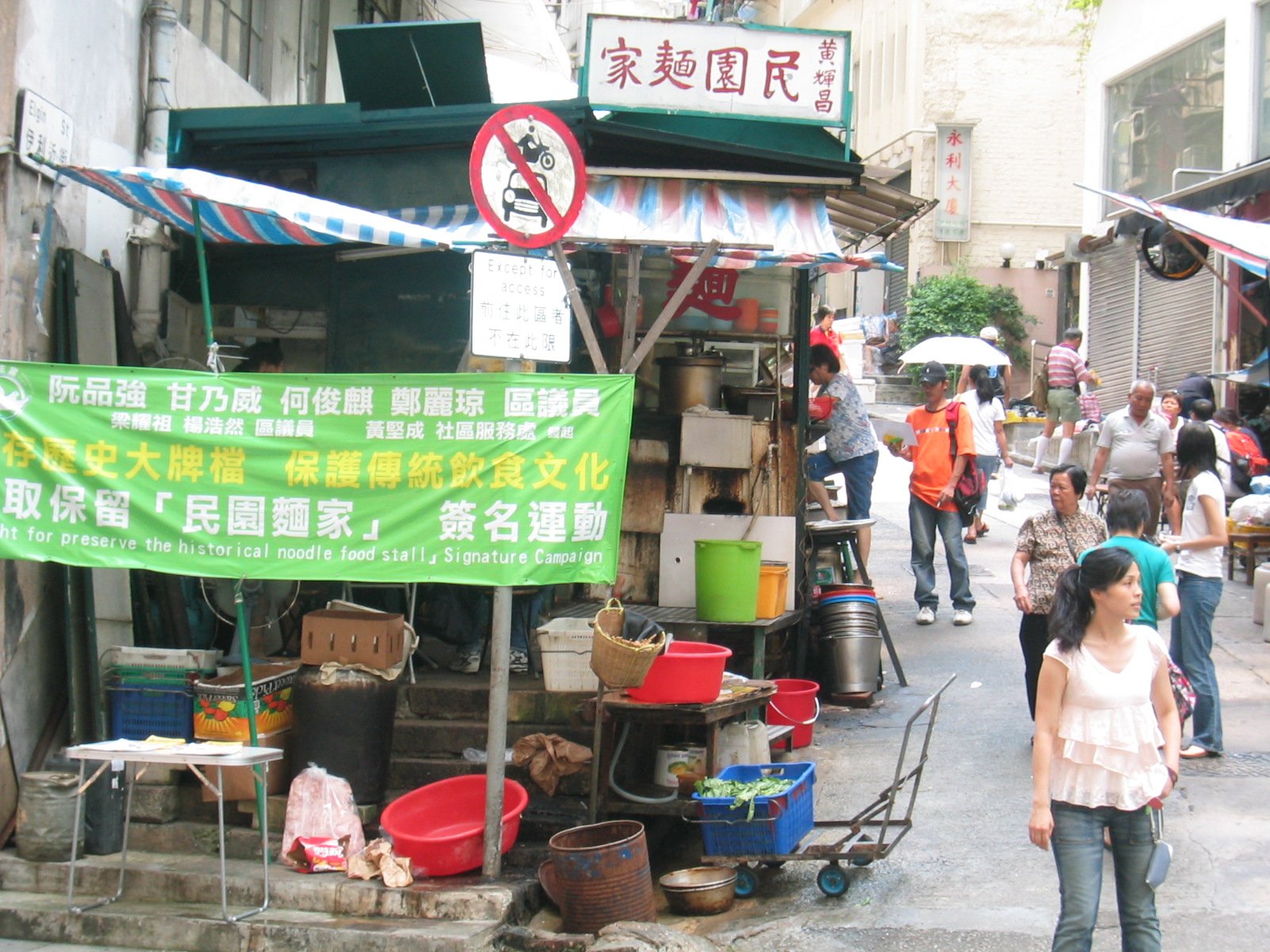
Hong Kong stopped issuing new dai pai dong licences in 1973, and because a licence cannot simply be sold on the open market, the number of stalls has fallen from more than 1,300 in the 1960s and 1970s to just 17 today. That figure comes from Food and Environmental Hygiene Department data reported by the Hong Kong Economic Times, which also found the oldest surviving licence holder is 93.
The freeze followed complaints about noise, cooking fumes, drainage and obstruction of pavements. A 2008 policy review allowed licences to be inherited or transferred to direct family members, subject to district council support and added hygiene conditions — which is why so many surviving stalls are family businesses. A reported 13 of the 17 current licences have been passed down or transferred within a family.
Other outlets put the number slightly higher: a CGTN report in June 2026 described “fewer than 20” remaining and quoted operators and former lawmakers warning the culture could vanish within five years without policy change. Treat 17 as the most recent official figure and “under 20” as the working consensus — either way, the trend is one direction only.
The licensing rules are published by the Food and Environmental Hygiene Department, and the stall-by-stall breakdown of where the survivors are is in the Hong Kong Economic Times report. The CGTN feature documents the operators’ own case for support.
What Should You Order?
Order the wok dishes: they are the reason to be here, and they are the dishes a dai pai dong does better than almost anywhere else. Portions are generous, prices are low, and the food is designed to arrive fast.
| Dish | What it is | Typical price |
|---|---|---|
| Beef fried rice noodles (dry-fried) | Flat rice noodles, beef and bean sprouts, charred at the edges — the benchmark for wok skill | HK$50–75 |
| Tomato and egg stir-fry | Cantonese home cooking at its simplest; sweet, soft, comforting | HK$40–55 |
| Stir-fried seasonal greens | Chinese broccoli or water spinach with garlic and oyster sauce | HK$35–50 |
| Clams in black bean sauce | Seafood stalls only; priced by market rate, so ask first | HK$80+ |
| Clay pot dishes | Slow-cooked minced pork, tofu or aubergine — a cool-weather staple | HK$55–85 |
| Congee | Smooth rice porridge with century egg and pork, or fish | HK$35–55 |
Prices are indicative, based on published estimates for 2026, and vary with the seafood market and the stall. What does not vary is the format: order two or three dishes between you, add rice, and eat them as they land rather than waiting for everything to arrive together.
Where Do You Still Find Them?
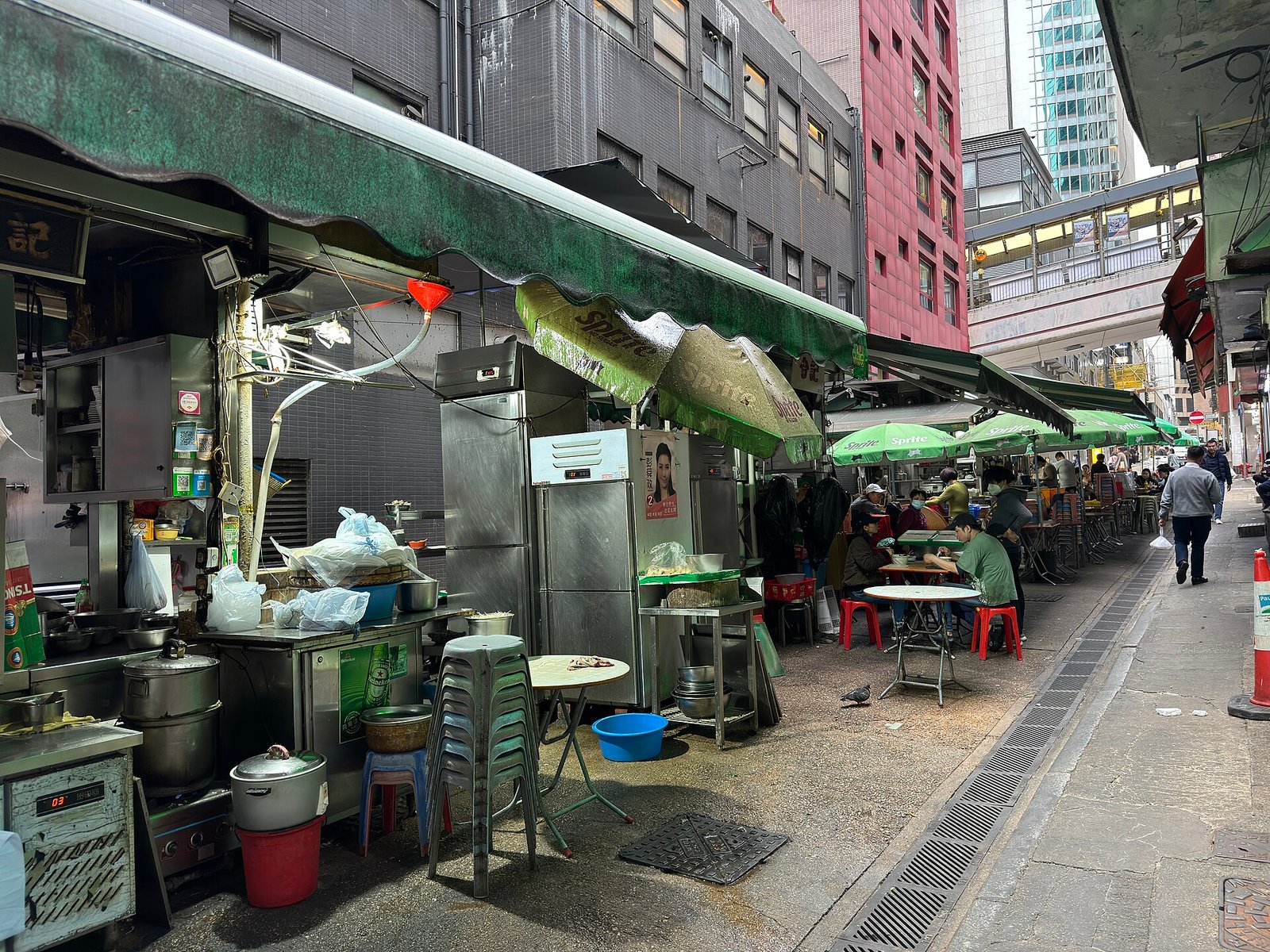
The surviving dai pai dong are concentrated in Central and Western district, Sham Shui Po and Wan Chai, with a single stall on an outlying island. Of the 17 licensed stalls, nine are in Central and Western, five in Sham Shui Po and two in Wan Chai.
- Central and Western — the densest cluster, and the easiest to reach on foot from the MTR.
- Sham Shui Po — the most famous of the surviving strips, with stalls that have been trading for four and five decades.
- Wan Chai — a small pair of survivors in a district that has changed almost beyond recognition around them.
- Outlying islands — one licence remains outside the urban core.
Sham Shui Po is also where the night-time eating is thickest, and it pairs naturally with the street life around Temple Street night market. If you want a single district for a food-focused evening, that is the one. For a wider city orientation, our Hong Kong travel guide covers transport between the districts, and the tourism board’s dining pages list current recommendations.
How Do You Order and Behave?
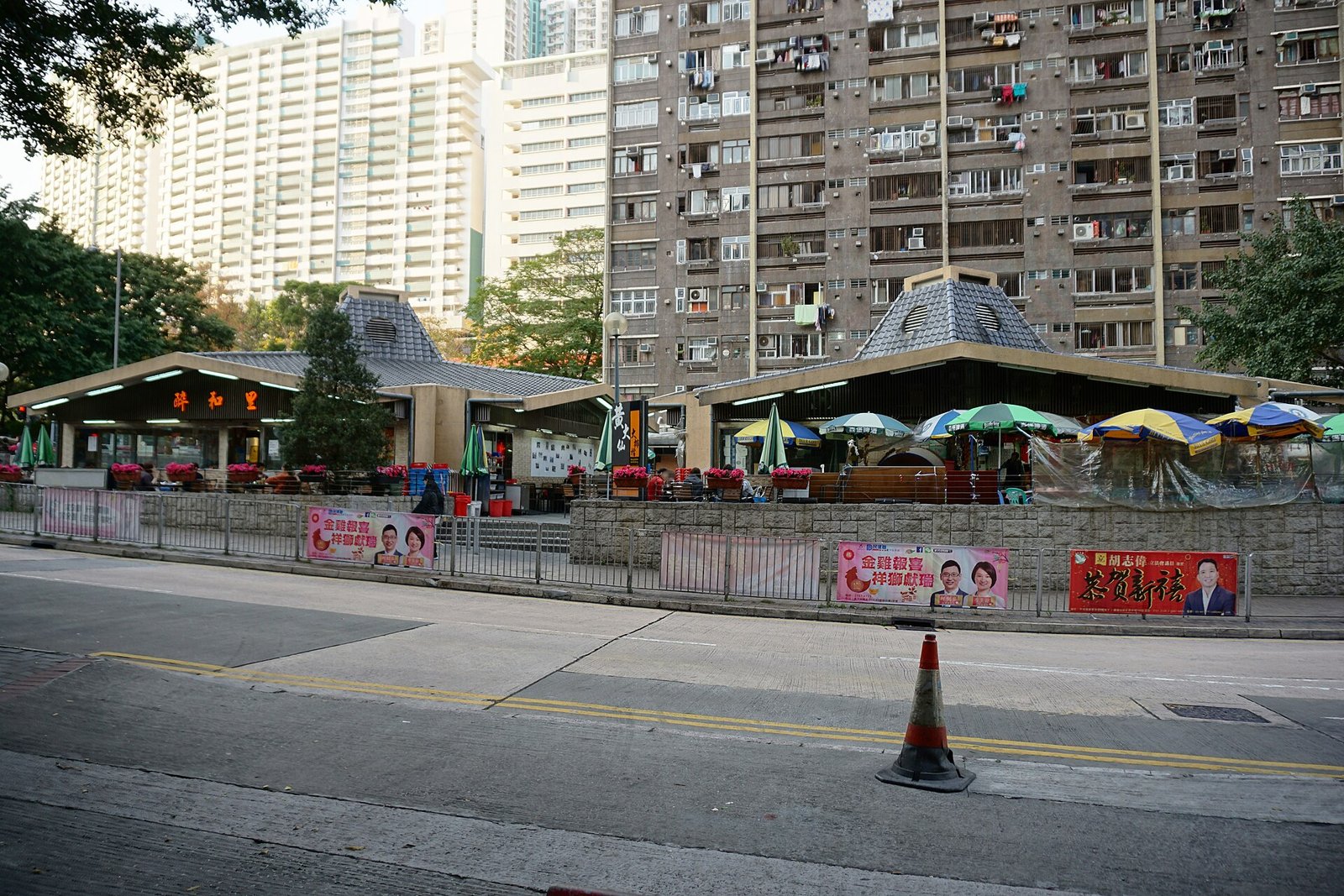
Sit down where there is space, share the table, order quickly, eat, pay in cash and move on — that is the entire etiquette of a dai pai dong. It is not unfriendly; it is simply a system built for speed and turnover.
- Expect to share. Tables are communal, and sitting down opposite a stranger is normal, not rude.
- Point at what other people are eating. With no English menu, the most reliable order is the dish on the next table.
- Bring cash. Almost all stalls are cash-only.
- Order in rounds. Dishes come as they are cooked; do not wait for a full set.
- Do not linger. Once you have finished, the table is wanted.
- Keep your bag off the pavement. Space is genuinely tight, and it is the one thing that gets you a sharp look.
If you are comparing these stalls with the city’s other great everyday institution, our guide to wonton noodles in Central’s old eateries shows how a single dish became a Hong Kong benchmark.
Practical Tips for Your First Visit
- Go at dinner time. Most stalls operate roughly 17:00–23:00, and the atmosphere builds after dark.
- Check the licence board. A genuine dai pai dong displays its hawker licence — that is what makes it different from an ordinary pavement restaurant.
- Go with two or three people. Wok dishes are made for sharing, and one person cannot order enough variety.
- Go soon. With the oldest licence holder at 93 and inheritance applications reportedly taking years, these stalls are closing, not opening.
- Eat at the stall you find, not the one on a list. The best-known addresses change; the surviving cluster is small enough to walk.
- Leave a good impression. These businesses survive on local goodwill, and a foreign visitor who eats politely is part of the argument for keeping them.
A dai pai dong is not a theme park version of old Hong Kong. It is the real thing, still operating on a licence that will probably not be replaced — which is exactly why it belongs on your list now rather than later. At jusha.travel we love the parts of a city that are still being lived in, and in Hong Kong there is no better example than a wobbly table under a canvas awning at eight in the evening.
Heading to Hong Kong for the food? Tell us in the comments which dish you would hunt down first — and for more of the city’s everyday eating, start with our guide to Hong Kong street food.
Frequently asked questions
What is a dai pai dong?
A dai pai dong is a licensed open-air cooked food stall in Hong Kong, operating from a fixed outdoor structure with folding tables and stools. The name means “big licence”, referring to the large-format hawker licence holders were required to display. They are known for wok-fried Cantonese dishes, low prices and a casual street setting.
How many dai pai dong are left in Hong Kong?
Seventeen licensed dai pai dong remain, according to Food and Environmental Hygiene Department data reported in 2026 — down from more than 1,300 in the 1960s and 1970s. Other reports describe “fewer than 20”, so treat 17 as the most recent official figure and under 20 as the working consensus.
Why did Hong Kong stop issuing dai pai dong licences?
New licences stopped in 1973 after complaints about noise, cooking fumes, drainage and obstruction of pavements. Since a 2008 policy review, existing licences may be inherited or transferred to direct family members, subject to district council support and additional hygiene conditions, which is why most survivors are family-run.
Where can I find a dai pai dong in Hong Kong?
The surviving stalls are concentrated in Central and Western district, which has nine of the 17 licences, followed by Sham Shui Po with five and Wan Chai with two, plus one on an outlying island. Sham Shui Po is the most famous cluster and pairs well with an evening at Temple Street night market.
What should I order at a dai pai dong?
Order the wok dishes. Dry-fried beef rice noodles are the benchmark of wok skill, alongside tomato and egg stir-fry, garlic stir-fried greens, clay pot dishes and, at seafood stalls, clams in black bean sauce. Congee is excellent in the morning. Expect to pay roughly HK$35–85 per dish.
Do dai pai dong take cards?
Almost none do. Bring cash in Hong Kong dollars, and bring small notes — change can be limited at busy stalls. Many also have no English menu, so pointing at what nearby diners are eating is a perfectly normal way to order.