


Imagine stepping through a gate and into a city that glows from the inside — palaces, pagodas and towers carved entirely from frozen river water, lit in cobalt blue, hot pink and emerald green, standing under a sky that has dropped to −25°C. That is Harbin Ice and Snow World, the largest ice-and-snow theme park on Earth, and every winter it is demolished by the thaw and rebuilt from nothing on the banks of the frozen Songhua River in northeast China.
Few travel experiences genuinely exceed their photographs. This one does. Where else can you ride a slide built from 500 metres of solid ice, watch a Ferris wheel turn inside a cathedral of frozen light, and warm your hands around a cup of hot soy milk while your breath freezes in mid-air?
At jusha.travel, we care about the details that make a China winter trip actually workable rather than merely aspirational. In this guide we cover the confirmed 2026–2027 season plans, ticket prices, how to get there, exactly what to wear at −25°C, and the small decisions that separate a spectacular visit from a frozen, queue-filled one.
What Is Harbin Ice and Snow World?
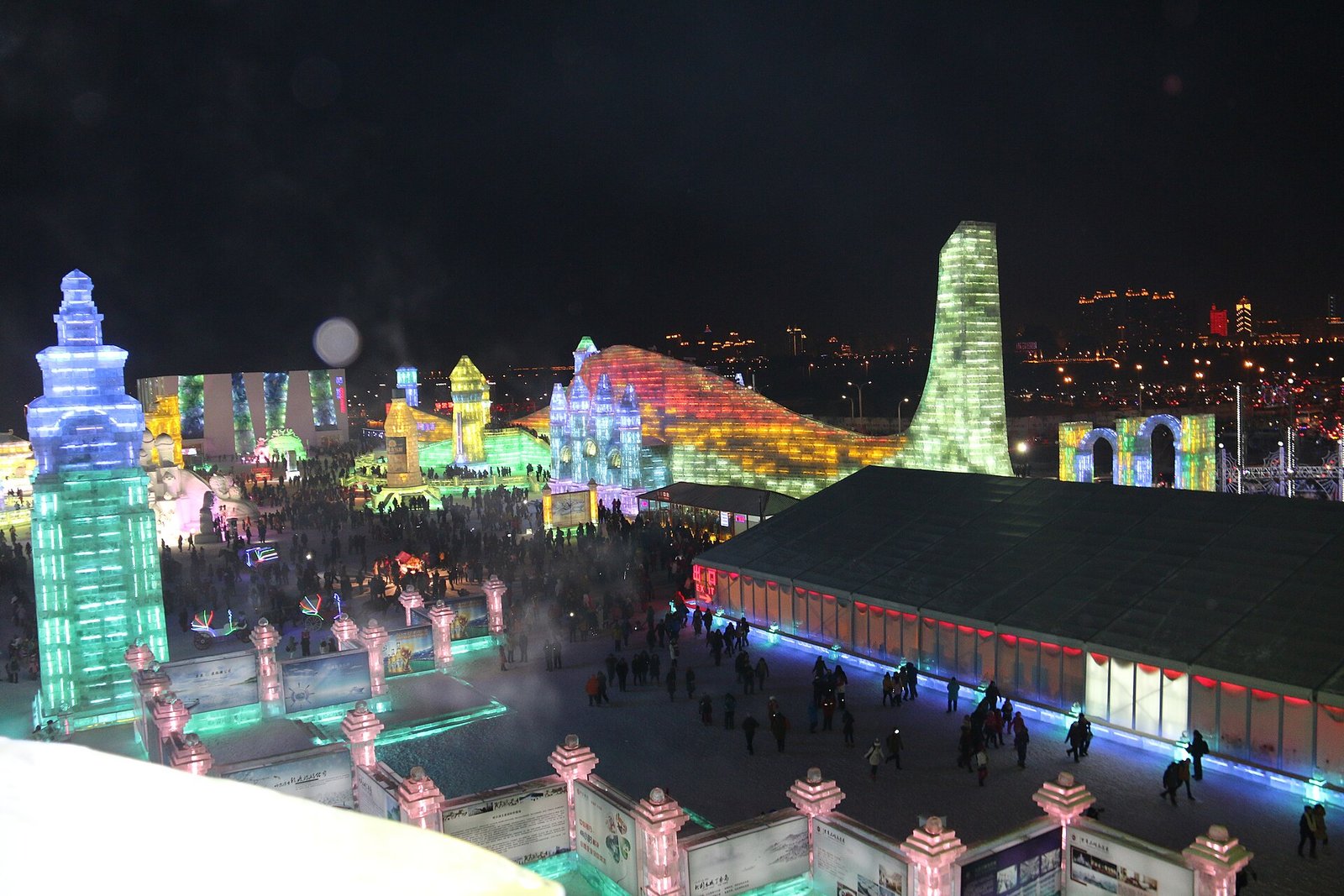
Harbin Ice and Snow World is an outdoor winter theme park in Harbin, the capital of Heilongjiang Province in northeast China, built each season from ice cut out of the frozen Songhua River. Crews harvest the blocks, truck them to Songbei District on the west side of Sun Island, and carve them into palaces, towers and monuments that stand until temperatures rise in late February.
It is less a single attraction than a temporary city. For the 2026–2027 season — the park’s 28th edition since it was founded in 1999 — organisers have confirmed the site will expand to 1.25 million square metres, using roughly 400,000 cubic metres of ice and snow and featuring more than 1,000 ice-and-snow structures across six themed zones, according to the season announcement reported by China Daily (13 October 2026). That scale is why the park holds the Guinness World Record as the world’s largest ice-and-snow theme park, and why it welcomed more than 120,000 visitors in a single day in February 2026 — a historic high for the venue.
If frozen architecture is your priority, it pairs naturally with the other snow-and-ice destinations we cover in our guide to winter escapes in China, which maps out where else the season rewards a long journey.
When Does Harbin Ice and Snow World Open in 2026–2027?
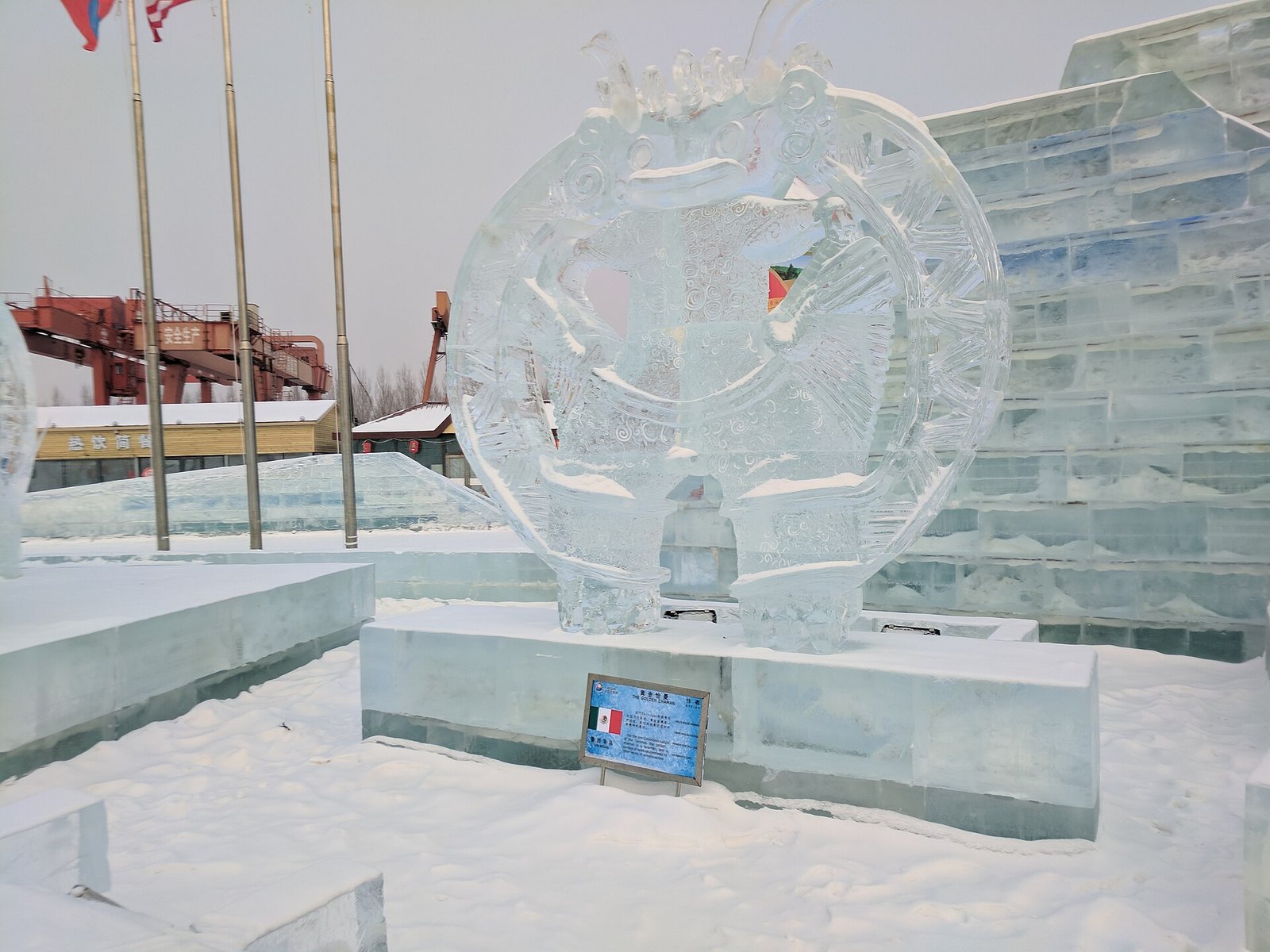
The 2026–2027 season is expected to open around 21 December 2026, with the official festival opening ceremony on 5 January 2027, and operations continuing into late February 2027. The park has historically opened to the public before the ceremonial launch, and the festival simply ends when the ice starts to soften — there is no closing ceremony to plan around.
The 2026–2027 Season at a Glance
| Stage | Expected timing | What it means for you |
|---|---|---|
| Soft opening | Around 21 December 2026 | Park open, quieter crowds, some zones still finishing |
| Official opening ceremony | 5 January 2027 | Full programme, fireworks and performances |
| Peak season | Early to mid-January 2027 | Best sculpture detail and reliably bitter cold |
| Chinese New Year | Mid-February 2027 | Busiest period; hotels at their most expensive |
| Season close | Late February 2027 | Weather-dependent; ice begins to slump |
These dates follow the festival’s long-standing pattern, as set out by Ice Festival Harbin, and are confirmed rather than final for 2026–2027 — always check the official channels in the week before you travel.
The Best Weeks to Visit
Early to mid-January is the sweet spot. The sculptures are at full height with crisp detail, the cold is reliably severe so nothing is melting, and you are clear of the biggest crowd surges. Two periods to avoid if you can: Chinese New Year in mid-February 2027, when venues fill and hotel prices peak, and the final days of February, when you risk arriving as the art starts to soften. That risk is real — the 2025–2026 season was cut short by an unseasonably warm spell.
If you want the park at its calmest, late December around Christmas is a good compromise: open for business, not yet at peak.
How Much Do Tickets Cost, and How Do You Book?
Expect around 328 yuan (roughly US$46) for a standard adult ticket, with concessions for students, seniors and children in the region of 240 yuan, and VIP fast-track tickets near 800 yuan. Opening-week prices are often slightly lower. The venue is ticketed separately from Harbin’s other winter attractions, so budget for more than one entry if you plan to see everything.
| Venue | Typical adult ticket | Best for |
|---|---|---|
| Harbin Ice and Snow World | ~328 CNY (VIP ~800 CNY) | The headline ice palaces, slides and night lights |
| Sun Island Snow Sculpture Expo | ~198 CNY | Monumental snow carvings, best in daylight |
| Zhaolin Park Ice Lantern Fair | Free to ~150 CNY | The traditional, intimate original heart of the festival |
Tickets are released on the official booking channel roughly a week ahead and tend to sell out fastest at weekends and over Chinese New Year. Prices in this table reflect the 2026–2027 season guidance published by China Travel Plus; treat them as a planning baseline and verify at the point of booking, since seasonal surcharges do apply.
How Do You Get to Harbin Ice and Snow World?
The park sits at 1666 Xuejing Street in Songbei District, on the western side of Sun Island, and Harbin Metro Line 2 reaches it directly. Take the metro to the Ice and Snow World station and use Exit 3 — you are then about a 50-metre walk from the entrance, roughly 15 minutes from the city’s Central Street. For a city this cold, avoiding a taxi rank is a genuine comfort, not a detail.
By air, fly into Harbin Taiping International Airport (HRB). By train, high-speed services connect Harbin with Beijing and Shanghai. Once downtown, the metro is the fastest way to the park; taxis from the centre take around 40–50 minutes in winter traffic. For orientation around the rest of the city, Travel China Guide’s Harbin city guide is a solid reference. For a fuller picture of rail and city transport across the country, see our transportation in China guide.
What Should You Wear at −25°C?
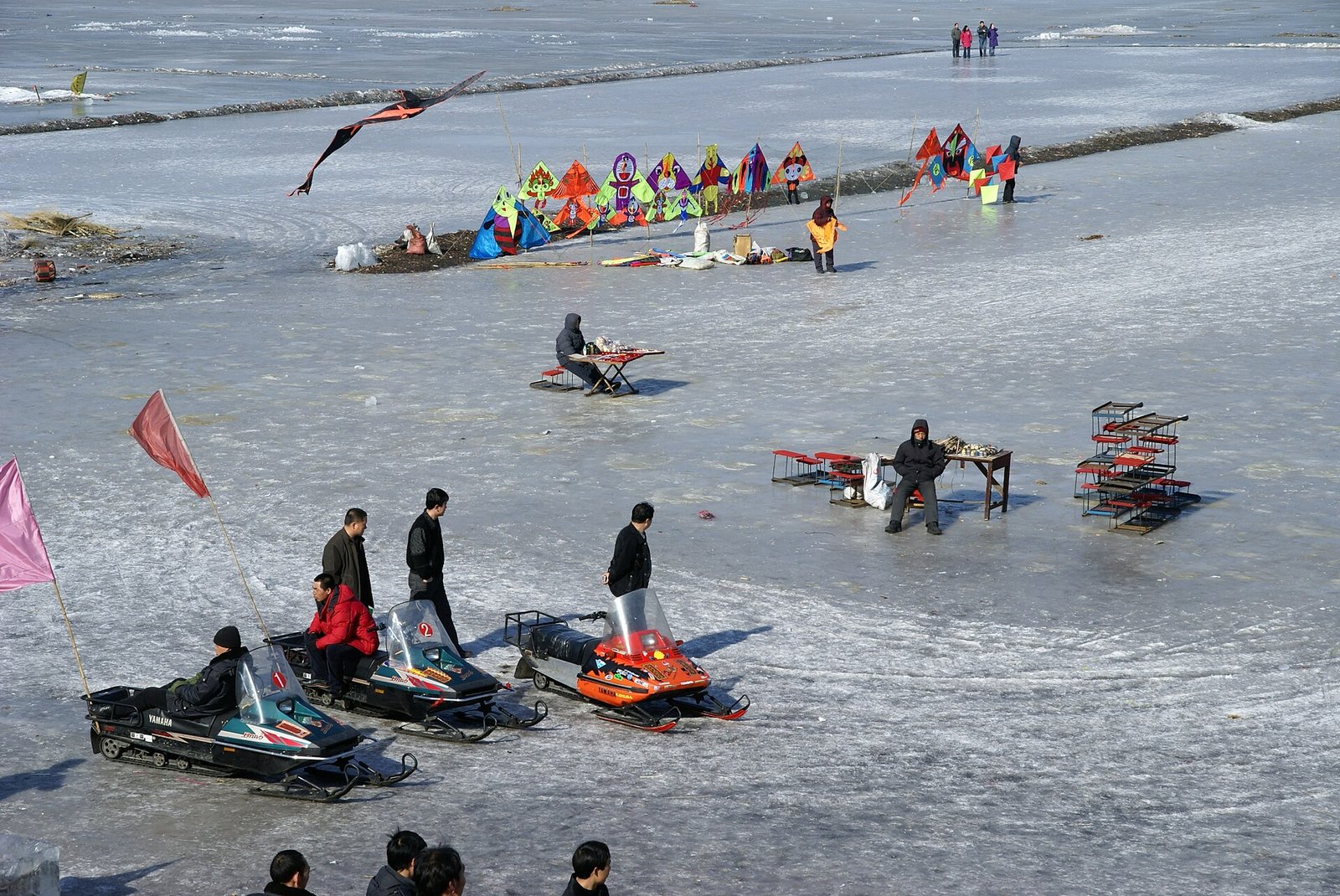
January in Harbin regularly drops to −25°C and can reach −30°C at night, so the goal is layering, not one thick coat. Standard winter fashion will not survive an evening here. Build from the skin outward:
- Base layer: thermal top and long johns, moisture-wicking rather than cotton.
- Mid layer: fleece or wool knit for insulation.
- Outer layer: a long, insulated down jacket that covers your hips.
- Legs: insulated snow trousers over your thermals.
- Feet: waterproof, insulated boots with real grip — ice is slippery and you will be standing for hours.
- Extremities: mittens beat gloves, and a beanie plus scarf seal the gaps.
- Extras: chemical hand and foot warmers, and a spare phone battery — phones lose charge fast in the cold.
One practical trick for photographers: seal your camera in a bag before stepping back into a heated building, or condensation will fog the lens. Before you fly, confirm your entry paperwork with our China visa requirements guide, and pack against our essential China travel tips checklist.
What Else Is Worth Seeing Around Harbin in Winter?
Harbin’s winter season is three venues plus a city, not one park. The most common first-timer mistake is trying to compress all of it into a single day.
- Sun Island International Snow Sculpture Art Expo — the snow counterpart to the ice park, across the river, best seen in daylight. Pair it with the ice park for a “white by day, lit by night” combination.
- Zhaolin Park Ice Lantern Fair — where the festival began in 1963, with smaller, more traditional lantern carvings. A gentle, low-commitment first evening.
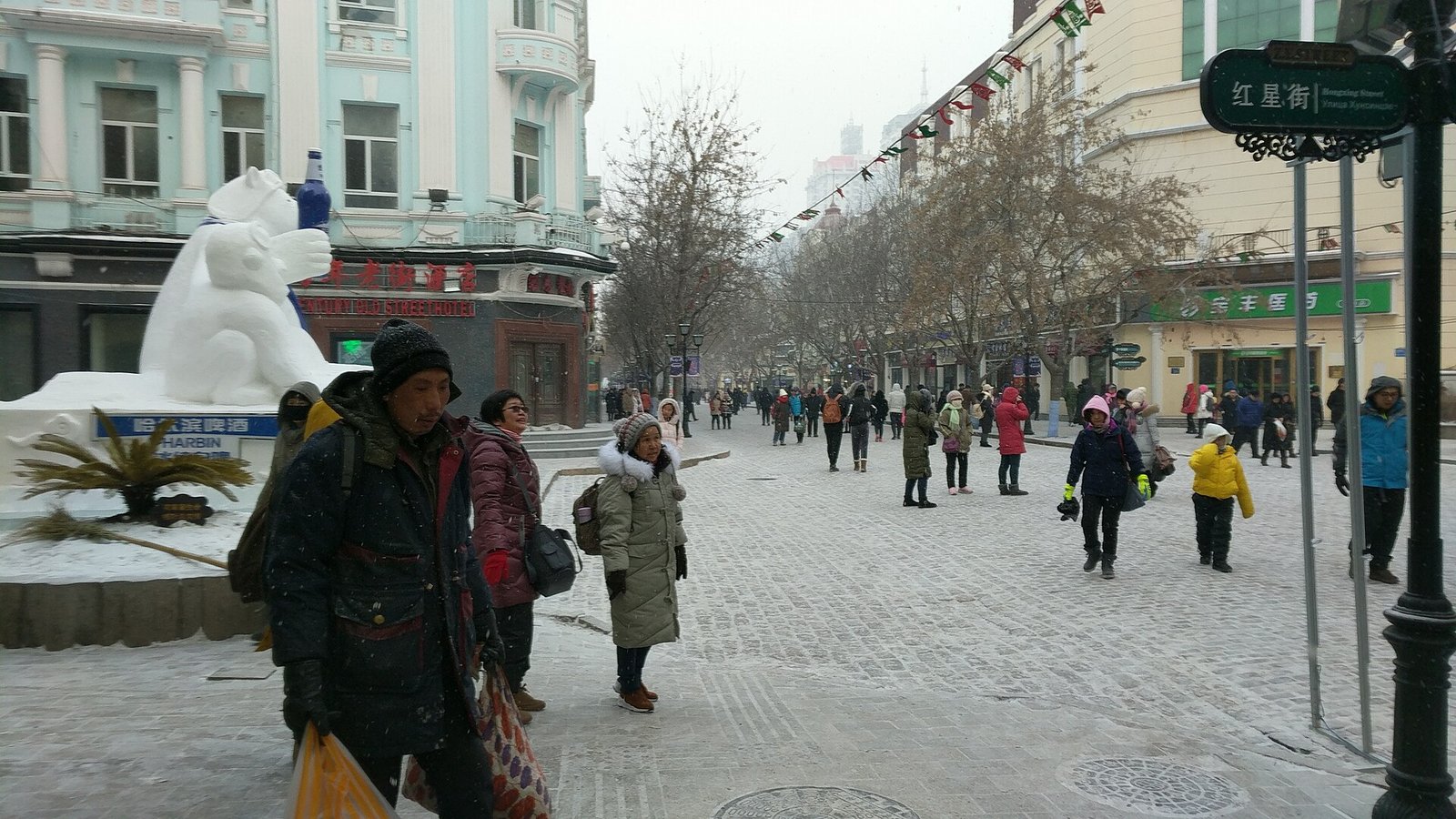
- Central Street — Harbin’s pedestrian heart, lined with Russian-influenced architecture. Try the local dare: eating a Ma Die Er ice pop at −25°C.
- China Snow Village and Yabuli — a few hours south, for fairytale snow-cottage stays and proper skiing. See our roundup of China’s best ski resorts for the full picture.
If you are deciding between the two main venues, this comparison of Ice and Snow World and the Sun Island Snow Sculpture Expo sets out the differences in materials, activities and atmosphere clearly.
If you are weighing up winter sports beyond Heilongjiang, our piece on Zhangjiakou’s winter sports scene shows how the country’s snow economy extends well past the northeast. And for the food side of Harbin after dark, our guide to Chinese night markets explains the etiquette and the etiquette of ordering when you do not speak Mandarin.
Practical Tips for Your First Visit
- Arrive mid-afternoon, not at night. Entering around 15:00 gives you the sculptures as sharp architecture in daylight, then the same park transformed as the lights come on. Two experiences on one ticket.
- Scan the big rides immediately. The long ice slide and the Ferris wheel use timed queues that can run one to three hours at peak.
- Book accommodation two to three months ahead for January, and even earlier around Chinese New Year.
- Go cashless. Alipay and WeChat Pay cover almost everything, including market stalls.
- Plan for four hours minimum at the main park, plus travel time each way.
- Buy specialist gear in Harbin if you are under-equipped — it is cheaper and better suited than anything you will find at home.
Standing among towers of frozen river light, you begin to understand why Harbin rebuilds this city every single year. It is one of the great spectacles of the Chinese winter — demanding, yes, but unforgettable. At jusha.travel, we are always glad to help you plan the cold-weather side of a China trip, because the season most travellers skip is often the one they remember longest.
Planning your own winter route? Tell us in the comments which Harbin sight you would brave −25°C for — and for more cold-season inspiration, start with our guide to the best winter escapes in China.
Frequently asked questions
When does Harbin Ice and Snow World open for 2026–2027?
The park is expected to open to the public around 21 December 2026, with the official festival opening ceremony on 5 January 2027. Operations typically continue into late February 2027, ending when warmer weather softens the sculptures.
How much is a ticket to Harbin Ice and Snow World?
A standard adult ticket is around 328 yuan (roughly US$46). Concessions for students, seniors and children sit near 240 yuan, and VIP fast-track tickets cost about 800 yuan. Opening-week prices are often slightly lower.
What is the best time of day and year to visit?
Early to mid-January is the best time of year, when sculptures are at full height and the cold is reliable. Within a day, arriving around 15:00 is best: you see the ice in daylight and then lit up after dark.
How cold does it get, and what should I wear?
January temperatures typically range from −15°C to −25°C and can fall to −30°C at night. Wear a thermal base layer, a fleece mid layer, a long insulated down jacket, snow trousers, waterproof insulated boots, mittens, a beanie and a scarf — plus chemical hand warmers.
How do I get to Harbin Ice and Snow World?
Take Harbin Metro Line 2 to the Ice and Snow World station and leave via Exit 3, which puts you about 50 metres from the entrance. From Harbin Taiping International Airport, a taxi to the city centre takes roughly 40–50 minutes.
Is Harbin Ice and Snow World worth visiting for foreign travellers?
Yes — it is the largest ice-and-snow theme park in the world, built to a scale that photographs genuinely fail to capture. The main caveats are the extreme cold and the need to book accommodation and tickets well in advance for peak periods.