


Yamdrok Lake: Permits, Altitude and Turquoise Water
The climb announces itself before the view does. Above Gonggar the road folds back on itself, the air thins, and then the guardrail opens onto water so flat and so blue that people stop talking. Yamdrok Lake lies at 4,441 metres in Nagarzê County, Shannan, roughly 90–110 km southwest of Lhasa, and it is the one great Tibetan lake you can reach and leave in a day.
Reaching it is the part most guides skip. Yamdrok has no gate, yet foreign travellers cannot simply drive up: the lake sits outside Lhasa prefecture, so the permits have to match the route.
At jusha.travel, we love sharing tips that turn a famous viewpoint into a trip you can plan, so here is the practical version — documents first, scenery second.
What is Yamdrok Lake?
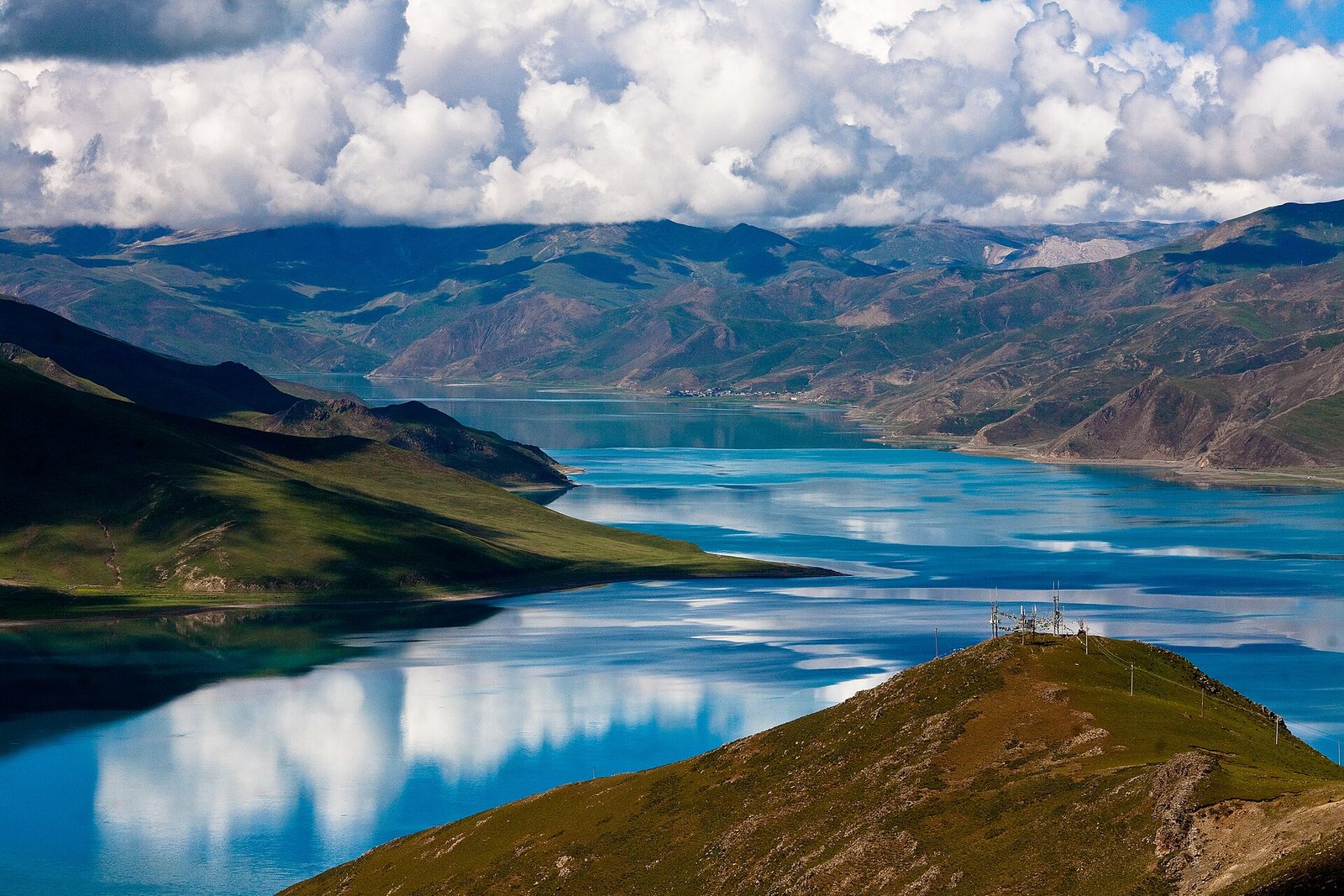
Yamdrok Lake is a freshwater lake of about 638 square kilometres on the northern slope of the Himalaya, at 4,441 metres, and it is one of Tibetan Buddhism’s three holy lakes alongside Namtso and Mapam Yumco. Its Tibetan name, Yamzho Yumco, means turquoise, and the colour shifts from pale jade at dawn to sapphire by noon.
The lake runs 74 km northwest to southeast with a shoreline near 250 km, an average depth of 20–40 metres and a maximum around 60. Yamdrok is a drowned valley rather than a round basin, so from above it reads as a branching, antler-like shape with dozens of bays — the reason its name is also translated as the upper coral lake, and why a circuit is a full day.
Do foreign visitors need a permit for Yamdrok Lake?
Foreign visitors need two documents for Yamdrok Lake: a Tibet Travel Permit to enter the region and an Alien’s Travel Permit because Nagarzê County lies outside Lhasa. Both come through a licensed agency; neither is sold at a counter.
The sequence is fixed: book through an agency, send passport and visa scans, and wait 10–20 days for the paper permit checked at the airport. The Alien’s Travel Permit is then processed in Lhasa by your guide within a day. Checkpoints ask for both, and a route missing from the permit is a route you get turned back from.
Rules move, though. Some 2026 guidance says the Alien’s Travel Permit is no longer checked for Lhoka itineraries, while most agencies still list Shannan as requiring it. Get written confirmation for your dates, and keep Yamdrok on the approved route.
| Document | Issued by | When it matters |
|---|---|---|
| Tibet Travel Permit | Tibet Tourism Bureau, via agency | Flight or train into Tibet |
| Alien’s Travel Permit | Public Security Bureau, in Lhasa | Travel beyond Lhasa |
How do you reach the lake from Lhasa?
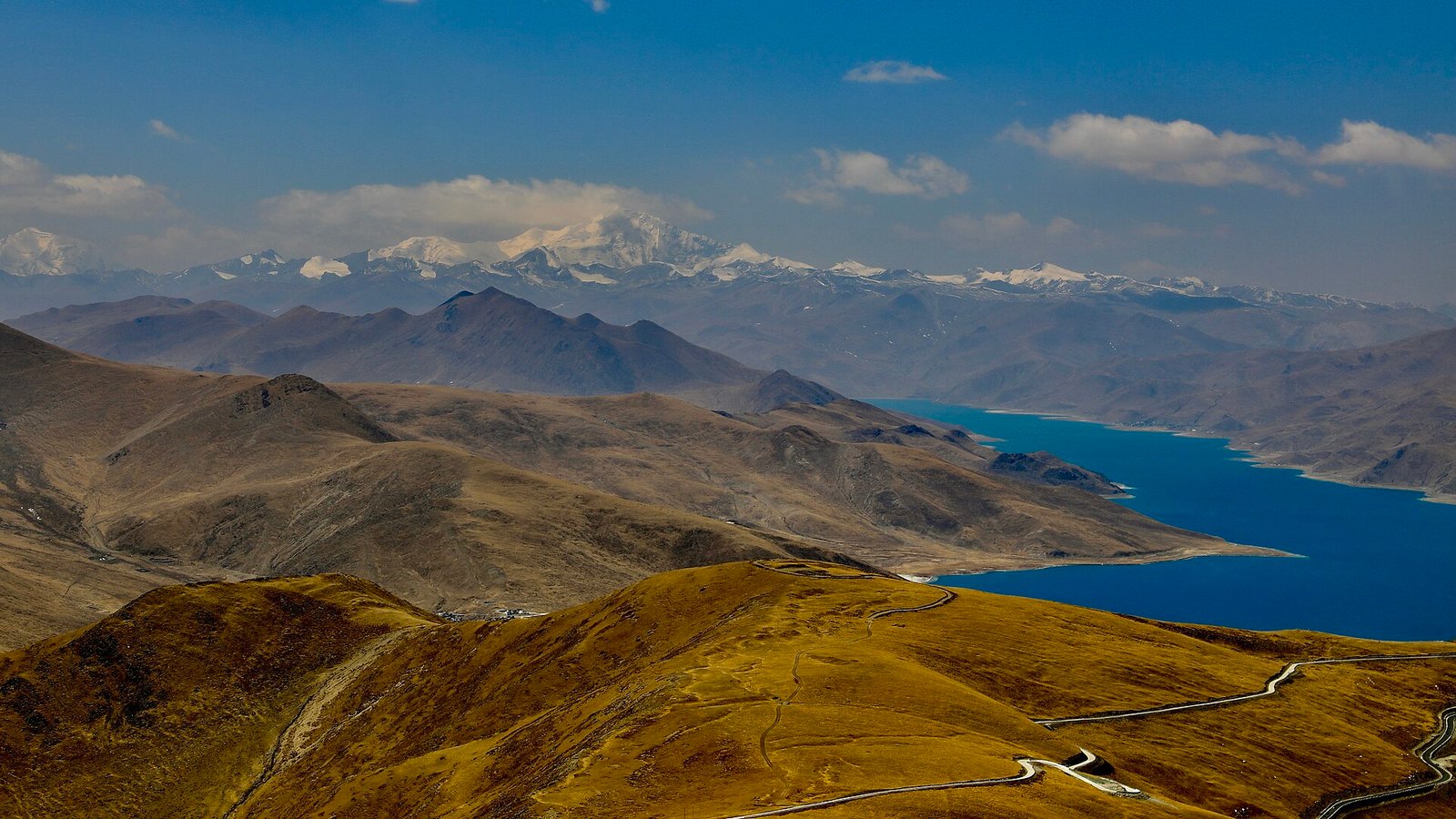
The standard route runs from Lhasa on the Yaye Expressway to Gonggar, then G349 up onto the Kamba La ridge and down to the shore: 90–110 km, or 2 to 2.5 hours each way, depending on stops. No public bus serves the lake, so the vehicle comes with the guide.
The drive ends at the Yamdrok visitor service centre, from which the road climbs to platforms 1, 2, 2.5 and 3; how long you get at each is the biggest variable in the day. A private half-day with vehicle and guide usually costs 800–1,500 CNY per car, and winter rates are capped at half the peak-season price, or 3.5 CNY per kilometre for a 5–7 seat car.
| Option | Time | Best for |
|---|---|---|
| Half-day return | 5–6 hours | First trip, tight permit window |
| Full day, lakeside walk | 8–9 hours | Photography, slower pace |
| Onward to Gyantse | 2–3 days | Karola Glacier and Kumbum |
What do you see at Kamba La and the numbered platforms?
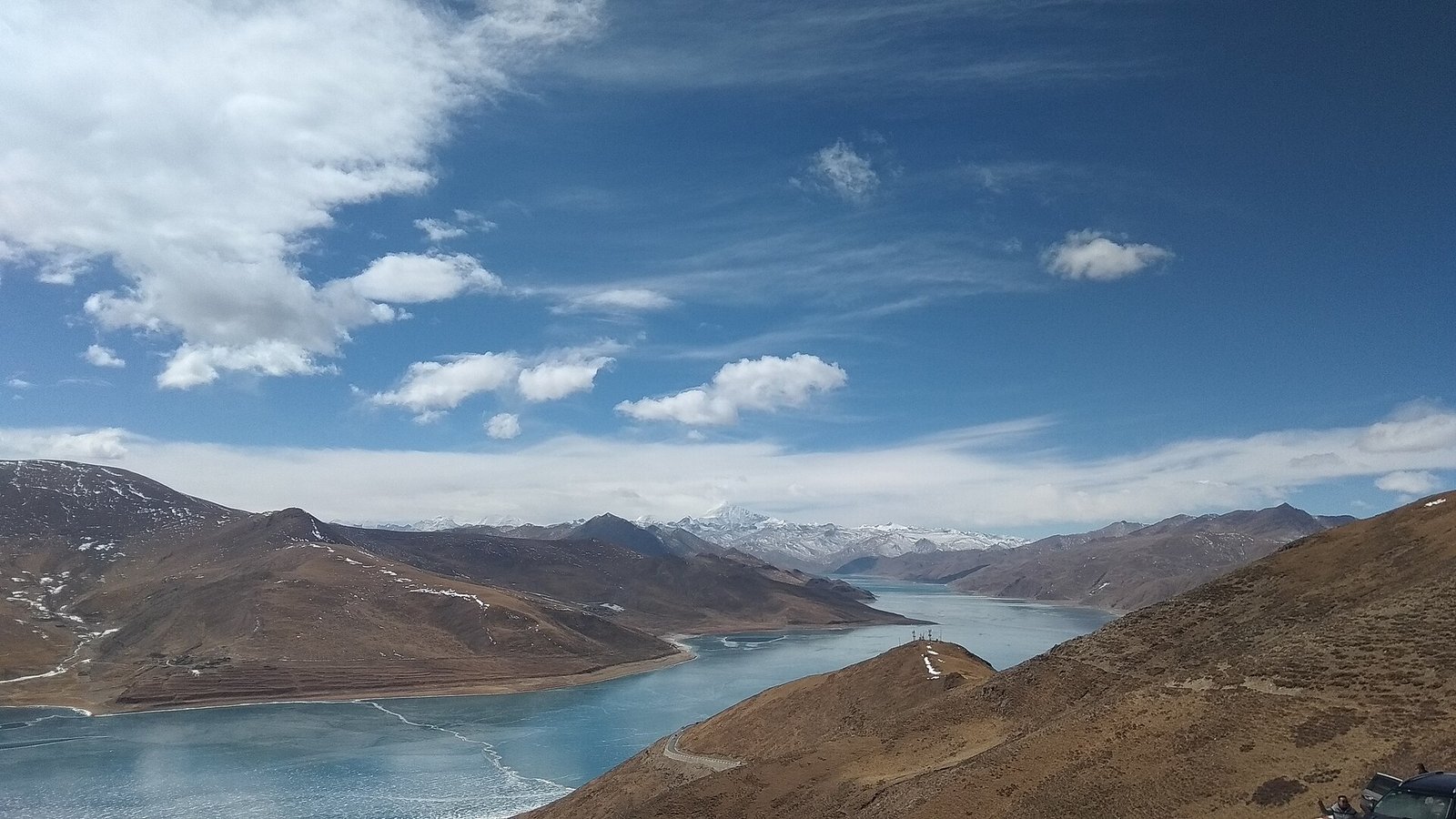
Kamba La is the pass where the lake first appears, marked at 4,794 metres on most maps and at 4,990 metres on some local signage; either way it stands roughly 350 metres above the water, and that drop is what makes the view read like a map rather than a lake.
- Platform 1 is the panorama: the branched body of water below, usually with prayer flags thrashing in the foreground.
- Platform 2 sits lower and closer, better for the colour of the water than the shape of the lake.
- Platforms 2.5 and 3 put you near the shore, on pebbles and, in winter, on a rim of ice.
Expect hawkers selling prayer flags, yaks parked for photographs at a fee, a toilet shed and serious wind. Nobody lingers: at this altitude ten minutes feels like an hour of work.
What does 4,441 metres do to your body?
At 4,441 metres each breath carries far less oxygen than in Lhasa, which is already 3,650 metres. The US Centers for Disease Control and Prevention notes that at 3,000 metres air pressure is about 69 percent of sea level; Yamdrok sits another 1,400 metres above that.
Acute mountain sickness comes from going too high too fast, and its early symptoms are unglamorous: headache, tiredness, no appetite, nausea. The CDC’s rules are blunt — no sleeping altitude above 2,750 metres on day one, then no more than 500 metres higher each night. Acetazolamide at 125 mg every 12 hours, started the day before ascent, speeds acclimatisation; alcohol and hard exercise are out for the first 48 hours.
| Place | Elevation | Gain from Lhasa |
|---|---|---|
| Lhasa | 3,650 m | — |
| Yamdrok Lake | 4,441 m | +791 m |
| Nagarzê town | 4,480 m | +830 m |
| Kamba La pass | 4,794 m | +1,144 m |
Yamdrok has one mercy built in: a day trip returns you to Lhasa to sleep, and the CDC notes that returning to lower ground is far less stressful than sleeping high.
What changes in November?
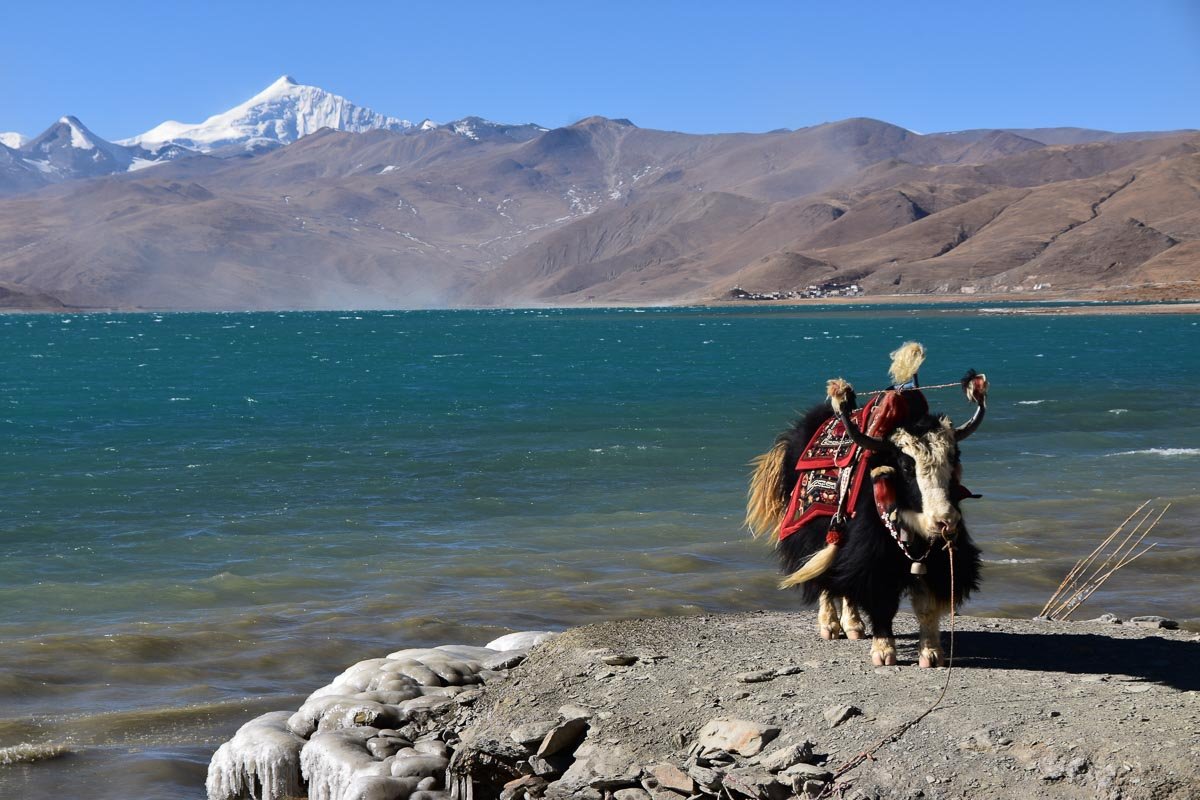
November makes Yamdrok colder, emptier and free: coaches thin out, ticket checks stop at the viewpoints, and wind takes over by early afternoon. The region’s culture and tourism department confirmed on 4 November 2026 that the ninth Winter Tibet campaign runs from 15 October 2026 to 15 March 2027, with A-level scenic areas free except monastery sites.
Langkazi County’s notice of 23 October 2026 lists platforms 1, 2, 2.5 and 3 as free for that window. Outside it the ticket is 120 CNY, cut from 16 March 2026 to 100 CNY adult and 60 CNY half price.
The county averages 2.2–5.4 °C a year, with 252 mm of precipitation and 100–150 windy days, so a November morning can sit below freezing under a full sun. Snow on the Kamba La road is the one thing that cancels the day outright; check conditions the same morning and start early.
Who is the Dorje Phagmo of Samding?
Samding Monastery is a small Nyingma house on the western shore whose head is a woman — the Dorje Phagmo, the only female reincarnation lineage in Tibetan Buddhism — which makes it the quietest unusual stop on the lake. The first of the line, Chokyi Dronma, lived from 1422 to the mid-fifteenth century.
The lake’s sacred status is older still: pilgrims walk its shoreline, and the Dalai Lamas are said to have used its waters for divination when searching for a reincarnation — the landscape version of what our guide to what makes Tibet’s spiritual sites different from its scenery describes.
Why does a holy lake have a power station?
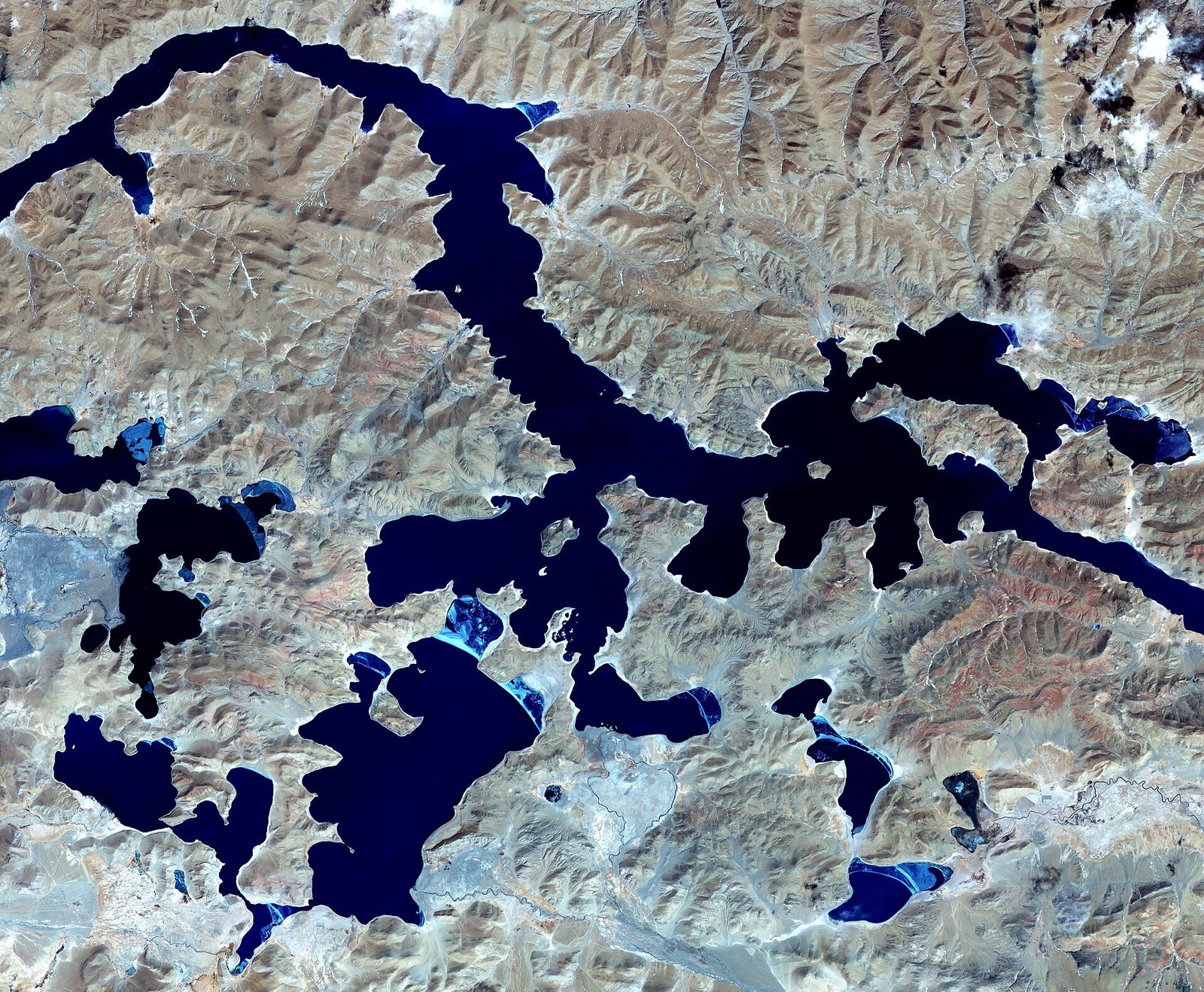
Yamdrok also works as a battery. Water dropped about 840 metres through a tunnel of nearly 5.9 km to the Yarlung Tsangpo drives a 90-megawatt pumped-storage plant, built between 1989 and 1997 and still described as the highest of its kind anywhere; the lake rose about 2.5 metres after it opened.
That explains the pylons on the ridge and the settlement near the outlet works.
Practical tips for a Yamdrok day
- Spend two nights in Lhasa first; the lake is 791 metres above the city you just flew into.
- Carry passport and both permits in one zip bag; checkpoints ask, and your guide holds the originals at times.
- Leave by 07:30 for cleaner light, weaker wind and a return before the afternoon cloud builds.
- Bring cash for yak photographs, prayer flags and roadside toilets; signal is patchy above Gonggar.
- Pack a windproof shell and gloves even in September — wind chill does the rest at the pass, and the lake is sacred, so no swimming or drones.
Is Yamdrok worth a day of your permit?
Yes, with the right expectations: this is half a day of driving wrapped around an hour of standing still, and the stillness is the point. The colour at 4,441 metres does something photographs flatten.
Go early, go slowly, and treat the paperwork and the oxygen as part of the itinerary rather than obstacles to it. If you are stringing high days together, our guide to hiking China’s Tibetan plateau covers what changes, and our first-timer reflections on Tibet’s spiritual sites are good preparation before you fly.
Have you stood at Kamba La in winter, or turned back because the pass was closed? Tell us in the comments — reader reports keep these road notes current. For the Lhasa half of the trip, start with why the Potala Palace deserves a full morning, then warm up over butter tea in a Lhasa teahouse.
Frequently asked questions
Do you need a permit to visit Yamdrok Lake?
Yes. Foreign visitors need a Tibet Travel Permit plus an Alien’s Travel Permit for Shannan, both arranged by a licensed agency with a guide and vehicle, and neither is issued at the lake.
How far is Yamdrok Lake from Lhasa?
Yamdrok Lake is 90–110 km southwest of Lhasa, a drive of 2 to 2.5 hours over the Kamba La pass at 4,794 metres, and most visitors do it as a 5–6 hour return trip.
Is Yamdrok Lake free to enter in 2026 and 2027?
Yes, between 15 October 2026 and 15 March 2027. Under the ninth Winter Tibet campaign, platforms 1, 2, 2.5 and 3 waive the ticket, otherwise 100 CNY for adults and 60 CNY at half price.
Can you visit Yamdrok Lake in November?
Yes, and it is free, but expect temperatures near or below freezing at the pass, 100–150 windy days a year and possible snow closures on the Kamba La road, so check conditions the same morning.
How high is Yamdrok Lake and will you get altitude sickness?
The lake surface is 4,441 metres, 791 metres above Lhasa, so mild headache and nausea are common on a first-day dash; two nights in Lhasa first and a return to sleep lower greatly reduce the risk.
Can you walk around Yamdrok Lake?
Only in sections. The shoreline runs about 250 km, a full day by vehicle and weeks on foot, and short walks at platforms 2.5 and 3 are what most itineraries allow.