


Sanjiang’s Dong Villages: Bridges That Shelter Rain
Rain on a Dong roof does not sound like rain on a roof. It arrives as a soft, continuous rustle, because the water is landing on clay tiles stacked over a timber gallery, and the gallery is a bridge you can walk through. Stand inside the Yongji Bridge at Chengyang and the name stops being poetic: it is a shed thrown over a river, with benches along both walls.
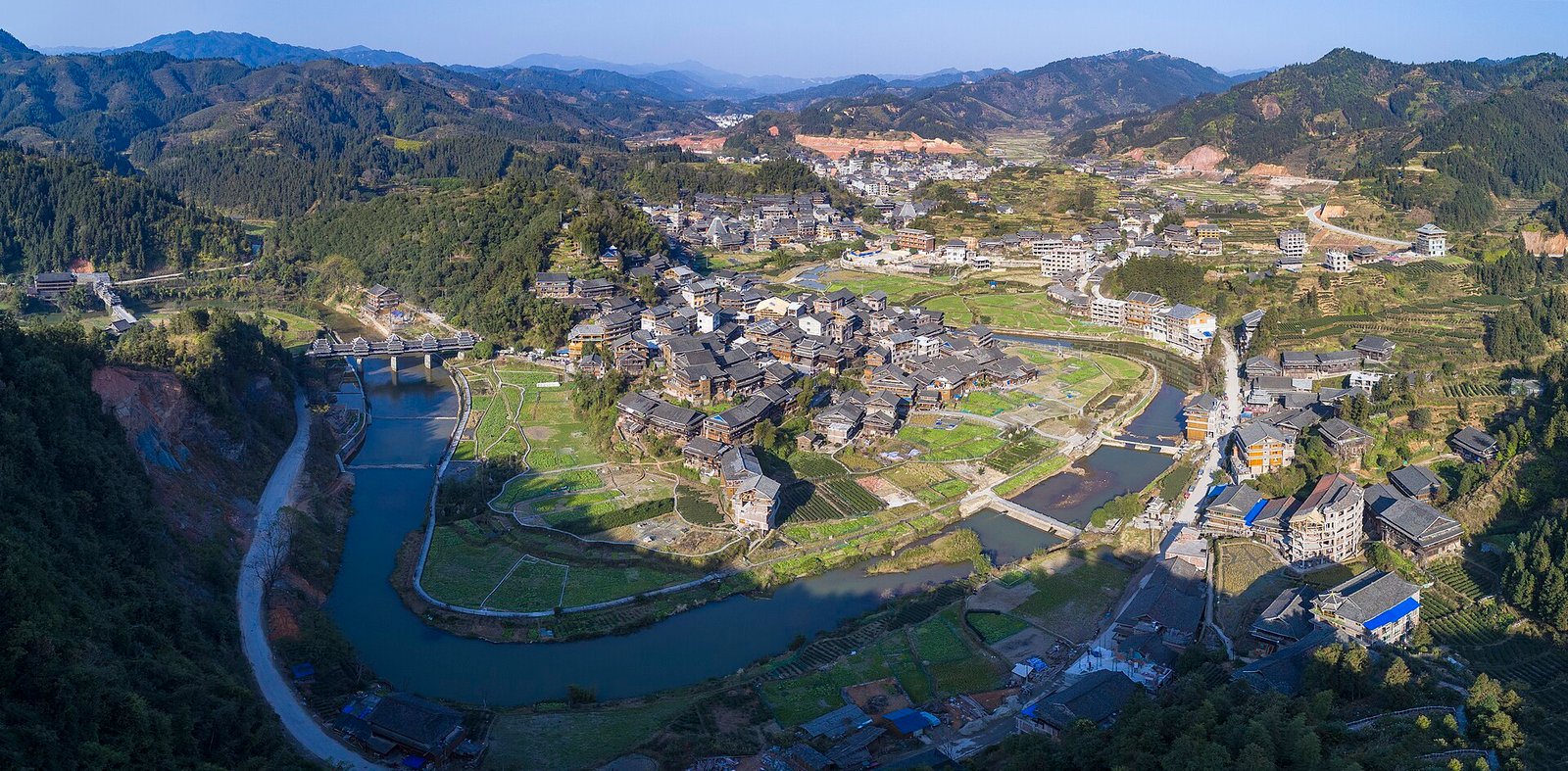
Sanjiang Dong village country fills the far north of Guangxi, where the province meets Guizhou and Hunan. Within twenty kilometres of the county town stand a nail-free 1924 bridge, the tallest single-pillar drum tower in Dong China, and Grand Song choirs UNESCO listed in 2009. Trains from Guilin take 38 minutes.
What is Sanjiang, and why do its Dong villages matter?
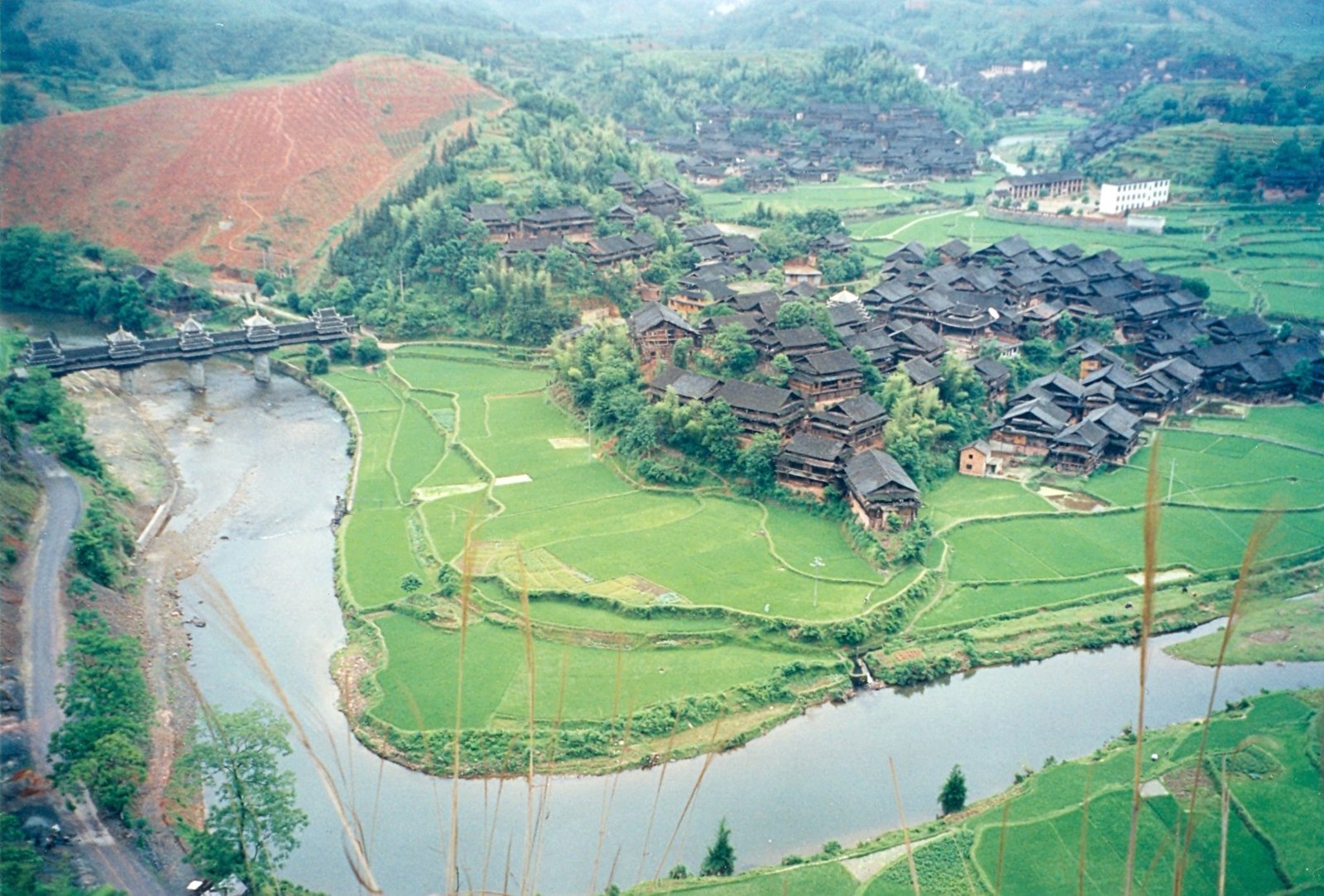
Sanjiang Dong Autonomous County is a 2,454 sq km county in northern Guangxi where the Dong minority make up 58 per cent of roughly 418,000 residents, according to the Sanjiang County Government’s county profile (accessed 8 November 2026). It holds more than 230 drum towers and 200 wind-and-rain bridges, and it is Guangxi’s only Dong autonomous county.
Among China’s five Dong autonomous counties it was the first established and still has the largest Dong population, as China Daily reported on 13 July 2026. Twenty-one villages sit on the national traditional-village list.
How do you get to Sanjiang by train?
Sanjiang South station sits on the Guiyang–Guangzhou high-speed line and is the county’s main gateway. Trains reach Guilin North in about 38 minutes and Guangzhou South in 2 hours 46 minutes (timetables checked 8 November 2026), making the county a realistic add-on to a Guilin or Longji itinerary.
The station opened as China’s first county-level departure terminal for an ethnic-minority area. Chengyang Eight Villages is 18–20 km away: about 30 minutes and CNY 60–80 by taxi, or roughly CNY 7 on the shuttle.
Chengyang Yongji Bridge: why does a 1924 timber span still stop people?
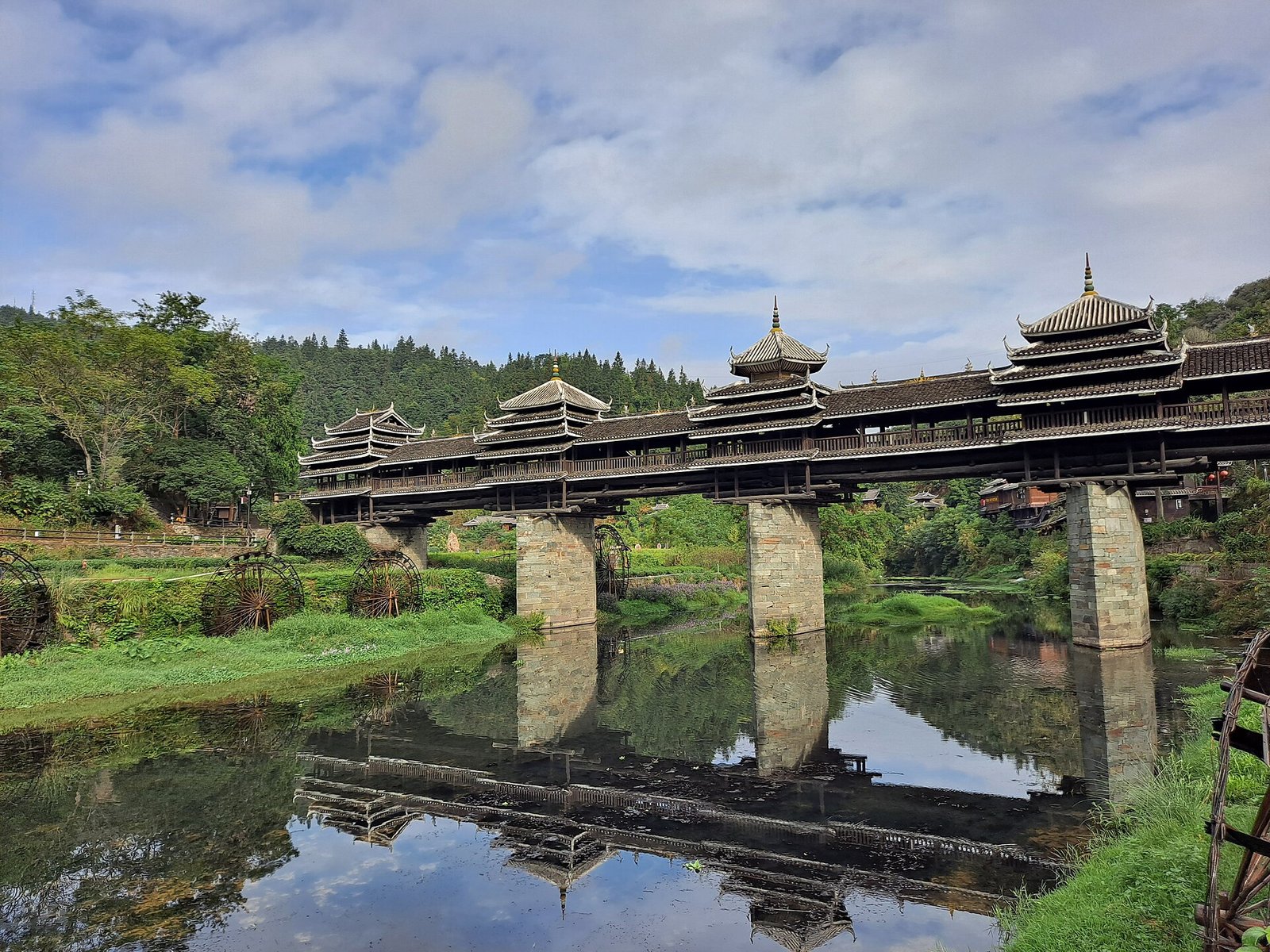
Chengyang Yongji Bridge is a stone-piered, timber-galleried covered bridge completed in 1924, and it remains the only Dong wind-and-rain bridge in China protected as a national key cultural relic, per the county’s heritage page. Its deck runs 77.76 m across the Linxi River, carrying five pavilions and nineteen gallery bays.
The gallery is 3.75 m wide, the deck sits 11.52 m above the pier foundations, and the whole thing stands on two abutments, three piers and four spans. Builders relied on a dense cantilever bracket system rather than iron fastenings. Guo Moruo added the plaque in the 1960s.
A 1983 flood took out one pier and two pavilions; the rebuild pulled salvaged beams from downstream so the repair would not read as new, as craftsman Yang Siyu told China News Service.
How does a bridge with no nails stay up?
The bridge holds because every joint is a locked mortise-and-tenon, cut so that load presses the members tighter rather than levering them apart. Cantilevered bracket arms step out from each pier in layers, shortening the clear span, while the tiled roof adds weight that settles the assembly.
Dong carpenters in Sanjiang traditionally work without drawings, sizing several hundred beams by rule of thumb. The craft joined China’s first national intangible-heritage list in 2006, and Yang Siyu is credited with more than 300 bridges and 100 stilt houses.
| Structure | Job in the village | Chengyang example | Key figure |
|---|---|---|---|
| Wind-and-rain bridge | Crossing plus shelter | Yongji Bridge | 77.76 m, 5 pavilions |
| Drum tower | Meeting hall, song stage | Pingzhai single-pillar tower | 25 m, 17 tiers |
| Stilt house | Home above damp ground | Ma’an and Ping hamlets | Three storeys typical |
What happens inside a Dong drum tower?
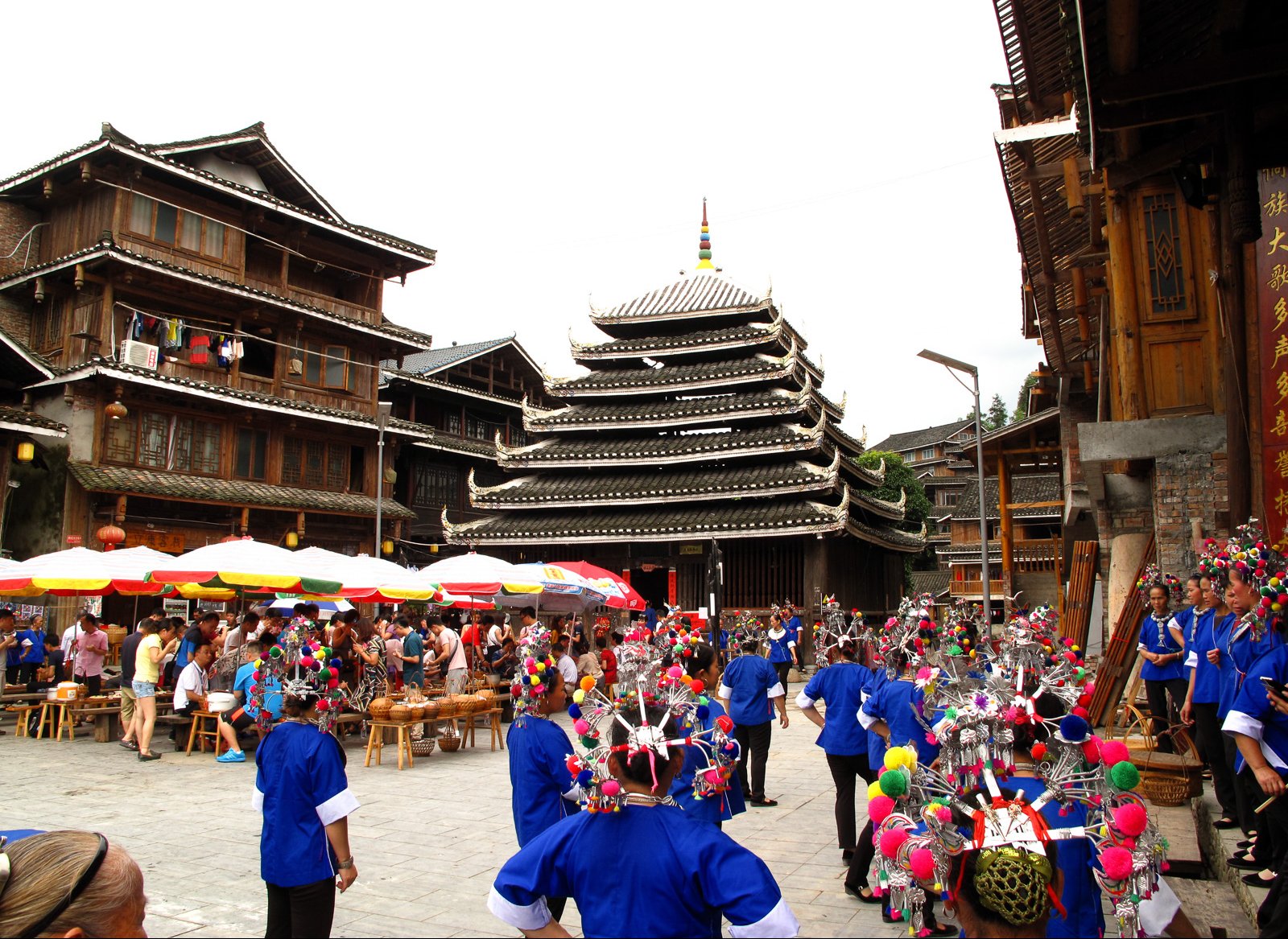
A drum tower is the civic centre of a Dong village: a timber tower with a fire pit at its base, benches around the fire, and tiers of eaves stacked above like a fir tree. Villages use it for meetings, disputes, choir practice and, increasingly, visitors.
Pingzhai’s, in Sanjiang, is the one to study. The 1821 tower was lifted bodily aside in 2014 rather than demolished, its original beams still inside. The new tower reaches 25 m in 17 tiers on one central column — the largest single-pillar drum tower in Dong country, built under national inheritor Yang Qiushi, according to Guangxi’s housing department.
Dong Grand Song: what are you actually listening to?
The Grand Song of the Dong ethnic group is multi-part singing with no conductor and no instruments, inscribed on UNESCO’s Representative List in 2009 (element 00202, UNESCO Intangible Cultural Heritage). Choirs divide by age and sometimes by gender, and the drum tower is the traditional stage.
Dong households put it plainly: rice nourishes the body, songs nourish the soul. Because the language had no script, history and farming knowledge travelled inside the repertoire, and some songs imitate birds and moving water. Villages stage short sets at 10:30 and 15:00, with an extra slot when busy.
How should you walk the eight villages?
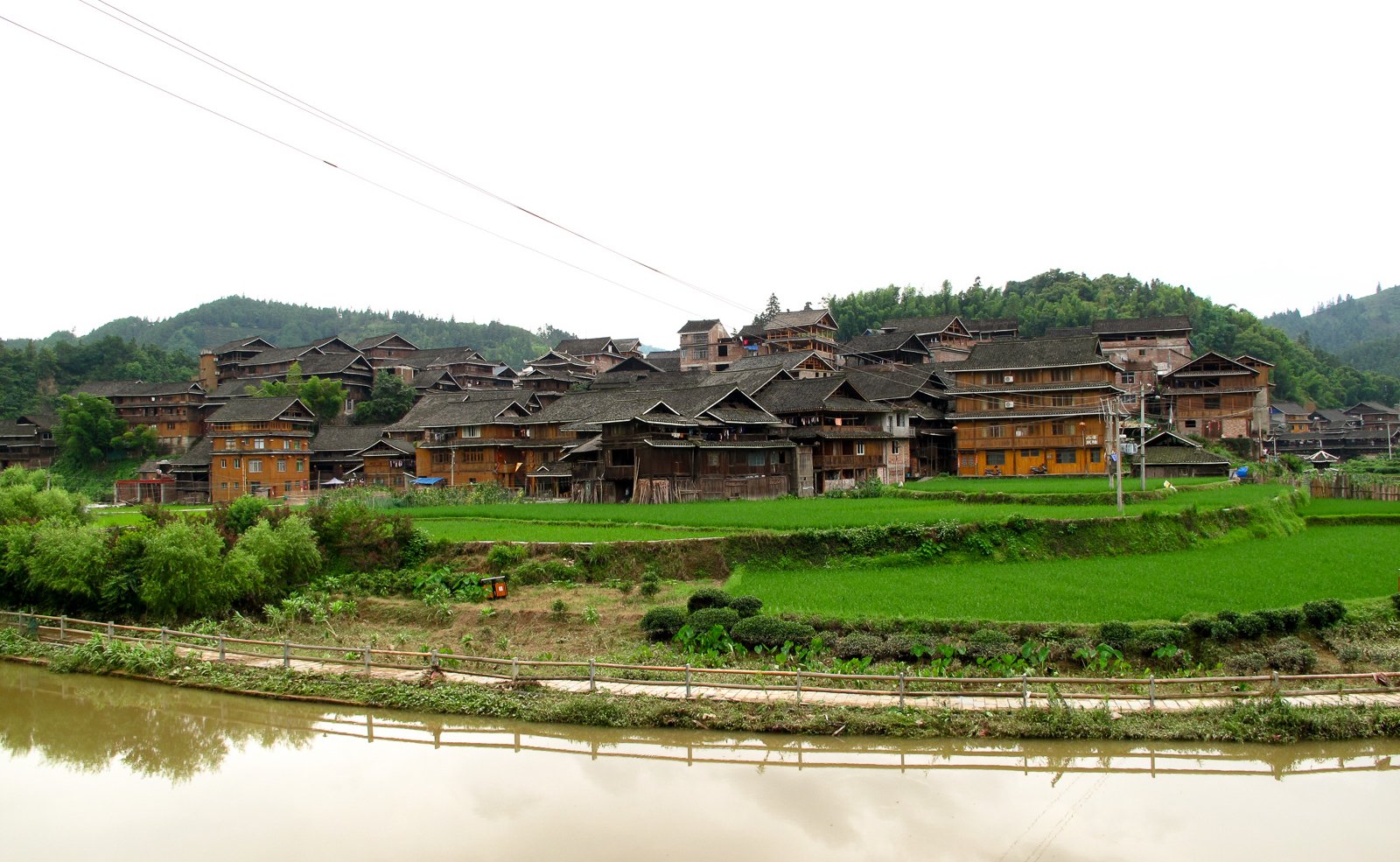
Chengyang Eight Villages is a cluster of eight inhabited hamlets along the Linxi River about 20 km north of Sanjiang town, linked by stone paths rather than roads. Walking between them takes most of a day; staying one night turns a photograph into a conversation.
- Start at the Yongji Bridge before 08:30, when the water is still and the gallery empty.
- Cross into Ma’an hamlet and follow the river path upstream, not the shuttle road.
- Climb to the Pingzhai drum tower for the single-column interior and the roof view.
- Continue to Yan hamlet for the older timber lanes and the indigo dye vats.
- Take the terraced field path back toward Dazhai as the light drops.
- Return to the bridge after dark, when the pavilions are lit and the river doubles them.
What should you eat in a Dong village?
Dong cooking in Sanjiang runs on glutinous rice, fermented sourness and tea. Three things are worth planning around: oil tea in the morning, sour fish or sour pork at midday, and the long-table feast if a hamlet is staging one.
Oil tea is pounded in an iron wok with rice grains, peanuts and tea leaves, then poured over puffed rice — bitter at first, addictive by the third bowl. Sour fish is layered with rice, salt and chilli in a clay jar and left for months, which is why November smells of fermentation. The long-table feast gathers dishes from every household onto one table, typically CNY 60–80 per person.
When is the best time to visit Sanjiang?
Late October to early December is the most rewarding window, when the rice is cut, the harvest is pounded and the valley runs dry. The county averages 17–19°C, so November brings mild afternoons and cool mornings.
| Season | Conditions | What you gain | What you give up |
|---|---|---|---|
| Nov–early Dec | Dry, 10–20°C | Harvest, clear water | Short daylight |
| Mar–May | Wet, mild | Green terraces, mist | Rain most days |
| Jun–Aug | Hot, humid | Long evenings | Crowds, heat |
| Jan–Feb | Cold, damp | Dong New Year | Grey light |
Tickets, opening hours and what the 5A label changed
Chengyang Eight Villages has held national 5A status since February 2024, when the Ministry of Culture and Tourism confirmed it in a batch of 21 scenic areas, as China Tourism News reported on 7 February 2024. Gates open at 08:00 and the last shuttle runs around 18:00, though the hamlets stay inhabited all evening.
Ticket pricing is genuinely inconsistent, so treat any fixed figure with suspicion. Listings cluster between CNY 60 and CNY 90 for the through ticket, with the shuttle bundled at the higher end; adding the Yueye Dongxiang show pushes it to about CNY 120 (Ctrip, November 2026). Free first-gate entry after 22:00 has also been advertised. Arrivals rose from 900,000 in 2022 to 2.5 million in 2025, which Xinhua reported on 14 December 2025 — the strongest argument for arriving early.
Practical tips for a Dong village visit
- Wear grippy shoes: stone paths and timber stairs stay slick after rain.
- Expect thin walls in stilt-house guesthouses, and pack earplugs.
- Open flame and smoking are banned inside timber houses, and enforced.
- Ask before photographing elders and children; a smile beats a long lens.
A place that still works in the rain
What separates Sanjiang from a heritage park is that the buildings still do their jobs. The bridge carries shoppers and schoolchildren, the drum tower hosts arguments and rehearsals, and the stilt houses are homes with washing hung under the eaves.
That also means you should give it time. A half-day coach stop buys one photograph of a famous roofline; two nights buy the sound of rain on tiles at six in the morning, which is what people remember. At jusha.travel, we love sharing tips that push travellers past the first photograph, and this valley rewards that instinct.
For a wider route, our guide to traditional villages across the border in Guizhou covers the next stretch of Dong country, and our notes on visiting China’s ethnic minority villages as a foreign traveller explain the etiquette. Coming from Guilin, pair the trip with a Longji rice terrace walk, or start with a Guilin noodle village day trip. For the flavours at the table, read our piece on Guizhou sour soup fish, and this overview of Guangxi ethnic culture is a useful primer.
Frequently asked questions
Where is Sanjiang Dong village country?
Sanjiang Dong Autonomous County lies in northern Guangxi where Guangxi, Guizhou and Hunan meet, covering 2,454 sq km about 150 km north of Liuzhou. Chengyang Eight Villages sits roughly 20 km north of the county town.
How do I get to Chengyang from Guilin?
Take a high-speed train from Guilin North to Sanjiang South in about 38 minutes, then a 30-minute taxi or the CNY 7 shuttle for the last 18–20 km. Guangzhou South is 2 hours 46 minutes away.
How much does Chengyang Eight Villages cost?
Expect CNY 60–90 for the through ticket with the shuttle bundled at the higher end, and about CNY 120 with the Yueye Dongxiang show added. Prices vary by season, so confirm at the gate.
Is one day enough for the Dong villages?
One day covers the Yongji Bridge, two drum towers and a Grand Song set, but misses the morning mist and the evening feast. Two nights is the practical minimum.
When are the Grand Song performances?
Villages usually stage short Grand Song sets at 10:30 and 15:00, with an extra slot in peak periods. Timing shifts with festivals and weather, so check the board at the gate.
Do I need a guide or permit to visit?
No permit is required, and foreign visitors enter on the same ticket as everyone else. A local guide is optional but useful for the drum-tower interiors.