


The short answer: Three days in Hong Kong works best split by geography rather than by attraction: day one on Hong Kong Island around Victoria Peak and Central, day two in Kowloon from Tsim Sha Tsui across to Mong Kok, and day three on the water and the outlying islands. Each day is walkable, and each ends somewhere worth being at night.
Key takeaways
- Day 1: Hong Kong Island – Victoria Peak early, then the Mid-Levels Escalator, Sheung Wan, Hollywood Road and Tai Kwun.
- Day 2: Kowloon – the Star Ferry across, Tsim Sha Tsui, Jordan's street food, Mong Kok's markets and Temple Street night market.
- Day 3: Lantau (Ngong Ping, Big Buddha, Tai O) or Sai Kung if the weather turns; finish at Victoria Harbour for the 8pm Symphony of Lights.
- Ride the Peak Tram before 8:30am: the queue reaches 45 minutes by mid-morning and is close to nothing early.
- Stay in Tsim Sha Tsui to start Day 2 on foot, with the harbour view outside your window.
- Buy an Octopus card on day one – it covers the MTR, buses, trams, the Star Ferry and the Peak Tram.
- Skip Disneyland and any 'Hong Kong in one day' tour; both consume a full day for little return.
Three days in Hong Kong is the awkward middle: enough time to see the real city, not enough to see all of it. The mistake almost every first-timer makes is treating Hong Kong Island and Kowloon as one place and trying to cover both in a single day. They are two cities separated by a harbour, and the harbour crossing is the thing you came for.
This itinerary splits the days by geography, not by attraction. Day one is Hong Kong Island, day two is Kowloon, day three is the water and the islands. Each day is walkable, and each ends somewhere you actually want to be at night.
If you have not sorted out the basics yet — when to come, where to base yourself, how to pay for things — start with my Hong Kong travel guide for first-timers and come back to this.
Day 1 — Hong Kong Island, from the Peak down
Start at Victoria Peak before the crowds. The Peak Tram queue at 10am is 45 minutes; at 8am it is close to nothing. Buy the combo ticket online the night before and take the tram up, not the bus.
Walk the Peak Circle Walk — about 3.5km, an hour at an easy pace. It loops the hill and gives you the harbour view from three sides. The Sky Terrace is optional; the free viewing spots along the walk are arguably better, and there is a fuller comparison in the Victoria Harbour guide.
Come down and ride the Mid-Levels Escalator to SoHo for lunch. Not because the escalator is remarkable, but because it drops you into the streets where people actually eat.
Spend the afternoon in Sheung Wan and Central — Man Mo Temple, the antiques along Hollywood Road, and the PMQ design complex. Finish at Tai Kwun, the former police compound turned arts centre, which runs until late and is free to enter.
Practical tip: Wear shoes you can walk 12,000 steps in. Hong Kong’s hills are steeper than the map suggests, and Day 1 is the hilliest day of the three.
Day 2 — Kowloon, west to east
Cross on the Star Ferry from Central to Tsim Sha Tsui. It costs a few dollars, takes eight minutes, and is the single best-value thing in the city. Sit on the upper deck, on the right side heading to Kowloon.
The morning is Tsim Sha Tsui: the Avenue of Stars, the Hong Kong Museum of History if you want context on the place, and the waterfront promenade. The Avenue of Stars walk is short and worth doing early before the heat builds.
Afternoon, move north and east through the working city. Jordan for the street food, Mong Kok for the markets — the Ladies’ Market and the flower and bird markets are all within walking distance of each other. If you want a food-focused version of this afternoon, this street food breakdown maps the stalls properly.
Join a Temple Street Night Market walk after dark, then eat at one of the dai pai dong stalls nearby. This is the one evening I would not skip.
Practical tip: Dai pai dong stalls are mostly cash-only and mostly have no English menu. Point at what the next table is eating. It works.
Day 3 — Water, islands and a slower pace
Take the MTR to Tung Chung and the cable car to Ngong Ping, then the bus down to Tai O, the stilt-house fishing village on the west of Lantau. Tai O is the part most itineraries miss and the part people remember. There is more on Lantau’s Big Buddha and the surrounding area here.
If the weather is bad, swap this for Sai Kung: seafood on the waterfront and a short boat out to one of the islands. Sai Kung works best as a slow day rather than something you squeeze around other plans.
Last evening: back to Victoria Harbour for the Symphony of Lights at 8pm, viewed from the Tsim Sha Tsui promenade rather than the Island side. Then a drink in Lan Kwai Fong or a quiet one in Kennedy Town, depending on which version of the evening you want.
Practical tip: The Symphony of Lights is 10 minutes. Arrive by 7:45pm for a spot at the railing. Do not build an evening around it — build it into an evening.
Getting around
- Get an Octopus card at the airport or any MTR station on day one. It covers the MTR, buses, trams, the Star Ferry and most convenience stores. I explain the whole system in the Octopus Card guide.
- The MTR is the answer to almost every transport question. It is fast, signposted in English, and does not care what time it is. See the MTR guide for routes and fares.
- Taxis are cheap, but tunnel tolls and traffic make them a poor choice at peak hours.
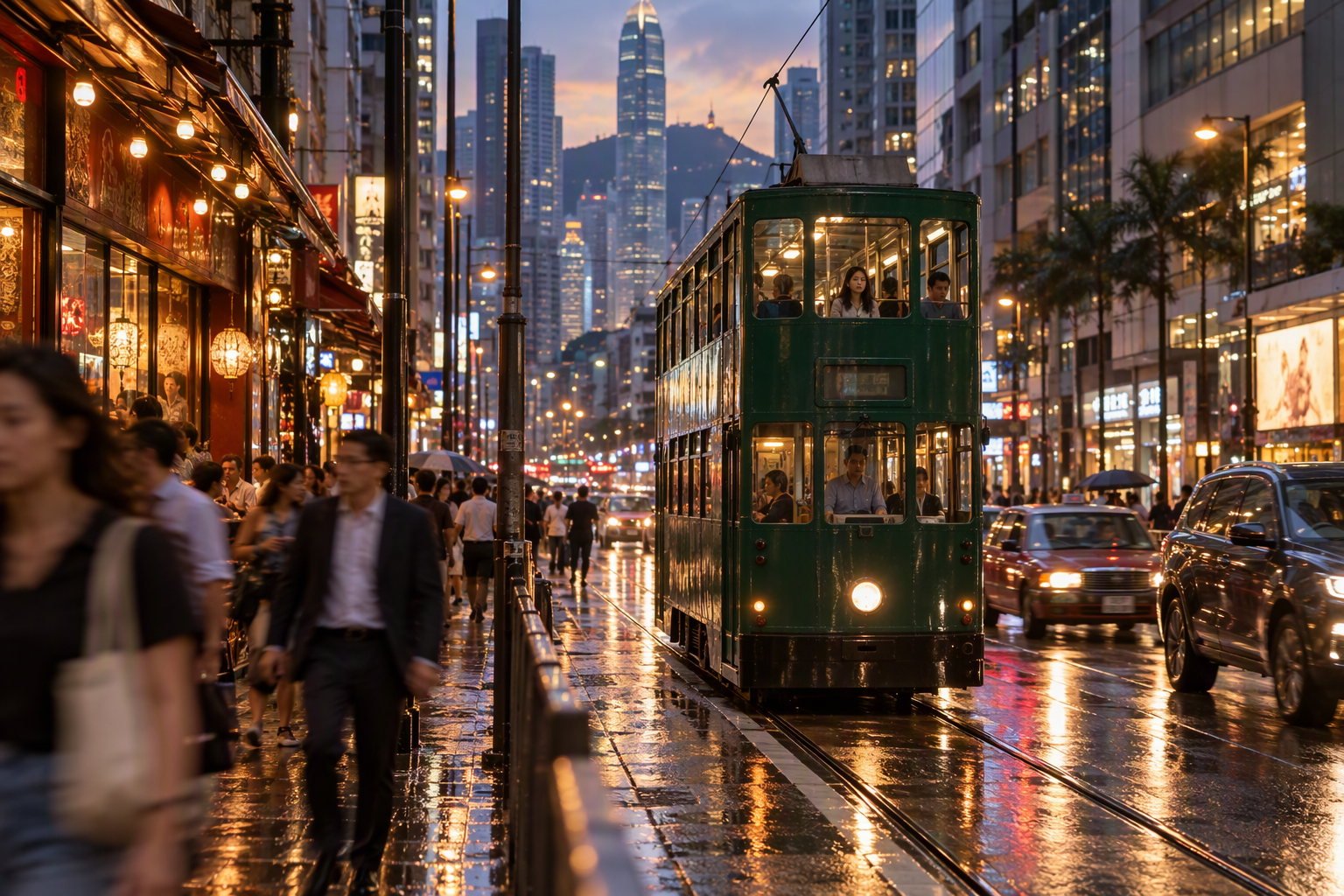
- Trams on Hong Kong Island cost about HK$3 and are slow on purpose. Ride one anyway.
Where to base yourself for this itinerary
Tsim Sha Tsui is the best fit for this plan — you start Day 2 on foot, and the harbour view is outside your window. Wan Chai or Causeway Bay works well if you would rather be on the Island. Kennedy Town is the value pick if you do not mind 15 minutes on the MTR.
For the budget-by-budget breakdown, I keep an updated list of Hong Kong hotels for every budget.
What to skip
- Hong Kong Disneyland on a three-day trip. It is a full day and it is not why you came.
- Any “Hong Kong in one day” tour. It is a bus.
- The Peak Tram at midday, and the Star Ferry at 6pm on a weekday — both are crush-loaded.
- The night markets before 7pm. They are still setting up.
Frequently asked questions
Is 3 days enough for Hong Kong?
It is enough to see the essential city properly: the Peak, the harbour, Kowloon’s markets, and one island. It is not enough to add Disneyland, Ocean Park, and a full hiking day. Three days done well beats five days done in a rush.
Should I stay in Kowloon or on Hong Kong Island?
Kowloon (Tsim Sha Tsui or Jordan) for the view, the food and better value. Hong Kong Island (Wan Chai, Causeway Bay) if you want the tram, the bars and the business district. For this itinerary, Kowloon edges it.
Do I need to book the Peak Tram in advance?
Yes, in October to December. Buy online the night before and take the earliest slot you can manage. Walk-up queues in peak season regularly exceed an hour.
Can I do Hong Kong and Macau in three days?
Not comfortably. Macau deserves its own day and the ferry eats three hours return. Make it a four-day trip, or treat Macau as a separate visit.
What is the best day of the week to start this itinerary?
Start on a Tuesday or Wednesday. You avoid the weekend crowds on the Peak and at the night markets, and hotel rates drop.
How much cash should I carry each day?
About HK$300–500 in small notes. Everything else can go on Octopus or a contactless card.
Is this itinerary doable with kids?
Days 1 and 2, yes, with fewer stops and a mid-afternoon break. Swap Day 3 for Ocean Park or a beach day if you have young children.
What if it rains?
Use Day 1’s afternoon option — the museums in Tsim Sha Tsui, Tai Kwun, and PMQ are all indoor and worth the time. Move the Peak to the first clear morning you get.