


Hong Kong Ding Ding Tram: A Slow Ride Through City Life
The bell rings twice, the stalls shuffle back by inches, and a double-decker tram slides through a wet market so narrow that shoppers could touch its paintwork. Almost nobody on board looks up.
Hong Kong’s ding ding is the city’s double-decker street tram, running along the north shore of Hong Kong Island since 1904, and an adult ride costs a flat HK$3.30 however far you travel. You board at the rear, pay at the front, and cover about 120 stops between Kennedy Town and Shau Kei Wan across six overlapping routes.
At jusha.travel, we love sharing tips that push you past the coach-tour circuit, and the tram is perfect for that: slow, unglamorous and unmistakably local. Here is what a ride costs in 2026 and how boarding works.
What Is the Hong Kong Ding Ding Tram?
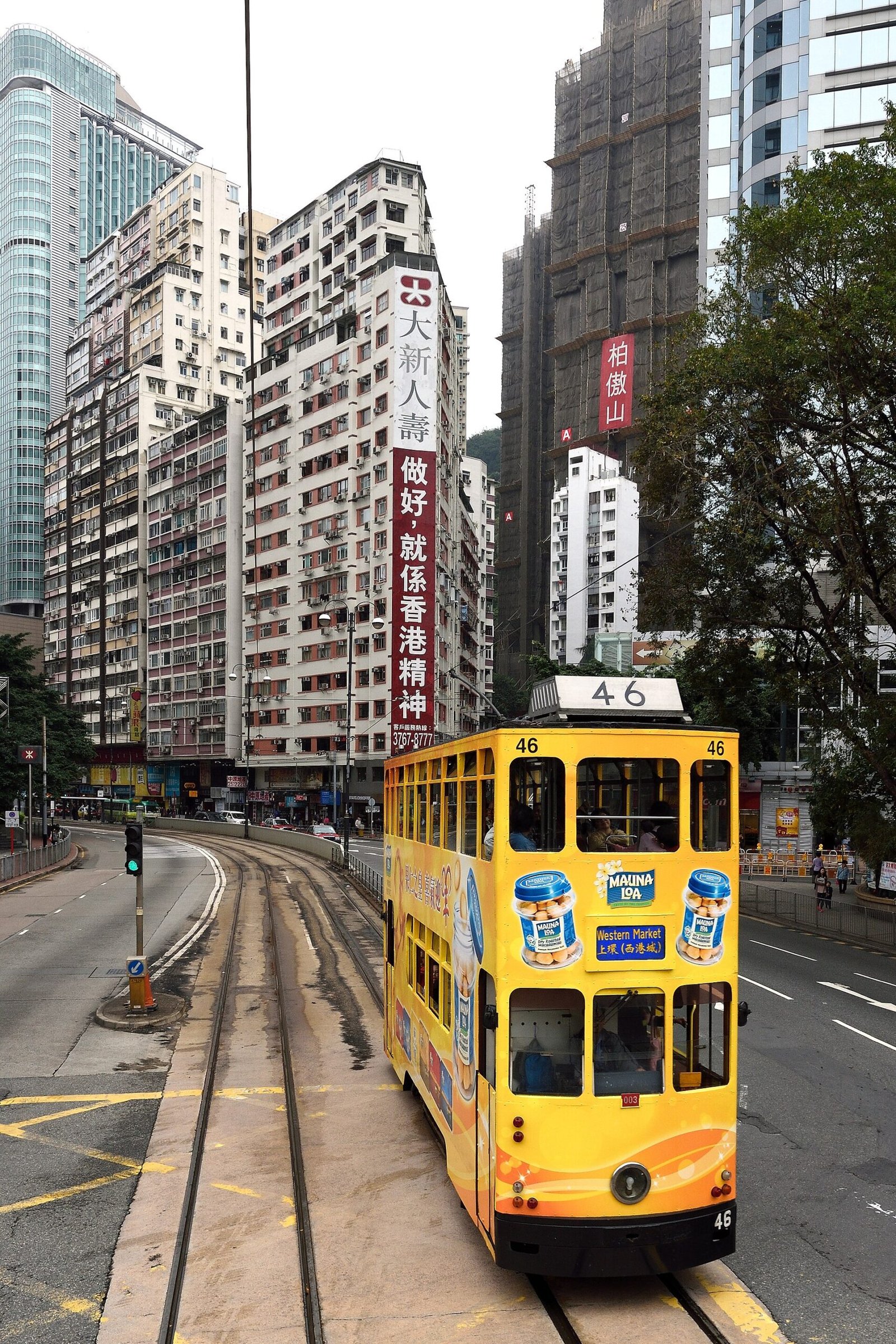
The ding ding is the double-decker tram network run by Hong Kong Tramways, named after the two-note bell drivers ring to clear the road. It began in 1904 with 26 single-deck cars, per the operator’s own history, making it one of Asia’s oldest electric tramways still running.
The fleet now numbers 165 tramcars, which Hong Kong Tramways describes as the world’s largest double-deck tram fleet still in operation, carrying around 200,000 passengers a day (Hong Kong Tramways, accessed October 2026). Operator RATP Dev lists six routes, 30 kilometres of track and 120 stops.
| Founded | 1904 |
| Fleet | 165 double-deck tramcars |
| Network | 6 routes, 30 km, 120 stops |
| Adult fare | HK$3.30, flat |
Sources: Hong Kong Tramways and RATP Dev, accessed October 2026.
Do not confuse it with the Peak Tram: the ding ding runs flat along the streets for a few dollars, while the funicular climbs to Victoria Peak for a sightseeing price. Our guide to riding the Peak Tram covers that separately.
How Much Does a Hong Kong Tram Ride Cost?
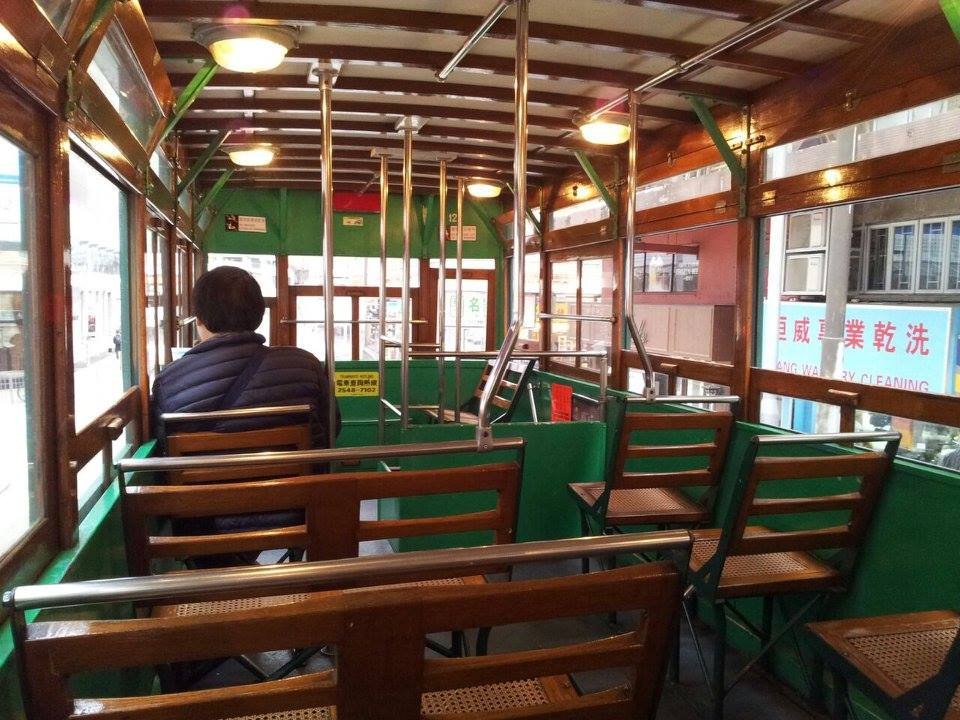
A Hong Kong tram charges one flat fare, so a two-stop hop costs exactly the same as the full run from one end of the island to the other. There are no zones and no peak pricing. The fares published by the operator in 2026 are:
| Adult, aged 12 and over | HK$3.30 |
| Child, aged 3 to under 12 | HK$1.60 |
| Senior, aged 65 and over | HK$1.50 |
| Monthly ticket | HK$260 |
Source: Hong Kong Tramways fare information, accessed October 2026.
Two things make it cheaper still: the operator’s website listed a Visa tap-to-pay promotion in October 2026 giving HK$1 off every HK$3.30 fare, and a government concession scheme covers eligible elderly and disabled passengers. Both have changed repeatedly, so confirm the current rules.
Cash works but gives no change, so feeding in a HK$5 coin for a HK$3.30 ride is a donation. Use Octopus, a contactless bank card or a QR app: Octopus is the same card you tap on the MTR, buses and ferries. Our guide to navigating the MTR covers the faster alternative underneath.
How to Ride the Ding Ding Correctly
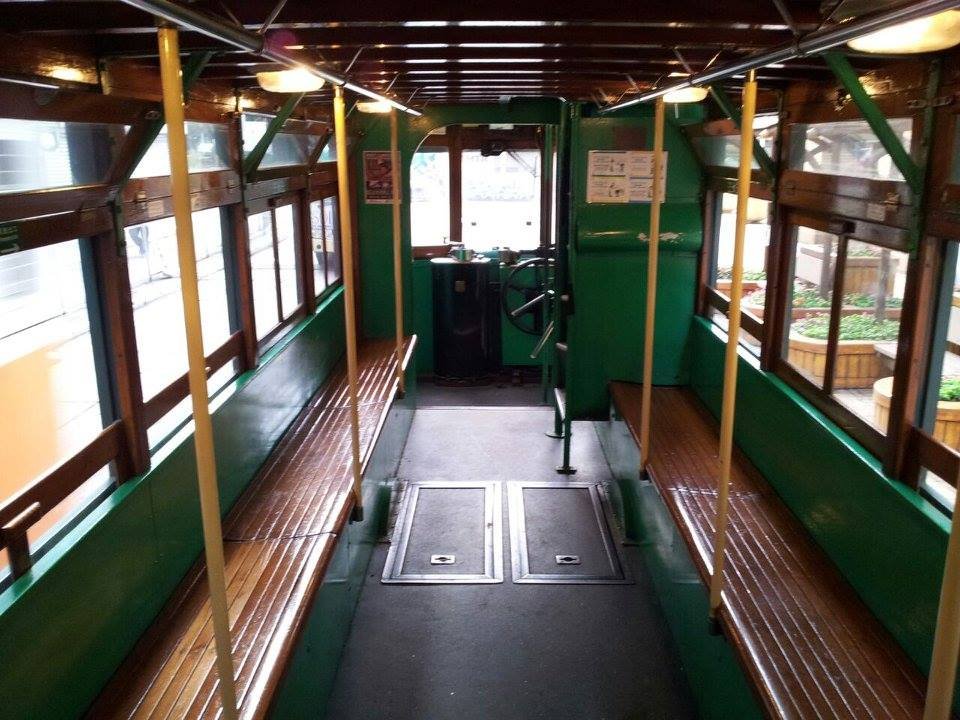
Boarding runs the opposite way to the buses most travellers know: walk on at the rear without paying, then pay at the front door as you leave. First-timers who queue at the front get gently waved to the back.
- Wait at a marked stop — usually a raised island or pavement platform marked with a stop number.
- Check the destination blind, which names the terminus rather than a route number, and confirm you are heading east or west.
- Board at the rear, then climb the spiral staircase if you want the top deck.
- Sit at the very front of the upper deck — open windows, eye level with the shop signs.
- Pay on the way out at the front door: tap Octopus or a contactless card, or drop exact coins.
Etiquette is light but real. Keep the doorways clear, do not climb the stairs while the tram is moving, and offer priority seats to elderly passengers.
The Six Routes, Explained Simply
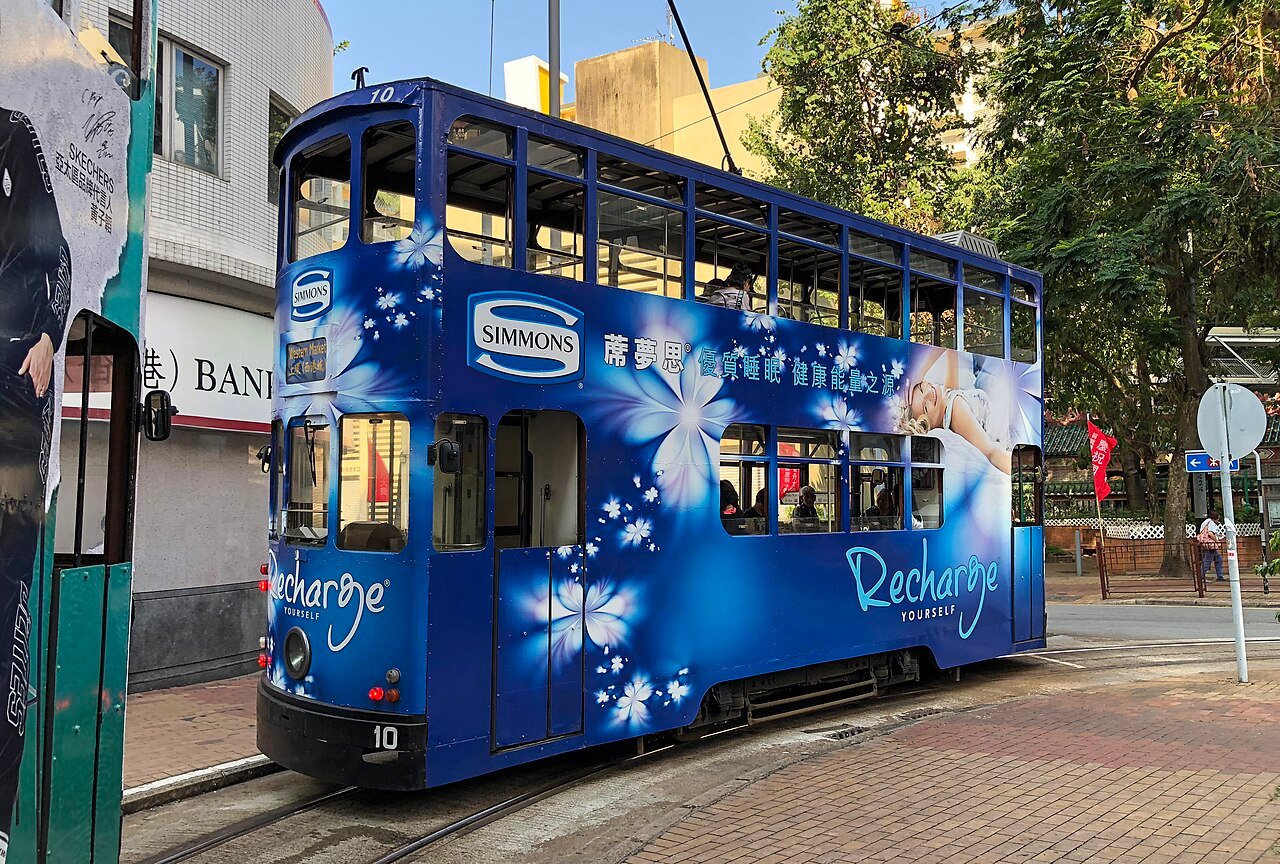
All six routes share one east–west corridor along the north shore of Hong Kong Island, differing only in where they begin and end. You need not memorise them: the destination blind tells you what matters.
| Route | Useful for |
|---|---|
| Kennedy Town to Shau Kei Wan | The full island haul |
| Kennedy Town to Happy Valley | The racecourse loop |
| Shek Tong Tsui to Causeway Bay | Western districts |
| Shek Tong Tsui to North Point | The market stretch |
| Happy Valley to Shau Kei Wan | Crossing without changes |
| Western Market to Shau Kei Wan | Starting in Sheung Wan |
Source: Hong Kong Tramways route information, October 2026.
One live exception: on 9 September 2026 the operator closed Shek Tong Tsui Terminus until further notice for track repairs, directing passengers to the “07E – Hill Road” stop for eastbound trams. Always check the special notices before planning around a terminus.
Chun Yeung Street: The Tram Ride Through a Wet Market
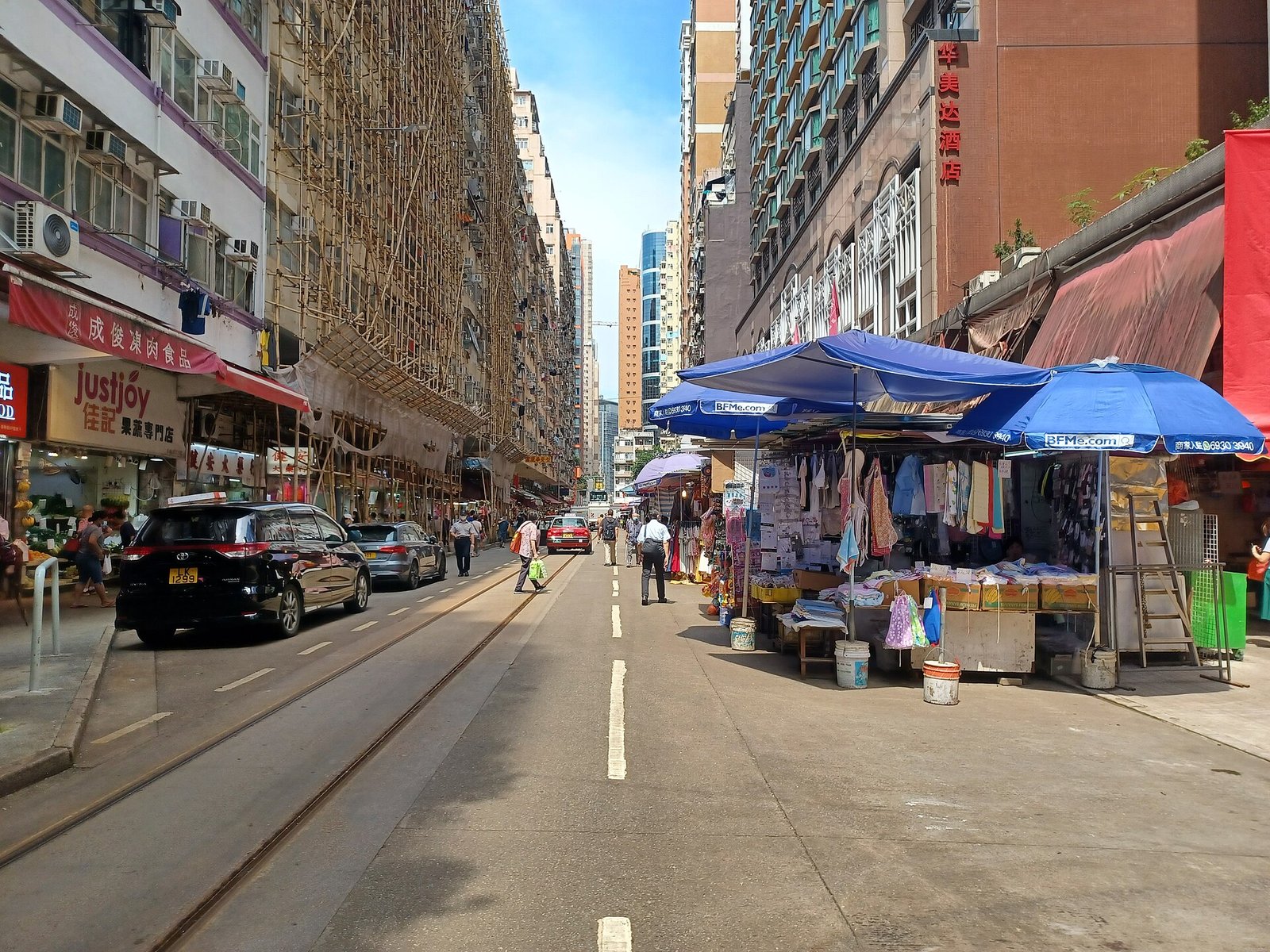
Chun Yeung Street in North Point is the only place on the network where the tram runs straight through a working street market, brushing vegetable stalls, fishmongers and hanging meat just inches from the windows. It is the best single ride on the system.
Only trams signed “North Point” swing off Kings Road and thread through the market, so the destination blind matters more than any route number. The Hong Kong Tourism Board recommends exactly this: take an eastbound tram bound for the North Point terminus and watch the street part around you (Discover Hong Kong, accessed October 2026).
Go on a weekday morning, when the market is liveliest and vendors are relaxed about cameras; late afternoons bring the school run. Get off afterwards, walk back through the stalls and buy something.
Eight Stops Worth Getting Off For
The tram is the destination, but these stops reward a hop off and a wait for the next one:
- Western Market, Sheung Wan — a 1906 red-brick market turned crafts arcade beside the rails.
- Sai Ying Pun — dried seafood shops and herbalists along Des Voeux Road West.
- Sheung Wan — pawn shops and temple streets; our post on Sheung Wan’s heritage lanes goes deeper.
- Kennedy Town — the western terminus and a sleepier harbour-side district.
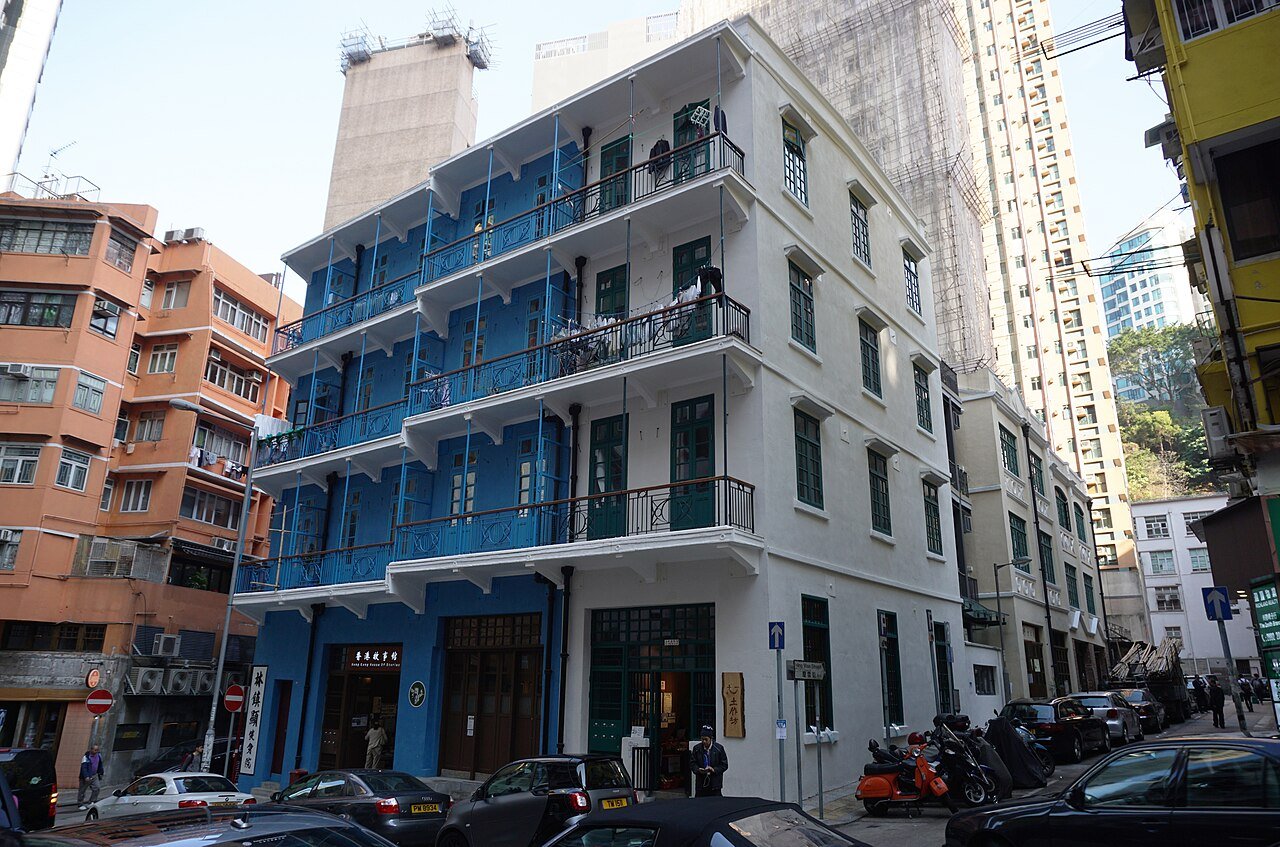
- Wan Chai, Stone Nullah Lane — the Blue House Cluster, winner of an Award of Excellence in the 2017 UNESCO Asia-Pacific Awards for Cultural Heritage Conservation (UNESCO, 1 November 2017).
- Causeway Bay — the island’s densest shopping, where most routes converge.
- North Point — the market street, a ferry pier and a thoroughly local food scene.
- Shau Kei Wan — the eastern terminus, with an old main street and a working harbour.
Practical Tips for Your First Ding Ding Ride
A few small habits separate a comfortable ride from a confusing one:
- Pay by Octopus or contactless — exact coins work, but nobody wants to hunt for change at the exit door.
- Avoid 8–9am and 5–7pm, when trams fill to standing room.
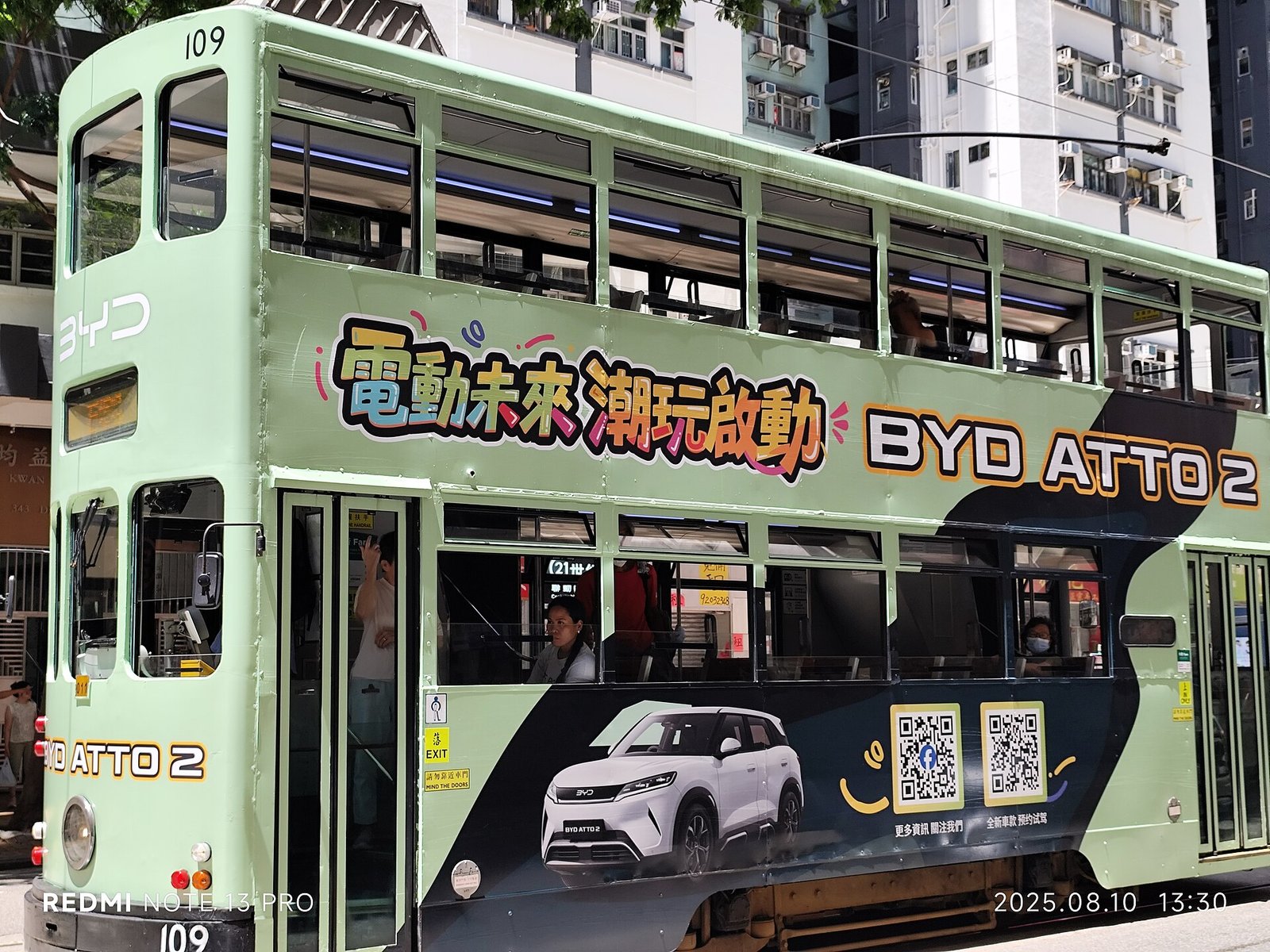
- Sit upstairs, front or back — the top deck is the sightseeing deck.
- Budget double the time: trams stop roughly every 250 metres, so an eight-minute MTR trip can take 25 minutes.
- Ride the whole line once — Kennedy Town to Shau Kei Wan takes about 80 minutes and is Asia’s best-value city tour.
- Carry small coins, since market vendors around Chun Yeung Street are largely cash-based.
Is the Ding Ding the Right Choice for You?
The tram is right when your journey sits on the north shore of Hong Kong Island and you have time; it is wrong when speed matters. It never crosses to Kowloon, never reaches Stanley or Repulse Bay, and never pretends to be quick.
The MTR beats it on almost every point-to-point trip, which is why locals treat the tram as a pleasure rather than a necessity. Use it for short hops, the long scenic haul and people-watching: our guide to taking the Star Ferry across Victoria Harbour makes an obvious companion, and if you want to eat where tram crews eat, start with Hong Kong’s vanishing dai pai dong kitchens.
The TramOramic Tour: The Vintage Alternative
If you want commentary with your ride, Hong Kong Tramways runs the TramOramic Tour on a 1920s-style tram with an open upper deck. The hour-long loop links Western Market with Causeway Bay, commentary plays in 16 languages, and the ticket includes a two-day pass for regular trams.
Treat any price as expected rather than fixed: operator and reseller listings in 2026 ranged from roughly HK$180 to HK$190 for adults and HK$110 to HK$120 for children, while older pages quote different figures, so confirm details on hktramways.com. For most travellers the ordinary HK$3.30 tram delivers the same streets for far less.
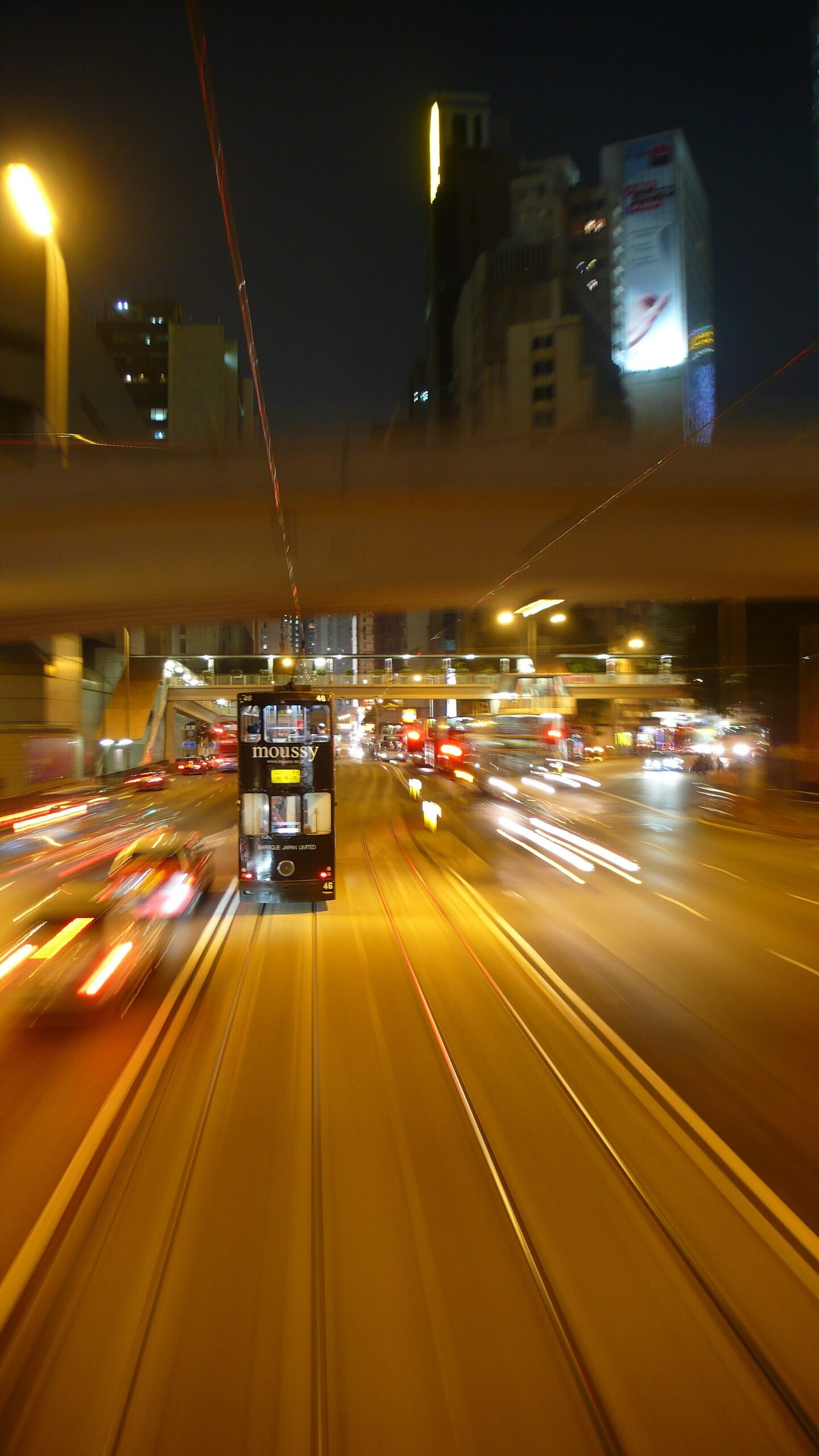
The ding ding will never be quick or sleek, and that is exactly why it belongs in your itinerary. Ride it once for the market, once at night when the neon doubles in the wet road, and once more with nowhere in particular to go. Tell us in the comments which stop you would hop off at first — and our Hong Kong travel guide picks up where this ride ends.
Frequently asked questions
How much is a ticket for the Hong Kong tram?
A single ride costs HK$3.30 for adults, HK$1.60 for children aged 3 to under 12 and HK$1.50 for seniors aged 65 and over, per the operator’s October 2026 fares. The fare is flat, so distance makes no difference.
Do I need an Octopus card to ride the ding ding?
No, but it makes life easier. Cash is accepted at the front door, but the tram gives no change, so you need the exact fare in coins. Octopus, contactless cards and QR apps all work.
Where do you board and pay on a Hong Kong tram?
You board at the rear door without paying and pay on the way out at the front door beside the driver. It is the opposite of the bus system and catches out most first-time visitors.
Which tram goes through the market in North Point?
Trams signed “North Point” swing off Kings Road and run through the Chun Yeung Street wet market before terminating at the North Point terminus. Other eastbound trams stay on Kings Road and skip the market street.
How long does the whole Hong Kong tram line take?
Kennedy Town to Shau Kei Wan takes roughly 80 minutes in normal traffic. Allow longer at rush hour, since trams stop about every 250 metres and share the road with all other vehicles.
Is the Hong Kong tram the same as the Peak Tram?
No, they are unrelated. The ding ding is a street-level tram with a flat HK$3.30 fare, while the Peak Tram is a funicular railway climbing to Victoria Peak at a sightseeing price.