


Weizhou Island: A Volcanic Escape in China’s Beibu Gulf
Black lava cliffs drop straight into water so clear you can count the coral below, and somewhere beyond the headland a whale is feeding. Weizhou Island is not the China most first-time visitors picture — which is exactly why it belongs on your list.
Weizhou Island is China’s largest and youngest volcanic island, a 24.7 km² speck in the Beibu Gulf about 21 nautical miles south of Beihai in Guangxi. You reach it by a 70–110 minute ferry, pay roughly RMB 98 for a seven-day scenic-area pass, and explore it by rented electric scooter over two or three days. From December to April, the waters offshore become the only known feeding ground in China for Bryde’s whales.
At jusha.travel, we love sharing tips that push you past the coach-tour circuit, and Weizhou is a perfect case study: a fishing island with a French-built coral-stone church, basalt coastlines that look like sculpture and almost no English signage.
What Is Weizhou Island, and Why Is It Different?
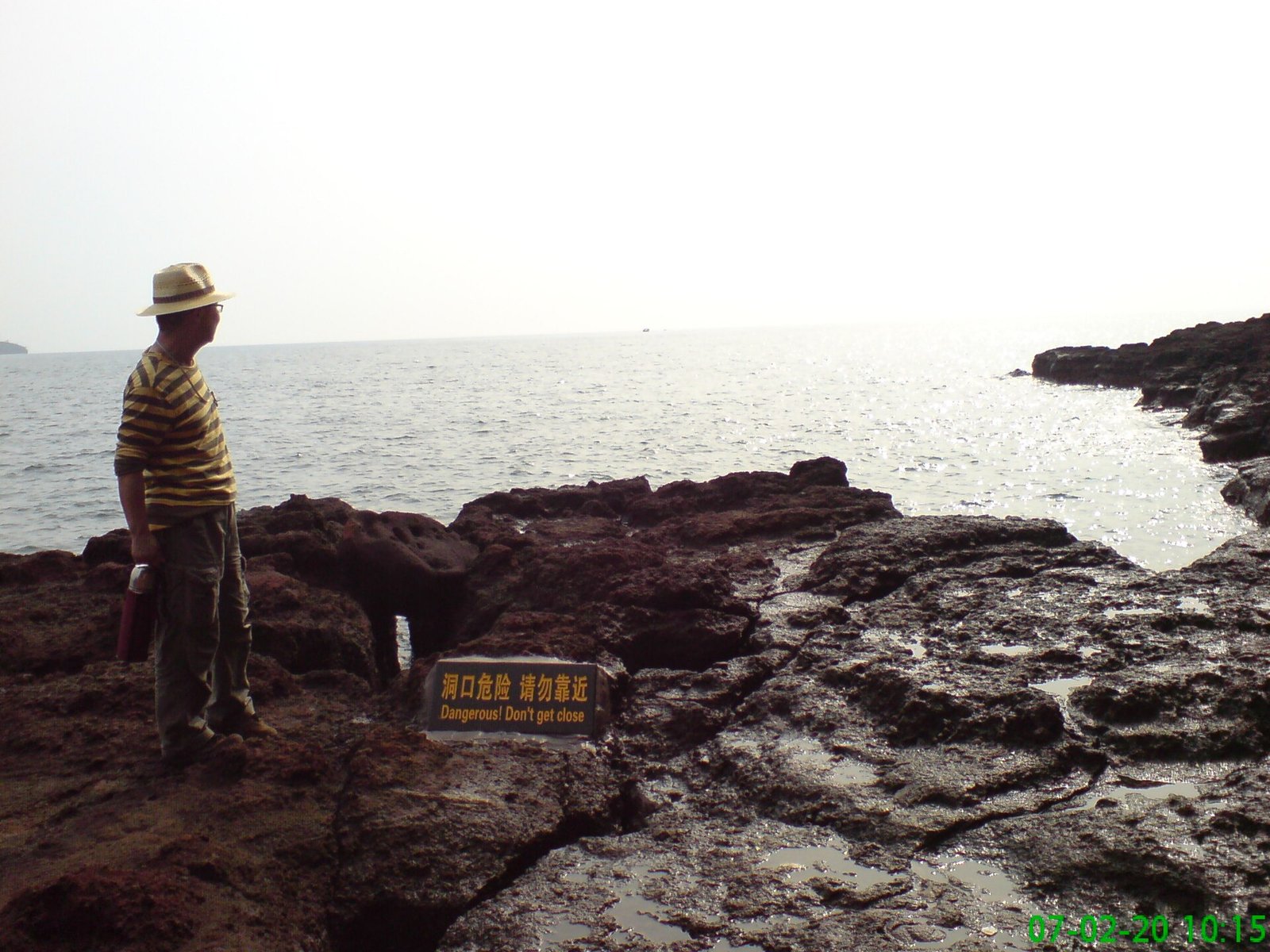
Weizhou is a dormant volcanic island whose landscape was written entirely by eruption, erosion and salt water. According to the Guangxi Zhuang Autonomous Region Bureau of Geology and Mineral Exploration, more than 95% of the rock above sea level is volcanic, and the island preserves five recognised craters, including Nanwan and Crocodile Mountain.
That geology separates it from China’s resort islands. Instead of overwater villas you get sea caves, sea stacks and “sea mushrooms” — the largest standing 3 m high and 6 m wide near the West Port.
- Island area: about 24.7 km², the largest island in Guangxi
- Visitor numbers: 1.002 million in the first half of 2025, according to geopark figures
- Core attraction: Nanwan Crocodile Mountain, rated a national 5A scenic area by the Ministry of Culture and Tourism in December 2020
If you have already worked through the peaks in our guide to Guilin’s karst landscapes, Weizhou is the coastal counterpart: same province, different planet.
How Do You Get to Weizhou Island?
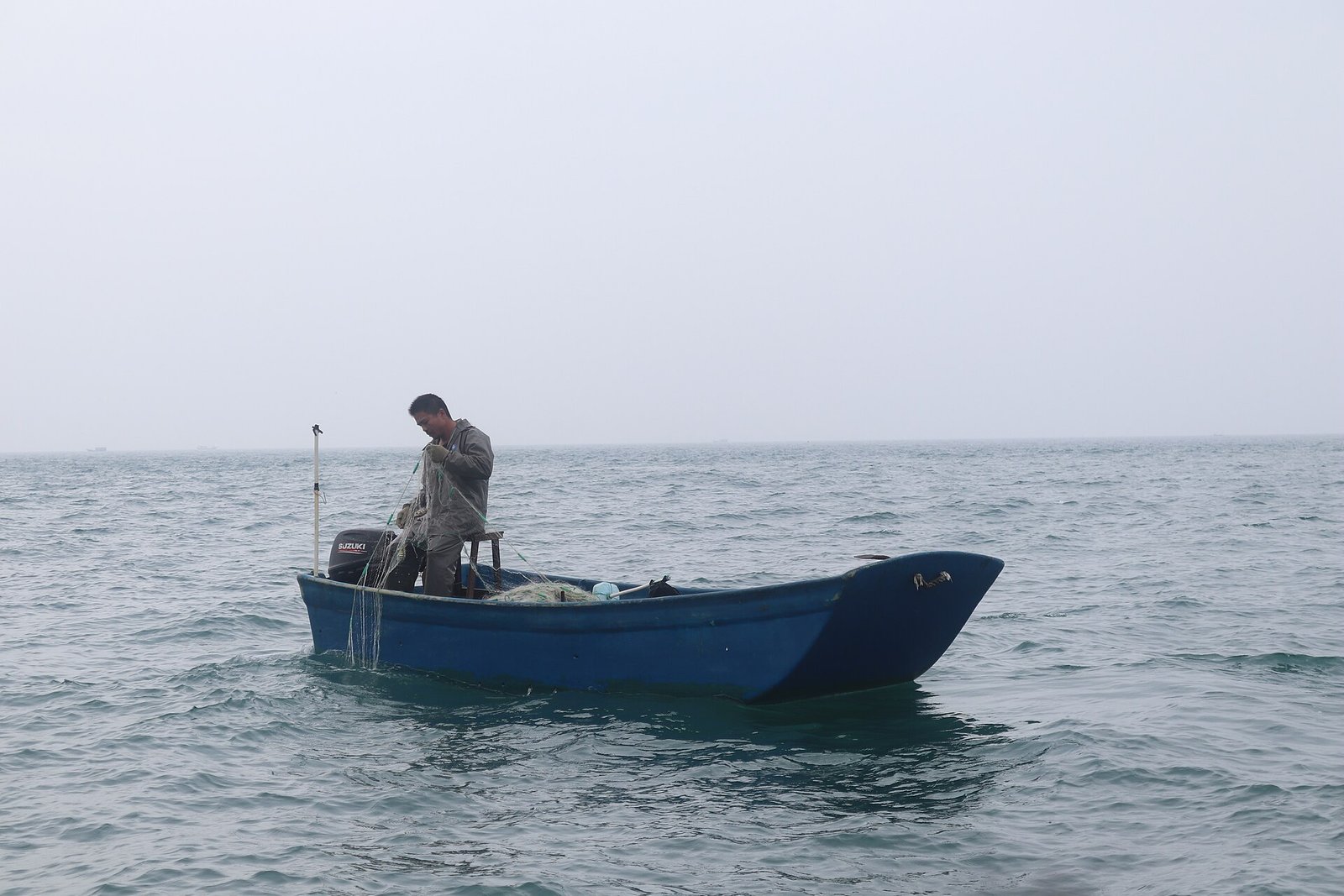
Every public ferry leaves from Beihai International Passenger Port, with no bridge or airport alternative. CCTV+ reported on 14 January 2026 that annual passenger volume through the terminal has grown from 2.7 million in 2021 to nearly five million.
| Leg | What to know |
|---|---|
| Beihai → island | Ferry, 70–110 minutes |
| Ferry fares | About RMB 150 one way standard class, RMB 180–190 business (October 2026 listings) |
| Island pass | About RMB 98 for adults, valid seven days across all main sights |
| Reaching Beihai | High-speed rail from Nanning, about 1.5 hours, or flights to Beihai Fucheng Airport |
Book the sailing before the bed: summer and holiday departures sell out days ahead. Bring your passport, since tickets and the island pass are tied to it.
Crocodile Mountain: Reading the Island’s Volcanic Past
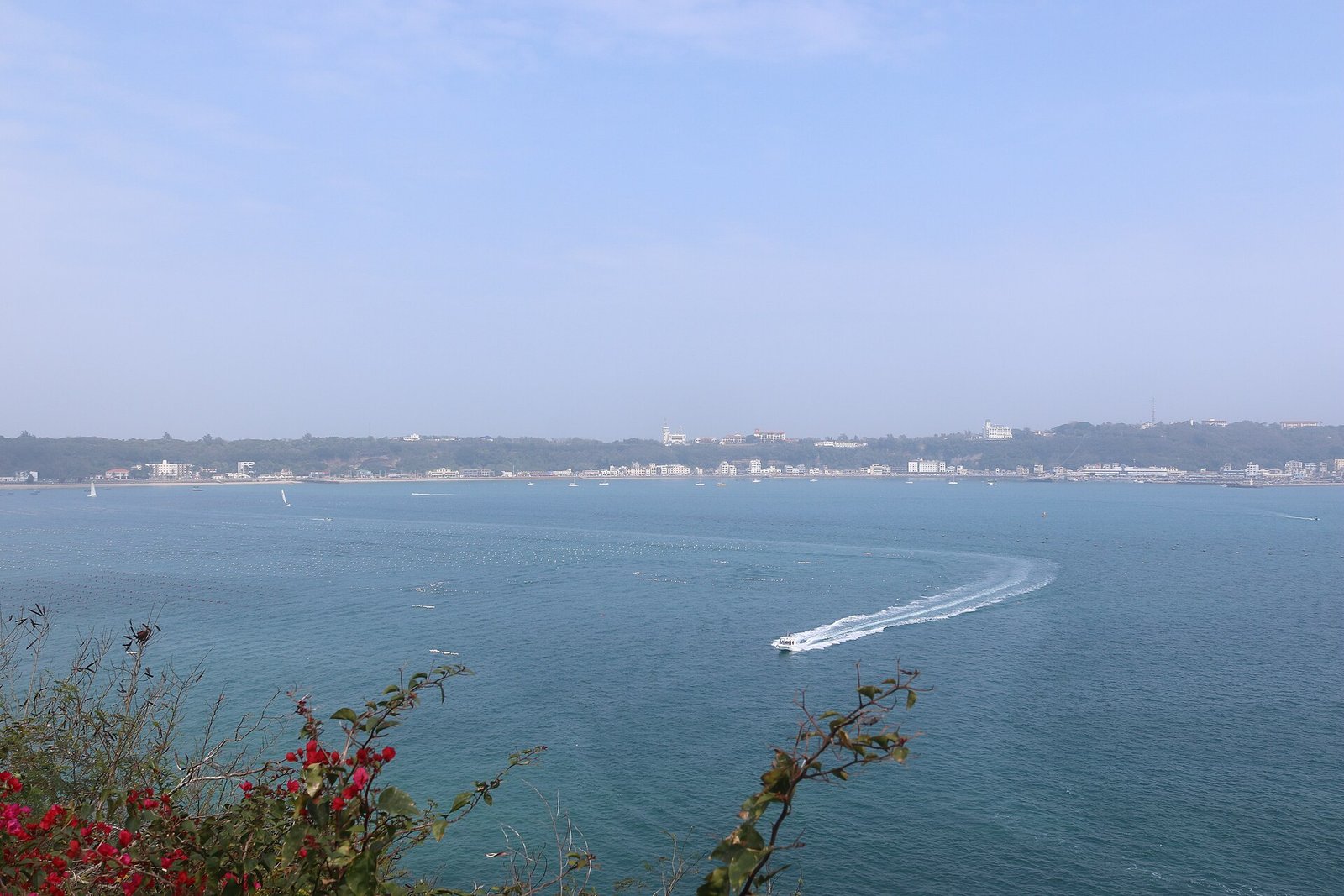
Crocodile Mountain (鳄鱼山) is the clearest place to read how Weizhou was built, and the section most visitors rush. A boardwalk curves along a headland above Nanwan Bay, past a volcanic vent, layered lava flows and columnar basalt that usually requires a trip to Iceland to see.
Walk it slowly in the late afternoon, when low sun separates one eruption from the next. Two details to look for:
- Volcanic bombs and impact pits — molten rock flung out during eruptions, now frozen into the surface around the vent
- Sea-eroded platforms — flat rock shelves cut by waves at low tide, showing how fast the sea is remaking the island
The on-site Volcano Geology Museum, the only one built on a Chinese island, holds more than 100 Weizhou rock specimens, with English labels.
Bryde’s Whales: China’s Only Known Feeding Ground
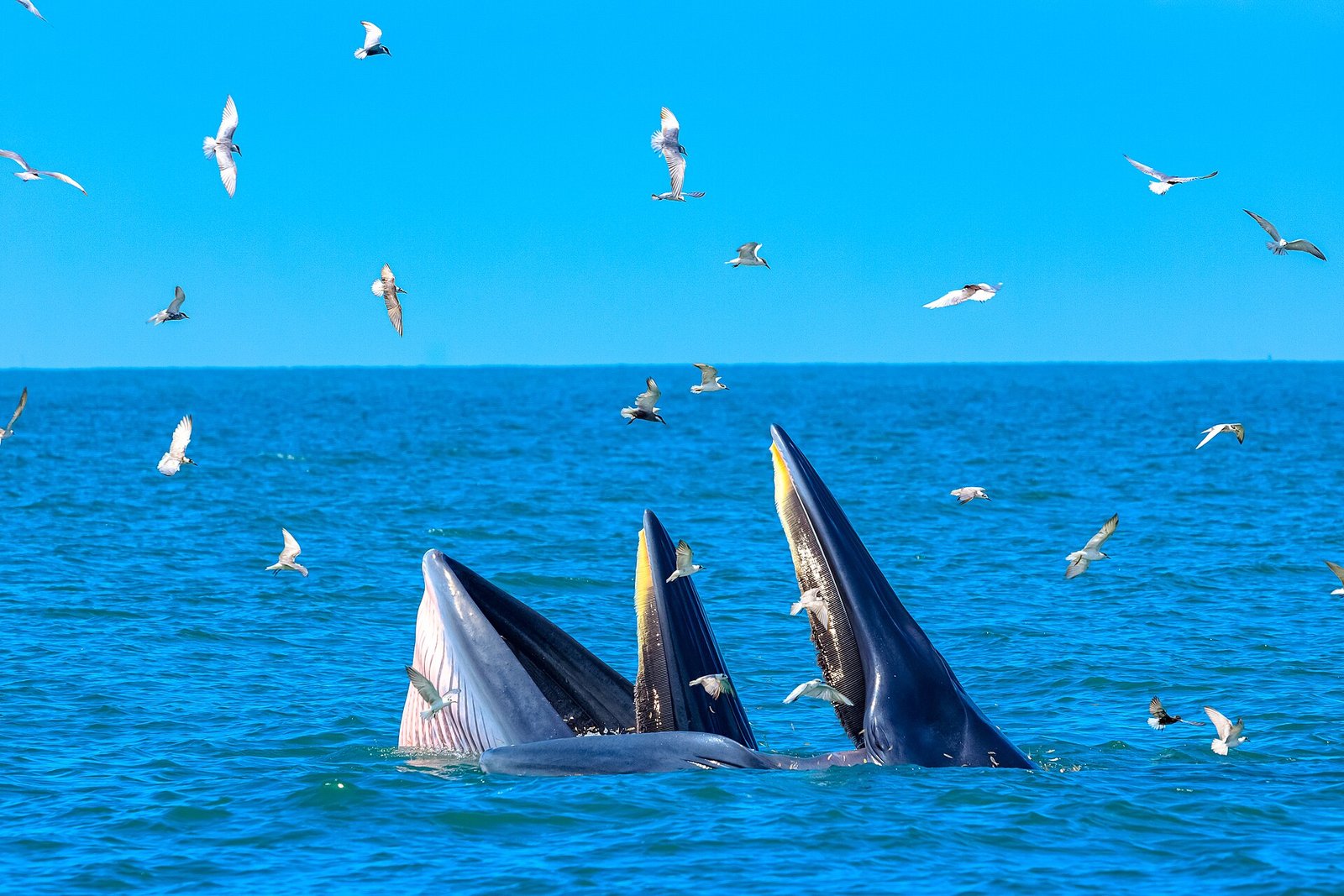
The waters off Weizhou are the only known feeding ground in China for Bryde’s whales (Balaenoptera edeni), a species under first-class national protection. China Daily reported on 1 April 2026 that the whales are most active in the Beibu Gulf from December to April, and that warm, calm days give the best odds of a sighting.
Numbers have risen sharply: Chen Mo of the Guangxi Academy of Sciences told CCTV+ in December 2024 that identifiable Bryde’s whales here increased from six individuals in 2018 to more than 60 in 2024.
- Season: December to April, peaking mid-window
- Timing: operators sail mostly in the afternoon, when water is warmest
- The tell: watch for gulls swirling over a patch of water — when whales drive fish up, the birds descend to steal a meal
- Etiquette: keep your distance, cut the engine when close, and never chase or shout
Book through an official operator rather than a roadside tout, and treat a sighting as a bonus, not a guarantee.
Which Beaches Should You Prioritise?
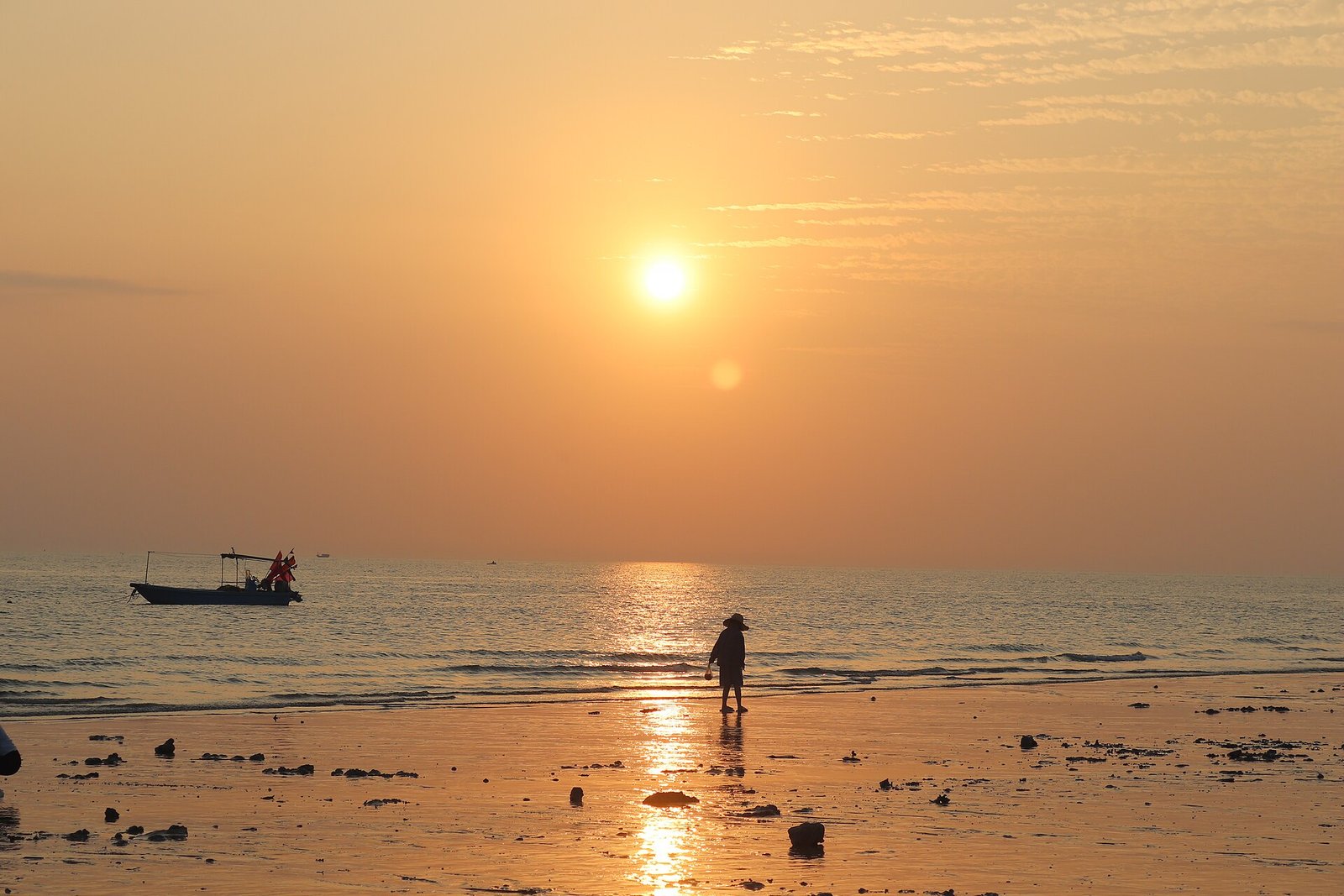
Weizhou’s coast faces two directions, and which side you pick decides whether you get a crowded sunset or an empty swim. East-coast beaches catch sunrise; west-coast beaches catch sunset.
| Beach | Best for |
|---|---|
| Wucai Beach (五彩滩) | Sunrise and low-tide rock shelves; reef shoes essential |
| Dishuidanping (滴水丹屏) | Sunset beneath dripping cliffs; the island’s classic view |
| Shiluokou (石螺口) | Snorkelling and diving; visibility over five metres on good days |
| Shell Beach (贝壳沙滩) | Quiet mornings and shell collecting on the east coast |
After dark, the same coastline occasionally glows. The “blue tears” phenomenon is bioluminescence from Noctiluca scintillans, plankton that emits cold blue light when disturbed; local tourism sources report the strongest displays on clear, moonless nights with a rising tide, most often in spring. Bring a red-light torch and never scoop the water.
For a wider shortlist of coastal escapes, our round-up of the best beaches in China for relaxing getaways puts Weizhou in national context.
The Coral-Stone Church at Shengtang Village
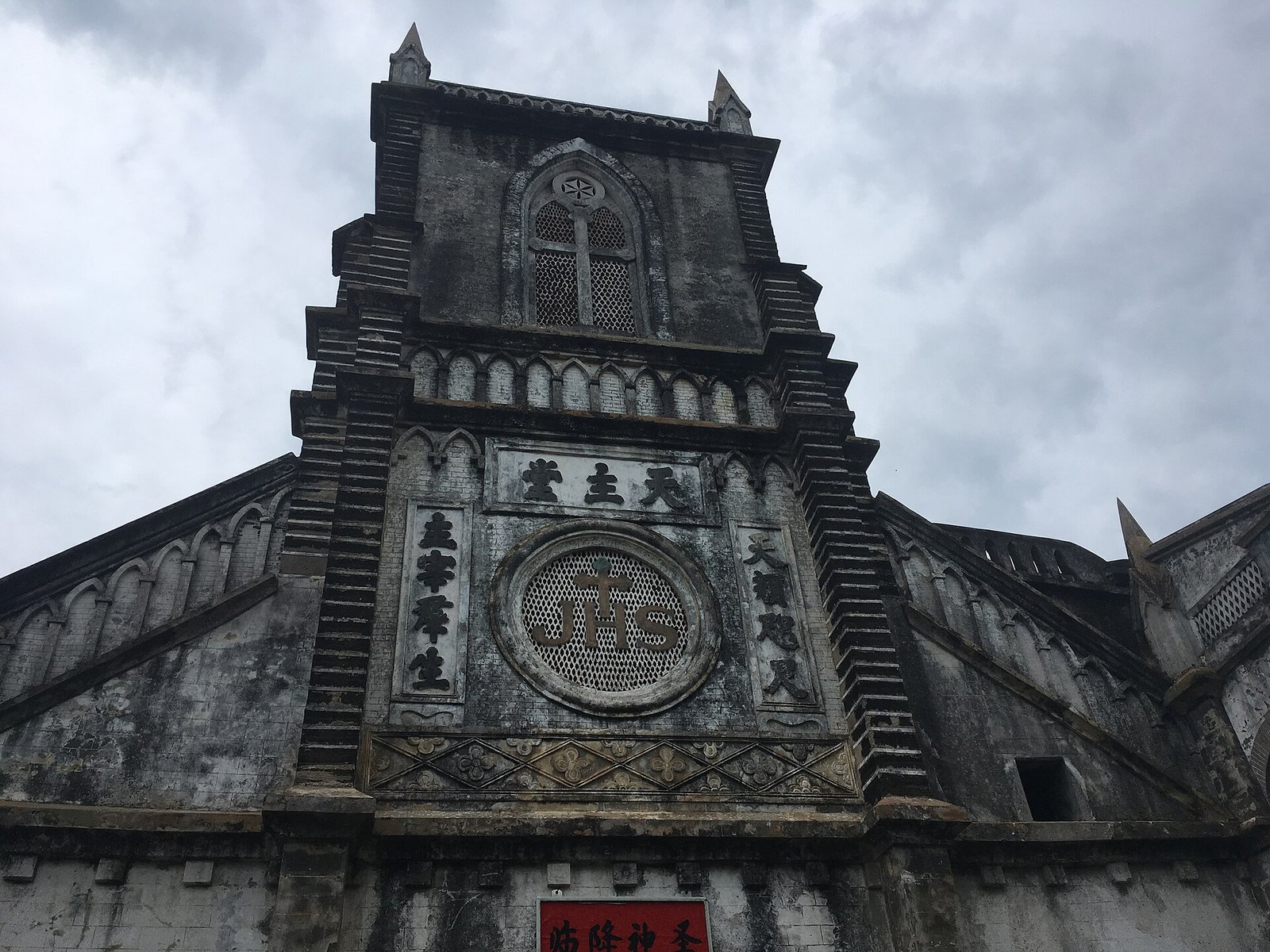
Shengtang Catholic Church is the island’s most improbable building: a Gothic structure raised in the 19th century from coral limestone, volcanic rock and lime mortar, with no steel or cement in its structure. French missionaries of the Paris Foreign Missions Society arrived in the 1860s and oversaw construction.
- Dates are disputed. Guangxi’s geological bureau dates the church to 1870–1880, while church records describe work starting in 1853 or 1869.
- Scale: a hall roughly 56–59 m long, with a tower about 21–23 m high seating some 1,500 people.
- Status: listed by the State Council as a National Key Cultural Relics Protection Unit on 15 June 2001.
- Today: an active parish; around a third of Shengtang’s residents are Catholic and Sunday services still run.
Dress modestly, keep your voice down inside, and wait outside during Mass. The lanes around the church — coral-stone walls, banana and jackfruit trees — are as rewarding as the building itself.
What to Eat on Weizhou Island
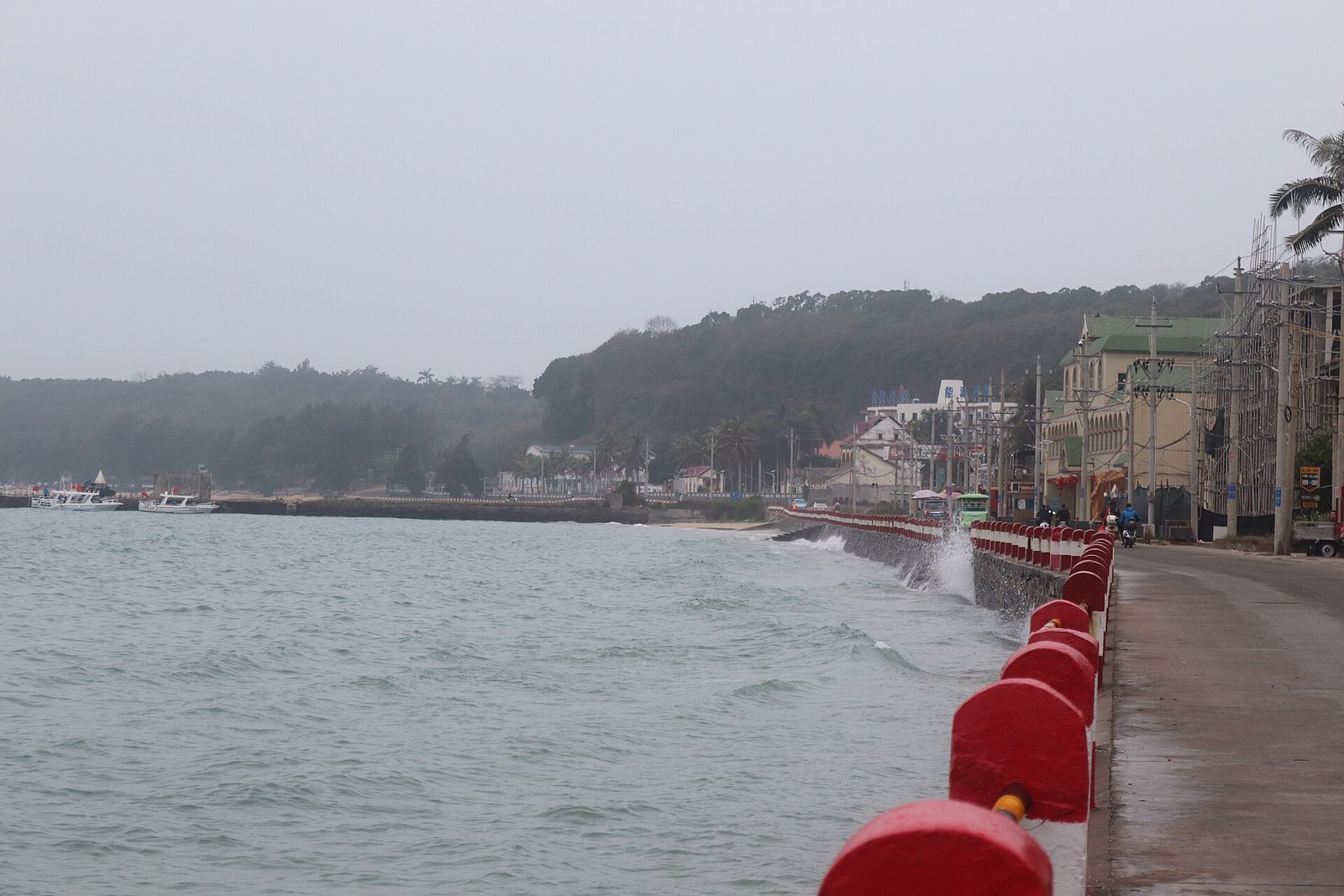
Weizhou’s food is fishing-village food, and the cheapest way to eat it is to buy your own seafood and pay a restaurant to cook it. Nanwan Old Street is the centre of that trade, with stalls and market tanks along the waterfront.
- Grilled oysters with garlic — the island signature, sold by the half-dozen and best before 8 pm while the grills are full
- Mantis shrimp, grouper and blue crab — buy at Nanwan market and expect a per-plate cooking fee
- Banana chicken — free-range birds raised under the island’s banana palms
- Weizhou banana and mango shaved ice — roadside fruit is far cheaper than at the attractions
Compare two or three vendors and ask to see the scale, because short-weighing is common, and carry some cash since a few smaller stalls do not take mobile payments.
Street-level eating pays off elsewhere in China too. Our piece on Nanning’s Guangxi ethnic culture explores what the region’s communities put on the table.
When to Go and How Long to Stay
December to April is the best all-round window: calm seas, mild weather and whale season. September to November is quieter and still comfortable. July and August are hottest, busiest and most prone to ferry cancellations from south-west swell. Allow two or three nights plus one buffer day.
Practical Tips for Visiting Weizhou Island
- Rent an electric scooter. The island loop takes about three hours; expect around RMB 60 per day.
- Download offline translation. English is limited, including at guesthouses.
- Sort out payments first. Set up WeChat Pay or Alipay in advance and keep some cash as backup.
- Pack for the coast. Reef shoes, sun protection, mosquito repellent and a windproof layer for whale-watching decks.
- Respect the geology and wildlife. Do not remove coral or lava samples, and do not approach whales.
Make Weizhou Your Slow Island

Weizhou rewards a different pace from China’s headline destinations. There is no single monument to tick off; the point is the combination of a live volcano’s leftovers, a coral-stone church in a banana grove, a working fishing harbour and the possibility — never the promise — of a whale surfacing offshore.
Give it three days and eat where the fishermen eat, and you will see why this island keeps surfacing on lists of China’s most surprising escapes. If you are shaping a wider Guangxi route, our guide to river rafting on Guilin’s scenic waters pairs naturally with it.
Tell us in the comments: would you plan the trip around the whales, or around an empty beach?
Frequently asked questions
How do I get to Weizhou Island?
You take a ferry from Beihai International Passenger Port in Guangxi, and the crossing takes roughly 70 to 110 minutes. There is no other public route, so book your sailing before you book accommodation.
How much does a Weizhou Island ticket cost?
The combined island pass was listed at about RMB 98 for adults in October 2026, valid seven days and covering all main sights. Ferry tickets are separate, around RMB 150 one way in standard class.
When is the best time to visit Weizhou Island?
December to April is the best all-round window, because seas are calm, weather is mild and it coincides with whale season. September to November is the quieter alternative, while July and August are hottest, busiest and most prone to cancellations.
Can you actually see whales at Weizhou Island?
Yes, but never guaranteed. China Daily reported on 1 April 2026 that Bryde’s whales are most active here from December to April, and researchers told CCTV+ that identifiable individuals grew from six in 2018 to more than 60 in 2024.
Do I need a visa to visit Weizhou Island?
You need whatever entry permission applies to mainland China, since Weizhou is part of Guangxi. Several nationalities can currently enter visa-free for short stays under policies extended into 2026, but verify your own status before booking.
Is Weizhou Island worth visiting for foreign travellers?
It is one of the most rewarding off-the-beaten-path destinations in southern China if you value geology, seafood and quiet coastlines over resorts and nightlife. English is limited and logistics need planning, but the geopark, church and whale season make it distinctive.