


Huaqiangbei: Inside Shenzhen’s Vast Electronics Bazaar
Somewhere under the fluorescent glare of SEG Plaza, a stallholder is soldering a new charging port onto a phone discontinued six years ago, and doing it while you wait. That is Huaqiangbei: a 930-metre stretch of Huaqiang North Road in Futian District, Shenzhen, holding 22 specialist market buildings, more than a million component types and annual turnover above 200 billion yuan (Shenzhen government, 13 June 2024). You come to buy a case for eight yuan, watch a prototype reach sample stage in a week, or simply see how the world’s gadgets are assembled. Entry is free, and the metro from the Hong Kong border takes about 20 minutes.
What is Huaqiangbei, and why does it matter?
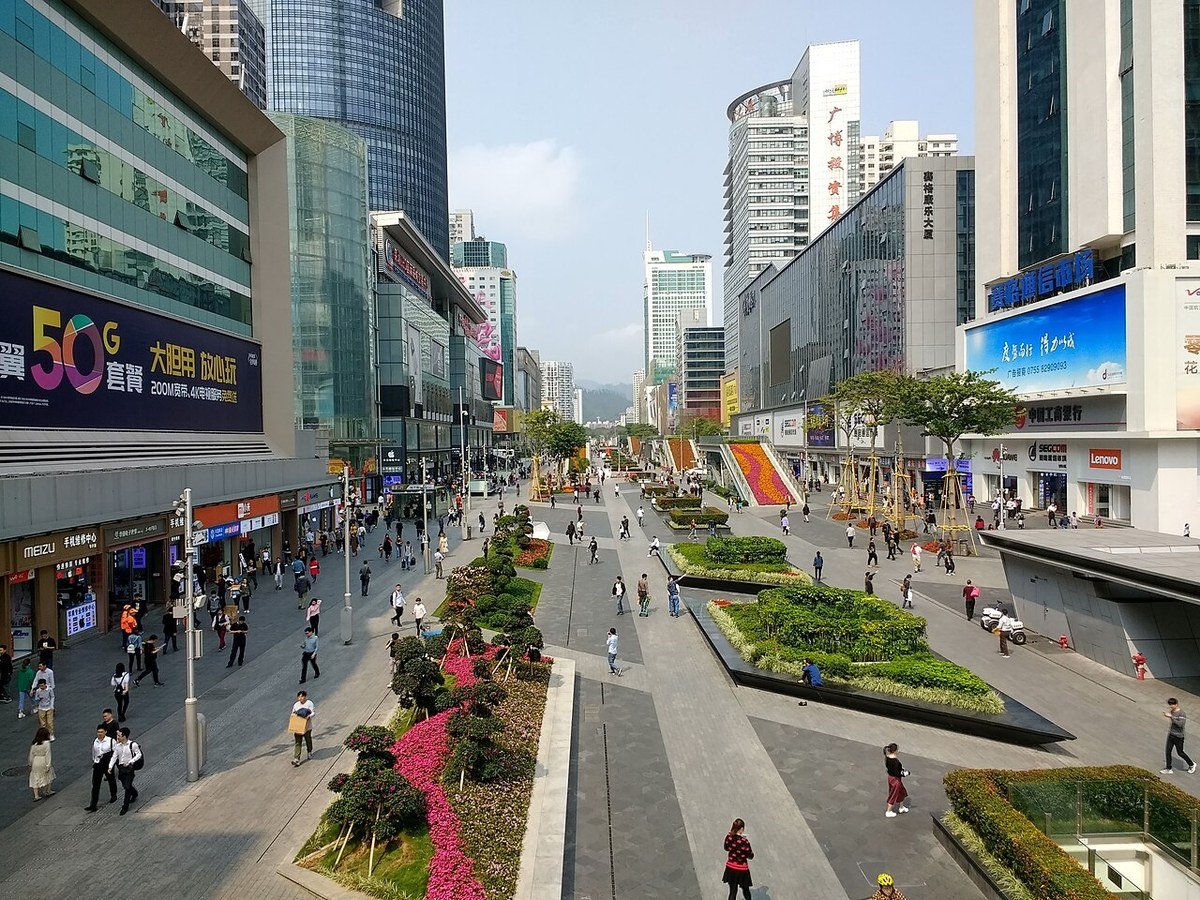
Huaqiangbei is a 1.45-square-kilometre district in Futian, Shenzhen, built around one pedestrian street and 22 specialist electronics markets stocking more than a million component types (Shenzhen government, 13 June 2024). About 150,000 people work inside it, and annual turnover exceeds 200 billion yuan.
The name means “Huaqiang North”, after a road named for a 1979 electronics assembler. In March 1988 the SEG Electronics Market opened with 900 square metres and 43 counters, China’s first market dedicated to components (Shenzhen News, 1 April 2019). Huaqiang Electronics World followed in 1998; the metro shut the street from 2013 to 2017, and it reopened as a pedestrian boulevard.
Today around 850,000 people pass through daily and roughly three million parcels leave for 183 countries (Guangdong Provincial Information Office, 2026).
How do you get to Huaqiangbei from Hong Kong or the airport?
Huaqiangbei has its own station on metro Lines 2 and 7, with Exit D1 opening onto the pedestrian street (Futian District Government, 6 May 2026). Huaqiang Road on Line 1 is a ten-minute walk west, and Huaxin on Line 3 a similar distance north-east.
| Starting point | Route | Time |
|---|---|---|
| Luohu border | Line 1 to Huaqiang Road, walk east | 15–20 min |
| Bao’an Airport | Line 11 to Chegongmiao, change to Line 1 | 60 min |
| Futian rail station | Line 2, or a short taxi ride | 10–15 min |
| Shenzhen North | Line 4 to Convention & Exhibition Center, then Line 1 | 30–35 min |
Travellers from 57 countries can enter visa-free for 240 hours under China’s transit policy as of 20 August 2026, using Shenzhen’s airport and land ports (Shenzhen government, 21 August 2026). Everyone else needs a tourist visa; all visitors should carry a passport.
Which building sells what?
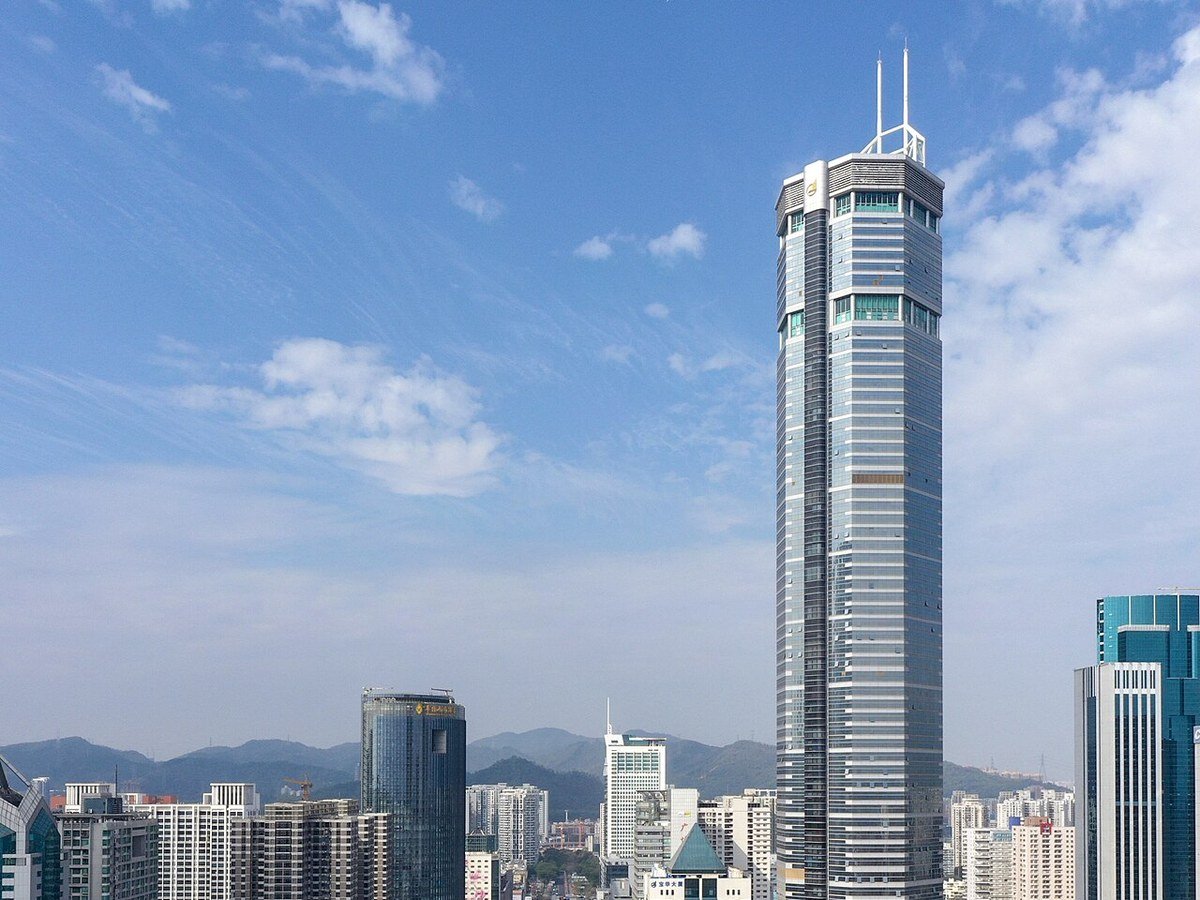
Markets here are not interchangeable. Each tower drifted into a speciality over three decades, organised by floor: components at street level, devices and repairs in the middle, wholesale-only floors where casual shoppers stop climbing. Knowing the vertical order saves hours.
| Building | Best for | Start at |
|---|---|---|
| SEG Electronics World | Chips, resistors, sensors, laptops | Ground floor; floors 4–6 |
| SEG Communications | Chargers, power banks | Floors 2–3 |
| Xiandaizhichuang | Used cameras, CCD compacts | Any floor; museum on 5 |
| Longsheng Accessories | Cables, straps, earphones | Whole building |
| Huitong Communication | Phone cases (90% of China’s supply) | Ground floor up |
| Yuanwang Digital Mall | Phones near wholesale price | Third floor up |
| Feiyang Times | Used iPhones | Third floor |
SEG Plaza, the skyline tower, is 71 storeys with a roof at 291.6 metres (Wikipedia, accessed November 2026), and the electronics halls fill its lower eight floors (EYE Shenzhen, 3 July 2025). Most sellers take wholesale orders but will sell one unit.
How does the supply chain actually work?
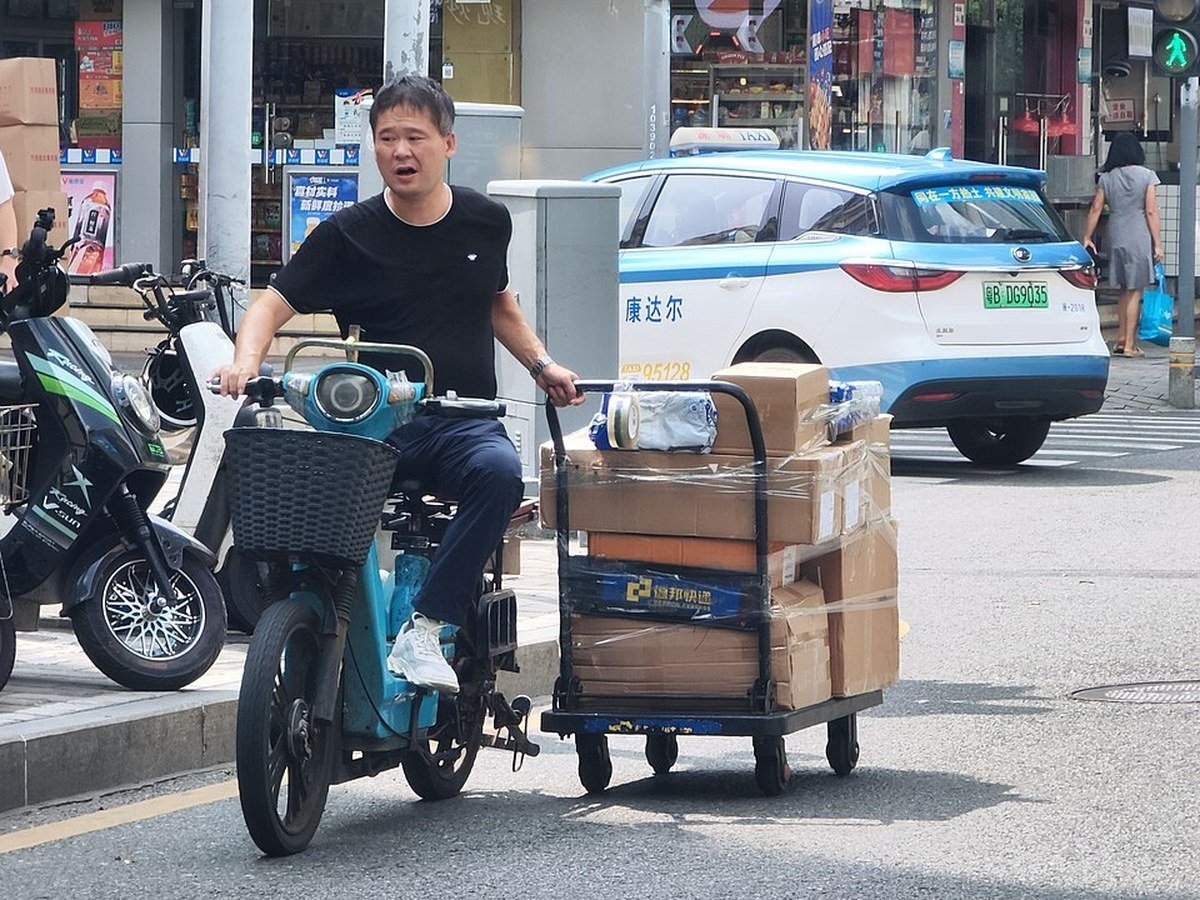
Huaqiangbei works as a physical search engine. Every component, connector and mould sits within about one square kilometre, so a designer can walk a bill of materials from counter to counter in an afternoon rather than wait weeks for international post. Proximity, not price, is the product.
Elephant Robotics needed 100 components for a bionic panda toy; it sourced all of them in three days and had a production-ready prototype within a week (Shenzhen government, 13 June 2024). Fourteen incubation platforms host 500-plus maker teams.
The trade is moving upmarket: in 2026 the district published a global sales heat map for AI hardware and set aside subsidised desks for one-person companies, aiming to be a launch street for AI gadgets rather than a parts bazaar (Shenzhen News, 4 March 2026).
How much should you pay, and how does bargaining work?
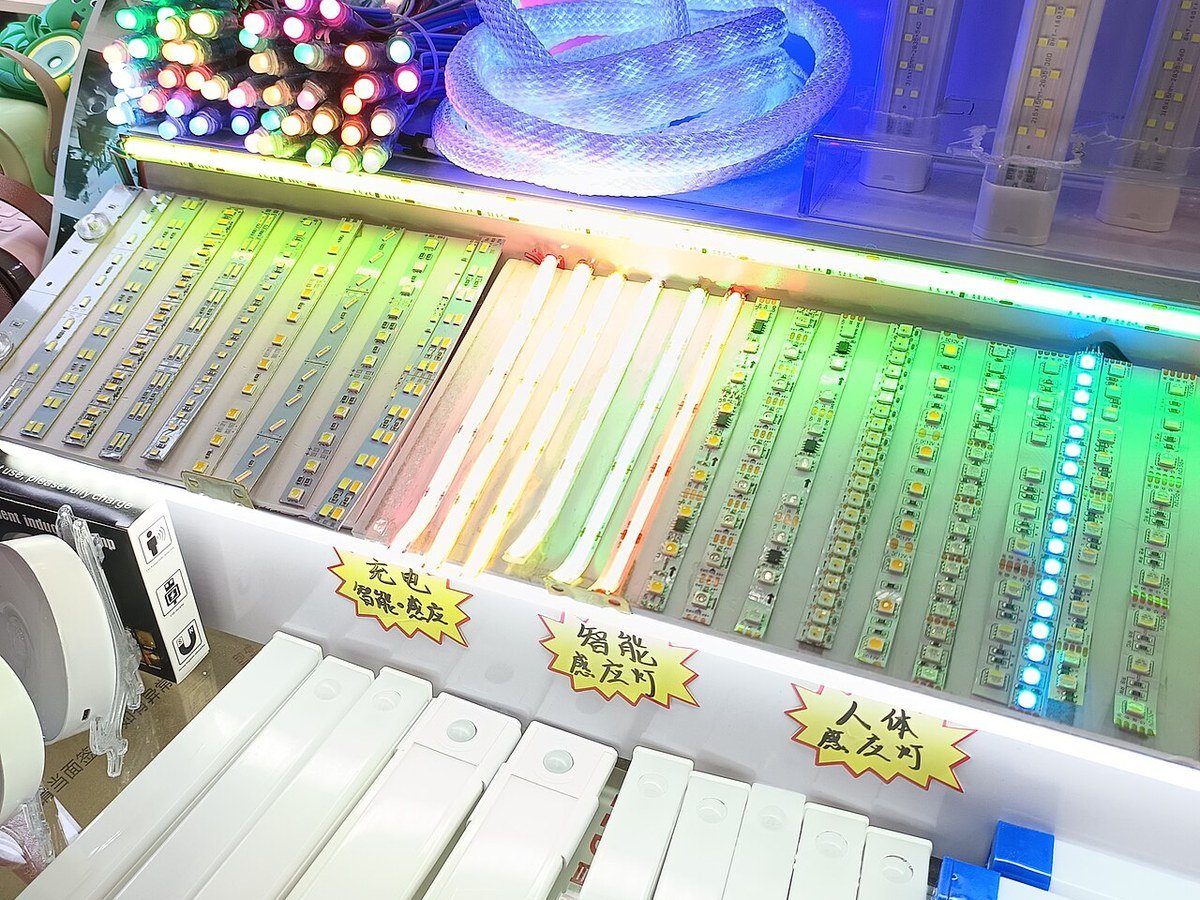
Prices are quoted, not fixed, and the gap between opening and closing price is often the entire margin. Wholesale counters sell to walk-ins at retail rates unless you ask for the bulk price. Cash is not required — Alipay and WeChat Pay both take foreign cards — but a calculator helps.
| Item | Typical price | Where |
|---|---|---|
| Phone case | Under ¥10 | Huitong Communication |
| Screen protector, fitted | Single-digit yuan | SEG Communications, 2–3F |
| Watch strap, earphones | Single-digit yuan | Longsheng Accessories |
Three habits do the work. Price three stalls first, so you know the floor. Counter-offer and be willing to walk away; a seller who calls you back has already moved. Buy two or three of the same item and the unit price drops again.
What changed on the street in 2026?
Shenzhen hosted the APEC leaders’ meeting on 18–19 November 2026, and Huaqiangbei was tidied for the cameras. Pavements are now separated from scooter lanes, cargo riders pushed to the edges, and a drone display centre near the main entrance (Asia Weekly, November 2026). The result is a calmer street and fewer near-misses.
Can you claim the tax back before you fly home?
Shenzhen runs China’s departure tax refund scheme, and electronics from registered shops qualify. Shenzhen Port Office rules confirmed in 2026 allow a refund on goods bought in one shop on one day worth at least 200 yuan, carried out unused within 90 days.
Goods taxed at 13% VAT refund at 11%; goods at 9% refund at 8%, agent fee included (Shenzhen Port Office, 2026). Six ports handle claims — Bao’an Airport, Shekou Cruise Terminal, Luohu, Futian, Shenzhen Bay and Wenjindu — all open 09:00–21:00.
Since September 2025 shops seal purchases in a standard bag with a QR-coded form fixed outside, cutting inspection time by 85% (Yangcheng Evening News, 2026). The city had over 2,000 refund shops and processed 68,000 refunds in 2025, thirteen times the 2024 figure (People’s Daily, 12 May 2026). Most cheap stalls are not registered, so ask first.
How do you avoid buying a refurbished phone?
Used and grey-market handsets are a normal part of the trade here, and most are honestly described. The rest tend to fail on details you can check in five minutes at the counter, before any money changes hands. Work through them in this order.
- Read the IMEI from Settings and match it against the box and SIM tray.
- Run a diagnostic on the screen, both cameras and battery health.
- Inspect screws and seals; a re-applied sticker sits crooked or doubles up.
- Check the activation date on the manufacturer’s warranty page.
- Request a fapiao, the official invoice, with the serial number printed on it.
- Pay by Alipay or WeChat Pay, so the sale leaves a record.
Is the Huaqiangbei Museum worth an hour?
The HQB Museum fills the fifth floor of Xiandaizhichuang, 1058 Huaqiangbei Road, telling forty years of the street in 3,000 square metres (Futian District Government, 10 August 2026). Entry is free, hours are 10:00–17:00, and you must book on WeChat (HQB_Museum).
The collection earns the detour: a Motorola 3200, the first GSM phone sold in China in 1992, reproduced one-metre-counter signs and a wall of disassembled handsets. It explains how a row of stalls became an industrial ecosystem.
Practical tips for a first visit
Practical advice for Huaqiangbei is mostly about timing and payment: arrive before the lunch crowd, keep your passport with you, and know what your phone will charge you abroad. The five points below cover what first-timers most often get wrong, and none takes more than a minute to act on.
- Go on a weekday morning. Stalls typically open around 10:00 and close by 18:00–19:00.
- Bring your passport. Tax refunds and hotels both ask for it.
- Carry a power bank. Your phone will do the translating.
- Mind the card fee. Alipay and WeChat Pay charge nothing up to 200 yuan per transaction, then about 3% (State Administration of Foreign Exchange guide, 2024).
- Start at the top and work down. Upper floors quote better than street-level stalls.
Is Huaqiangbei worth a day of your trip?
For anyone who enjoys hardware, yes — two hours to browse, half a day if you are buying, an hour more with the museum. Huaqiangbei is not scenic and does not pretend to be; it offers a rare look at the machinery behind your devices, with the people who run it in front of you.
At jusha.travel, we love sharing tips that turn a confusing market into an afternoon you can navigate, so pick one building rather than seven. Our guide to a Shenzhen food and tech day trip plots the eating around it, drone delivery in Shenzhen shows where the same supply chain is heading, and the Shenzhen nightlife guide picks up after the shutters come down. For a shopping list, try the gadgets worth hunting for in China’s tech markets, and set up WeChat Pay before you arrive.
Frequently asked questions
Do I need a visa to visit Huaqiangbei?
Citizens of 57 countries can enter Shenzhen visa-free for up to 240 hours under China’s transit policy as of 20 August 2026, provided they hold an onward ticket to a third country. Other nationalities need a tourist visa, and everyone should carry a passport for tax refunds and hotel check-in.
Can you bargain at Huaqiangbei?
Yes, bargaining is normal at retail counters, although genuine wholesale quotations leave little room. Get prices from three stalls, counter-offer, and be ready to walk away — sellers often call you back with a lower figure before you reach the door.
Is Huaqiangbei open on Sundays?
Most retail stalls open daily from about 10:00 to 18:00 or 19:00, but some wholesale floors wind down early at weekends. Weekday mornings give the fullest rows of open counters.
Can foreigners claim a tax refund on electronics bought here?
Yes, if you spend at least 200 yuan in a single registered refund shop on one day and leave China within 90 days. Refunds are 11% on goods taxed at 13% VAT and 8% on goods taxed at 9%, claimed at six Shenzhen ports.
Is it safe to buy a phone at Huaqiangbei?
Buying a phone is safe when you verify the IMEI, test the screen and cameras, check the activation date and insist on an official fapiao invoice. Avoid counters that refuse a diagnostic or a receipt.