


You hear the cicadas before you see the towers. Then the rice fields open out — flat, green and impossibly wide — and there they are: grey concrete towers rising straight out of the paddies, each wearing a small Italianate pavilion like a hat borrowed from another continent.
This is Kaiping, a county-level city in Guangdong’s Pearl River Delta, two hours from Hong Kong and one from Guangzhou. It looks like ordinary Cantonese farmland until you notice the Roman columns on the farmhouses and a fortress guarding every village.
Kaiping diaolou are multi-storey fortified towers — part watchtower, part family mansion — built by overseas Chinese between the late 19th century and the 1930s to protect their families from bandits and floods. There are 1,833 still standing across the county, and in 2007 UNESCO inscribed 20 of the most representative, grouped in four village clusters, as a World Heritage Site. At jusha.travel, we love sharing tips that take you past the postcard version of China, so here is what the towers are, which villages to choose, and what a visit costs.
What exactly is a Kaiping diaolou?
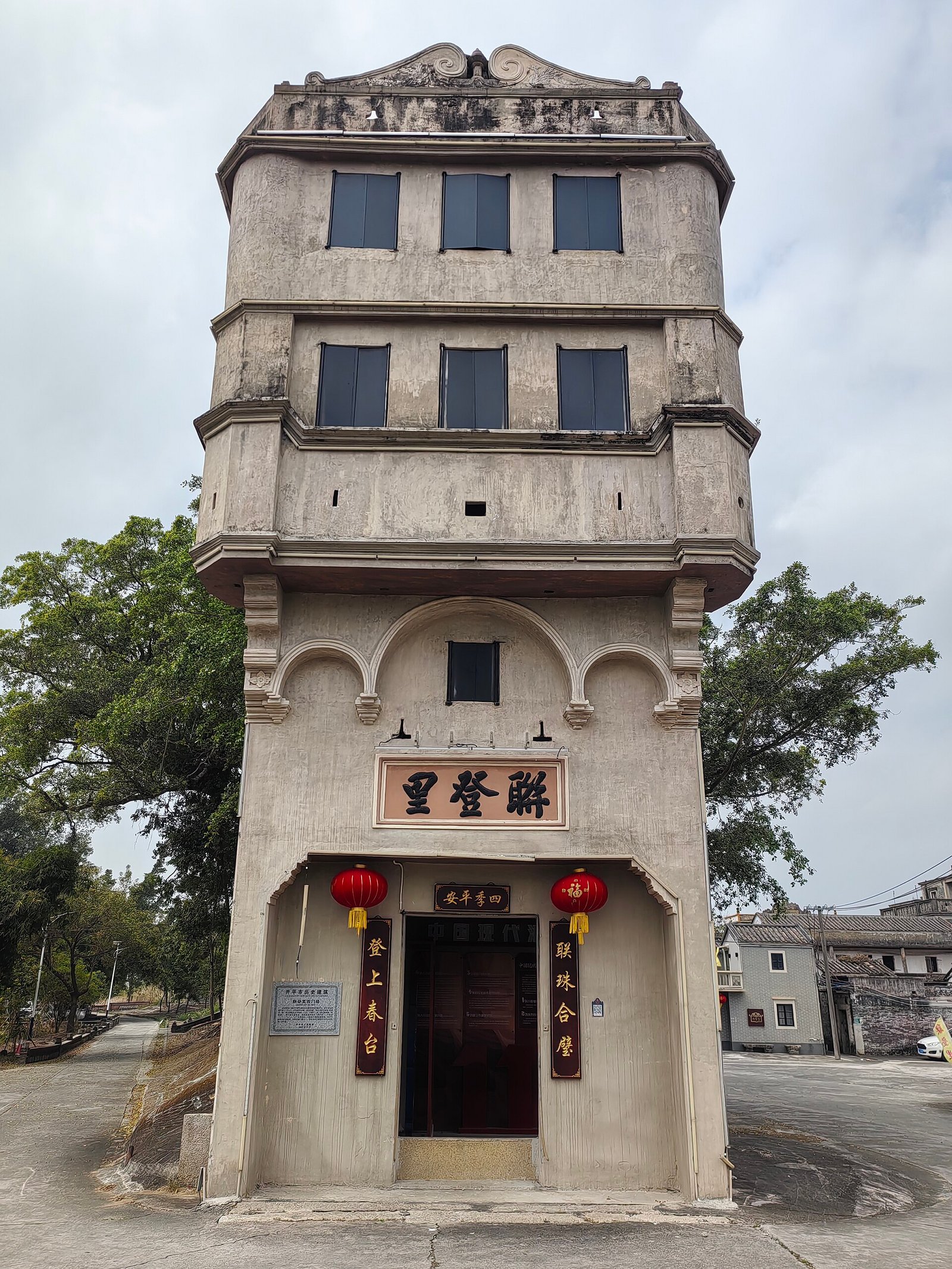
A diaolou is a fortified multi-storey tower that worked simultaneously as a family home, a storehouse and a last-resort refuge. The word means “watchtower”, but the buildings are stranger than that suggests.
Most stand five or six storeys tall, with walls of brick, rammed earth or reinforced concrete up to a metre thick. UNESCO sorts them into three functional types, and the numbers explain how the defensive system worked.
| Type | Built by | Purpose | Surviving |
|---|---|---|---|
| Communal tower (zhonglou) | Several families together | Temporary refuge during raids or floods | 473 |
| Residential tower (julou) | One wealthy family | Fortified permanent home | 1,149 |
| Watchtower (genglou) | Village collective | Lookout, alarm and coordinated defence | 221 |
What makes them unforgettable is the decoration: Gothic arches above Cantonese grey brick, Roman columns framing iron-barred windows, Art Deco railings around rooftop pavilions modelled on villas in Chicago or Vancouver. Nothing about the combination should work, and somehow all of it does.
Why did returning emigrants build castles in a rice field?
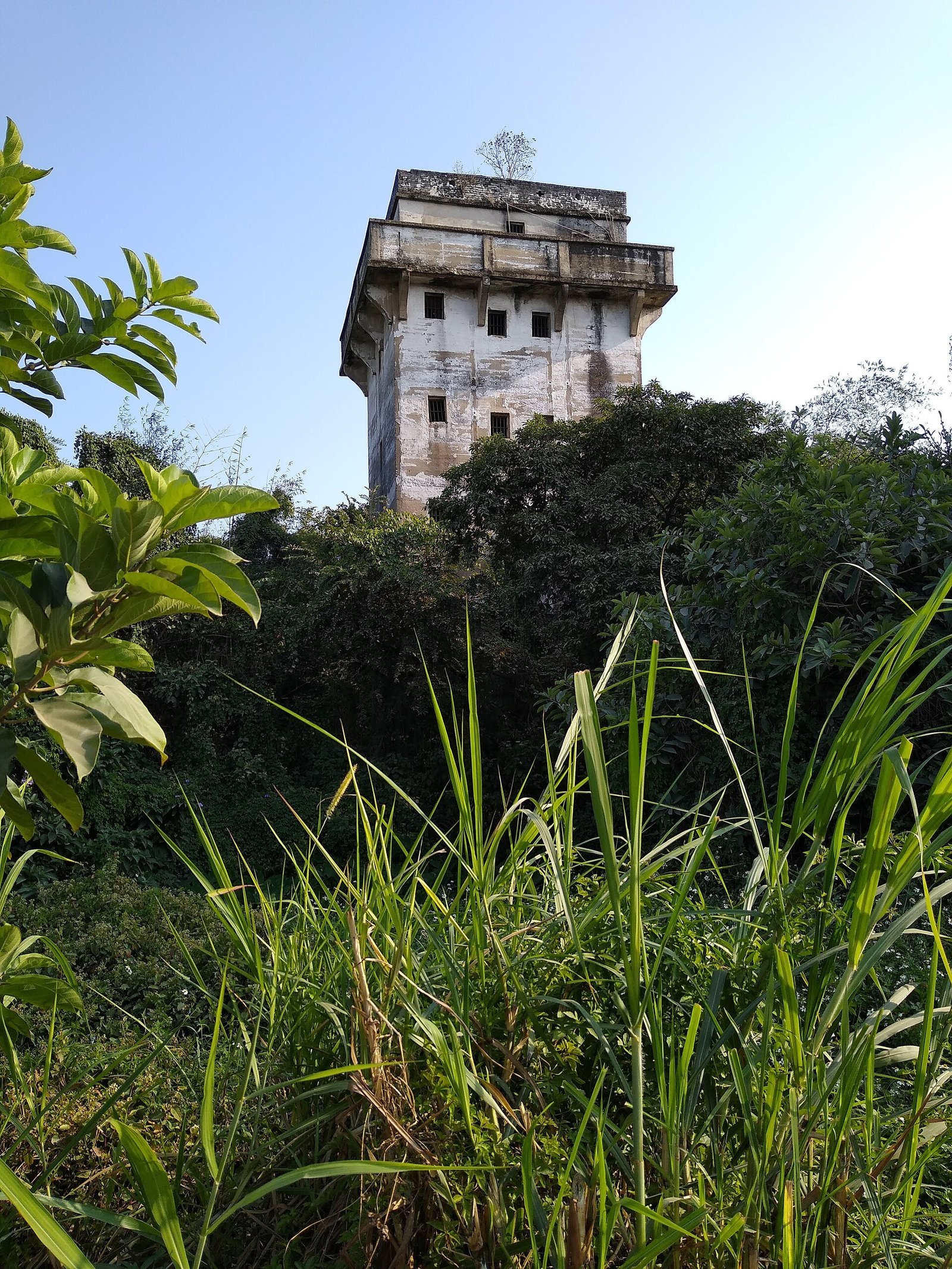
Kaiping’s towers are a direct product of the Chinese diaspora — a landscape built almost entirely by remittances. In the mid-19th century, young men from this poor, flood-prone corner of Guangdong left for the gold fields of California and the railway camps of western Canada.
When they sent money home, they sent ideas home with it. According to the National Cultural Heritage Administration of China (8 August 2024), about 750,000 people from Kaiping now live in 67 countries and territories — a ratio locals call “two Kaipings, one at home and one abroad”.
Wealth attracted bandits and the rivers flooded, so the returning emigrants built upwards. Of the 1,833 surviving towers, 1,648 — roughly 90 per cent — went up between 1900 and 1931, according to the Chinese Wikipedia entry on Kaiping diaolou (accessed 18 October 2026). War and revolution then emptied the villages, which is why so many survive almost untouched; China Daily, in a photo feature on 25 July 2025, called them a living record of overseas Chinese heritage rather than a ruin.
The four UNESCO villages, compared
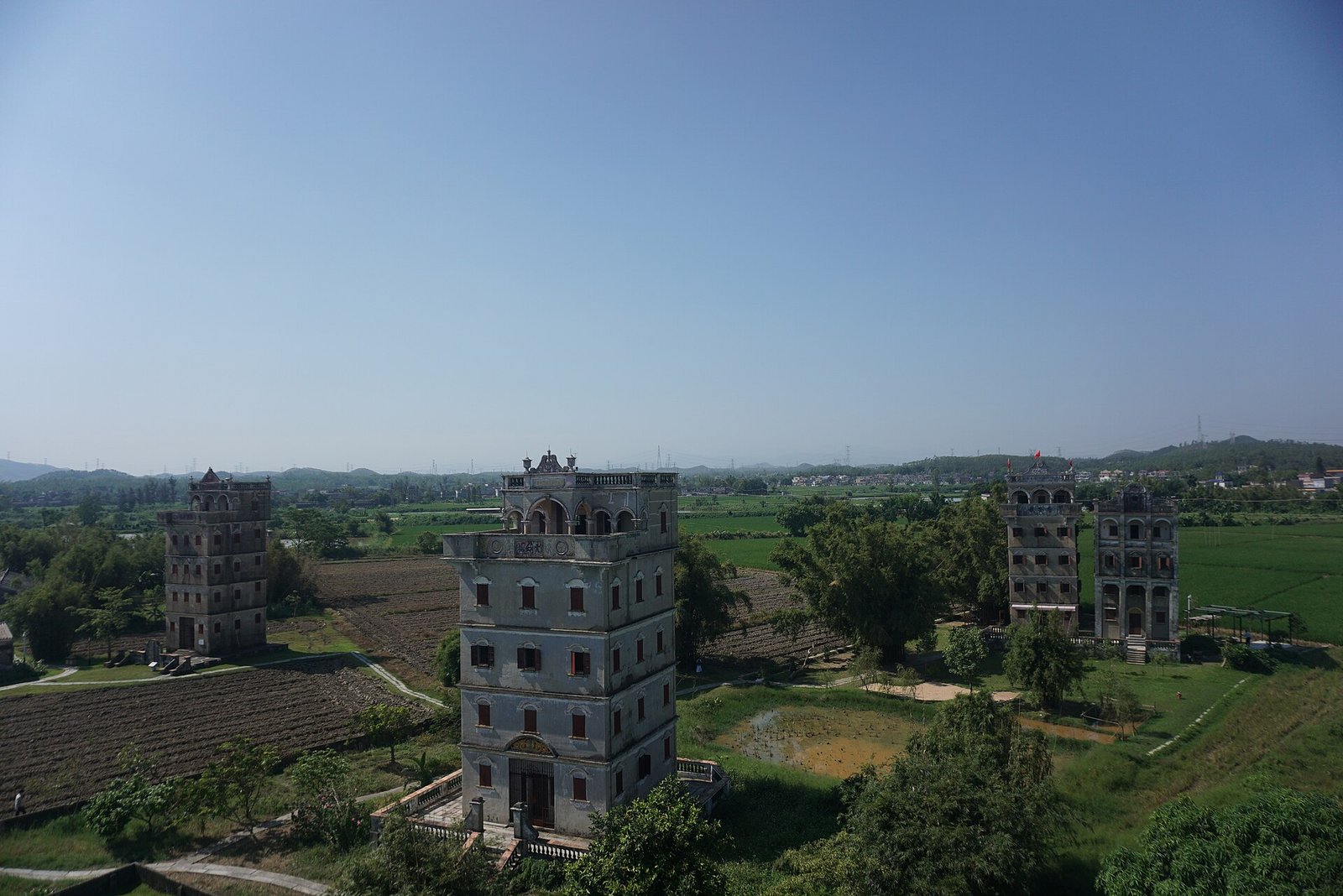
The World Heritage site is not one place but four clusters, spread across townships 10 to 25 kilometres apart, each with a distinct personality. Choosing two — three with a car — decides whether the day feels rushed.
| Cluster | Township | What you will see | Time needed |
|---|---|---|---|
| Zili Village | Tangkou | 15 towers and villas in open paddy and lotus ponds | 2–3 hours |
| Majianglong | Baihe | 13 towers half-swallowed by bamboo above the Tanjiang River | 1.5–2 hours |
| Jinjiangli | Xiangang | Ruishi Lou, the tallest tower in Kaiping at nine storeys | 1 hour |
| Sanmenli | Chikan | Yinglong Lou, a square Ming-dynasty tower, the oldest form | 30–45 minutes |
With one afternoon, choose Zili; with a full day, add Majianglong for contrast, then finish at Chikan for dinner.
Zili Village: the one on every postcard
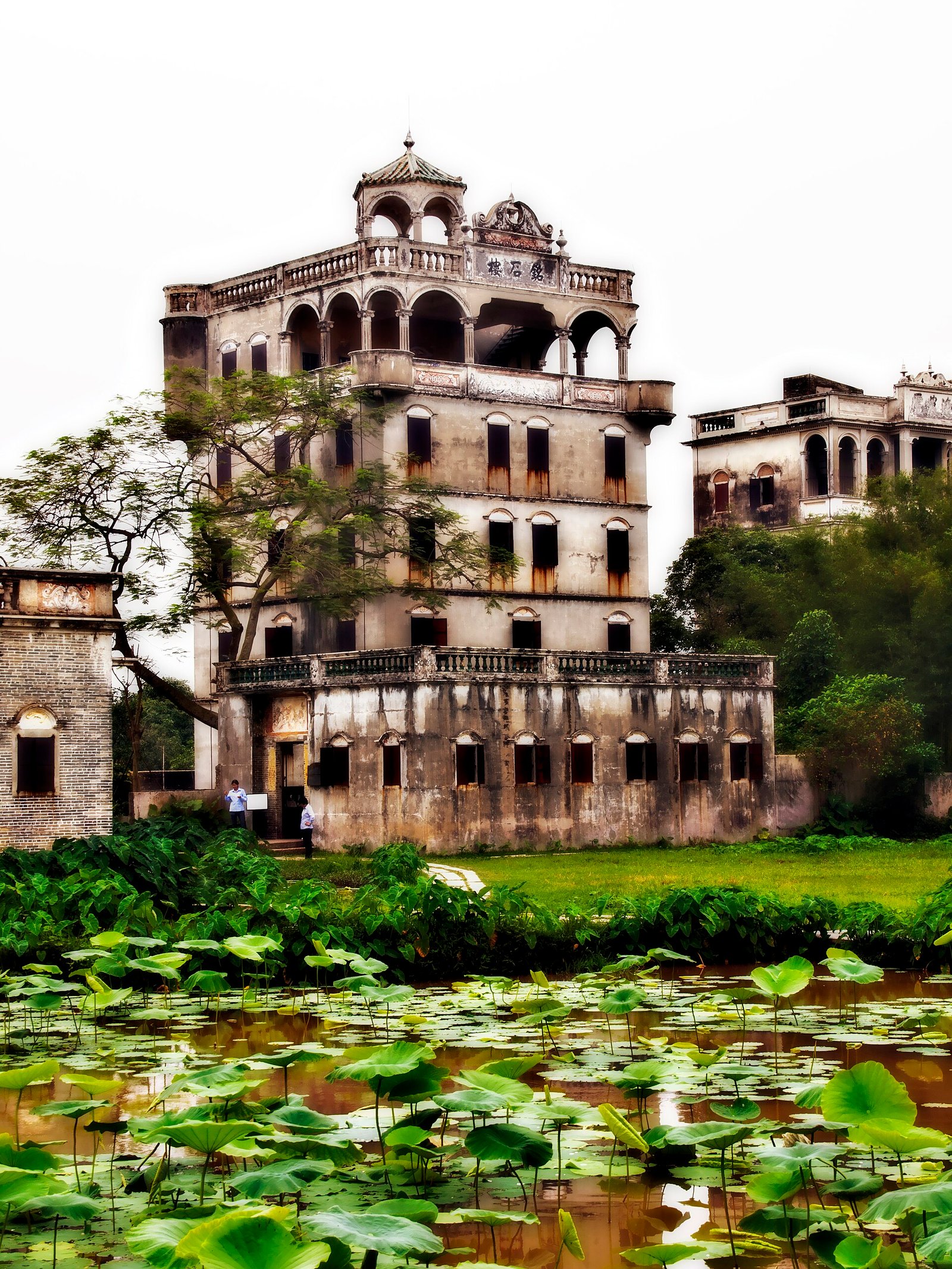
Zili is the most photographed cluster and the easiest introduction, with 15 towers and villas built between 1917 and 1948 in open paddy and lotus ponds. Nothing blocks the view, so the towers read as a skyline rather than a secret.
Start with Mingshi Lou, a six-storey residential tower with a colonnaded fifth floor and interiors that still hold German steel doors and Italian glass. Its rooftop terrace gives the panorama every guidebook uses, and Zili is where parts of Let the Bullets Fly were filmed — hence the mid-morning coach groups. A newer reason to linger is “Where a Fleeting Life, Once Lived”, a five-floor exhibition in Yinong Lou reviewed by the Global Times in January 2026.
Majianglong and Jinjiangli: bamboo shade and the tallest tower
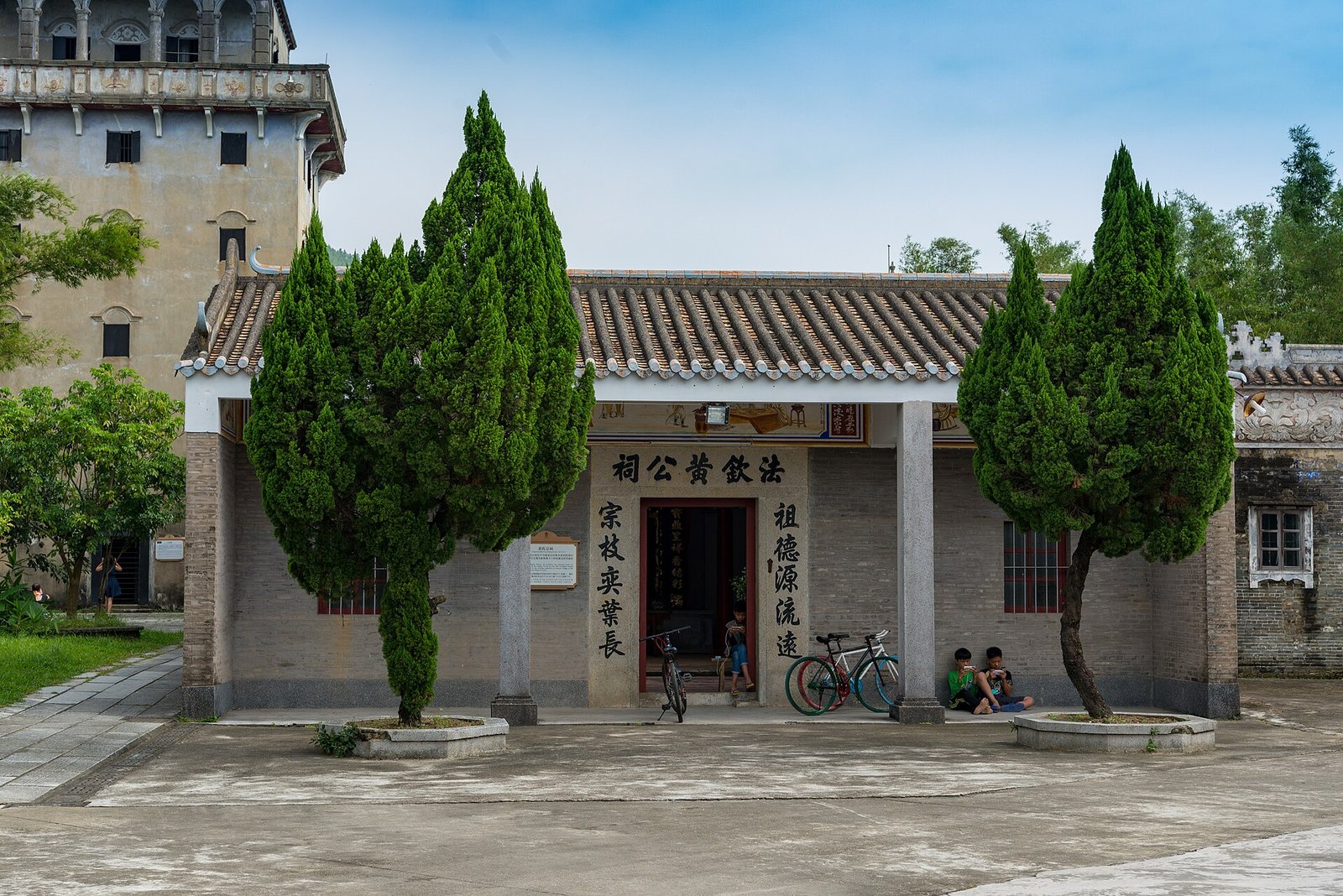
Majianglong is the quiet one: five villages, 13 towers, and a setting where banyan and bamboo almost swallow the buildings. A boardwalk loops through the groves along the Tanjiang River, and the mood is closer to a forest walk than a monument. Come here when Zili feels too staged.
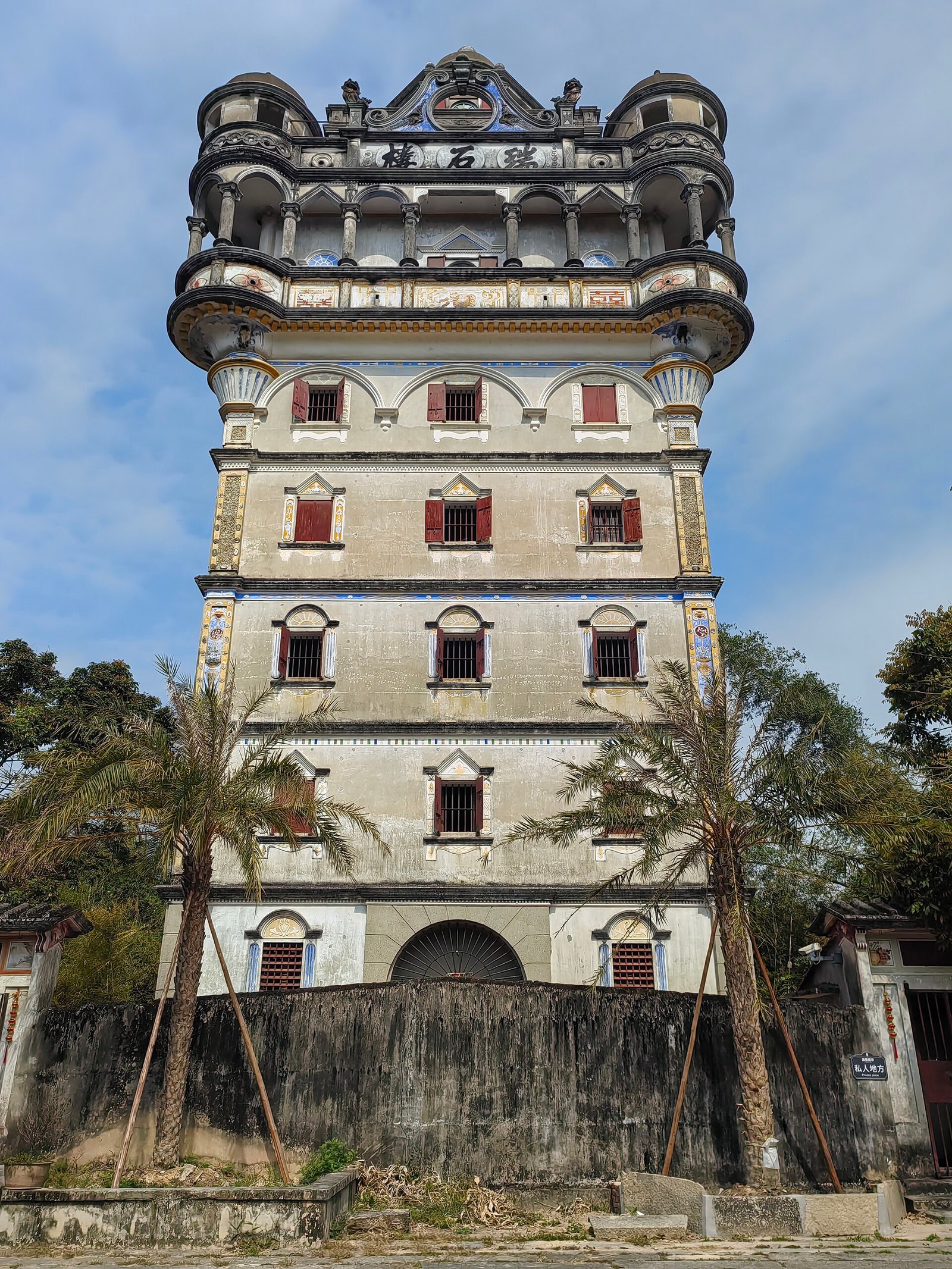
Jinjiangli, by contrast, is about one building. Ruishi Lou rises nine storeys and about 25 metres in the style of an Italian castle, and it is the tower everyone wants to climb. The stairs are narrow and uneven, but the view across the river plain explains the region’s defensive logic. Two smaller towers, Shengfeng Lou and Jinjiang Lou, stand beside it, creating the cluster’s famous three-in-a-row composition.
Chikan Old Town: the arcade gateway
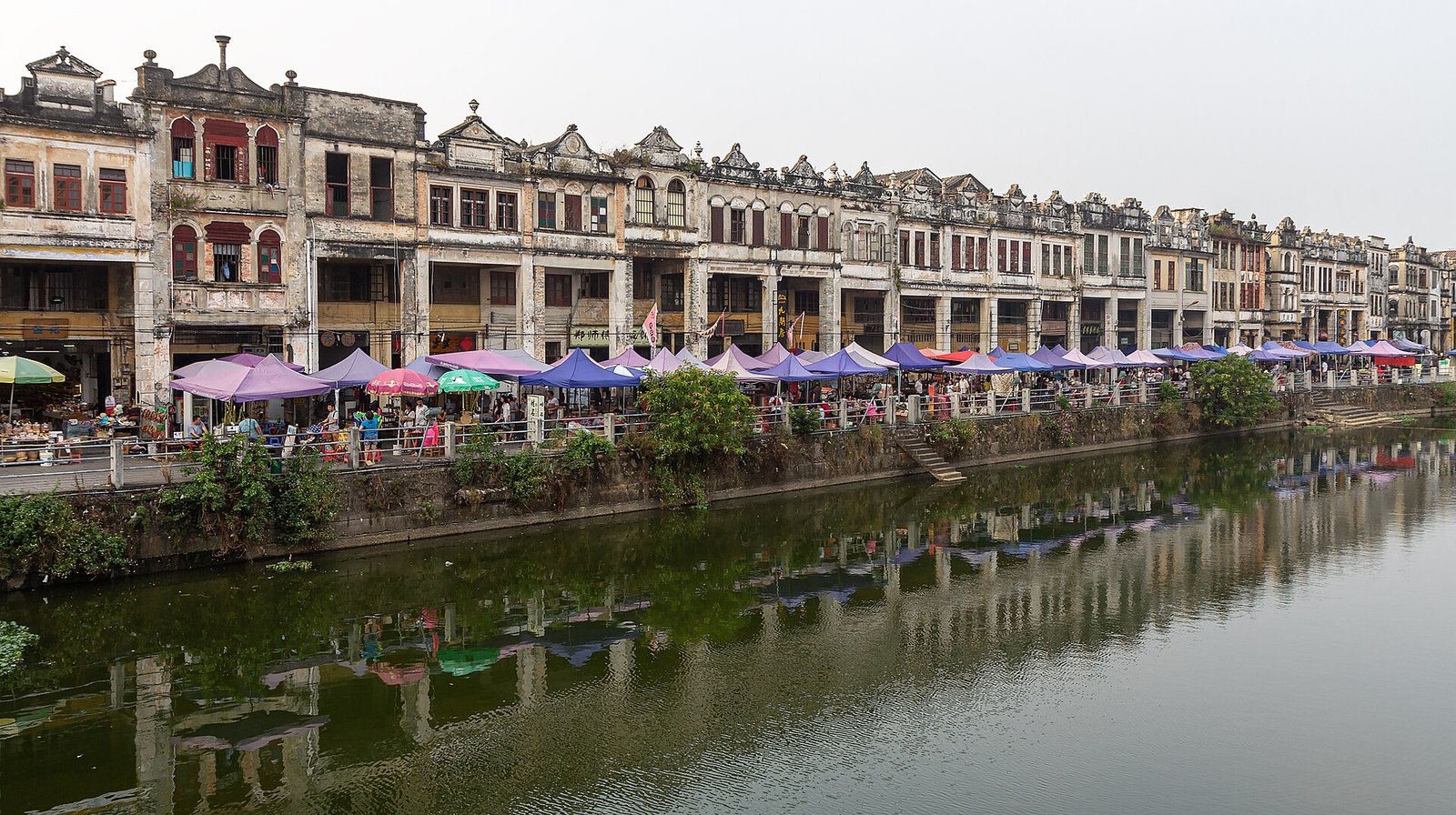
Chikan is not a diaolou cluster, but it is the natural base for them: a river town with more than 600 qilou arcade buildings and a three-kilometre waterfront. The restored core is now a ticketed resort, while the surrounding streets remain free to wander. Come at dusk, when the arcades light up and the day-trippers have gone.
Getting there from Hong Kong, Guangzhou or Macau
Kaiping is easy to reach, which makes its low profile so surprising. High-speed rail from Guangzhou South to Kaiping South is fastest, and a taxi from the station reaches Zili in 20 to 30 minutes.
| From | How | Typical time |
|---|---|---|
| Guangzhou | HSR Guangzhou South → Kaiping South, then taxi | 1 hour + 25 minutes |
| Hong Kong | HSR via Shenzhen or Guangzhou, or direct coach | 2–3.5 hours |
| Macau / Zhuhai | Coach or car across the delta | 1.5–2 hours |
Sources disagree on the rail leg — 40 to 50 minutes in some listings, up to 1.5 hours in others — so check 12306 for your date. Within Kaiping the clusters are too far apart to walk, so budget for a driver rather than chaining rural buses.
Tickets, opening hours and money
Prices change often and differ between platforms, so treat any figure as indicative. The Jiangmen municipal listings compiled for 2026 give these gate prices:
- Li Garden (Liyuan): ¥100
- Zili Village: ¥78
- Majianglong: ¥60
- Jinjiangli: ¥50
- Nanlou (South Tower): free
- Five-site pass: ¥180, valid two days
Other listings quote Majianglong at ¥47 and Zili at ¥60–75, so confirm at the gate or on the official mini-program. Carry cash: rural booths do not reliably take foreign cards. Clusters open around 08:30 and close between 17:30 and 18:00.
Practical tips for visiting the diaolou
Nearly every good day here comes down to timing and transport.
- Arrive at Zili before 09:00. Coach groups land mid-morning and the light is better before them.
- Hire a driver for the day. Roughly ¥300–400 for a full circuit beats waiting for village buses.
- Wear shoes with grip. Tower stairs are steep, narrow and polished smooth.
- Carry water and sun protection. Shade between villages is scarce, even in November.
- Download an offline translation app. Signage is bilingual at gates, not on village lanes.
- Set up Alipay or WeChat Pay in advance. Cash works, but small vendors prefer QR codes.
When to go, where to sleep, what to eat
Late autumn is the sweet spot: October and November bring golden rice, dry skies and comfortable walking weather, while March and April turn the paddies rapeseed yellow. Summer is hot, humid and one of Guangdong’s wettest seasons.
Most visitors day-trip from Guangzhou, but staying overnight is worth it: guesthouses in Tangkou and around Chikan put you in the fields at sunrise. Expect simple, clean rooms rather than luxury — and if you want the wider picture on rural stays, our guide to rural homestays for foreign backpackers covers the etiquette and the booking.
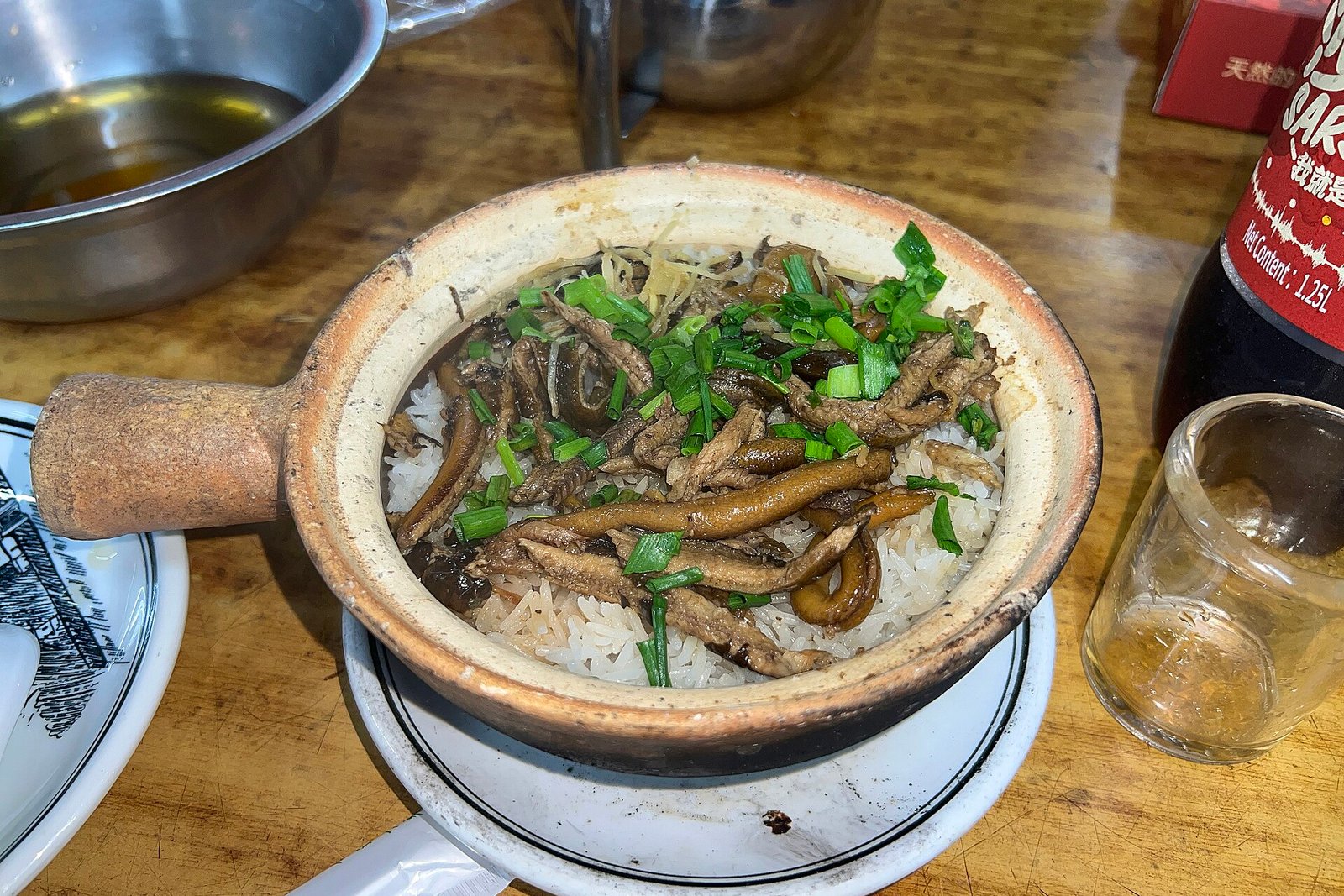
Food is a serious reason to stay. Kaiping is the home of claypot rice cooked with cured meats or river eel, a dish that arrives crackling and smelling of woodsmoke, and Chikan’s tofu pockets and duck congee are the classic street snacks.
Before you go
Kaiping rewards travellers willing to trade one famous monument for a hundred strange ones. The diaolou are not a museum: they are farm buildings with delusions of grandeur, built by people who left, worked, sent money home and never came back to live in them.
Give it a full day, sleep nearby if you can, and start early. If you enjoy this kind of architectural storytelling, our guide to the Fujian Tulou and their Hakka earth castles covers the other great communal building tradition of the south, and our round-up of lesser-known UNESCO sites in China will help you plan the next stop. Tell us in the comments which tower you would climb first.
Frequently asked questions
How many diaolou are there in Kaiping?
There are 1,833 diaolou still standing in Kaiping, and 20 of them across four village clusters form the UNESCO World Heritage Site. Many of the rest can be seen from the road for free.
How do I get to Kaiping from Hong Kong?
The fastest route is high-speed rail via Shenzhen or Guangzhou to Kaiping South, about three hours door to door. Direct coaches take roughly 3.5 hours, and a taxi from the station reaches Zili in 20 to 30 minutes.
How much does it cost to visit the Kaiping diaolou?
Expect roughly ¥50 to ¥100 per cluster, or about ¥180 for a five-site pass valid two days. The 2026 Jiangmen listings quote Zili at ¥78 and Majianglong at ¥60, but confirm before buying.
Can you go inside the towers?
Yes, several are open, including Mingshi Lou in Zili and Ruishi Lou in Jinjiangli. Stairs are steep and narrow, and some towers stay locked for conservation, so check at each ticket gate.
How many days do you need in Kaiping?
One full day covers Zili, Majianglong and Chikan comfortably with a driver. Two days add Jinjiangli, Li Garden and a sunrise over the rice fields, when the site is at its best.
Is Kaiping worth visiting?
Yes, especially if you want UNESCO-listed architecture without the crowds of China’s headline sites. The diaolou are unique, reachable in a day from Guangzhou, and the villages still feel lived-in.