


Cantonese Claypot Rice: The Winter Street-Food Ritual
At half past six on a December evening, the pavement outside a Wanfu Road rice shop smells of charcoal, sweet soy and curing pork. A cook lifts a lid, steam rushes out, and the queue on plastic stools leans forward at once. Winter in Guangzhou has its own soundtrack: the crackle of rice crust being scraped from a clay pot.
Cantonese claypot rice (煲仔飯, bou zai faan) is rice cooked to order in a small glazed clay pot, topped with cured sausage, chicken, spare ribs or eel, and finished so the base becomes a thin golden crust. A pot costs RMB 20–30 in a Guangzhou neighbourhood shop and takes 20–40 minutes to arrive. At jusha.travel, we love sharing tips that turn a menu into a meal, so this guide covers how the pot works, what to order, where the Yuexiu old-timers sit, and how to reach Shunde by train for eel.
What is Cantonese claypot rice?
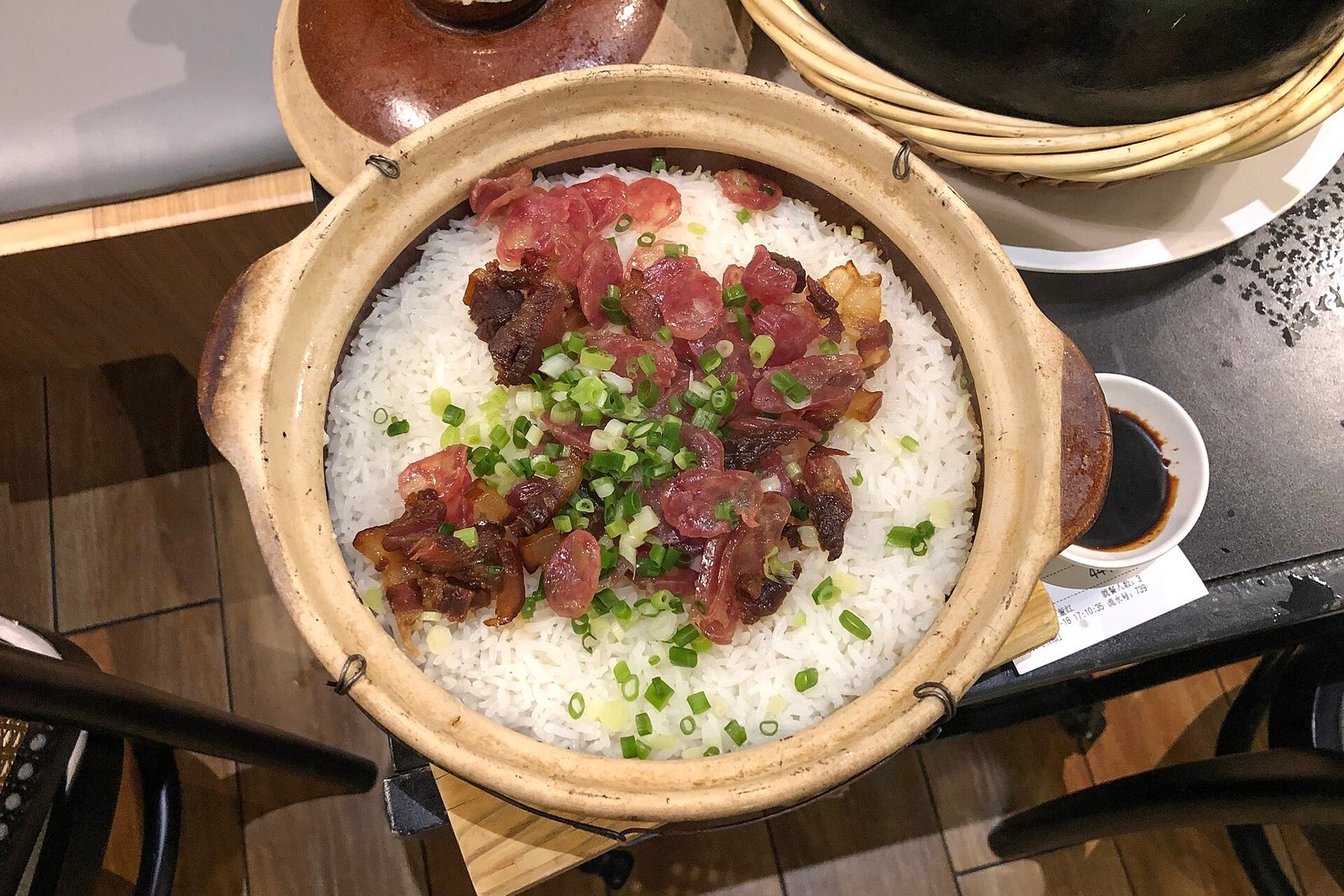
Cantonese claypot rice is a single-portion rice dish cooked from raw grains in a shallow earthenware pot over direct heat, with the topping steamed on the surface and a crisp crust scorched into the base. The pot, not the recipe, defines it: clay heats slowly, holds heat, and forces the last centimetre of rice into crackle.
The technique entered Guangzhou restaurants in the 1930s, according to the Chinese-language Wikipedia entry on 煲仔飯, after centuries as Pearl River Delta farm food. Older claims reach back to the Zhou dynasty, though those link a cooking method rather than a continuous recipe. What is documented is recent: in March 2024 the Tianhe District government added 廣式臘味煲仔飯製作技藝, the craft of Cantonese cured-meat claypot rice, to its twelfth batch of district-level intangible cultural heritage (Tianhe District Government, 29 March 2024).
Why is claypot rice a winter dish?
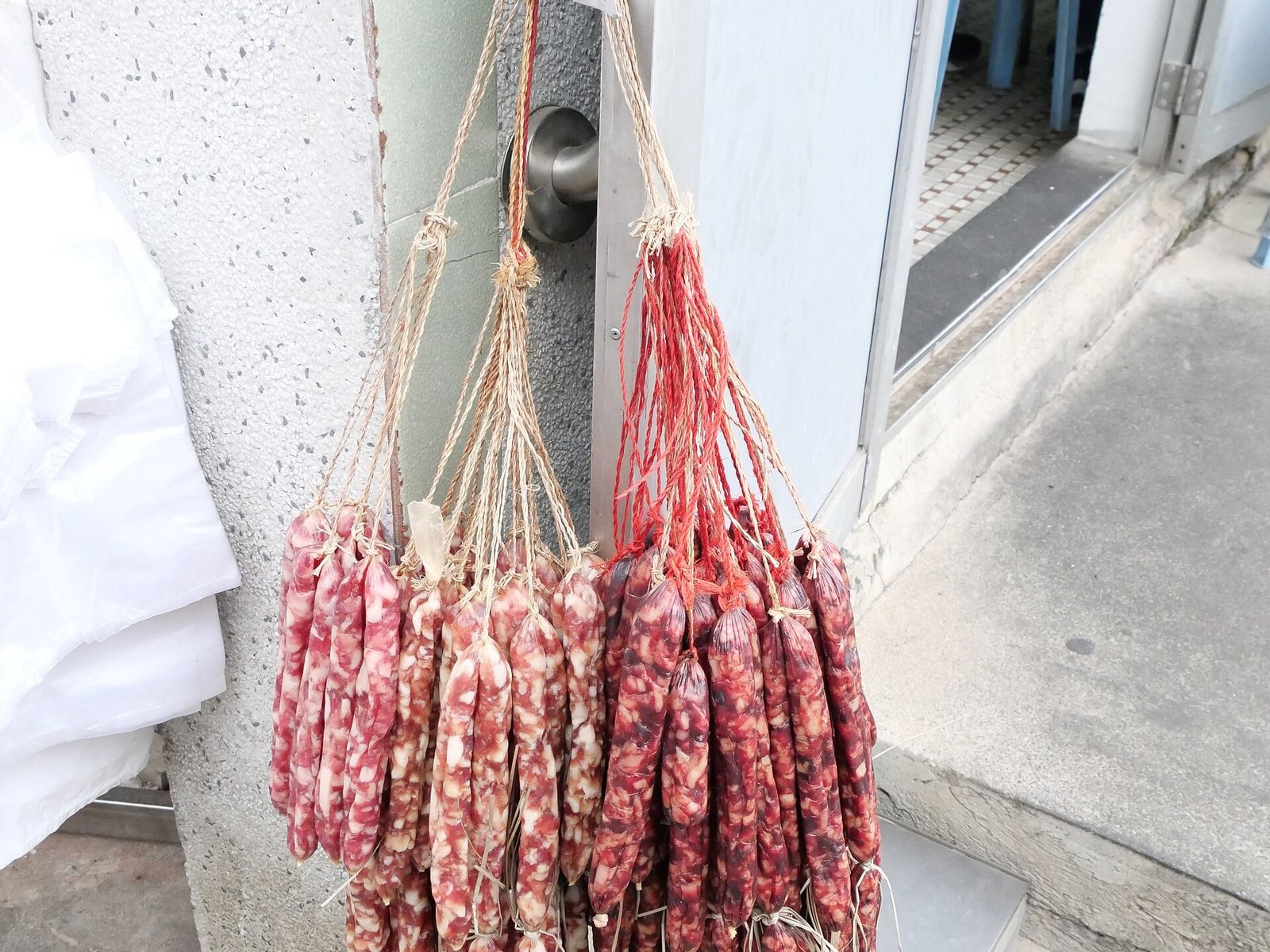
Cantonese claypot rice is a cold-weather dish because its defining topping, cured meat, only exists in the cool dry months. Lap mei is made when humidity drops after 立冬 in early November; families hang sausage and pork belly on balconies and shopfronts to dry in the north wind, and cooks build their menus around what is ready.
That is the logic behind the Cantonese saying 秋風起,食臘味 — when the autumn wind rises, eat cured meat. In Guangzhou the first pots appear in late October, peak between December and February, and stay on menus all year for the office lunch trade. Shops still rotate their specials with the weather, and a wet January changes what tastes right.
| Period | Weather | What the pot holds |
|---|---|---|
| Late Oct–Nov | 25°C falling, dry wind | First lap mei of the year |
| Dec–Feb | 10–20°C, damp cold | Triple cured meat, eel |
| Mar–Apr | Warm, humid | Chicken, ribs, salted fish |
| May–Sep | 30°C and above | Seafood, eel, eaten indoors |
How does a cook build the crust?
In Cantonese claypot rice the crust, or 飯焦, is engineered rather than accidental: oil lines the pot, water is measured, and heat steps down in stages so the rice steams dry before the base scorches. Cooks aim for a crust 0.2–0.3 cm thick, roughly one grain deep, golden rather than black (Tencent News, 7 December 2022).
- Blend the rice. Sticky 粘米 is mixed with fragrant 絲苗米 from Taishan, sometimes three varieties, for chew and aroma.
- Soak, then oil. Grains sit in water for 10–30 minutes; the pot is brushed with pork fat or peanut oil.
- Boil hard, uncovered. Water reaches the rice surface and the grains set at the edges.
- Add the topping at about seven minutes, when the surface water has gone and small craters appear.
- Turn the pot, not the rice. The cook rotates the vessel over the flame so one side never burns.
- Rest off the heat for 10–15 minutes with the lid on, then pour sweetened soy at the table.
What should you order on a first visit?
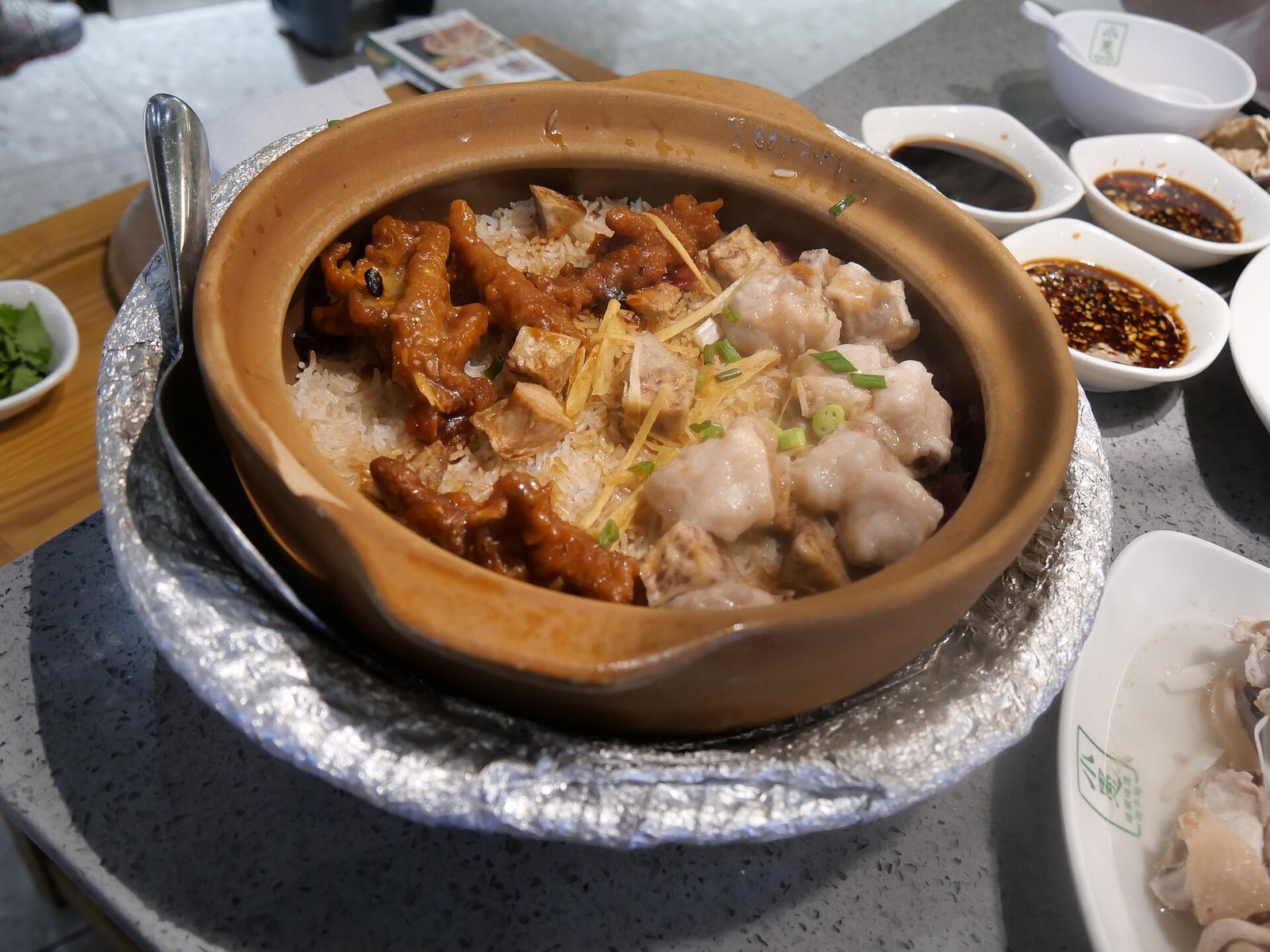
Cantonese claypot rice menus are short and repetitive, and the classics exist because they behave well under steam. Order one cured, one fresh and one egg-based pot for a table of three, and let the crust do the rest.
| Order | What it is | Why order it |
|---|---|---|
| 臘味 | Sausage, cured belly, duck | The benchmark |
| 滑雞 | Marinated chicken, mushroom | Gentlest flavour |
| 豉汁排骨 | Black bean spare ribs | Salty, bone-in |
| 窩蛋牛肉 | Minced beef, raw egg | Stir at the table |
| 黃鱔 | Rice-field eel | Shunde and Taishan |
| 鹹魚肉餅 | Salted fish pork patty | Punchy, old-school |
Where do locals eat Cantonese claypot rice in Guangzhou?
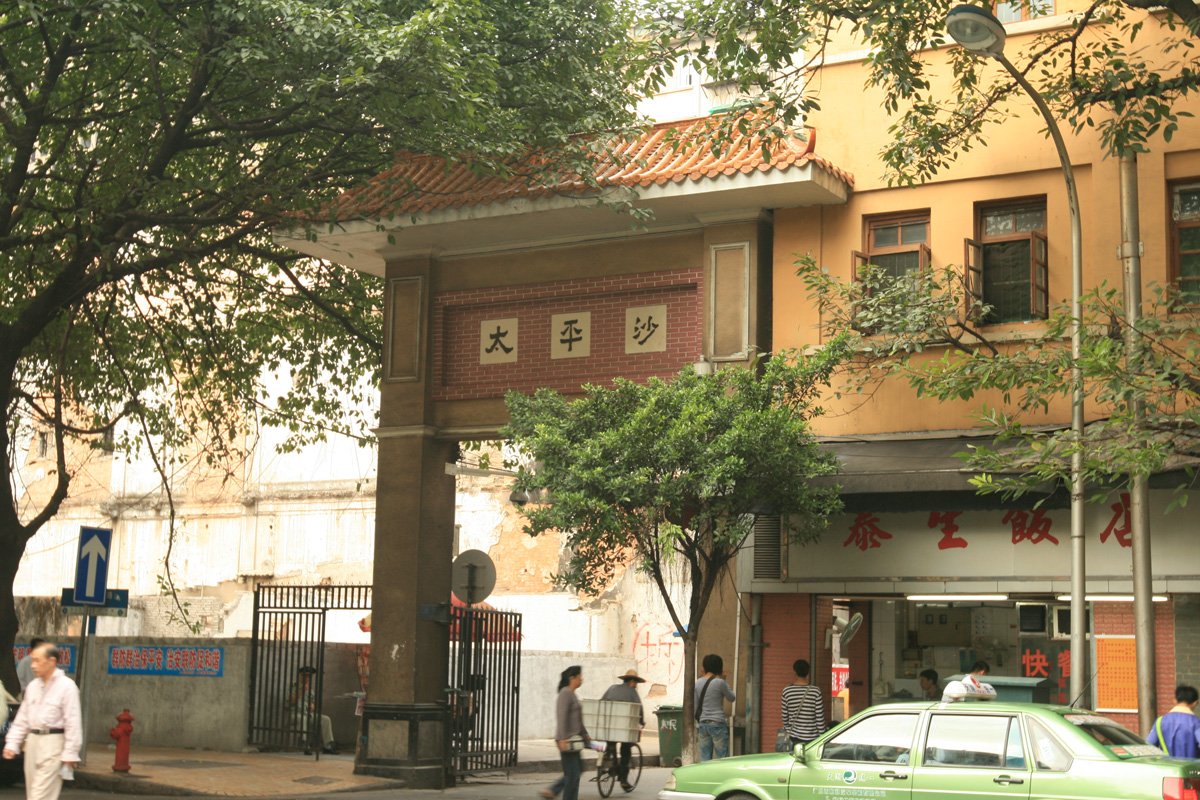
Old-school Cantonese claypot rice clusters in Yuexiu, in a fifteen-minute walk between Wanfu Road, Huifu East Road and Dezheng Middle Road, where shops have queued winter diners for four decades. Most sit within 300 m of Beijing Road station on Line 6 or Nongjiangsuo station on Line 1.
萬興 (Man Hing) at 289 Wanfu Road has run for more than thirty years and charges about RMB 28 a head; its lunch rush peaks from 11:00 to 13:00, and in cold weather waits stretch past 30 minutes (Tencent News, 7 December 2022). 好彩 on Beijing South Road, open from 10:00 until 02:00, is the crust specialist. 民記 has served Huifu East Road since 1979, 陶園 on Dezheng Middle Road is the quick solo option, and 超記 still cooks over open flame with Taishan rice. Expect RMB 20–30 per person as of November 2026, QR payment, and no English menu.
Is Shunde worth the train ride for eel claypot rice?
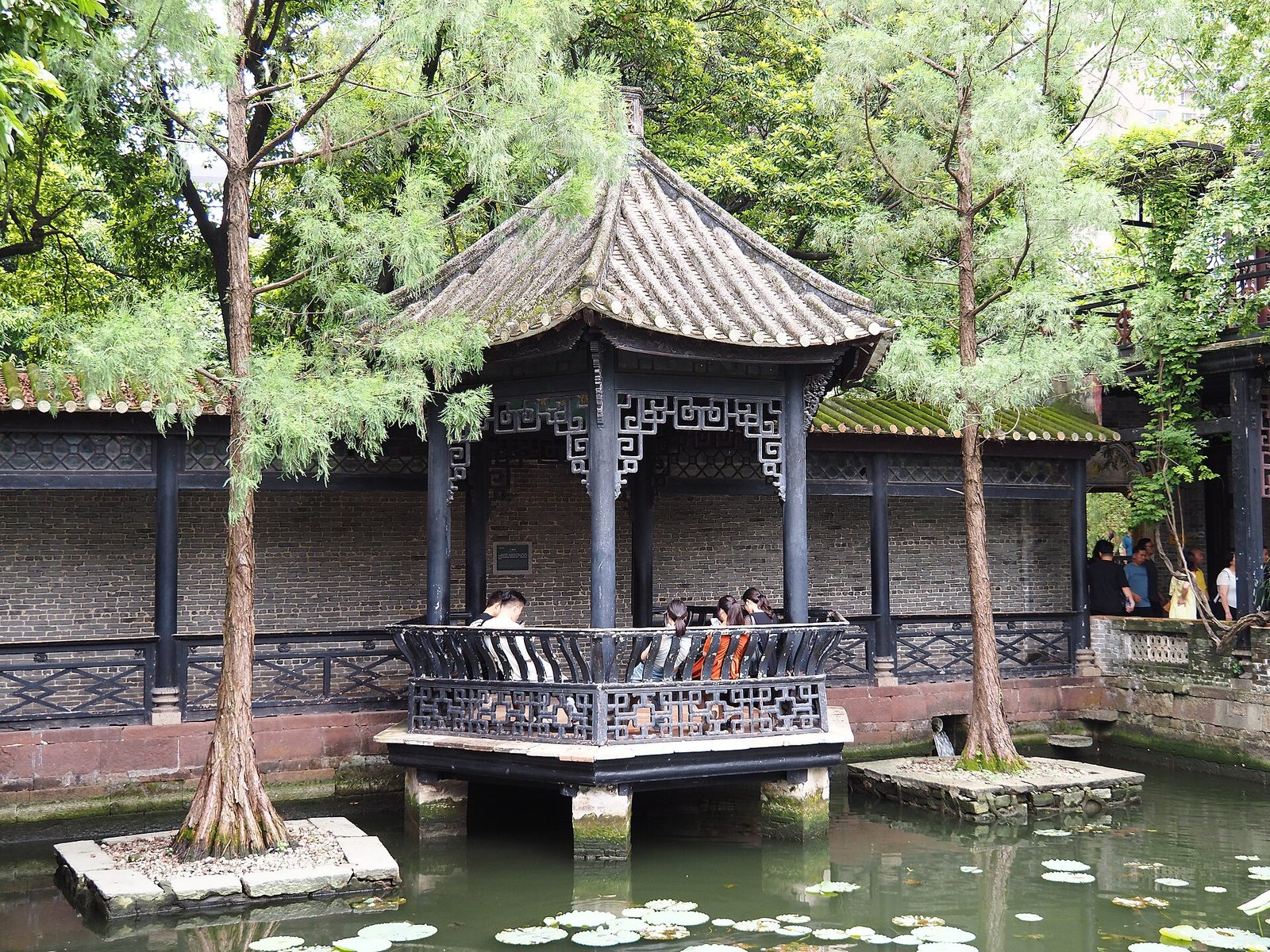
Shunde is worth a half-day because its Cantonese claypot rice leans on eel rather than sausage, and the town of Daliang is 16 minutes from Guangzhou South by intercity train. The 廣珠城際 line runs frequent services and the fastest reach Shunde in 16 minutes, with through trains continuing to Zhuhai (Hong Kong Commercial Daily, 1 March 2026).
Fares are modest: Guangzhou South to Shunde costs RMB 15 in second class. From Shunde station a taxi reaches Daliang in about ten minutes, which puts Qinghui Garden, a Qing-dynasty garden and national heritage site, within walking distance of lunch. Order 黃鱔飯, eel cut into strips and steamed over the rice, then walk it off among the rockeries before the return train.
How does Hong Kong serve it differently?
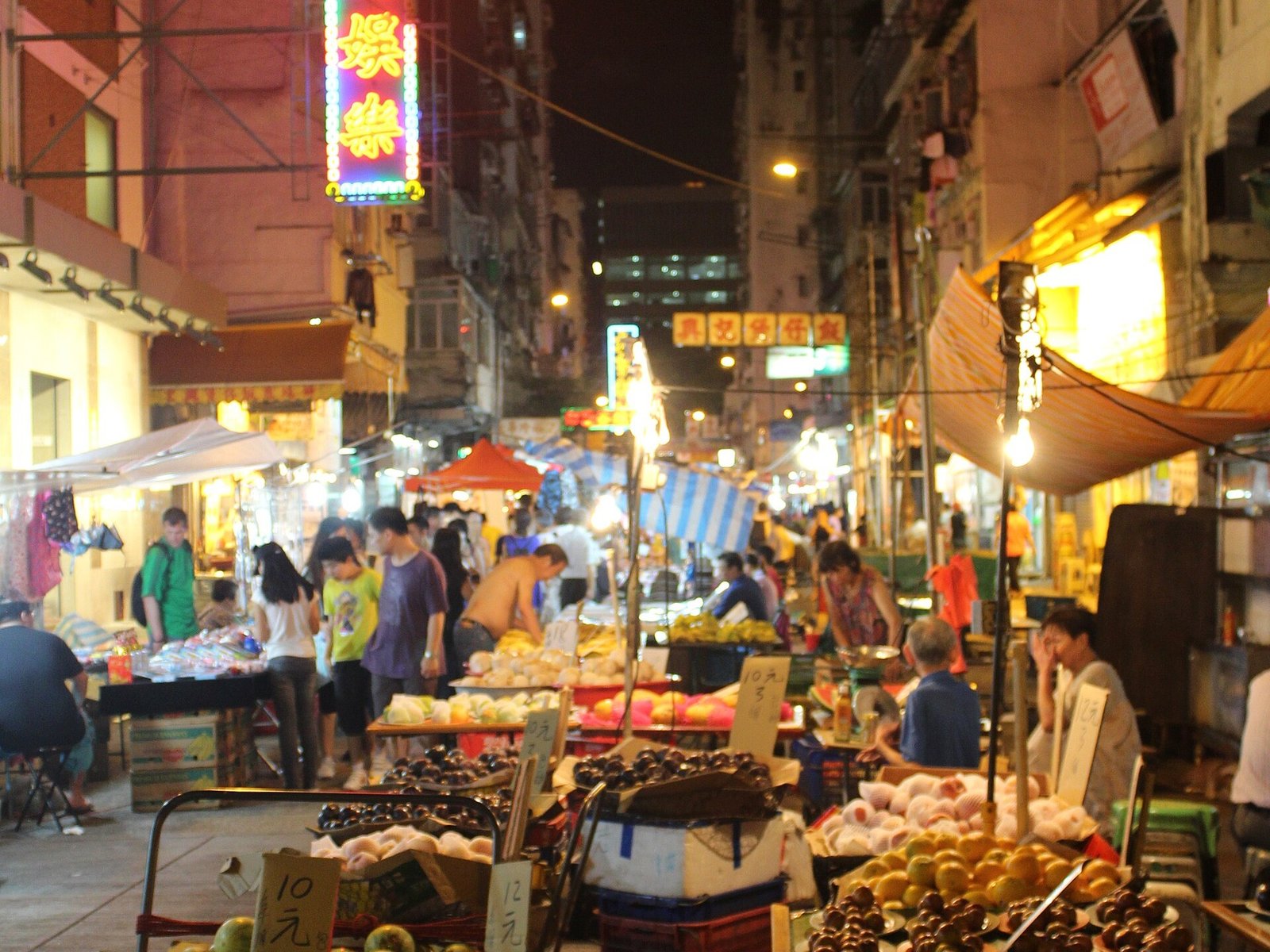
Cantonese claypot rice in Hong Kong is a restaurant and street-stall hybrid: charcoal is still the selling point, portions are larger, and the queue is part of the experience. Michelin’s Hong Kong guide picks five specialists, from Hing Kee on Temple Street to Kwan Kee in Sai Ying Pun, a Bib Gourmand address with more than 25 pots on the menu (Michelin Guide).
| Guangzhou | Shunde | Hong Kong | |
|---|---|---|---|
| Heat | Gas, some open flame | Gas, charcoal | Charcoal, oven |
| Signature | Lap mei | Eel | Eel, beef egg |
| Price | RMB 20–30 | RMB 30–60 | HK$90–160 |
| Wait | 20–40 min | 15–30 min | 30–60 min |
What should you say when you order?
Ordering is easier with five phrases, and staff in Yuexiu respond well to a pointed finger and a smile. Say 要飯焦 (yiu faan jiu) for extra crust or 少飯焦 for a softer base, 走蔥 to skip spring onion, 加蛋 for an egg, and 雙拼 to combine two toppings for a few yuan more.
Ask for 豉油 separately if you want to control salt, since the sweet soy arrives already mixed in some shops. Cash still works everywhere, but Alipay and WeChat Pay dominate; a foreign card linked to either wallet is enough. If nobody speaks English, photograph the menu board and point.
Practical tips for your first Cantonese claypot rice night
- Arrive at 11:00 or after 13:30; the 12:00 to 13:00 window is the slowest.
- Budget 30 minutes of cooking time and order a soup while you wait.
- Let the pot stand a minute before saucing, then loosen the crust from the rim.
- Order one green vegetable or a 例湯 to cut the richness.
- December and January bring the longest queues; weekdays are calmer.
- Takeaway pots travel badly — eat in.
Final thoughts
Cantonese claypot rice rewards patience: a twenty-minute wait, a minute of restraint before the first spoon, and a scraped crust at the end. Start in Yuexiu for the classics, ride the intercity to Shunde for eel, and cross to Hong Kong for charcoal. If you enjoyed this, our guide to why Guangzhou’s food scene is a global melting pot explains the wider picture, and a Cantonese cuisine day out in Guangzhou pairs lunch with the old city. For something hotter, try Chaoshan beef hotpot, and save room for Shunde double-skin milk. Street cooking in Hong Kong gets its own treatment in our piece on dai pai dong kitchens.
Frequently asked questions
What is Cantonese claypot rice made of?
Cantonese claypot rice is raw rice cooked in a glazed clay pot with water, oil and a topping of cured sausage, chicken, ribs or eel. Cooks blend sticky rice with Taishan 絲苗 rice, then finish the pot over stepped-down heat so a 0.2–0.3 cm crust forms underneath.
Is claypot rice only eaten in winter?
No, but winter is the season that matters. Cured meat is made after 立冬 in early November, when dry cool air lets sausage and pork belly hang without spoiling, so December and February pots taste best. Guangzhou shops serve it year-round for the lunch trade.
How much does claypot rice cost in Guangzhou?
A pot of Cantonese claypot rice costs about RMB 20–30 per person at Yuexiu institutions such as 萬興 on Wanfu Road or 民記 on Huifu East Road, as of November 2026. Two-topping pots and eel versions cost slightly more, and payment is by QR code rather than card.
Can I eat claypot rice in Hong Kong instead?
Yes, and the technique is the same with charcoal added. Hing Kee on Temple Street, Four Seasons on Arthur Street and Bib Gourmand-listed Kwan Kee in Sai Ying Pun all specialise in it, with pots typically HK$90–160 and waits of 30–60 minutes.
Is the burnt rice at the bottom safe to eat?
The 飯焦 is meant to be eaten and is the mark of a good cook. A proper crust is golden and one grain thick, lifting away in a sheet; black bitter patches mean the pot was left too long, and those you can leave.
Do I need to book a table?
Rarely. Most Guangzhou claypot rice shops take walk-ins and queue you on the pavement, with waits of 20–40 minutes at peak. Hong Kong specialists such as Kwan Kee accept phone bookings at some branches, so call ahead on winter weekends.